Common loon, the state bird of Minnesota
The state bird of Minnesota is the common loon, adopted in 1961. It is a large diving bird with a black head, a striped collar and a checkered back, and its wailing, yodeling calls are the sound of a northern lake at night. Minnesota has the largest summer loon population in the lower 48 states.
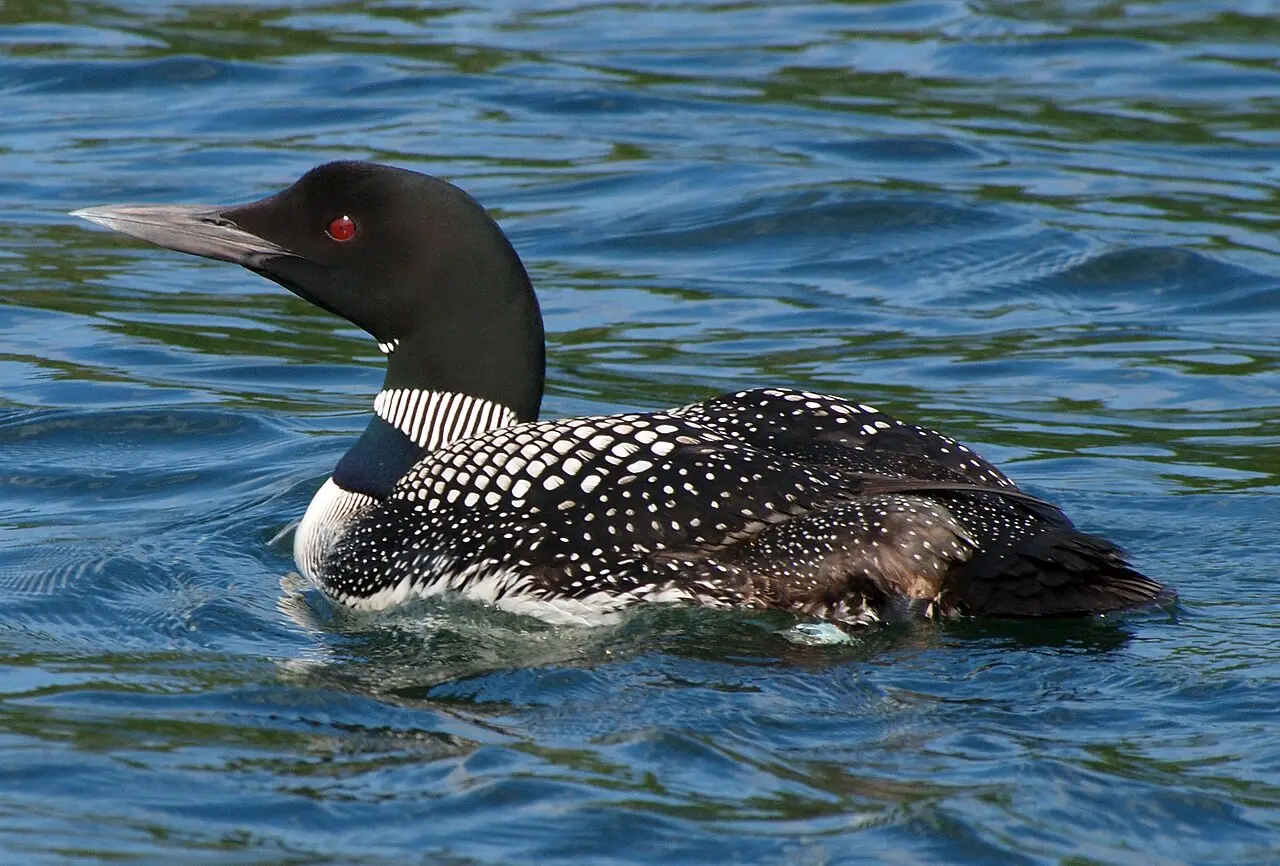
How to recognize it
The common loon is a large, long-bodied diving bird, about 26 to 36 inches long, that rides low in the water. In summer males and females look alike: a black head, a black-and-white striped collar, and a back checkered in black and white. In winter their plumage turns a duller gray and white, with pale areas around the eye. Look for the thick, heavy bill.
The loon’s calls are unforgettable. The tremolo is a wavering, laughing call; the wail is a long, ringing cry; and the yodel is a haunting call. They are often heard at night on northern lakes.
How it lives
Loons are built for diving. They chase fish underwater, driven mostly by their feet, and they eat mainly small fish such as minnows, perch and suckers, along with crustaceans, frogs, leeches and aquatic insects. Pairs nest on islands or shoreline mounds right at the water’s edge. Loon chicks sometimes ride on their parents’ backs.
Loons need large lakes with good fishing and enough open water for their long takeoff run across the surface. In winter they leave the frozen north for shallow coastal ocean waters and large lakes that stay free of ice.
Where to see one in Minnesota
Minnesota has the largest summer population of common loons in the lower 48 states. A 1989 statewide count estimated about 11,600 adults, more than half of all loons in the lower 48. They nest on the state’s many forested lakes. Since 1994, Department of Natural Resources volunteers have tracked loons every year on a set of index lakes through the Minnesota Loon Monitoring Program. Paddle a quiet forested lake in summer, and listen at night.
Doing well, but watched
The common loon is a species of least concern, with a population of about 1.2 million across North America, and Audubon reports that it is widespread and growing. It is listed as threatened in Michigan and New Hampshire, has lost some nesting lakes to human disturbance, and it is projected to lose much of its breeding range to climate change.
The state bird since 1961
Minnesota tried several birds before settling on the loon. Bills between 1947 and 1953 proposed the eastern goldfinch, the mourning dove, the pileated woodpecker, the scarlet tanager and the wood duck. The 1961 law naming the common loon was carried by Senator Norman Walz and Representative Loren Rutter and signed by Governor Elmer L. Andersen. In 2024 the loon also took center stage on the new state seal.
Questions about the Minnesota state bird
- What is the state bird of Minnesota?
- The common loon (Gavia immer), adopted in 1961.
- How many loons live in Minnesota?
- A 1989 statewide count estimated about 11,600 adult loons in summer, more than half of all loons in the lower 48 states.
- What sounds do loons make?
- Several. The best known are the tremolo, a wavering laugh; the wail, a long ringing cry; and the yodel, a haunting call. They are often heard at night on northern lakes.
- Where do Minnesota's loons go in winter?
- Loons need open water, so when the lakes freeze they leave for shallow coastal ocean waters and large lakes that stay free of ice.
Sources
- Common Loon National Audubon Society
- Minnesota loon study, 1989 Minnesota Department of Natural Resources
- Minn. Stat. § 1.145 (state bird) Office of the Revisor of Statutes, Minnesota Legislature