Tennessee
The Volunteer State
Tennessee became the 16th state on June 1, 1796, the first federal territory to apply for statehood. Its capital, Nashville, has been the seat of government since 1826 and is also its largest city, just ahead of Memphis. Tennessee is officially the Volunteer State, a name earned in the War of 1812, and it has more official state symbols than any other state, among them 16 state songs.
- Capital
- NashvilleCapital since 1826
- Statehood
- June 1, 179616th state
- Population, 2025
- 7,315,07615th of 50
- Area
- 42,144 sq mi36th largest · 109,153 km²
- Largest city
- Nashville721,074 people
- Abbreviation
- TNUS Postal Service code
- Motto
- Agriculture and CommerceEnglish
- Borders
- 8 statesLandlocked
Tanasi
Tennessee is named for Tanasi, a Cherokee town on the Little Tennessee River in what is now Monroe County, which was the leading political center of the Overhill Cherokee in the early 1700s, before Chota took that role. The secretary of state’s Blue Book adds that the word itself may be older than the Cherokee presence and could have come from the Yuchi, an earlier people of East Tennessee.
The first territory to apply
Before statehood, the region was the Southwest Territory, governed first from Rocky Mount and then from Knoxville. It was the first federal territory to seek admission as a state: it wrote a constitution and organized a state government before applying. After a close, party-line vote, Congress admitted Tennessee as the 16th state on June 1, 1796, and Knoxville became its first state capital.
The Volunteer State
Tennessee’s nickname dates from the War of 1812, when thousands of Tennesseans answered Governor Willie Blount’s call for volunteers, and heavy enlistment in the Mexican War reinforced it. It was written into law in 2020. Older nicknames include the Big Bend State, after the Native name for the Tennessee River, “the river with the big bend,” and the Mother of Southwestern Statesmen, for the presidents and other national leaders the state produced in the 1800s.
Finding a capital
Tennessee’s legislature moved several times in its early decades, among Knoxville, Nashville and Murfreesboro, chosen in 1818 as the state’s geographic center. It settled in Nashville in 1826, and in 1843 the General Assembly made it the permanent capital, after a contest in which Whigs generally backed Nashville and Democrats Murfreesboro. The Greek Revival Capitol, finished in 1859, is one of the oldest working state capitols in the country. The capital page tells the story.
Three stars
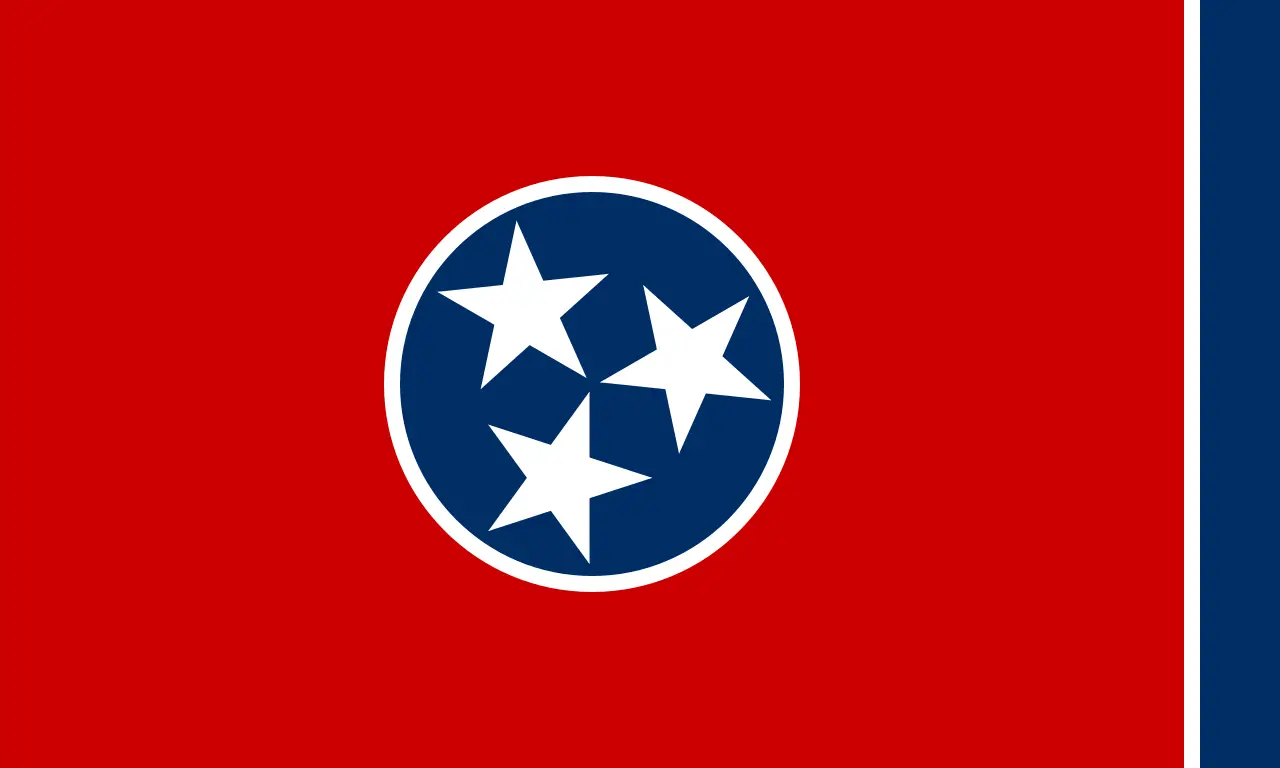
The state flag, adopted in 1905, shows three white stars in a blue circle on a crimson field. The stars stand for the state’s three grand divisions, East, Middle and West Tennessee, bound together by the unbroken circle. The motto on the seal is “Agriculture and Commerce,” and since 2023 the state has had a second motto, “Send Me.”
Eighty-eight symbols
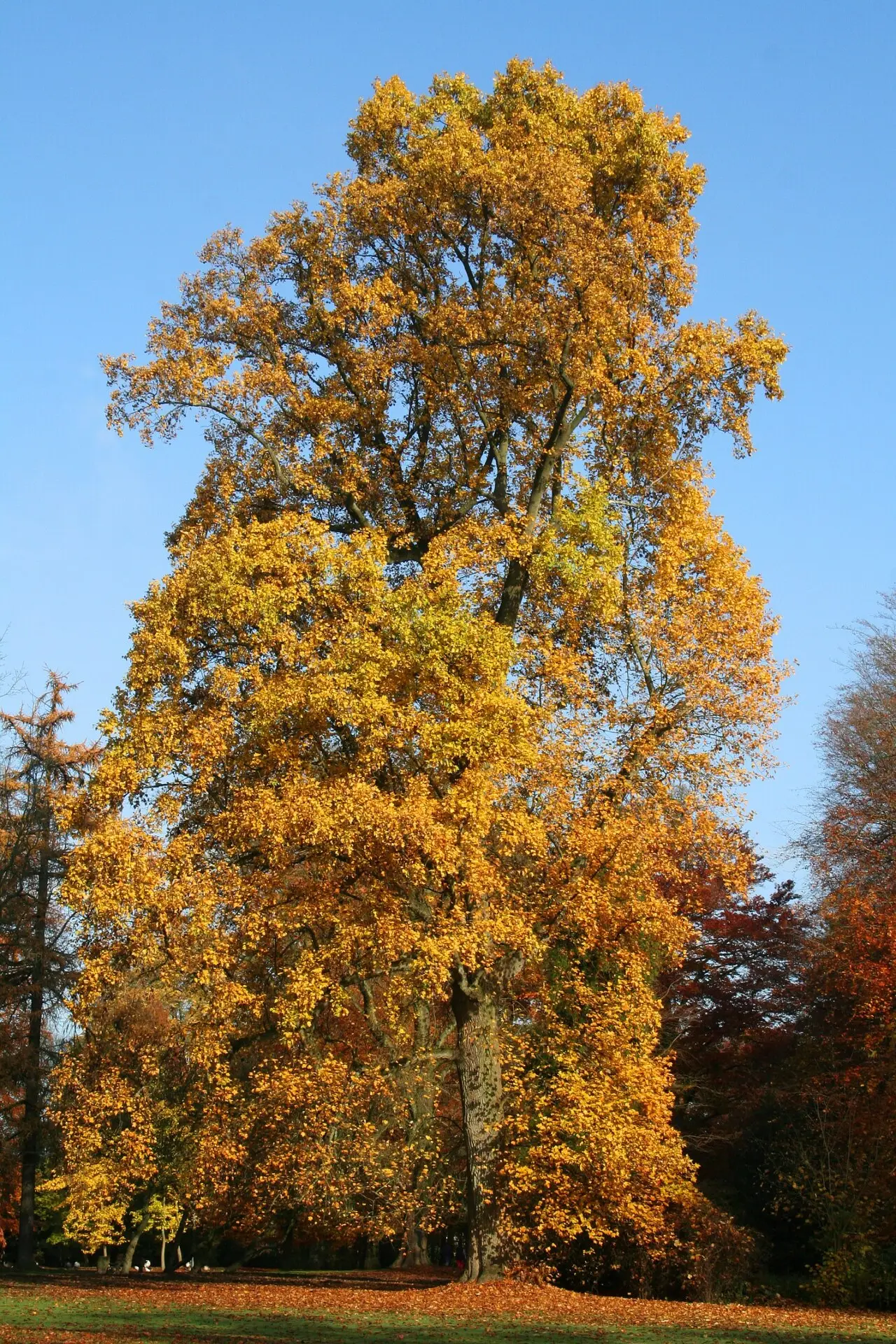
Tennessee has 88 official state symbols, more than any other state. The mockingbird is the state bird and the iris the state cultivated flower, and the tulip poplar, whose wood pioneers used for houses and barns, the state tree. The Tennessee Walking Horse, the bluetick coonhound and the raccoon all have titles, as do three foods, hot slaw, Memphis barbecue and Nashville hot chicken, ten official state books and 16 state songs, from “The Tennessee Waltz” and “Rocky Top” to Dolly Parton’s “My Tennessee Mountain Home.” See them all on the Tennessee symbols page.
Land and people
Tennessee covers 42,144 square miles, 36th among the states, and had about 7.32 million residents in 2025, 15th in the country and up nearly 6 percent from 2020. It borders eight states, Kentucky, Virginia, North Carolina, Georgia, Alabama, Mississippi, Arkansas and Missouri, tied with Missouri for the most of any state. Nashville, with about 721,000 people, is the largest city, followed by Memphis, Knoxville, Chattanooga and Clarksville.
Tennessee state symbols
All 88 official symbols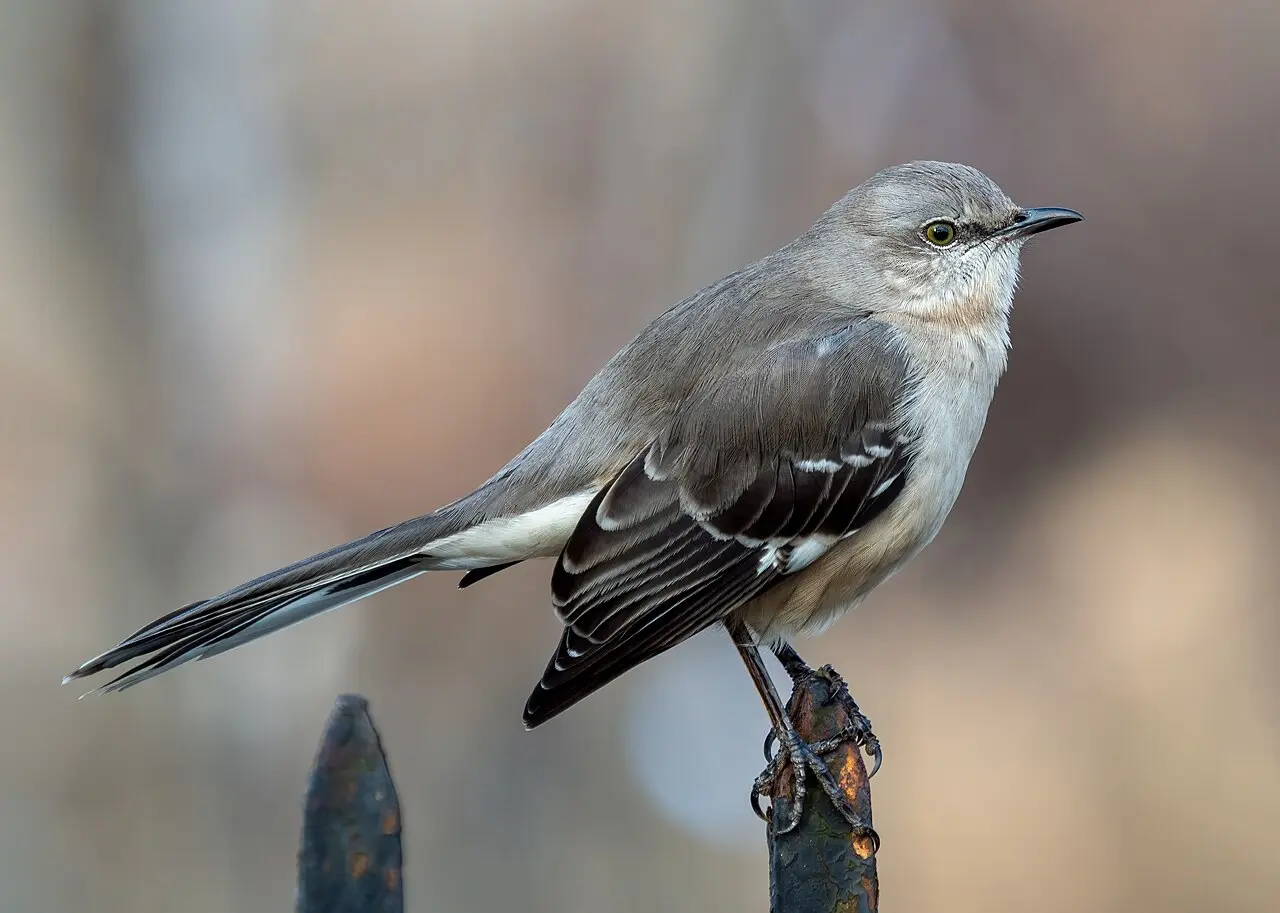


The capital: Nashville
The capital of Tennessee is Nashville, where the General Assembly has met since 1826; in 1843 lawmakers made it the permanent capital. Before that the legislature moved around: Knoxville was the first capital, Kingston held the title for a single day in 1807, and Murfreesboro served for eight years. Nashville's Greek Revival Capitol, finished in 1859, has no dome, and its architect is buried inside its walls.
- 1792–1807Knoxville
- 1807Kingston
- 1807–1812Knoxville
- 1812–1817Nashville
- 1817–1818Knoxville
- 1818–1826Murfreesboro
- 1826–todayNashville
Where Tennessee is
Tennessee shares a border with 8 states: Alabama, Arkansas, Georgia, Kentucky, Missouri, Mississippi, North Carolina and Virginia.
- Land area
- 41,235 sq mi
- Water area
- 909 sq mi
- Population density
- 177.4 people per sq mi (20th)
Tennessee trivia
- Kingston was Tennessee's capital for exactly one day in 1807, when lawmakers met there to satisfy a treaty promise made to the Cherokee.Source: Tennessee Encyclopedia (Tennessee Historical Society)
- William Strickland, architect of the State Capitol, died before it was finished and is entombed inside its walls.Source: Tennessee State Museum
- The Tennessee State Capitol is one of only a handful of U.S. state capitols built without a dome.Source: Tennessee State Museum
- The world-record smallmouth bass, 11 pounds 15 ounces, came out of Tennessee's Dale Hollow Lake in 1955.Source: Tennessee Secretary of State
- The state poem 'Oh Tennessee, My Tennessee' was written by Navy officer William Lawrence during solitary confinement as a prisoner of war in North Vietnam.Source: Tennessee Secretary of State
- The land the Capitol sits on was first called Cedar Knob, a link to the state's official evergreen, the eastern red cedar.Source: Tennessee Secretary of State
Questions about Tennessee
- What is the capital of Tennessee?
- Nashville, the seat of government since 1826 and the permanent capital since 1843. It is also the largest city.
- Why is Tennessee called the Volunteer State?
- Because thousands of Tennesseans answered Governor Willie Blount's call for volunteers in the War of 1812, and heavy enlistment in the Mexican War reinforced the name. It became the official nickname in 2020.
- Where does the name Tennessee come from?
- From Tanasi, a Cherokee town on the Little Tennessee River in what is now Monroe County. The state's Blue Book says the word may be even older, perhaps from the Yuchi people.
- How many state songs does Tennessee have?
- Sixteen are listed in state law, from "My Homeland, Tennessee" (1925) and "Rocky Top" to Steve Earle's "Copperhead Road," plus several designated by resolution and an official holiday song.
- What is Tennessee's state motto?
- '"Agriculture and Commerce," from the state seal. In 2023 the Legislature added a second motto, "Send Me."'
Photo credits (5)
- Flag of Tennessee: -xfi-, Public domain, via Wikimedia Commons
- Northern mockingbird: Rhododendrites, CC BY-SA 4.0, via Wikimedia Commons
- Iris: Za, CC BY-SA 3.0, via Wikimedia Commons
- Tulip poplar: Jean-Pol GRANDMONT, CC BY 3.0, via Wikimedia Commons
- Raccoon: Rhododendrites, CC BY-SA 4.0, via Wikimedia Commons
Sources
- Tennessee Blue Book 2025-2026: A History of Tennessee Tennessee Secretary of State · statehood
- Capital Cities Tennessee Encyclopedia (Tennessee Historical Society) · capital
- State Capitol Tennessee State Museum · capital
- Tennessee Blue Book 2025-2026, About Tennessee Tennessee Secretary of State
- Tennessee State Symbols Tennessee Secretary of State
- US Census Bureau Vintage 2025 population estimates; 2010 state area measurements