North Carolina
The Tar Heel State
North Carolina became the 12th state on November 21, 1789, when a convention at Fayetteville ratified the US Constitution, a year after an earlier convention had refused. Its capital is Raleigh, a city laid out for the purpose in 1792, and its largest city is Charlotte. North Carolina is known as the Tar Heel State and the Old North State, and its motto is "Esse quam videri," "To be, rather than to seem."
- Capital
- RaleighCapital since 1794
- Statehood
- November 21, 178912th state
- Population, 2025
- 11,197,9689th of 50
- Area
- 53,819 sq mi28th largest · 139,391 km²
- Largest city
- Charlotte964,784 people
- Abbreviation
- NCUS Postal Service code
- Motto
- Esse Quam Videri“To be, rather than to seem”
- Borders
- 4 statesOcean coast
Named for a king
Carolina is built on Carolus, the Latin form of the name Charles. In 1629 King Charles I granted the region to his attorney general, Sir Robert Heath, under the name Carolina, and in 1663 Charles II issued a fresh charter for the territory to eight Lords Proprietors. The “North” dates from 1710, when the Proprietors gave the northern settlements their own governor, Edward Hyde, separate from the government of South Carolina. That split is also the source of the nickname “the Old North State.”
Independence, twice dated
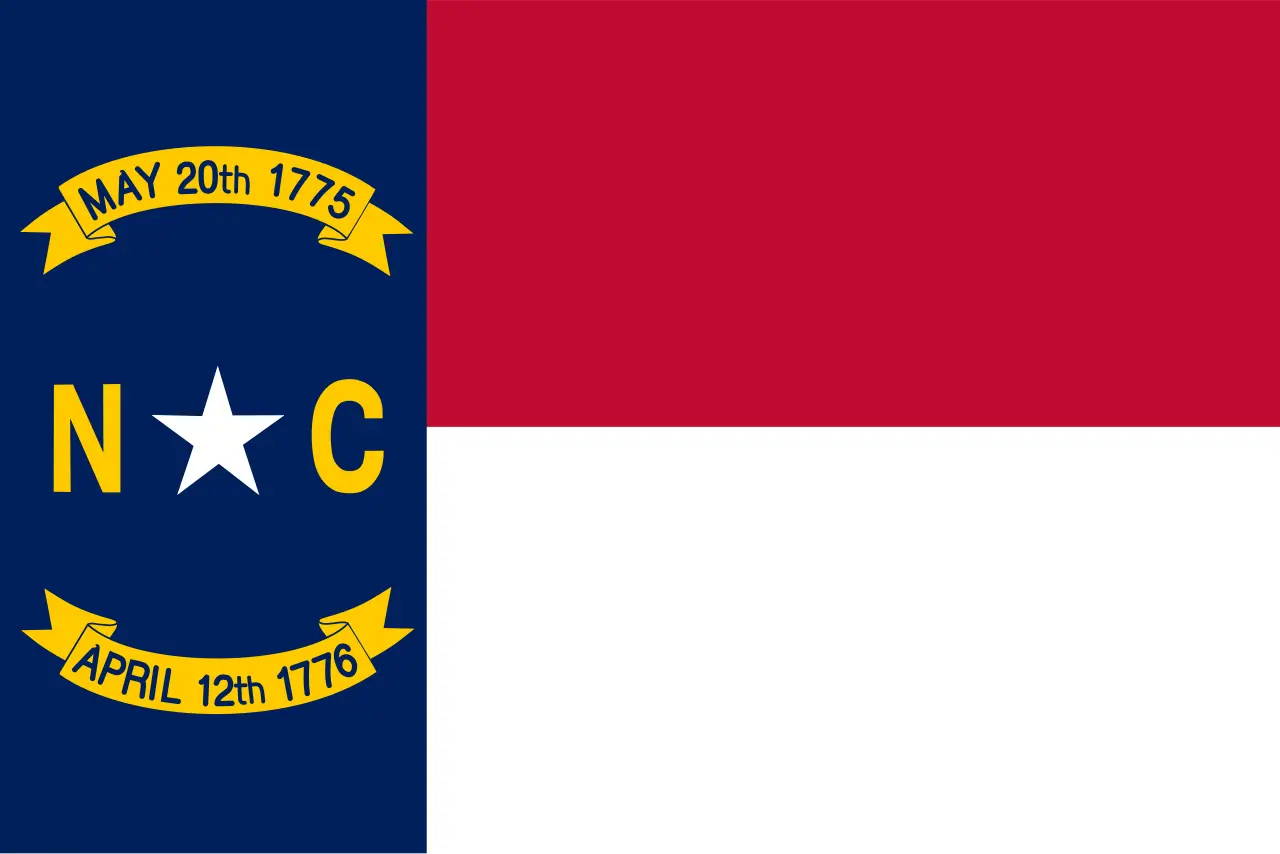
North Carolina’s flag and seal carry two dates from the road to independence. May 20, 1775, is the traditional date of the Mecklenburg Declaration of Independence, although historians dispute its authenticity. April 12, 1776, is the date of the Halifax Resolves, in which North Carolina’s Provincial Congress authorized its delegates to vote for independence.
The reluctant 12th state
North Carolina took its time over the US Constitution. A convention at Hillsborough in 1788 declined to ratify it. A second convention, at Fayetteville, ratified on November 21, 1789, making North Carolina the 12th state.
A capital built from scratch
For most of the colonial era the seat of government followed the governor, and the Assembly met in several towns, until New Bern became the permanent colonial capital in 1766. After the Revolution the legislature moved from town to town again. In 1788 a convention directed that a permanent capital be placed within ten miles of Isaac Hunter’s plantation in Wake County, near the middle of the state. Commissioners bought 1,000 acres from Joel Lane, and the new city, named for Sir Walter Raleigh, was laid out in 1792. The General Assembly first met there in 1794. The capital page tells the story, including the Greek Revival State Capitol of 1840.
Tar Heels
North Carolina’s best-known nickname was born in the Civil War. “Tar heel” began as a jibe at North Carolina soldiers and soon became a badge of pride, recalling the colony’s long trade in tar, pitch and turpentine from its pine forests, which supplied most of the American market until the 1860s. The motto, adopted in 1893, is Esse quam videri, “To be, rather than to seem.” The state song, “The Old North State,” was written in 1835 and adopted in 1927.
Cardinals, dogwoods and pines
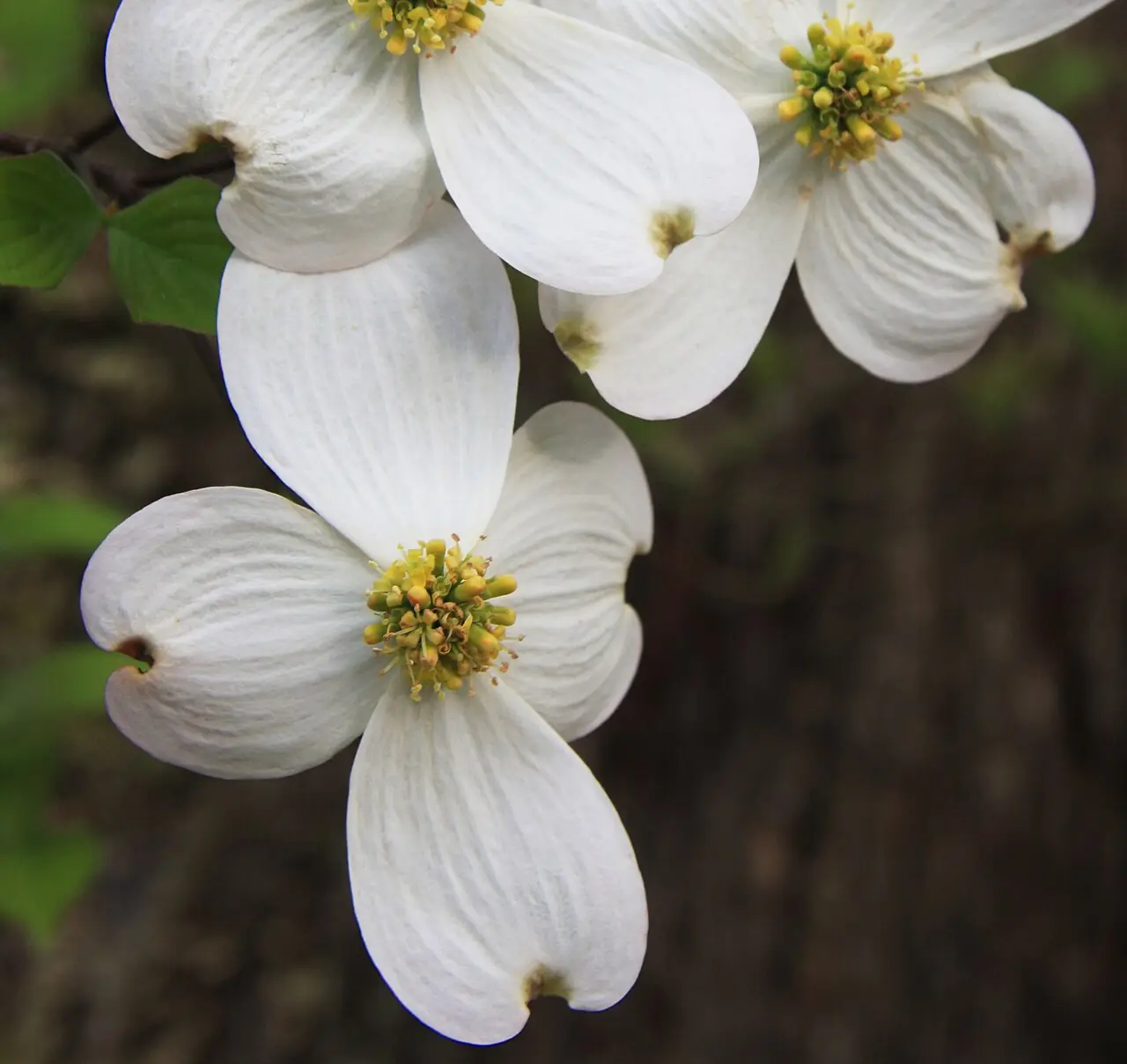
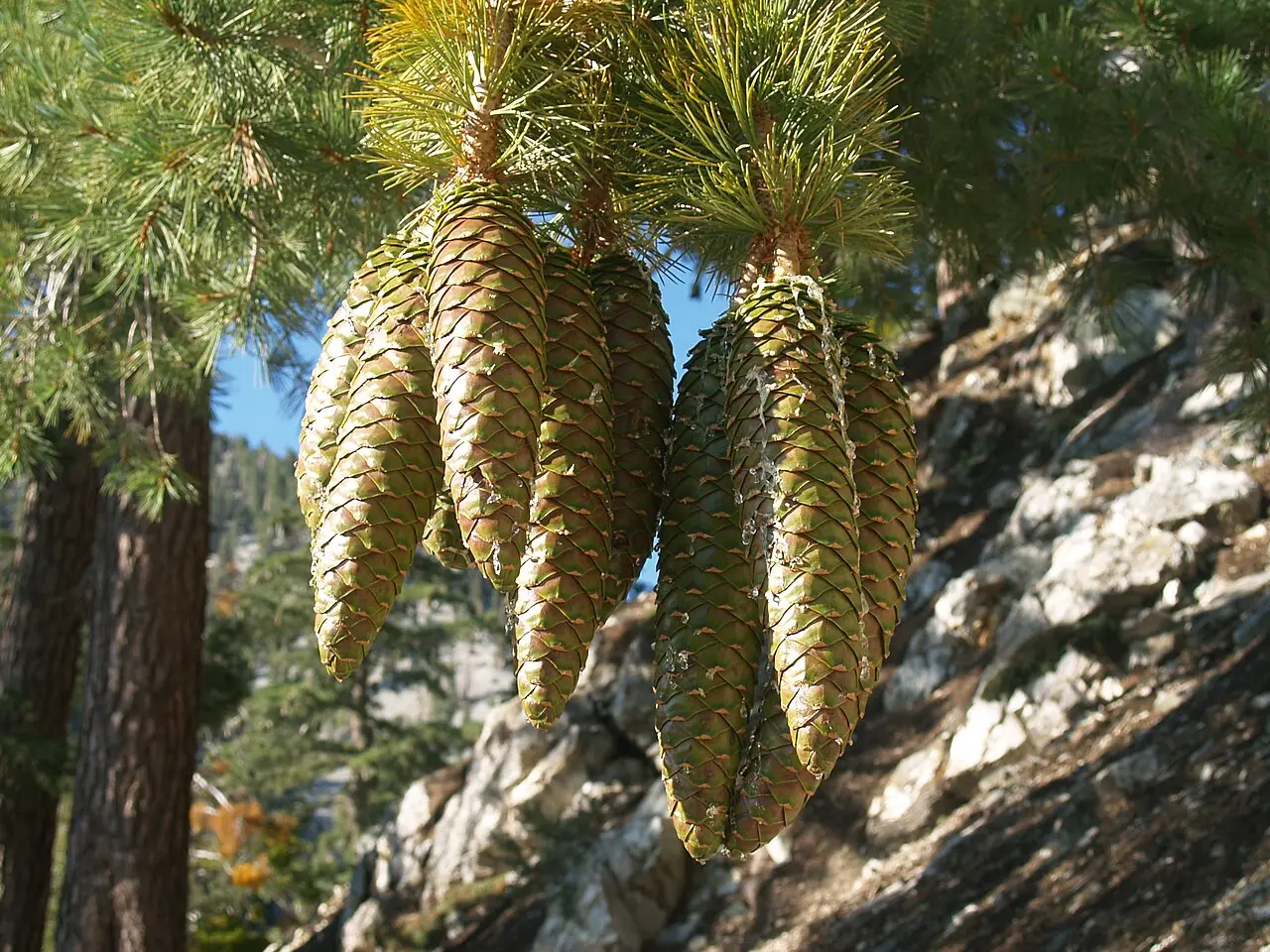
North Carolina has 43 official state symbols. The northern cardinal has been the state bird since 1943 and the dogwood the state flower since 1941. The pine is the state tree, and since 2023 the longleaf pine has been named the emblem of the state’s trees. The list also includes the Fraser fir as the official Christmas tree, the eastern box turtle, the scuppernong grape, the sweet potato, stock car racing, clogging and shagging, and the whirligigs of Vollis Simpson. The red-and-blue state flag has been in use since 1885. See every symbol on the North Carolina symbols page.
Land and people
North Carolina covers 53,819 square miles, 28th among the states, and had about 11.2 million residents in 2025, 9th in the country and up more than 7 percent from 2020. It stretches from the mountains in the west through the Piedmont to the coastal plain and the Atlantic coast, and borders Virginia, Tennessee, Georgia and South Carolina. Charlotte, with about 965,000 people, is the largest city, followed by Raleigh with about 506,000, Greensboro, Durham and Winston-Salem.
North Carolina state symbols
All 43 official symbols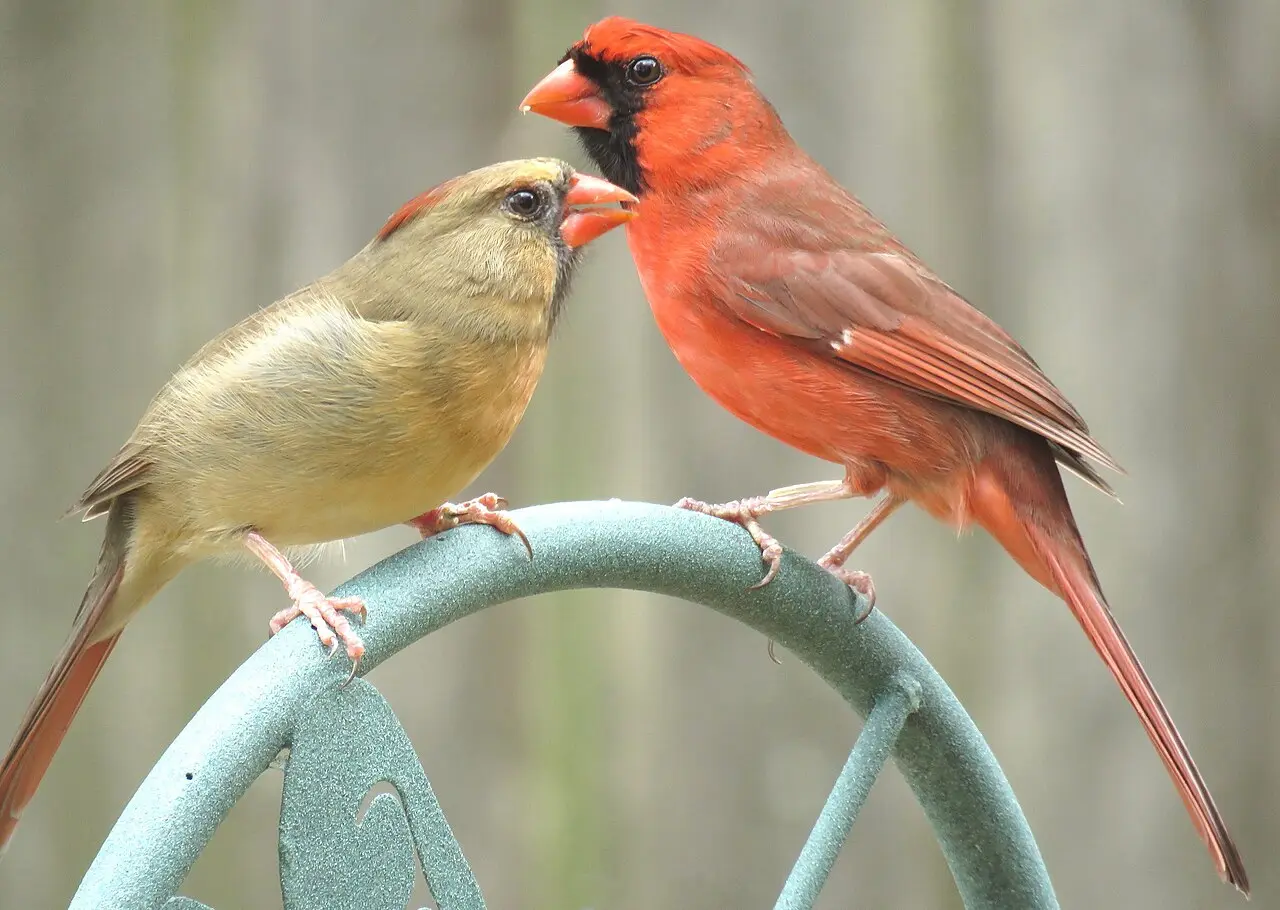

The capital: Raleigh
The capital of North Carolina is Raleigh, where the General Assembly has met since 1794. The city was created for the purpose: in 1788 a convention ordered the capital placed near the center of the state, and commissioners laid out Raleigh in 1792 on land bought from Joel Lane. Its Greek Revival State Capitol, finished in 1840, still houses the governor's office.
- 1778–1794Several towns
- 1794–todayRaleigh
Where North Carolina is
North Carolina shares a border with 4 states: Georgia, South Carolina, Tennessee and Virginia.
- Land area
- 48,618 sq mi
- Water area
- 5,201 sq mi
- Population density
- 230.3 people per sq mi (12th)
North Carolina trivia
- In 1933 the Carolina chickadee was the state bird for about a week before lawmakers repealed it, reluctant to see North Carolina called the Tomtit State.Source: NCpedia (State Library of North Carolina)
- When milk became the state beverage in 1987, a few House members cast their votes as "moo."Source: NCpedia (State Library of North Carolina)
- The Venus flytrap, the state carnivorous plant, grows wild only in a small part of the Carolinas' coastal plain, mostly within about 75 miles of Wilmington.Source: NCpedia (State Library of North Carolina)
- North Carolina's gold rush began when 12-year-old Conrad Reed found gold in Cabarrus County in 1799.Source: NCpedia (State Library of North Carolina)
- The Plott hound's foundation stock was five dogs that Johannes Plott brought from Germany in 1750; later crosses, including with local Blevins hounds, also shaped the breed.Source: NCpedia (State Library of North Carolina)
- Elementary students who called themselves the Pit Crew led the push to make stock car racing the state sport, signed into law at Charlotte Motor Speedway in 2011.Source: NCpedia (State Library of North Carolina)
Questions about North Carolina
- What is the capital of North Carolina?
- Raleigh. The General Assembly first met there in 1794, two years after the city was laid out on land bought for the purpose.
- Why is North Carolina called the Tar Heel State?
- The name arose during the Civil War, first as a jibe at North Carolina soldiers and soon as a badge of pride. It echoes the colony's long-running trade in tar, pitch and turpentine from its pine forests.
- What does the North Carolina motto mean?
- '"Esse quam videri" is Latin for "To be, rather than to seem." It became the state motto in 1893.'
- What do the dates on the North Carolina flag mean?
- May 20, 1775, is the traditional date of the Mecklenburg Declaration of Independence, whose authenticity historians dispute, and April 12, 1776, is the date of the Halifax Resolves, in which North Carolina authorized its delegates to vote for independence.
- Where does the name Carolina come from?
- From Carolus, the Latin form of Charles. King Charles I granted the region under the name Carolina in 1629, and Charles II issued a new charter in 1663.
Photo credits (5)
- Flag of North Carolina: Unknown author, Public domain, via Wikimedia Commons
- Cardinal: patricia pierce, CC BY 2.0, via Wikimedia Commons
- Dogwood: Dcrjsr, CC BY 3.0, via Wikimedia Commons
- Pine: Mitch from Costa Mesa, CA, USA, CC BY-SA 2.0, via Wikimedia Commons
- Gray squirrel: Dominic Nelson, CC BY-SA 4.0, via Wikimedia Commons
Sources
- North Carolina Becomes the Twelfth State N.C. Department of Natural and Cultural Resources · statehood
- Capitals, Colonial and State NCpedia (State Library of North Carolina) · capital
- Raleigh NCpedia (State Library of North Carolina) · capital
- State Names and Nicknames NCpedia (State Library of North Carolina)
- Tar Heel NCpedia (State Library of North Carolina)
- State Motto of North Carolina NCpedia (State Library of North Carolina)
- US Census Bureau Vintage 2025 population estimates; 2010 state area measurements