California
The Golden State
California is the most populous state and the third largest by area. Its capital is Sacramento, it joined the Union on September 9, 1850 as the 31st state, and its nickname, the Golden State, goes back to the gold rush that made it a state so quickly.
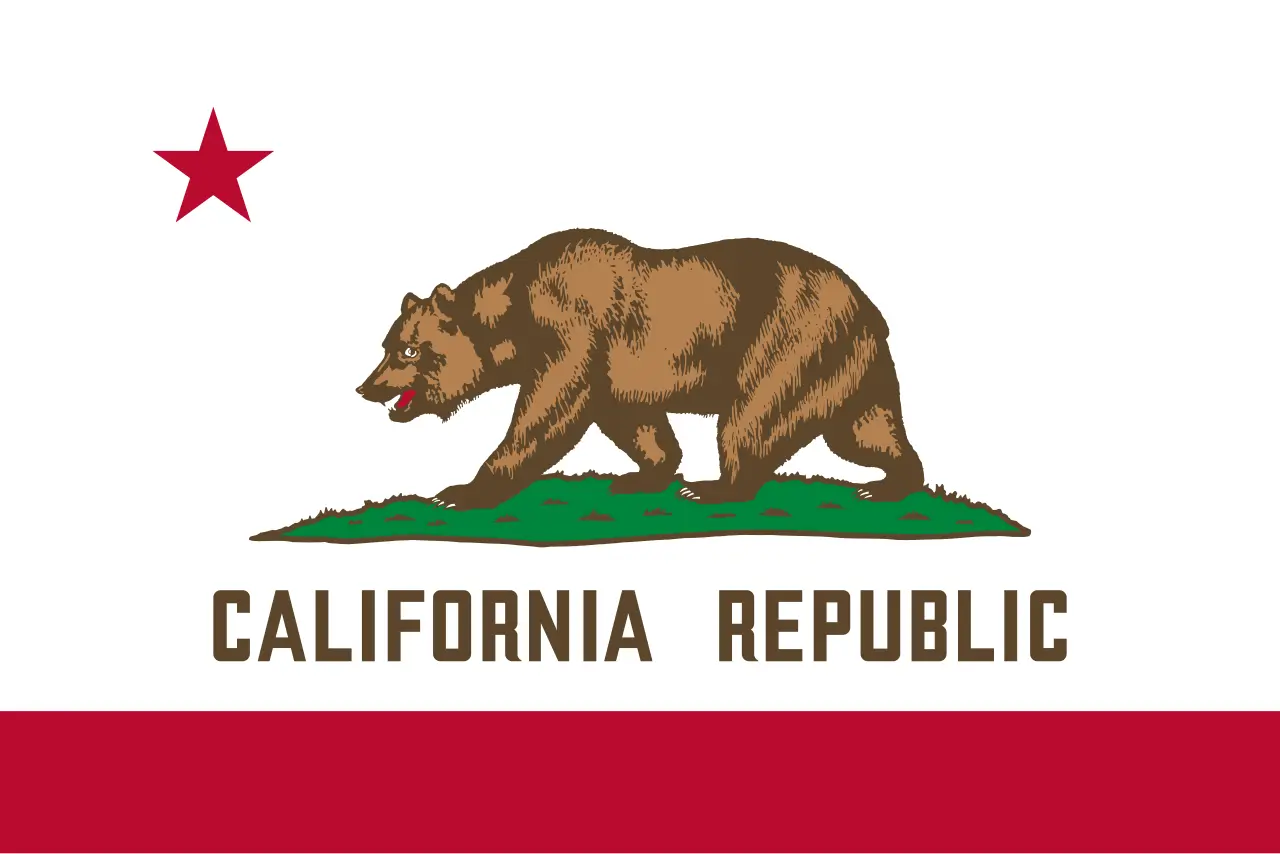
- Capital
- SacramentoCapital since 1854
- Statehood
- September 9, 185031st state
- Population, 2025
- 39,355,3091st of 50
- Area
- 163,695 sq mi3rd largest · 423,967 km²
- Largest city
- Los Angeles3,869,089 people
- Abbreviation
- CAUS Postal Service code
- Motto
- Eureka“I have found it”
- Borders
- 3 statesMexico · Ocean coast
A state that skipped the territory stage
Most western states spent years as territories before Congress let them in. California never did. Gold was found in early 1848, the same year Mexico gave up the region after the Mexican-American War, and within two years so many people had arrived that Californians held their own constitutional convention at Monterey in 1849 and asked to join as a state. Congress admitted it directly, as a free state, in one of the five laws that make up the Compromise of 1850. That made California the 31st state, a number you can still count in the 31 stars on its Great Seal.
Where the name comes from
California was named before anyone in Europe had seen it. Most historians trace the word to Las sergas de Esplandián, a Spanish adventure novel by Garci Rodríguez de Montalvo printed in the early 1500s. It describes an island called California, rich in gold and ruled by a warrior queen named Calafia. When Spanish explorers reached the Baja California peninsula in the 1530s and 1540s, they took it for an island and used the novel’s name. Where Montalvo got the word himself is still argued over.
Gold, Eureka and the Golden State
Gold runs through California’s official identity. The state motto is Eureka, Greek for “I have found it,” the cry tied to the gold strikes. It has been on the Great Seal since 1849, but the Legislature only made it the official motto in 1963. The nickname “the Golden State” is older than the law that adopted it: it was in print by the 1850s and became official in 1968. Native gold has also been the state mineral since 1965, and the state colors, set by law in 1951, are blue and gold.
A capital that took five years to settle
Sacramento is the capital, but it was not the first choice. Between 1849 and 1854 the Legislature met in San Jose, Vallejo, Sacramento, Vallejo again and Benicia, a run of moves that earned the government the name “the floating capital.” Sacramento won in 1854 by offering its county courthouse, and its residents later taxed themselves to buy land for a permanent capitol. Work on that building started in 1860 and finished in 1874. Sacramento is far from the biggest city: Los Angeles has about seven times as many people, and San Diego, San Jose, San Francisco and Fresno are all bigger too. The capital page tells the full story.
More official symbols than almost anywhere
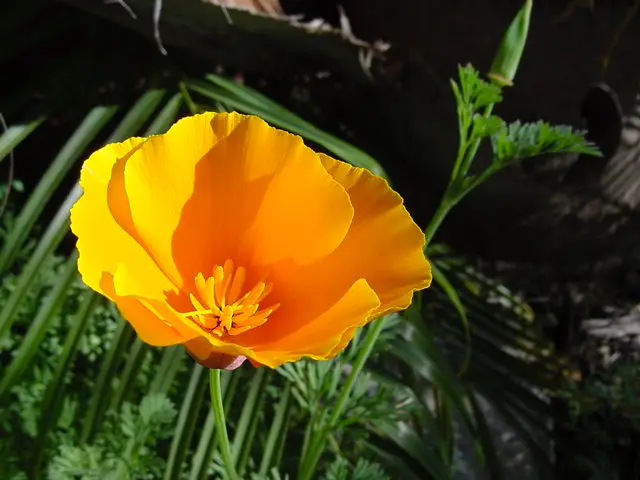
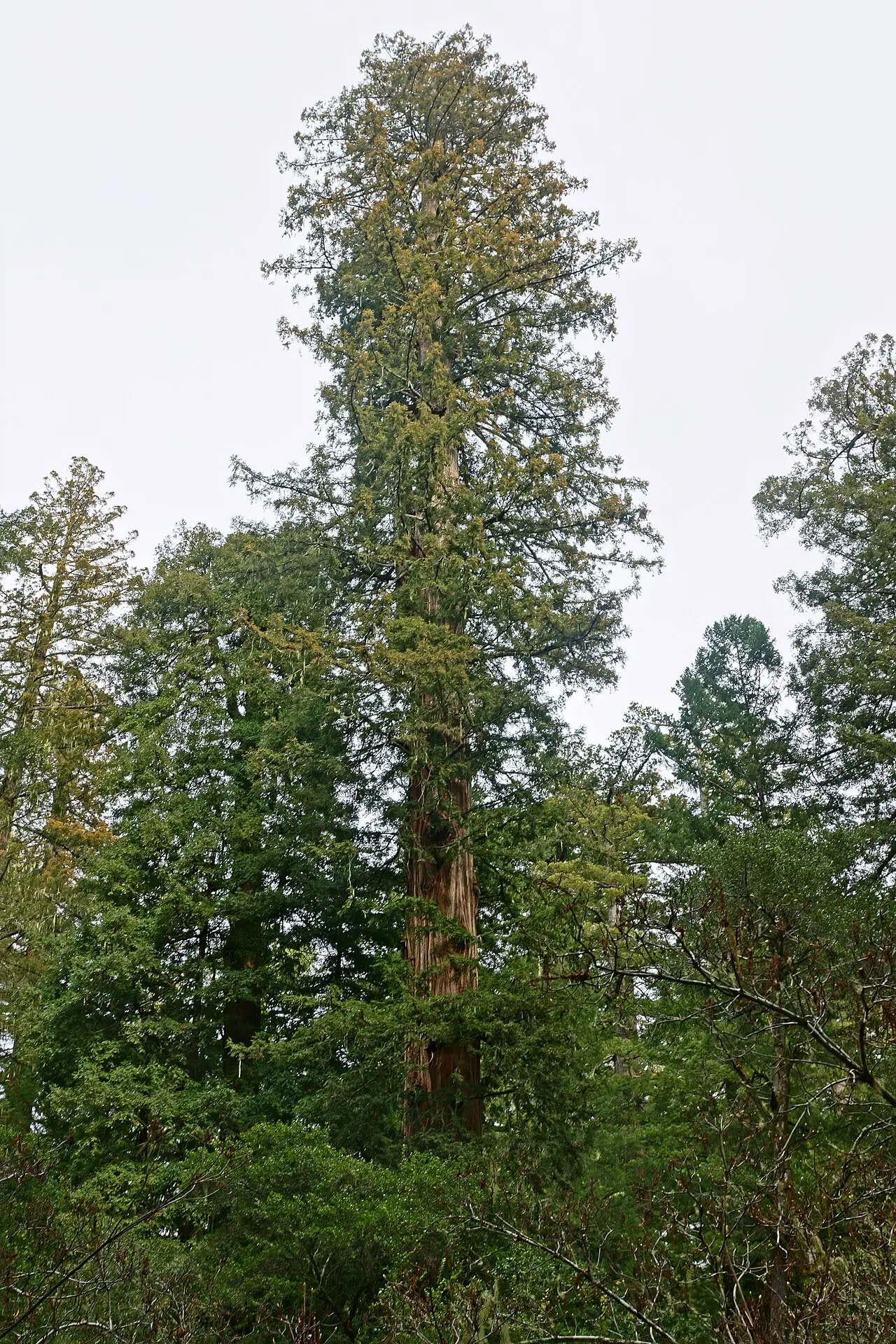
California has made more than 40 things official, and the list keeps growing. The best known is still the Bear Flag, adopted in 1911. It shows a California grizzly, the state animal since 1953 and a bear that was hunted out of the state by the 1920s. The California poppy became the state flower in 1903 and the California quail the state bird in 1931. The coast redwood and the giant sequoia share the title of state tree: one is the tallest tree in the world and the other the largest by volume.
Some of the newer choices are less expected. California was the first state to name an official rock (serpentine, in 1965) and the first to name an official lichen (lace lichen, in 2015). It has four state nuts at once, a state fabric (denim), a state sport (surfing) and an official prehistoric artifact, a small stone bear more than 7,000 years old. The banana slug joined the list in 2024 and the giant garter snake, a Central Valley species that is endangered, in 2025. Every one of them, with the law that made it official, is on the California symbols page.
Size and people
California covers 163,695 square miles, behind only Alaska and Texas. It is home to about 39.4 million people according to the Census Bureau’s 2025 estimate, more than any other state and roughly one in nine Americans, though its population is slightly lower than at the 2020 census. It borders Oregon, Nevada and Arizona, shares an international border with Mexico, and faces the Pacific along its whole western edge.
California state symbols
All 52 official symbols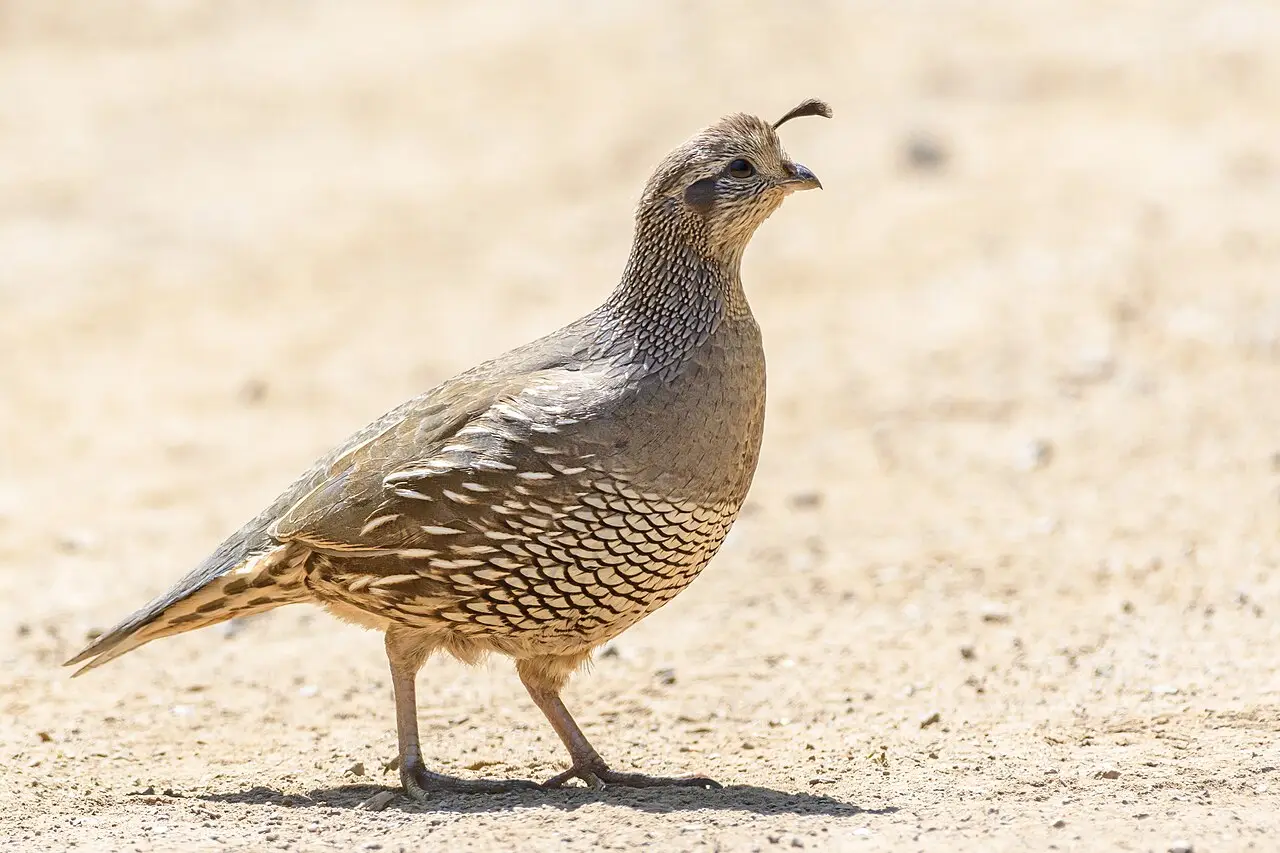
The capital: Sacramento
The capital of California is Sacramento, the seat of state government since February 1854. It was the fifth move in less than five years: the Legislature had already met in San Jose, Vallejo, Sacramento and Benicia, and the state's lawmakers became known as "the floating capital."
- 1849–1851San Jose
- 1852Vallejo
- 1852Sacramento
- 1853Vallejo
- 1853–1854Benicia
- 1854–todaySacramento
Where California is
California shares a border with 3 states: Arizona, Nevada and Oregon. It also borders Mexico.
- Land area
- 155,779 sq mi
- Water area
- 7,916 sq mi
- Population density
- 252.6 people per sq mi (11th)
California trivia
- In 1862 floods drove the Legislature out of Sacramento, and it finished the session in San Francisco's Merchants Exchange Building.Source: California State Capitol Museum
- Reuben Clark, the Capitol's chief early architect, was committed to a Stockton asylum in 1865, and hospital records blamed his breakdown on overwork on the Capitol.Source: California State Capitol Museum
- The Capitol's two shades of granite come from rival railroads: dark stone from Folsom and lighter stone from Rocklin.Source: California State Capitol Museum
- The original 1846 Bear Flag burned in the fires after the 1906 San Francisco earthquake.Source: Museum of the City of San Francisco
Photo credits (4)
- Flag of California: Original: Donald Graeme Kelley Vectorization: Devin Cook, Public domain, via Wikimedia Commons
- California quail: Becky Matsubara from El Sobrante, California, CC BY 2.0, via Wikimedia Commons
- California poppy: Artslave, CC BY 2.0, via Wikimedia Commons
- California redwood: Allie_Caulfield from Germany, CC BY 2.0, via Wikimedia Commons
Sources
- Compromise of 1850 U.S. National Archives · statehood
- Planning - History of the Capitol California State Capitol Museum · capital
- Construction - History of the Capitol California State Capitol Museum · capital
- How California (Probably) Got Its Name USC Dornsife College of Letters, Arts and Sciences
- Nickname - Golden State California State Capitol Museum
- Motto - Eureka California State Capitol Museum
- US Census Bureau Vintage 2025 population estimates; 2010 state area measurements