Pennsylvania
The Keystone State
Pennsylvania became the second state on December 12, 1787, when its convention ratified the US Constitution, five days after Delaware. Its capital is Harrisburg, the seat of government since 1812, while Philadelphia, where the Declaration of Independence and the Constitution were debated and signed, is by far its largest city. Pennsylvania is known as the Keystone State, and its name means "Penn's Woods."
- Capital
- HarrisburgCapital since 1812
- Statehood
- December 12, 17872nd state
- Population, 2025
- 13,059,4325th of 50
- Area
- 46,054 sq mi33rd largest · 119,280 km²
- Largest city
- Philadelphia1,574,281 people
- Abbreviation
- PAUS Postal Service code
- Motto
- Virtue, Liberty and IndependenceEnglish
- Borders
- 6 statesLandlocked
Penn’s Woods
Pennsylvania’s name pairs the family name Penn with the Latin sylvania, woods, so it means “Penn’s Woods.” In 1681 King Charles II granted the land to William Penn to settle a debt owed to Penn’s late father, Admiral Sir William Penn, and the name honors the admiral rather than the colony’s Quaker founder. Penn himself was uneasy about it. In a 1681 letter he wrote that he had wanted something like “New Wales” or simply “Sylvania,” had asked the king to strike out “Penn,” and could not get the under-secretaries to change it, even for twenty guineas.
Cradle of the nation
Pennsylvania was at the center of the nation’s founding. Its assembly met in the State House in Philadelphia, now Independence Hall, from the 1730s, and lent its Assembly Room to the Second Continental Congress and later to the Constitutional Convention, so the Declaration of Independence and the US Constitution were both debated and signed there. On December 12, 1787, a state convention ratified the Constitution by a vote of 46 to 23, making Pennsylvania the second state, after Delaware.
The state’s nickname reflects that role. Pennsylvania sat in the middle of the 13 original states, like the keystone at the top of an arch that locks the other stones in place, and by the early 1800s it was widely called the Keystone State.
Moving west to Harrisburg
Philadelphia was the capital from colonial times, apart from a stay in Lancaster during the British occupation of 1777 and 1778. In 1799 the legislature moved to Lancaster, as the population shifted west and amid concern over disease in Philadelphia. In 1812 it settled in Harrisburg, on the Susquehanna River, on land that the town’s founder, John Harris Jr., had donated for public use. The Capitol there, dedicated in 1906 with a dome modeled on St. Peter’s in Rome, was also the center of a notorious graft scandal. The capital page tells the story.
Virtue, Liberty and Independence
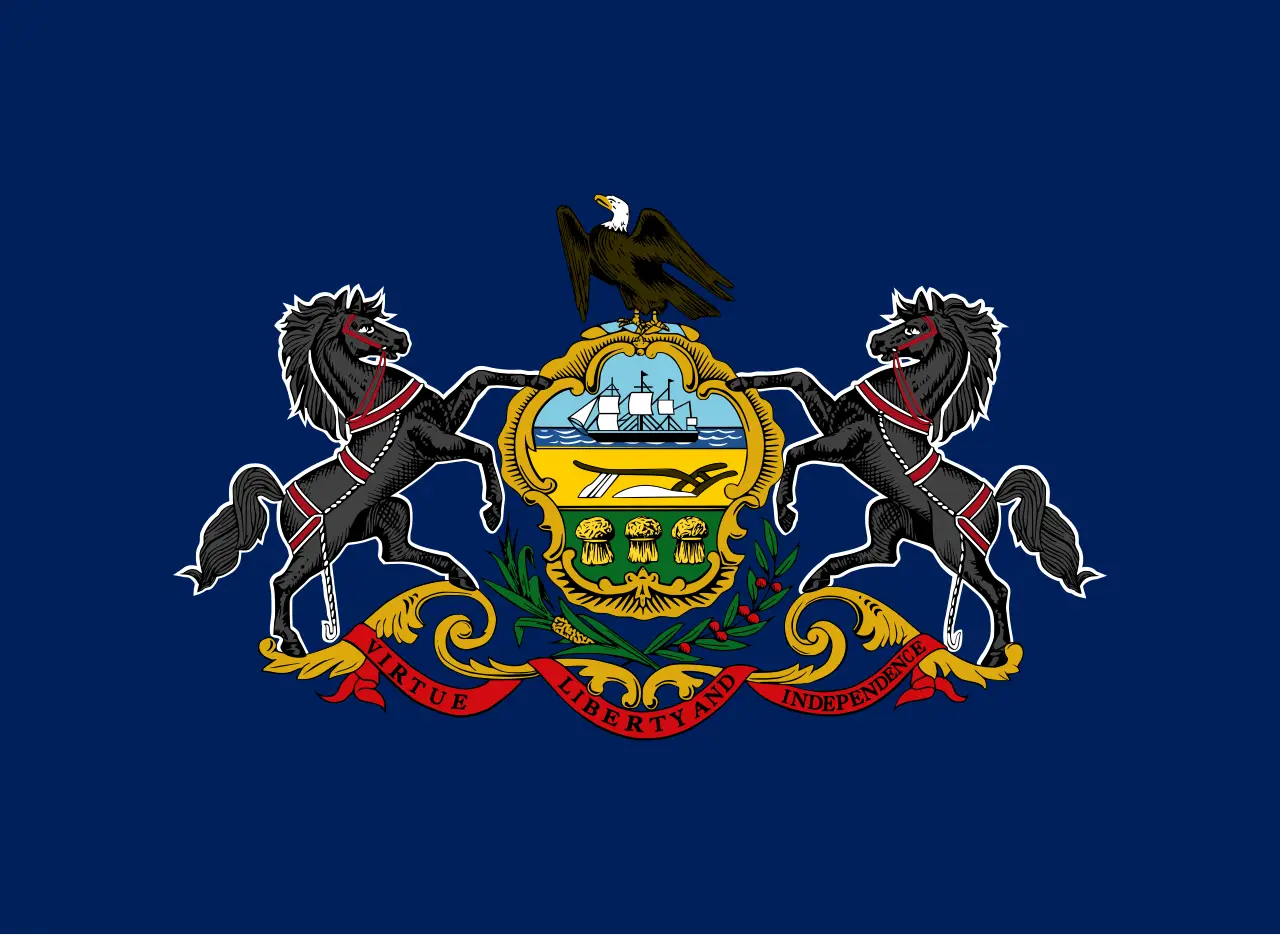
The state’s coat of arms, designed by Caleb Lownes of Philadelphia in 1778, carries the motto “Virtue, Liberty and Independence.” It shows a shield with a ship, a plow and three sheaves of wheat, held by two horses under an eagle, and it sits on the blue state flag, adopted in its current form in 1907. The state song, “Pennsylvania,” was adopted in 1990.
Grouse, laurel and hemlock
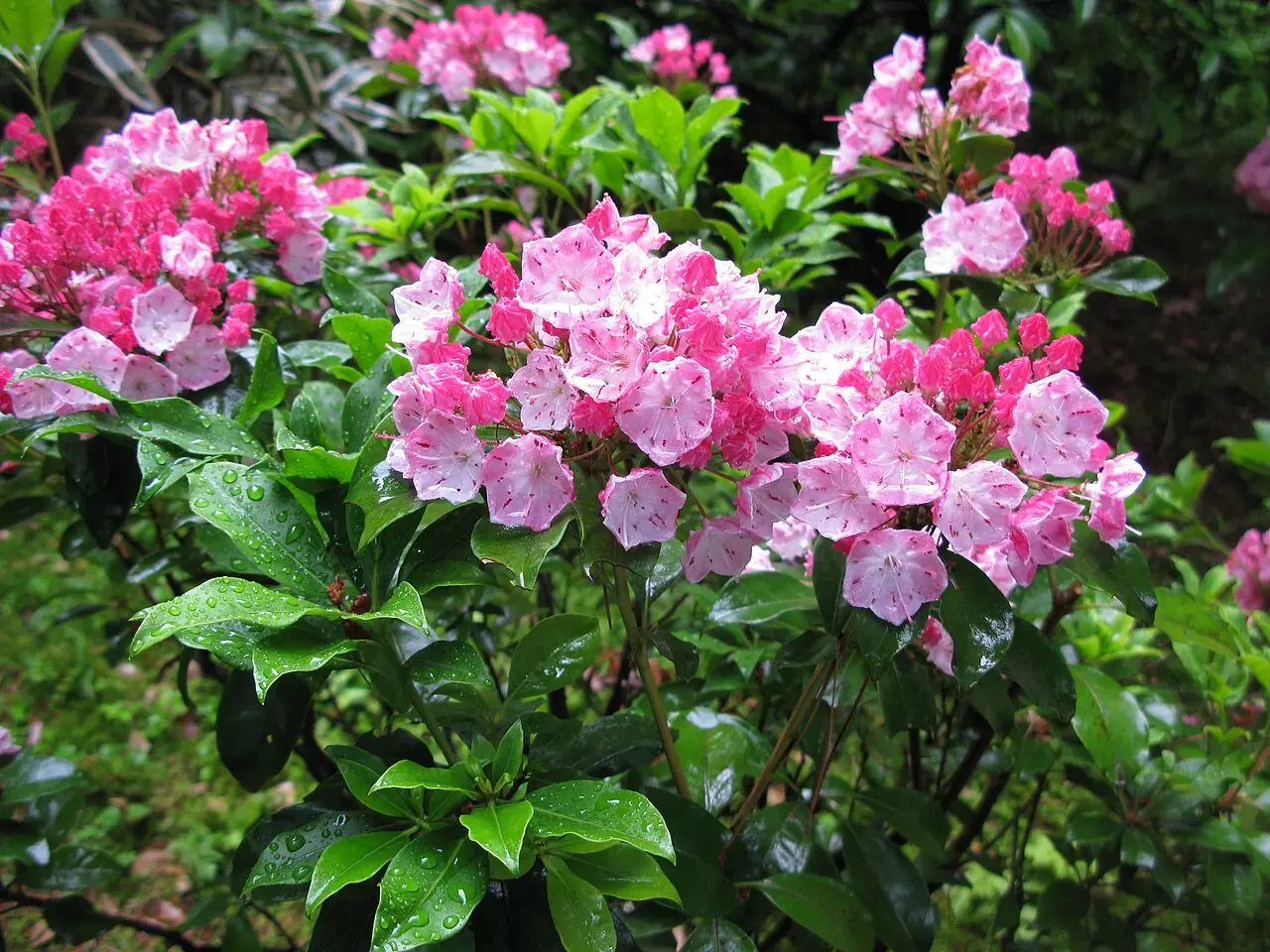
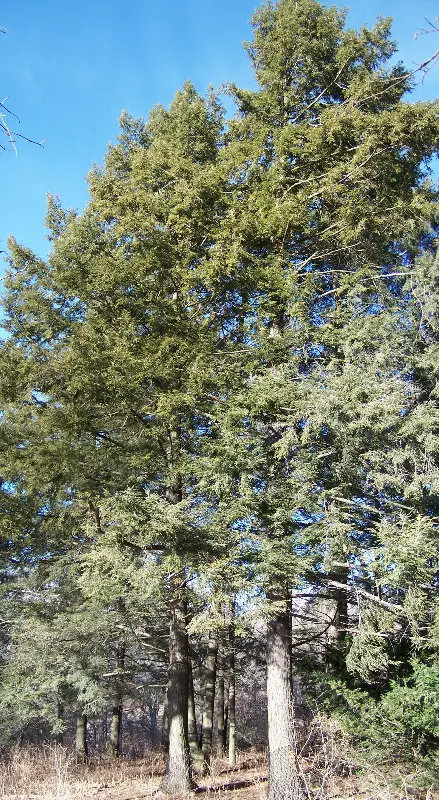
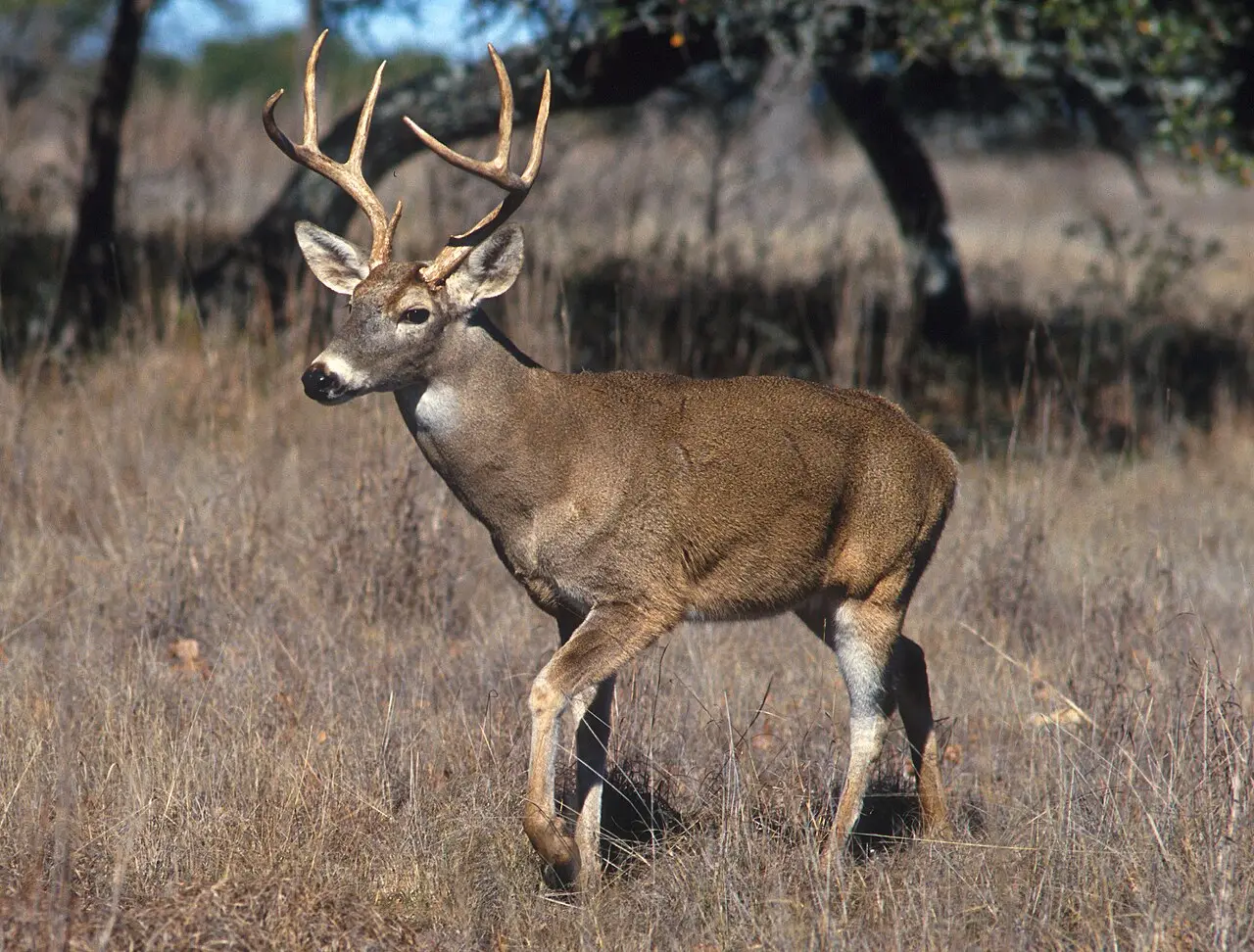
Pennsylvania has 21 official state symbols. In 1931 the Legislature named the ruffed grouse as state game bird, now presented as the state bird, and the eastern hemlock as state tree; the mountain laurel followed in 1933. The white-tailed deer is the state animal and the brook trout, the only trout native to the state, the state fish. Pennsylvania also honors its industries and history, with the Pennsylvania Railroad’s K4s and GG1 locomotives, the U.S. Brig Niagara, Commodore Perry’s flagship at the Battle of Lake Erie, the Piper J-3 Cub and the Pennsylvania long rifle. See them all on the Pennsylvania symbols page.
Land and people
Pennsylvania covers 46,054 square miles, 33rd among the states, and had about 13.06 million residents in 2025, 5th in the country. It borders New York, New Jersey, Delaware, Maryland, West Virginia and Ohio, and has a shoreline on Lake Erie, across which it shares a water boundary with Canada. Philadelphia, with about 1.57 million people, is the largest city, followed by Pittsburgh, Allentown, Reading and Erie. Harrisburg has about 51,000.
Pennsylvania state symbols
All 21 official symbols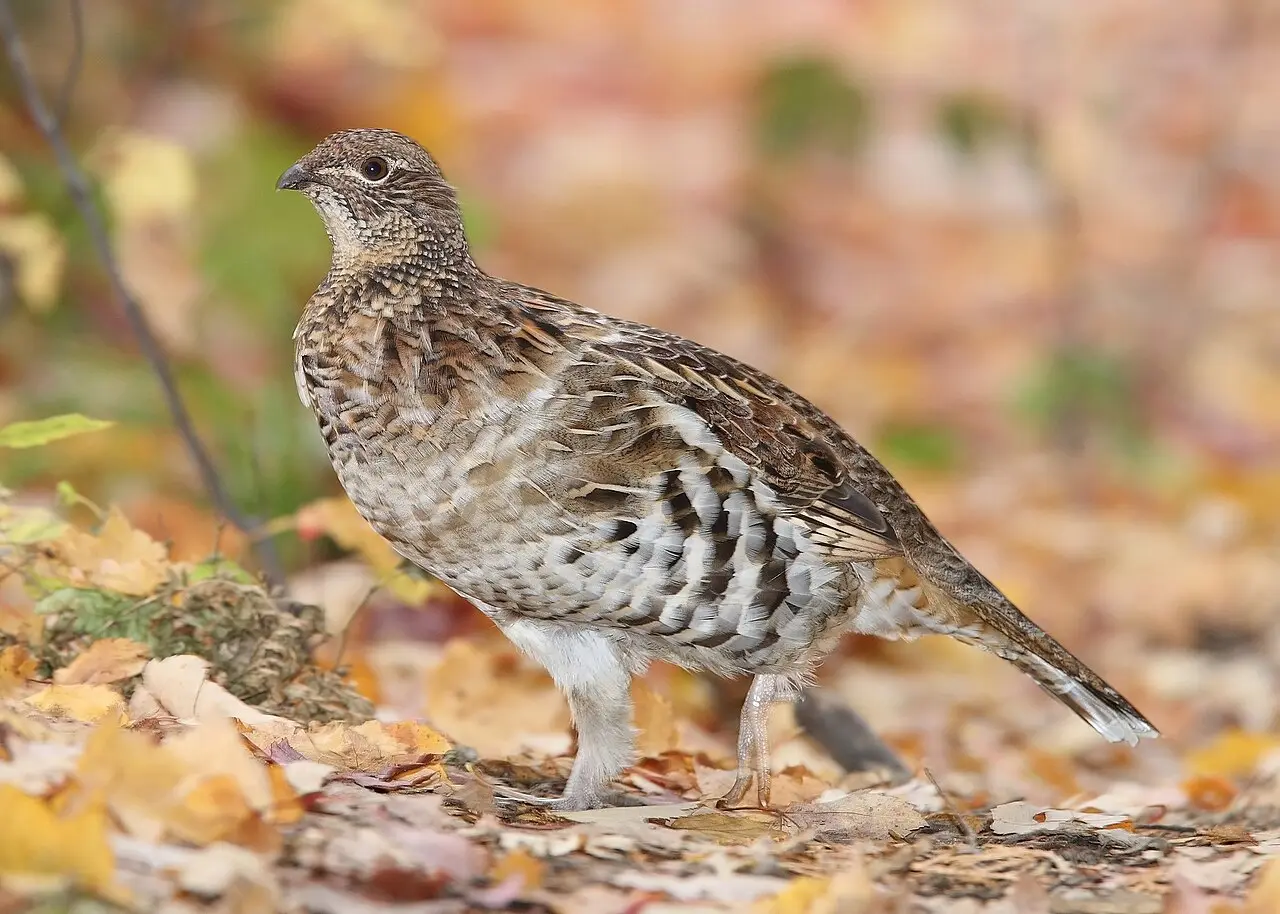
The capital: Harrisburg
The capital of Pennsylvania is Harrisburg, on the Susquehanna River, the seat of government since 1812. Philadelphia was the capital for more than a century, until the legislature moved west to Lancaster in 1799 and then to Harrisburg. Its Capitol, dedicated in 1906, has a dome modeled on St. Peter's Basilica in Rome, and its cost overruns led to a notorious graft scandal.
- 1683–1799Philadelphia
- 1799–1812Lancaster
- 1812–todayHarrisburg
Where Pennsylvania is
Pennsylvania shares a border with 6 states: Delaware, Maryland, New Jersey, New York, Ohio and West Virginia.
- Land area
- 44,743 sq mi
- Water area
- 1,312 sq mi
- Population density
- 291.9 people per sq mi (9th)
Pennsylvania trivia
- Harrisburg's first capitol, the Hills Capitol, burned down on February 2, 1897.Source: Pennsylvania Capitol Preservation Committee
- The Pennsylvania firefly became the state insect after a campaign by elementary school students from Upper Darby.Source: State Symbols USA
- High school students helped write the first draft of the bill that made the eastern hellbender the state amphibian in 2019.Source: Jenkins Law Library
- Roughly 20,000 Piper Cubs, the state aircraft, were built in Lock Haven between 1937 and 1947.Source: AVweb
- When Pennsylvania adopted 'Pennsylvania' in 1990, it became the 49th state to name an official song, chosen from a field of a couple hundred entries.Source: Spotlight PA
- Pennsylvania appears to be the only state with an official 'beautification and conservation plant', Penngift crownvetch.Source: State Symbols USA
Questions about Pennsylvania
- What is the capital of Pennsylvania?
- Harrisburg, the capital since 1812. Philadelphia and Lancaster were earlier capitals.
- Why is Pennsylvania called the Keystone State?
- Because it sat in the middle of the 13 original states, like the central stone that locks an arch, and played a pivotal role in the nation's founding. The name took hold in the early 1800s; no law formally adopts it.
- What does Pennsylvania mean?
- '"Penn''s Woods": the family name Penn plus the Latin sylvania, woods. King Charles II named it in honor of Admiral Sir William Penn, the father of the colony''s founder.'
- What is the state motto of Pennsylvania?
- '"Virtue, Liberty and Independence," which appears on the state coat of arms, designed in 1778.'
- Is Philadelphia the capital of Pennsylvania?
- Not anymore. Philadelphia was the capital from colonial times until 1799. The government then moved to Lancaster and, in 1812, to Harrisburg.
Photo credits (5)
- Flag of Pennsylvania: Simtropolitan and Jean-Pierre Demailly, Public domain, via Wikimedia Commons
- Ruffed grouse: Mdf, CC BY-SA 3.0, via Wikimedia Commons
- Mountain laurel: Qwert1234, CC BY-SA 3.0, via Wikimedia Commons
- Eastern hemlock: Bruce Marlin, CC BY-SA 3.0, via Wikimedia Commons
- White-tailed deer: USDA photo by Scott Bauer, Public domain, via Wikimedia Commons
Sources
- Pennsylvania ratifies the Constitution HISTORY.com · statehood
- The History of Pennsylvania's Early Capitols Pennsylvania Capitol Preservation Committee · capital
- Dedication of the Pennsylvania Capitol - October 4, 1906 Pennsylvania Historical and Museum Commission · capital
- William Penn National Park Service
- Independence Hall National Park Service
- Kids Corner, Pennsylvania state symbols and facts Office of the Governor of Pennsylvania
- US Census Bureau Vintage 2025 population estimates; 2010 state area measurements