Arkansas
The Natural State
Arkansas became the 25th state on June 15, 1836. Its capital and largest city is Little Rock, and its official nickname, adopted in 1995, is the Natural State. By law its name is spelled Arkansas but pronounced "Arkansaw."
- Capital
- Little RockCapital since 1821
- Statehood
- June 15, 183625th state
- Population, 2025
- 3,114,79133rd of 50
- Area
- 53,179 sq mi29th largest · 137,732 km²
- Largest city
- Little Rock206,427 people
- Abbreviation
- ARUS Postal Service code
- Motto
- Regnat Populus“The people rule”
- Borders
- 6 statesLandlocked
The 25th state, admitted with a twin
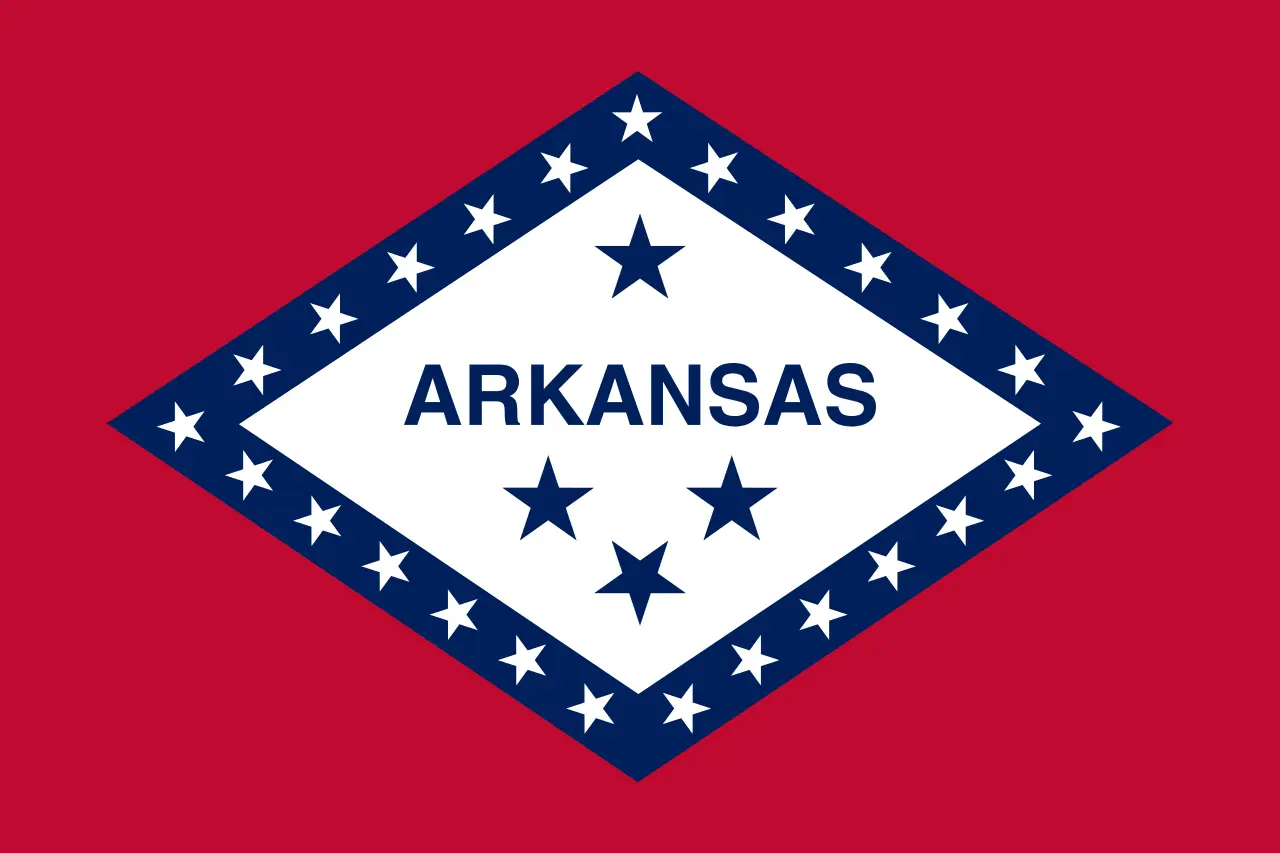
Arkansas joined the Union on June 15, 1836, as the 25th state, in an act of Congress that also provided for Michigan’s admission. Congress liked to balance new slave and free states, and the two were paired: Arkansas came in as a slave state, Michigan as a free one, although Michigan did not actually join until January 1837. The Arkansas flag still remembers the pairing, with two matching stars for the twin states.
Arkansas had been part of the Louisiana Purchase of 1803, then of the Missouri Territory, and became a territory of its own in 1819. Its government sat first at Arkansas Post, an old French trading post near the mouth of the Arkansas River, before moving to Little Rock in 1821.
A name the legislature had to settle
The name came by way of French explorers. The Algonquian-speaking peoples to the north called the Quapaw, who lived near the mouth of the Arkansas River, by a name that the French wrote down in many forms: “Akansea” in the journal of Marquette and Joliet in 1673, “Acansa” on La Salle’s map. Over time the spelling settled as Arkansas. The pronunciation did not. By the late 1800s Arkansans were arguing over whether to say “Ar-KAN-sas,” like Kansas, or “Arkansaw.” In 1881 the General Assembly settled it by resolution: the name is spelled Arkansas and pronounced Arkansaw, and the rule is still in state law.
The Natural State
Arkansas has gone through more official nicknames than most states. The legislature adopted “the Wonder State” in 1923, promoted by former governor Charles Brough. In 1953 it switched to “the Land of Opportunity,” coined by a Little Rock business group and already on license plates. In 1995 it made “the Natural State” official, a phrase the state parks had been using since the 1980s to promote the Ozark and Ouachita mountains, rivers, lakes and forests. Older, unofficial names include the Bear State, for its once-plentiful black bears, and the Toothpick State, for the big Bowie knives, or “Arkansas toothpicks,” that Arkansas men carried.
The motto is Latin: Regnat populus, “The people rule.” It was on the seal for decades in a garbled form, Regnant populi, until a 1907 law corrected it.
Diamonds, quartz and bauxite
Arkansas has diamonds. Near Murfreesboro, an ancient volcanic pipe is now Crater of Diamonds State Park, where visitors search a plowed field for diamonds in their original volcanic rock and keep what they find. The largest diamond ever found in the United States, the 40.23-carat “Uncle Sam,” came from there in 1924. The diamond is the state gem and the reason for the white diamond on the flag.
The same 1967 law named quartz crystal the state mineral, mined in the Ouachita Mountains, and bauxite the state rock. For most of the 20th century Arkansas produced about 90 percent of the bauxite mined in the United States, and a Saline County town is named Bauxite.
Symbols old and new
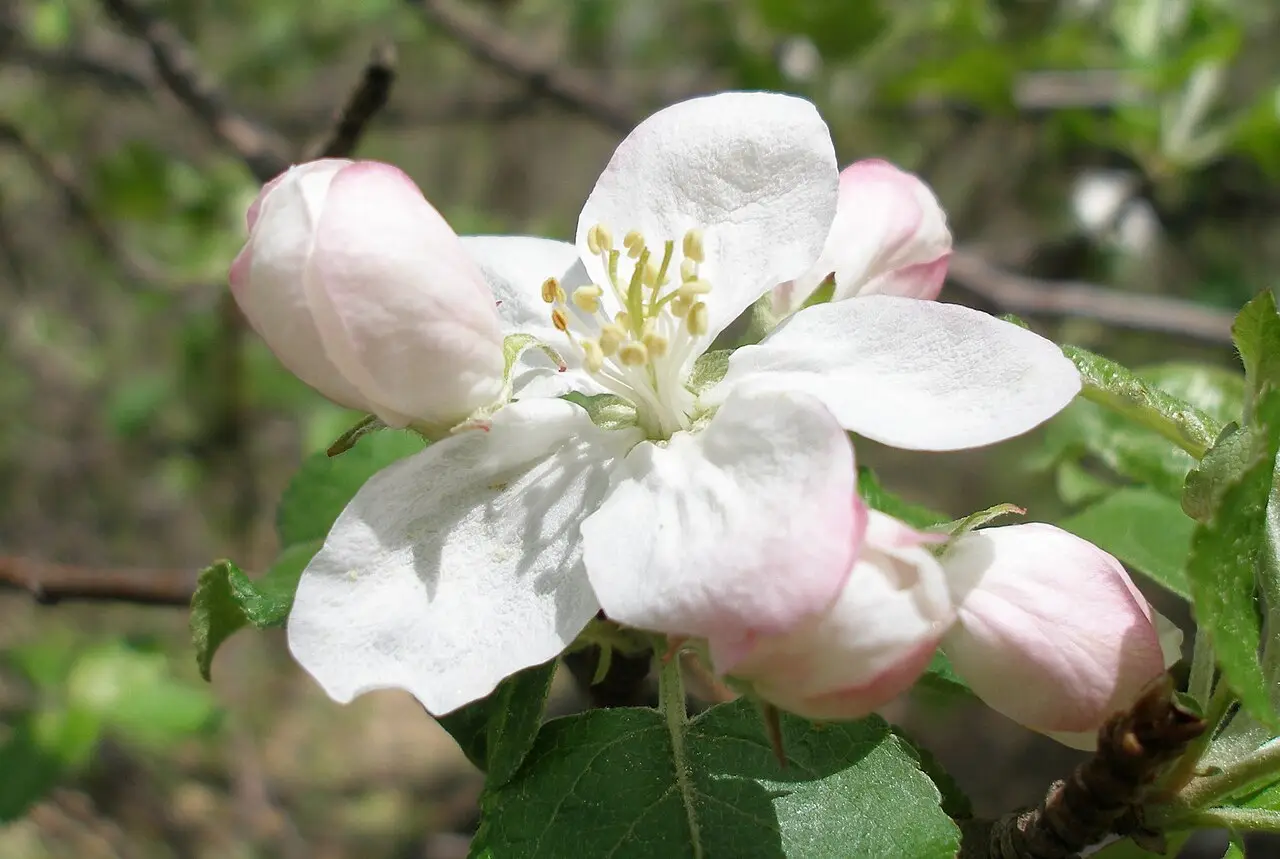
Arkansas has 36 official symbols. The apple blossom dates from 1901, when the state grew hundreds of apple varieties, and the mockingbird from 1929. Newer ones reflect the state’s outdoors culture: the mallard became the state duck and the Labrador retriever the state dog in 2025, and the Bowie knife and the shotgun were adopted in 2019. The South Arkansas Vine Ripe Pink Tomato is both the state fruit and the state vegetable, and rice, of which Arkansas is the country’s leading producer, is the state grain. See all of them on the Arkansas symbols page.
Land and people
Arkansas covers 53,179 square miles, 29th among the states, and had about 3.11 million residents in 2025, 33rd. It borders six states: Missouri, Tennessee, Mississippi, Louisiana, Texas and Oklahoma, with the Mississippi River forming its eastern edge. The Ozark and Ouachita mountains cover the northwest and west, and the flat Delta farmland the east. Little Rock, near the center of the state, is the largest city, followed by fast-growing Fayetteville, Springdale and the rest of northwest Arkansas.
Arkansas state symbols
All 36 official symbols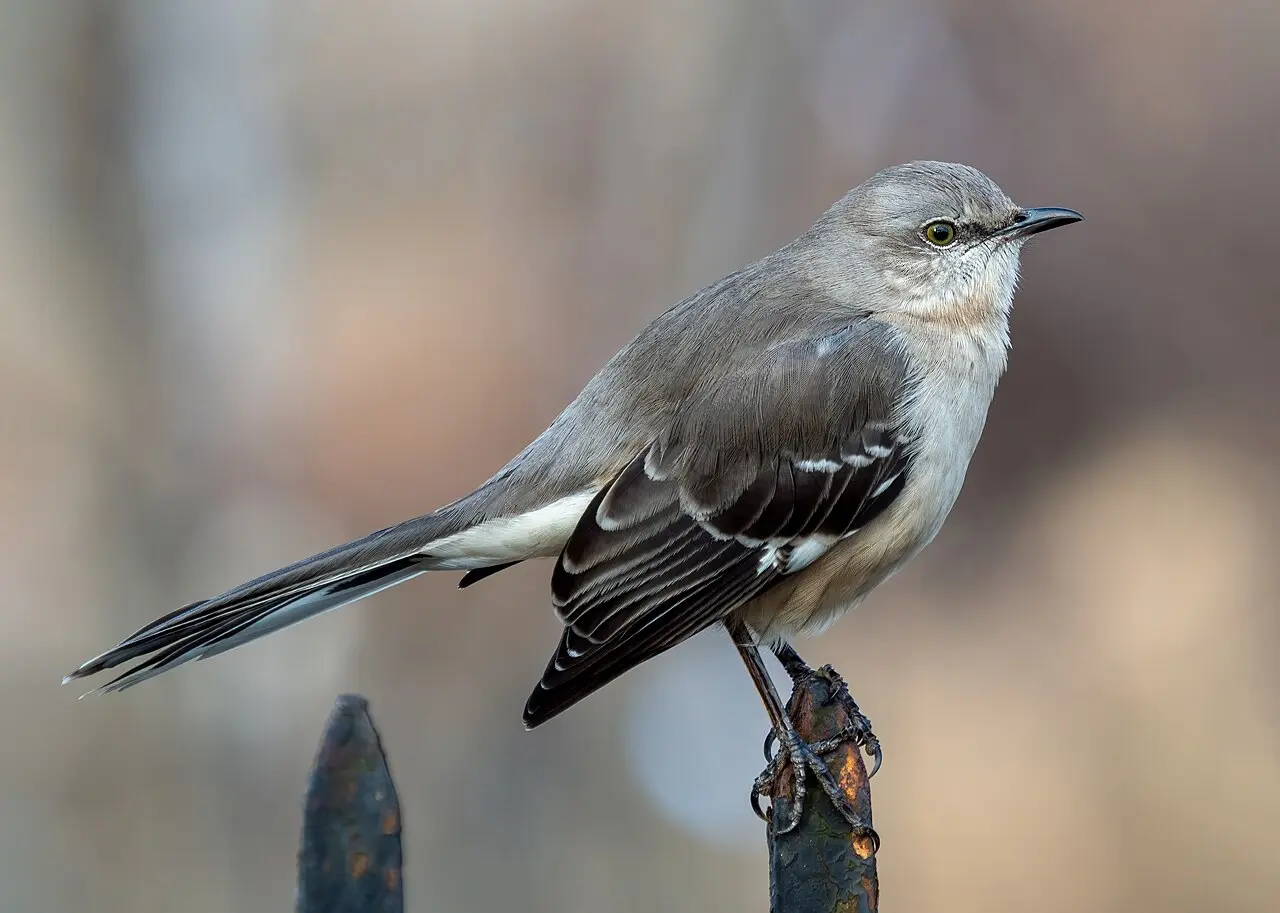
The capital: Little Rock
The capital of Arkansas is Little Rock, the seat of government since 1821, when Arkansas was still a territory. It is also the state's largest city. Only the Civil War interrupted its run, when the Confederate state government fled to Hot Springs and then to the town of Washington.
- 1821–todayLittle Rock
- 1862Hot Springs
- 1863–1865Washington
Where Arkansas is
Arkansas shares a border with 6 states: Louisiana, Missouri, Mississippi, Oklahoma, Tennessee and Texas.
- Land area
- 52,035 sq mi
- Water area
- 1,143 sq mi
- Population density
- 59.9 people per sq mi (35th)
Arkansas trivia
- Arkansas's state capitol was built on the grounds of the former state penitentiary, and state convicts were assigned to help build it.Source: Encyclopedia of Arkansas (Central Arkansas Library System)
- Little Rock's Old State House is the oldest standing state capitol building west of the Mississippi River.Source: Encyclopedia of Arkansas (Central Arkansas Library System)
- Arkansas was the first state to name the Labrador retriever its official dog, in 2025.Source: Encyclopedia of Arkansas (Central Arkansas Library System)
- The foot bones of Arkansaurus fridayi, the state dinosaur, are the only dinosaur bones ever found in Arkansas.Source: Encyclopedia of Arkansas (Central Arkansas Library System)
- Before 2019, Arkansas was one of only five states without an official fish; it then chose the alligator gar as its official primitive fish.Source: Arkansas State Legislature
Questions about Arkansas
- What is the capital of Arkansas?
- Little Rock. It became the territorial capital in 1821 and has been the state capital since statehood in 1836, apart from Confederate relocations during the Civil War.
- Why is Arkansas pronounced "Arkansaw"?
- The name comes from French spellings of a Native American name, and by the late 1800s people disagreed on how to say it. In 1881 the General Assembly settled it by resolution: spelled Arkansas, pronounced Arkansaw.
- What is Arkansas's nickname?
- The Natural State, official since 1995. Earlier official nicknames were the Wonder State (1923) and the Land of Opportunity (1953).
- Can you really find diamonds in Arkansas?
- Yes. At Crater of Diamonds State Park near Murfreesboro, visitors can search a plowed field over an ancient volcanic pipe and keep what they find. The largest diamond ever found in the United States, the 40.23-carat "Uncle Sam," came from there in 1924.
Photo credits (4)
- Flag of Arkansas: Unknown author, Public domain, via Wikimedia Commons
- Mockingbird: Rhododendrites, CC BY-SA 4.0, via Wikimedia Commons
- Apple blossom: Billpowellisalive, CC BY-SA 3.0, via Wikimedia Commons
- White-tailed deer: USDA photo by Scott Bauer, Public domain, via Wikimedia Commons
Sources
- History of the Arkansas State Flag Arkansas Secretary of State · statehood
- Folkloric Relocations of the Arkansas State Capital Encyclopedia of Arkansas (Central Arkansas Library System) · capital
- Little Rock (Pulaski County) Encyclopedia of Arkansas (Central Arkansas Library System) · capital
- How Did Arkansas Get Its Name? Arkansas Secretary of State
- Official State Nicknames CALS Encyclopedia of Arkansas
- Official State Gem CALS Encyclopedia of Arkansas
- US Census Bureau Vintage 2025 population estimates; 2010 state area measurements