Montana
The Treasure State
Montana became the 41st state on November 8, 1889. Its capital is Helena, the seat of government since 1875, and its largest city is Billings. Montana is the fourth-largest state by area, but with about 1.14 million people it is one of the most thinly settled. It is known as the Treasure State and as Big Sky Country.
- Capital
- HelenaCapital since 1875
- Statehood
- November 8, 188941st state
- Population, 2025
- 1,144,69443rd of 50
- Area
- 147,040 sq mi4th largest · 380,831 km²
- Largest city
- Billings121,239 people
- Abbreviation
- MTUS Postal Service code
- Motto
- Oro y Plata“Gold and silver”
- Borders
- 4 statesCanada
Mountain country
Montana’s name comes from montana, a word in both Latin and Spanish for a mountainous region. It was attached to the area in 1864, when Congressman James M. Ashley, urged on by Sidney Edgerton, carried the bill creating a new territory and gave it the name. President Abraham Lincoln signed the act on May 26, 1864. The name describes the Rocky Mountain country of the west.
Gold camps and statehood
Montana Territory was born in a gold rush. Its first legislature met in 1864 at the gold camp of Bannack, and the next year the seat of government moved to another camp, Virginia City. Helena became the territorial capital in 1875.
Congress passed an enabling act opening the way to statehood on February 22, 1889, Montana’s voters ratified a state constitution that October, and President Benjamin Harrison proclaimed Montana the 41st state on November 8, 1889.
The capital fight
The new constitution left the permanent capital for the voters, and the contest turned into one of the most bitter campaigns in Montana history. A seven-city election in 1892 produced no majority, so the top two finishers, Helena and Anaconda, met in a runoff in 1894. It became a proxy war between two copper kings: Marcus Daly, whose company town was Anaconda, and his rival William A. Clark, who backed Helena. Helena won. Its Capitol, dedicated on July 4, 1902, has a copper dome, and inside, Charles M. Russell’s mural of Lewis and Clark meeting the Salish hangs in the House chamber. The capital page tells the story.
Treasure, big sky and shining mountains
Montana has several nicknames, none of them official. “The Treasure State,” for its gold, silver and copper, spread after it appeared on the cover of an 1895 promotional booklet. The same booklet used “Land of Shining Mountains,” an echo of the name the Verendrye brothers, French explorers, used for the northern Rockies. “Big Sky Country” came from A. B. Guthrie Jr.’s novel The Big Sky, and the state adopted it for tourism promotion in 1961. The motto on the seal, Oro y Plata, is Spanish for “Gold and silver.”
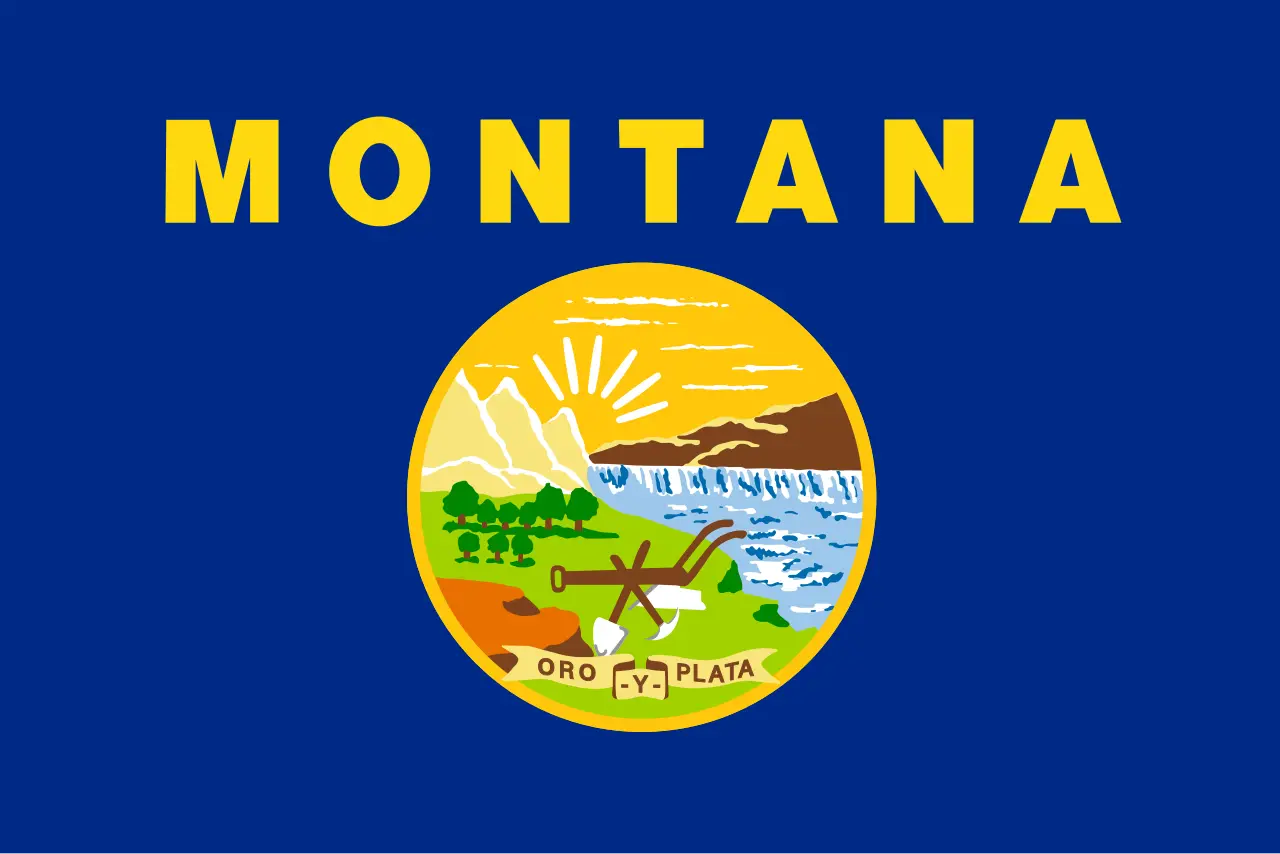
The state flag puts the seal, with its plow, pick and shovel and the Great Falls of the Missouri, on a blue field under the word MONTANA.
Grizzlies, bitterroots and dinosaurs
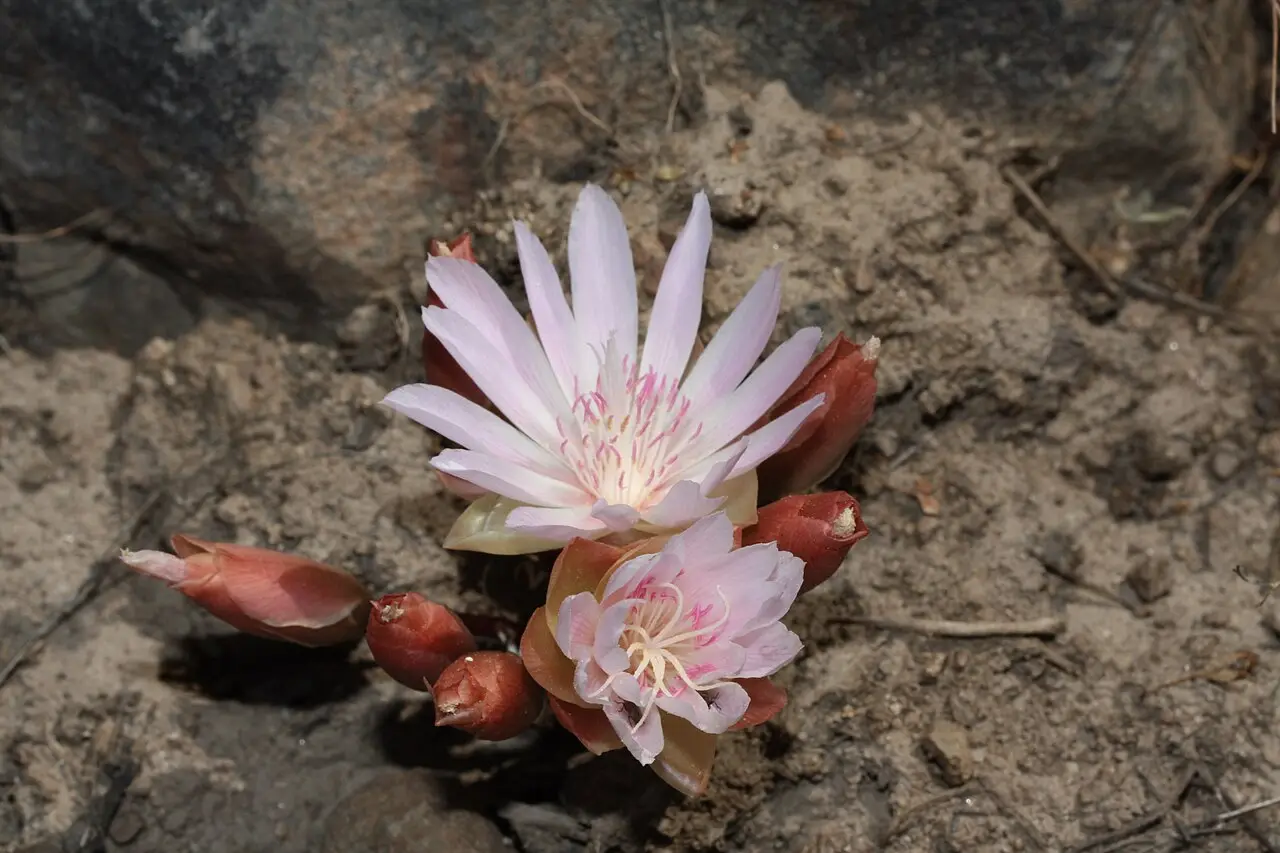
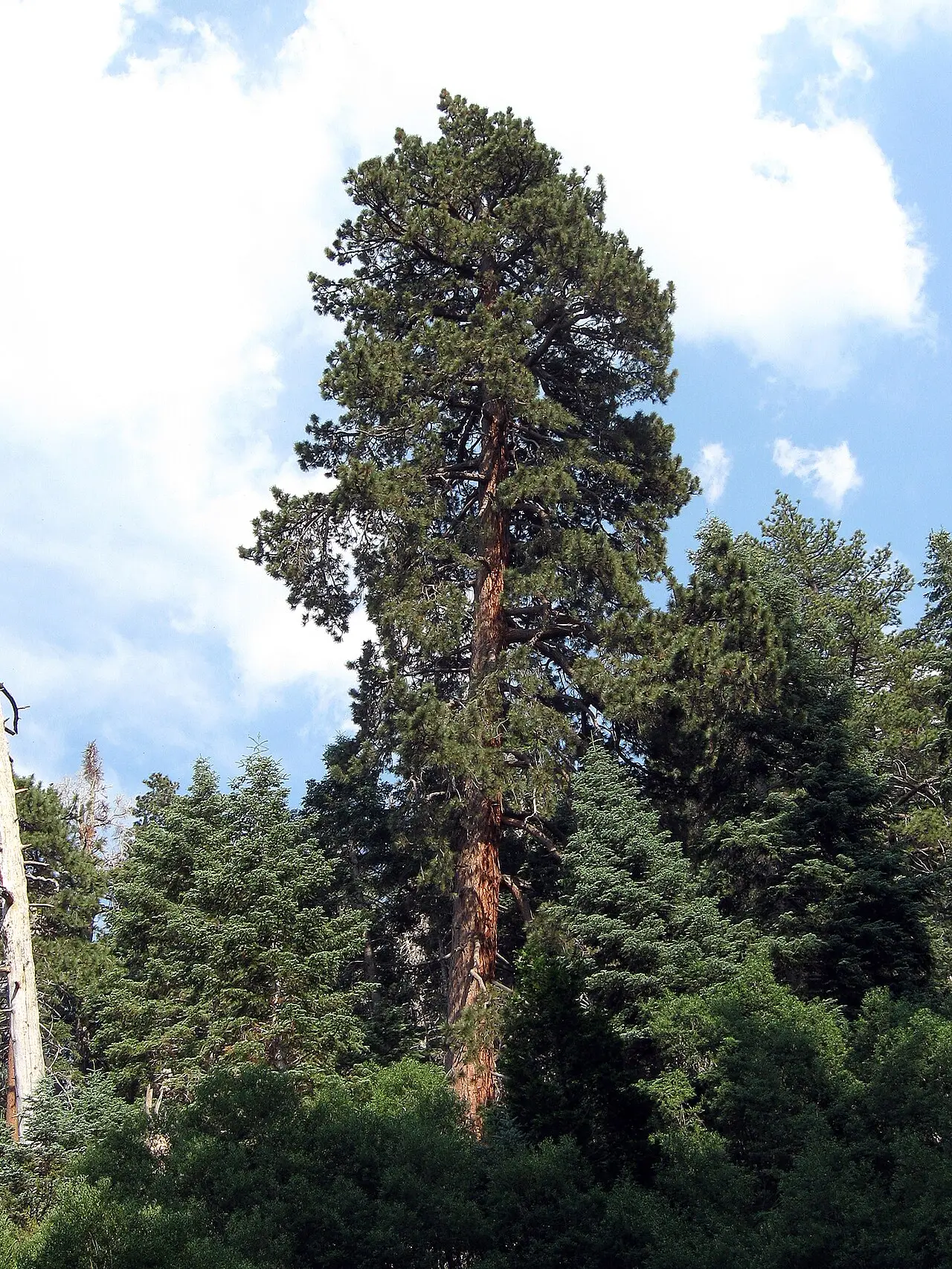
Montana has 20 official state symbols, and many were chosen by schoolchildren or citizen campaigns. The bitterroot, the oldest, was made the state flower in 1895 after a campaign by Mary Long Alderson, who saw it as a way for women to practice political organizing. Children voted for the western meadowlark as state bird in 1930; it is the state bird of six states. In 1982 schoolchildren held their own primary and general elections for a state animal, and the grizzly bear won. The state fossil is Maiasaura, the “good mother lizard,” whose nests near Choteau gave early evidence that some dinosaurs cared for their young. Montana also has two state gemstones, sapphire and agate; a state soil, Scobey, proposed by Bozeman fourth graders; and, since 2025, a state sport, the American rodeo. See every symbol on the Montana symbols page.
Land and people
Montana covers 147,040 square miles, fourth among the states after Alaska, Texas and California. It had about 1.14 million residents in 2025, 43rd in the country and up more than 5 percent from 2020, and with just 7.9 people per square mile it ranks 48th in density. It borders Canada to the north and Idaho, Wyoming, South Dakota and North Dakota. Billings, with about 121,000 people, is the largest city, followed by Missoula, Great Falls, Bozeman and Butte-Silver Bow. Helena, the capital, has about 35,000.
Montana state symbols
All 20 official symbols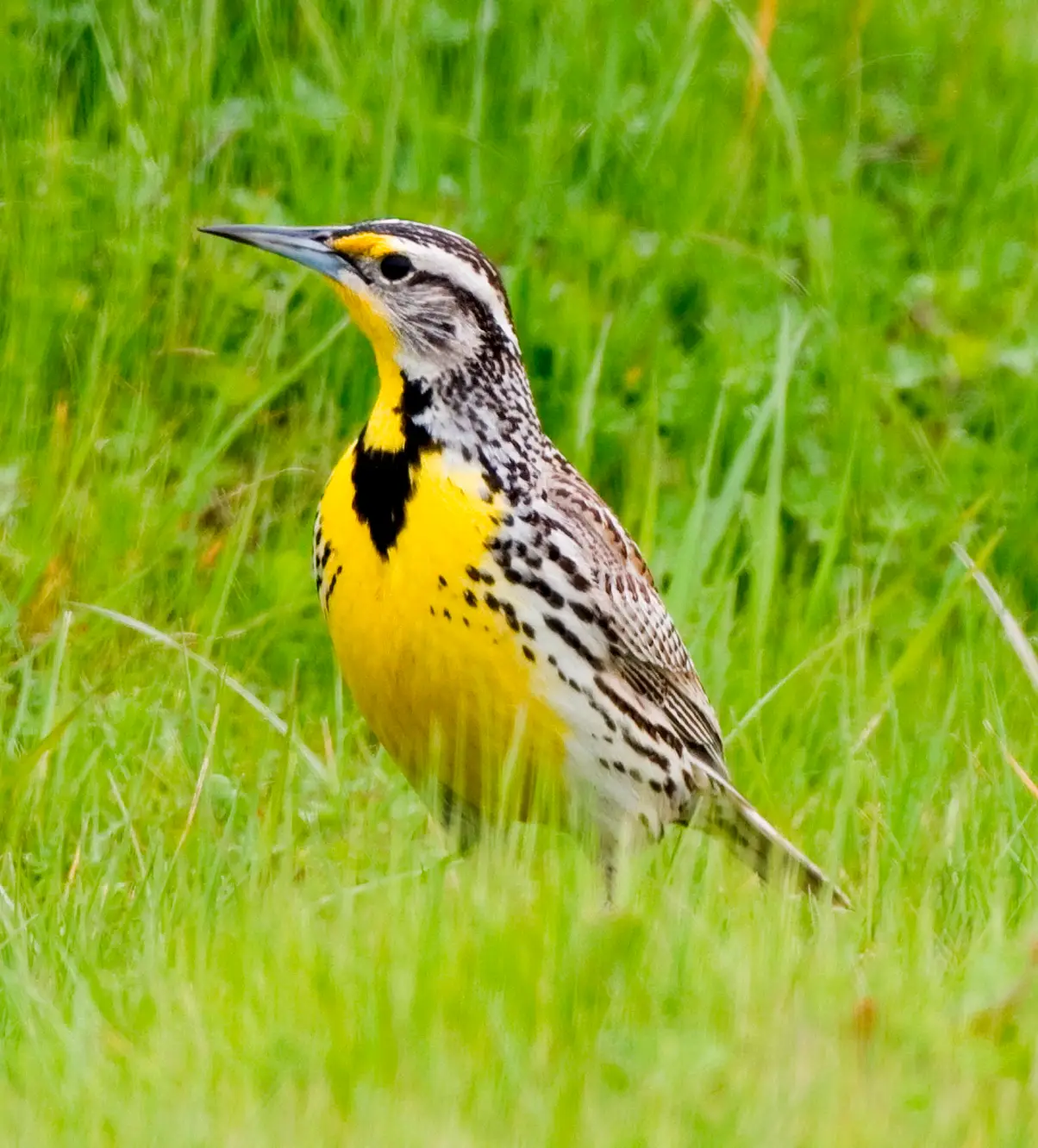
The capital: Helena
The capital of Montana is Helena, the seat of government since 1875, when the territorial capital moved there from Virginia City. At statehood in 1889 Helena was only the temporary capital, and it had to win a bitter statewide vote against the copper town of Anaconda in 1894 to keep the title. With about 35,000 people, it is much smaller than Billings, the largest city.
- 1875–todayHelena
Where Montana is
Montana shares a border with 4 states: Idaho, North Dakota, South Dakota and Wyoming. It also borders Canada.
- Land area
- 145,546 sq mi
- Water area
- 1,494 sq mi
- Population density
- 7.9 people per sq mi (48th)
Montana trivia
- When schoolchildren picked the state animal, they nominated more than 74 creatures and ran primary and general elections before the grizzly won.Source: Montana Historical Society
- The title of A. B. Guthrie's novel The Big Sky, source of the 'Big Sky Country' slogan, was supplied by his editor because Guthrie sent in the manuscript untitled.Source: Montana Historical Society
- The 1983 bill that created the state ballad 'Montana Melody' was originally meant to replace the state song.Source: Montana Historical Society
- Capitol architects Bell and Kent moved from Iowa to Helena because the Legislature required the Capitol's architect to live in Montana.Source: Montana Historical Society
- The statue atop the Capitol dome arrived without anyone knowing who had ordered it; its sculptor, Edward Van Landeghem, was only identified in 2006.Source: Intermountain Histories (David Cady, Northern Arizona University)
- Earthquakes in 1935 damaged the Capitol, including the Rotunda's original glass floor.Source: Montana Historical Society
Questions about Montana
- What is the capital of Montana?
- Helena. It became the territorial capital in 1875 and won a statewide vote in 1894 to remain the permanent state capital.
- Why is Montana called the Treasure State?
- Because of its gold, silver and copper. The nickname spread after it appeared on the cover of an 1895 promotional booklet from the state's Bureau of Agriculture, Labor and Industry.
- Why is Montana called Big Sky Country?
- The phrase comes from A. B. Guthrie Jr.'s novel The Big Sky. Montana took it up for tourism promotion in 1961, with Guthrie's permission.
- What does Montana mean?
- Montana is a Latin and Spanish word for a mountainous region. Congress gave the name to the new territory in 1864.
- What is Montana's state motto?
- '"Oro y Plata," Spanish for "Gold and silver." It has been on the seal since territorial days.'
Photo credits (4)
- Flag of Montana: N.a, Public domain, via Wikimedia Commons
- Western meadowlark: Kevin Cole from Pacific Coast, USA (en:User:Kevinlcole), CC BY 2.0, via Wikimedia Commons
- Bitterroot: Walter Siegmund, CC BY-SA 3.0, via Wikimedia Commons
- Ponderosa pine: Mitch from Costa Mesa, CA, USA, CC BY-SA 2.0, via Wikimedia Commons
Sources
- Proclamation 293 - Admission of Montana Into the Union The American Presidency Project, UC Santa Barbara · statehood
- Capitol History: Timeline of the Montana Capitol's History Montana Historical Society · capital
- Montana State Capitol: The People's House Montana Historical Society · capital
- "Montana Facts: Nicknames, Mottos and Symbols" Montana Historical Society
- Montana symbols (footlocker guide) Montana Historical Society
- US Census Bureau Vintage 2025 population estimates; 2010 state area measurements