Bitterroot, the state flower of Montana
The state flower of Montana is the bitterroot, a tiny wildflower whose large white to deep pink blossoms seem to sit right on bare, gravelly ground. Its scientific name, Lewisia rediviva, honors Meriwether Lewis, who collected it in western Montana in 1806, and its root was an important food for Native peoples. It became the state flower in 1895, after a campaign led by women.
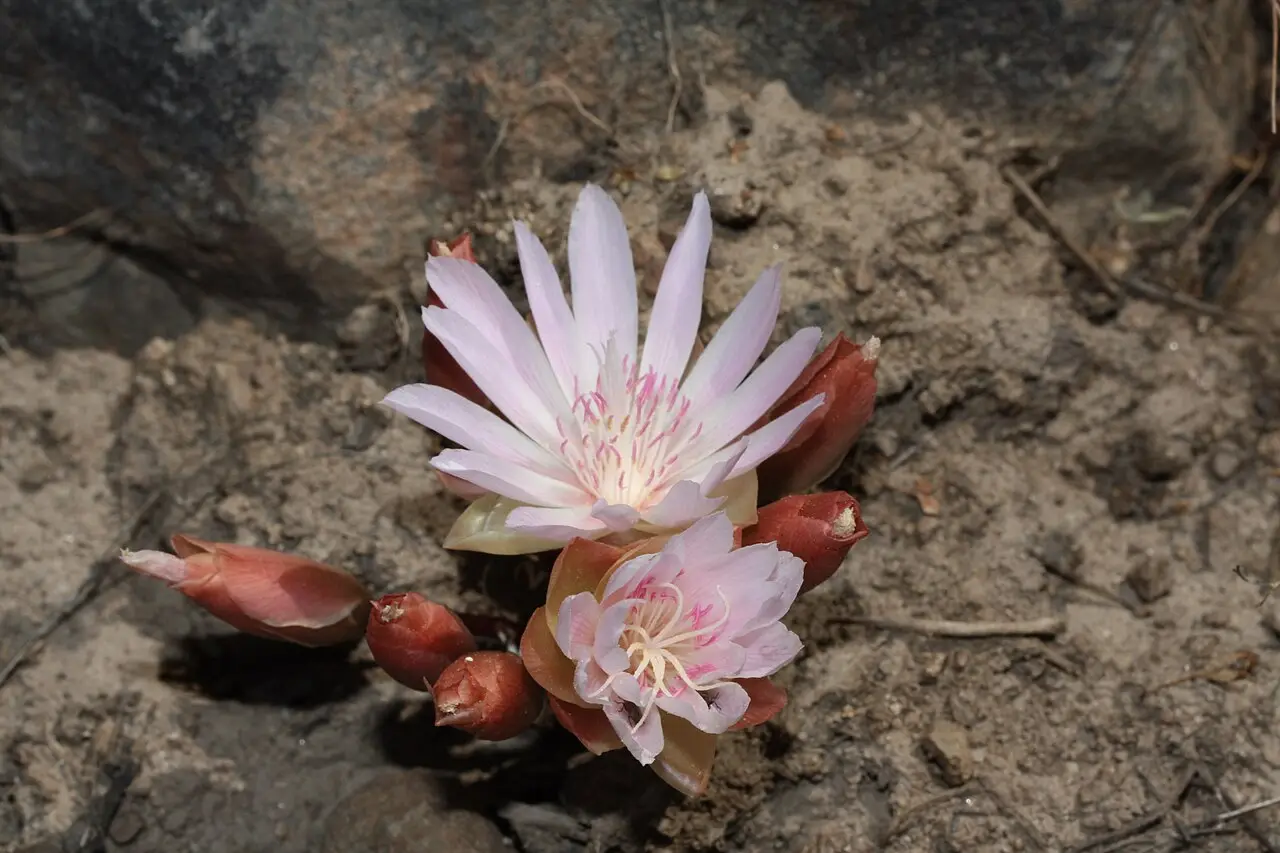
How to recognize it
The bitterroot is tiny. Its leafless flower stems are less than 2 inches tall, rising from a fleshy, branched root. Each stem carries a single large flower with 12 to 18 petals, ranging from white to pink or deep rose, above 6 to 9 sepals and many stamens. The narrow, succulent leaves come up early and usually wither before the plant blooms, so the flowers seem to sit right on bare ground. In Montana it blooms in late May and early June.
Lewis’s flower
Meriwether Lewis collected the specimen that was later named for him near Travelers’ Rest in western Montana in 1806. The botanist Frederick Pursh gave it its name: the genus Lewisia honors Lewis, and the species name rediviva, “restored to life,” comes from a dried root Lewis brought back that grew again after it was replanted.
A Native food
Long before Lewis arrived, the bitterroot was a staple. Its nutritious root was an important food and trade item for the Salish, Pend d’Oreille, Northern Shoshone and Nez Perce peoples, who dug it before the plant flowered.
Where it grows
The bitterroot is native to Montana. It grows across much of western and southern Montana in gravelly or sandy, well-drained, thinly vegetated soil in valley and mountain grasslands. Its full range runs from British Columbia and Alberta south to California, Arizona and Colorado.
Where to see it
Look on dry, open valley grasslands and gravelly slopes in western Montana in late spring, especially in late May and early June.
Chosen by Montana’s women
The bitterroot is Montana’s oldest state symbol after the seal and motto. In 1894 Mary Long Alderson, president of Montana’s Woman’s Christian Temperance Union, launched a campaign for a state flower, partly to give women practice in organizing politically. The 1895 Legislature made the bitterroot official. The Montana Historical Society notes that the plant grew mainly in western Montana, where most residents lived at the time.
Questions about the Montana state flower
- What is the state flower of Montana?
- The bitterroot (Lewisia rediviva), adopted in 1895.
- When does the bitterroot bloom?
- In late May and early June in Montana.
- Why is it called Lewisia rediviva?
- The genus honors Meriwether Lewis, who collected it in 1806. Rediviva means "restored to life," because a dried root Lewis brought back grew again after it was replanted.
- Is the bitterroot edible?
- The root was an important food for the Northern Shoshone, Salish and Nez Perce, who dug it before the plant flowered.
Sources
- Bitterroot (Montana Field Guide) Montana Natural Heritage Program and Montana Fish, Wildlife and Parks
- Bitterroot National Park Service, Lewis and Clark National Historic Trail
- Montana symbols (footlocker guide) Montana Historical Society
- MCA 1-1-503, State flower Montana Legislature (Montana Code Annotated)