Alabama
Yellowhammer State
Alabama became the 22nd state on December 14, 1819. Its capital is Montgomery, the fifth city to hold the title, and its largest city is now Huntsville. Alabama has no official nickname, but it is widely known as the Yellowhammer State and the Heart of Dixie.
- Capital
- MontgomeryCapital since 1846
- Statehood
- December 14, 181922nd state
- Population, 2025
- 5,193,08824th of 50
- Area
- 52,420 sq mi30th largest · 135,767 km²
- Largest city
- Huntsville233,627 people
- Abbreviation
- ALUS Postal Service code
- Motto
- Audemus jura nostra defendere“We Dare Maintain Our Rights”
- Borders
- 4 statesOcean coast
The 22nd state
Alabama was part of the Mississippi Territory until 1817, when Congress split off its eastern half as the Alabama Territory. Settlers were arriving fast, drawn by cheap land and cotton, and within two years the territory had enough people to ask for statehood. Delegates met in Huntsville in July 1819 to write a constitution, and on December 14, 1819, Alabama became the 22nd state.
The name comes from the Alabama people, a Native American nation of the region whose name was also given to the Alabama River. French colonists recorded them as the “Alibamons.” The most widely accepted reading traces the word to a Choctaw expression about clearing or gathering plants, usually translated as “vegetation gatherers.”
Five capitals in thirty years
Few states moved their government as often. The territorial government sat at St. Stephens, on the Tombigbee River. Huntsville served as a temporary capital while the first legislature met. Cahaba, a new town at the meeting of the Alabama and Cahaba rivers, became the first permanent capital in 1820, but floods and complaints about disease drove the government out in 1826, and Cahaba was a ghost town by 1900. Tuscaloosa held the capital for twenty years. In 1846, as settlement spread east, the legislature moved to Montgomery, where it has stayed. The capital page tells the whole story.
The Capitol in Montgomery has seen two turning points of American history. A six-pointed star on its portico marks where Jefferson Davis took the oath as president of the Confederacy in 1861, and in 1965 the Selma to Montgomery march for voting rights ended at its steps.
Yellowhammers and the Heart of Dixie
Alabama has never adopted an official nickname, but two have stuck. “The Yellowhammer State” dates from the Civil War, when the dyed homespun uniforms of some Alabama soldiers reminded people of the yellow-and-brown yellowhammer, a kind of woodpecker. The legislature made the yellowhammer the state bird in 1927. “The Heart of Dixie” became so popular that a 1951 law required it, along with a red heart, on every Alabama license plate.
The state motto is Latin: Audemus jura nostra defendere, “We dare maintain our rights.” It appears on the coat of arms adopted in 1939. The shield carries the flags of Spain, France, Great Britain and the Confederacy, which all governed Alabama at some point, joined by the shield of the United States.
A seal with a map
Most state seals show people, animals or a landscape. Alabama’s shows a map. The design goes back to the territorial governor William Wyatt Bibb in 1817: an outline of the state with its main rivers. During Reconstruction an eagle replaced it, but the map returned in 1939 and is still in use. Under state law, using an image of the Great Seal for any commercial purpose is a felony.
Symbols from whales to cookies
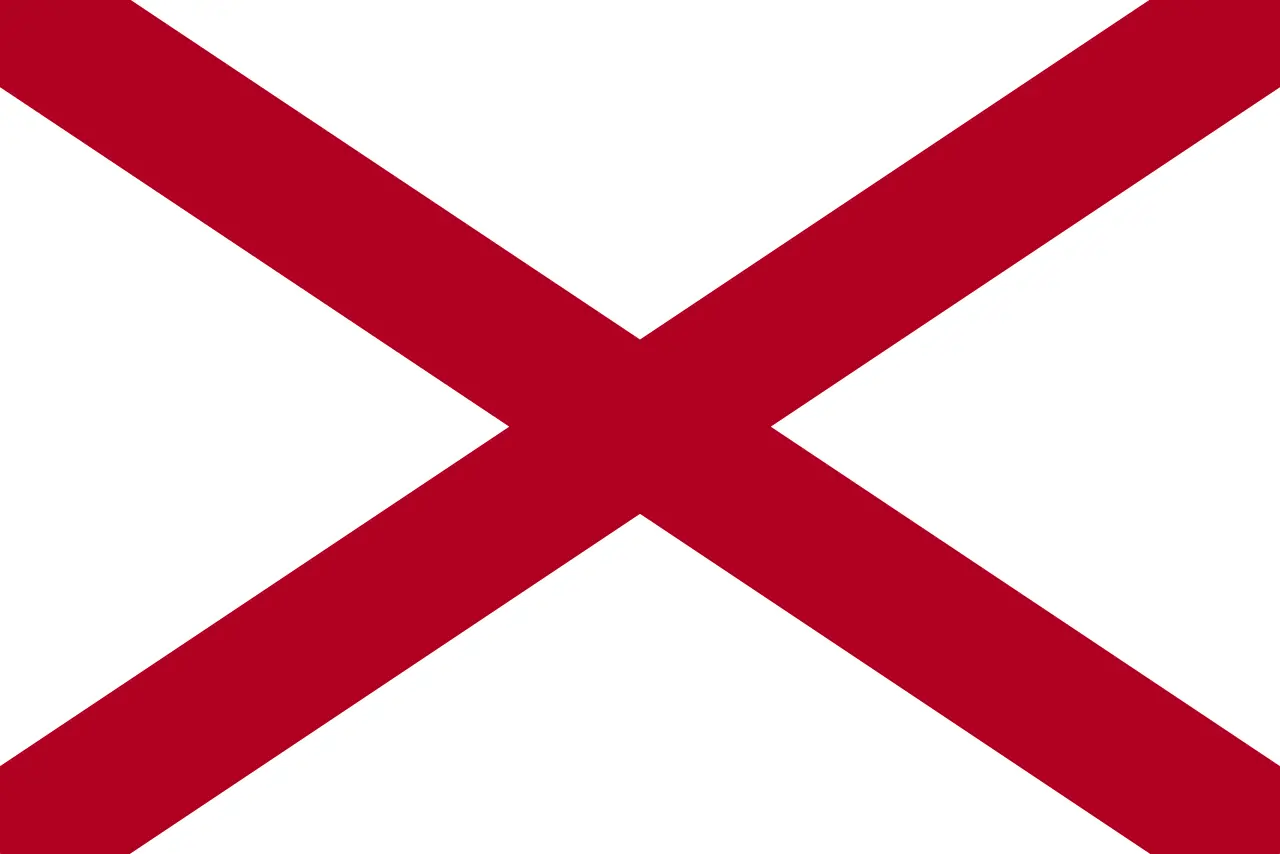
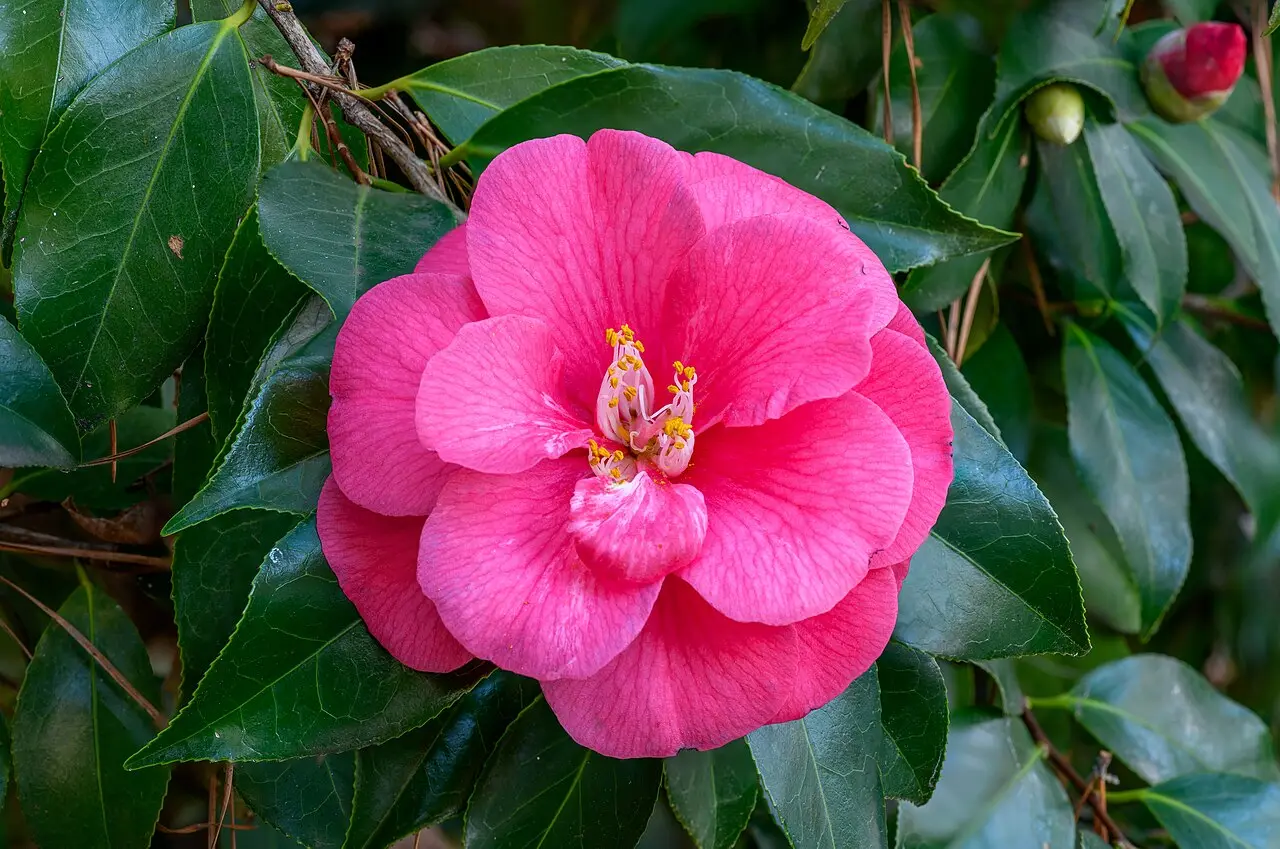
Alabama has more than 40 official symbols, and the list keeps growing. The flag, a crimson cross on white, dates from 1895. The yellowhammer is the state bird and the camellia the state flower. The state fossil is Basilosaurus, an ancient whale that could reach about 60 feet long, and the law forbids anyone to take one of its fossils out of Alabama without the governor’s written permission. More recent additions include the Lane cake, a whiskey-laced layer cake from Clayton that turns up in To Kill a Mockingbird, the sweet potato and the Yellowhammer Cookie, made with the state nut and the state legume. See all of them on the Alabama symbols page.
Land and people
Alabama covers 52,420 square miles, 30th among the states, and had about 5.19 million residents in 2025, 24th in population. It borders Tennessee, Georgia, Florida and Mississippi, and reaches the Gulf of Mexico at Mobile Bay. Huntsville, home to NASA’s Marshall Space Flight Center, has grown into the largest city, ahead of Mobile, Birmingham and Montgomery, which are all close to 200,000 people.
Alabama state symbols
All 50 official symbols
The capital: Montgomery
The capital of Alabama is Montgomery, chosen in 1846. It is the state's fifth seat of government, after St. Stephens, Huntsville, Cahaba and Tuscaloosa. The Capitol on Goat Hill, finished in 1851, has seen both the swearing-in of the Confederacy's president and the end of the 1965 Selma to Montgomery march.
- 1819–1820Huntsville
- 1820–1826Cahaba
- 1826–1846Tuscaloosa
- 1846–todayMontgomery
Where Alabama is
Alabama shares a border with 4 states: Florida, Georgia, Mississippi and Tennessee.
- Land area
- 50,645 sq mi
- Water area
- 1,775 sq mi
- Population density
- 102.5 people per sq mi (27th)
Alabama trivia
- Alabama's first capitol in Montgomery burned down in December 1849, only about two years after it was finished.Source: Encyclopedia of Alabama
- The Capitol's spiral staircases were built by Horace King, a bridge builder who had been enslaved.Source: Encyclopedia of Alabama
- The state reptile, the Alabama red-bellied turtle, was chosen in 1990 because lawmakers believed it lived only in Alabama; it has since been found in coastal Mississippi as well.Source: Alabama Legislature (ALISON)
Questions about Alabama
- What is the capital of Alabama?
- Montgomery, the capital since 1846. Before that the state government sat in St. Stephens, Huntsville, Cahaba and Tuscaloosa.
- What is the largest city in Alabama?
- Huntsville, with about 234,000 people in 2025. Mobile, Birmingham and Montgomery each have just under 200,000.
- What is Alabama's nickname?
- Alabama has no official nickname. The most common ones are the Yellowhammer State, from the Civil War, and the Heart of Dixie, which state law has required on license plates since 1951. The Cotton State is an older one.
- When did Alabama become a state?
- On December 14, 1819, as the 22nd state, after delegates meeting in Huntsville that July wrote a state constitution.
Photo credits (5)
- Flag of Alabama: Steve Hall, Public domain, via Wikimedia Commons
- Yellowhammer: Nature's Pic's (www.naturespicsonline.com), Attribution, via Wikimedia Commons
- Camellia: PumpkinSky, CC BY-SA 3.0, via Wikimedia Commons
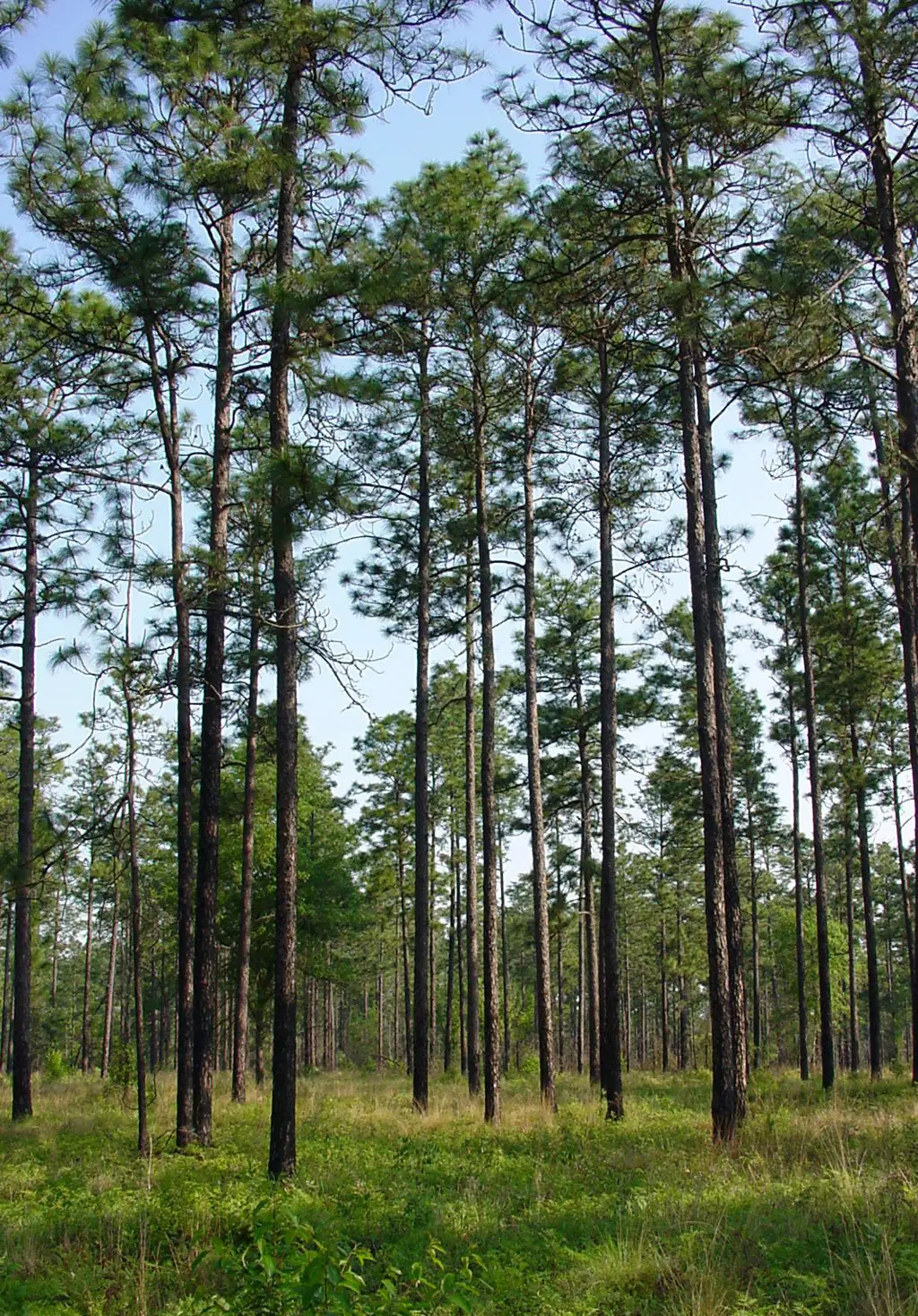
- Southern longleaf pine: Chuck Bargeron, University of Georgia, CC BY 3.0 us, via Wikimedia Commons
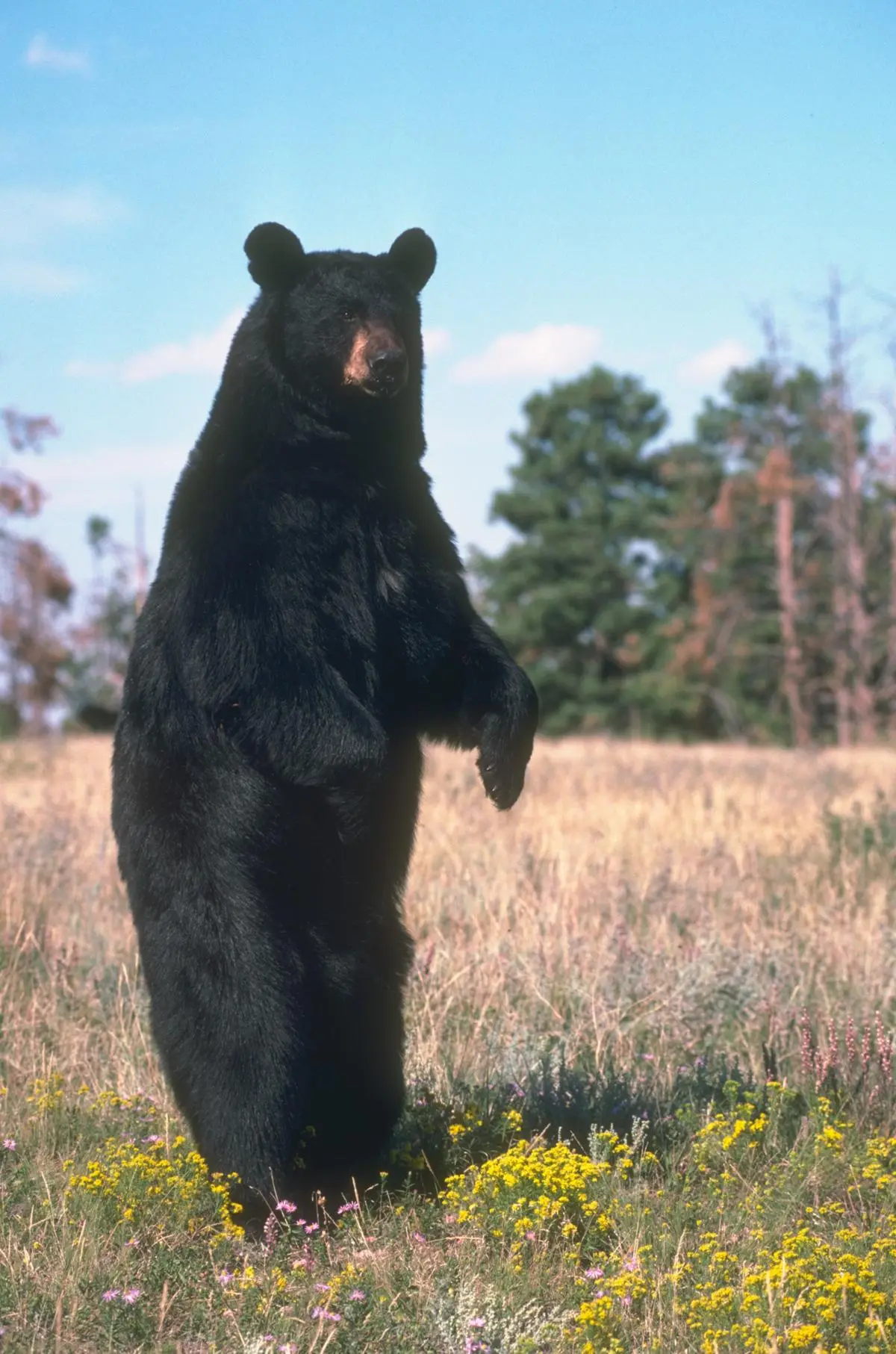
- American black bear: California Department of Fish and Wildlife from Sacramento, CA, USA, CC BY 2.0, via Wikimedia Commons
Sources
- Territorial Period and Early Statehood Encyclopedia of Alabama · statehood
- Montgomery Encyclopedia of Alabama · capital
- Cahaba Encyclopedia of Alabama · capital
- State of Alabama Encyclopedia of Alabama
- Code of Alabama § 32-6-54 (Heart of Dixie license plates) Alabama Legislature (ALISON)
- Code of Alabama § 1-2-1 (coat of arms and motto) Alabama Legislature (ALISON)
- US Census Bureau Vintage 2025 population estimates; 2010 state area measurements