Wisconsin
The Badger State
Wisconsin became the 30th state on May 29, 1848, twelve years after Wisconsin Territory was organized. Its capital is Madison, a city that existed only on paper when it was chosen in 1836, and its largest city is Milwaukee. Wisconsin is known as the Badger State, after the lead miners of the 1820s who sheltered in the ground like badgers, and its license plates have called it America's Dairyland since 1939. Its motto is a single word: "Forward."
- Capital
- MadisonCapital since 1838
- Statehood
- May 29, 184830th state
- Population, 2025
- 5,972,78721st of 50
- Area
- 65,496 sq mi23rd largest · 169,635 km²
- Largest city
- Milwaukee562,407 people
- Abbreviation
- WIUS Postal Service code
- Motto
- ForwardEnglish
- Borders
- 4 statesLandlocked
A river through a red place
Wisconsin is named for the Wisconsin River, and the name goes back to a Miami word for that river. Father Jacques Marquette wrote it down as Meskousing in June 1673, after Miami guides led him and Louis Joliet to the river. The explorer La Salle misread Marquette’s handwritten “M” as “Ou,” so Ouisconsin was the usual spelling for about 150 years, until US government records began using “Wisconsin” around 1830. Over the years writers proposed many meanings, among them “gathering of waters” and “red stone river.” The Wisconsin Historical Society now accepts the linguist Michael McCafferty’s 2003 reading, “river running through a red place,” probably a reference to the red sandstone bluffs of the Wisconsin Dells.
Territory and state
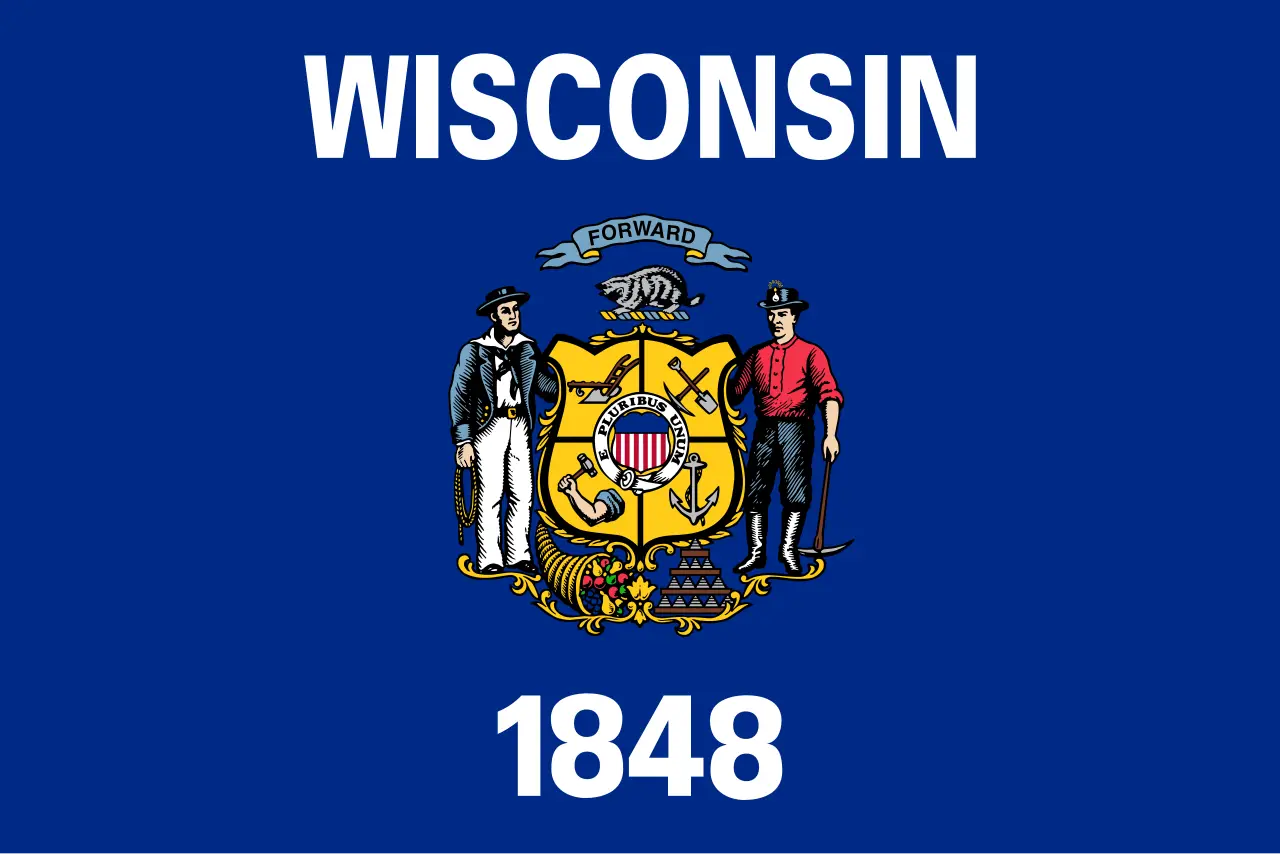
Wisconsin Territory was organized on July 4, 1836, and Congress admitted Wisconsin as the 30th state on May 29, 1848. The state’s motto, “Forward,” dates from 1851, and the coat of arms of 1881 sums up the young state’s economy: a plow for farming, a pick and shovel for mining, an arm with a hammer for manufacturing and an anchor for navigation, with a badger on top.
A capital on paper
The first territorial legislature met at Belmont in 1836 and fought a long battle over where to put the permanent capital. It chose Madison, a town that existed only as a plat on paper between two of the Four Lakes, largely through the lobbying of James Duane Doty, a former federal judge who had a land interest in the site. The town was named for President James Madison, and the legislature first met there in 1838. Today’s Capitol, built one wing at a time after a 1904 fire, is topped by a gilded statue called “Wisconsin.” The capital page tells the story.
Badgers and dairyland
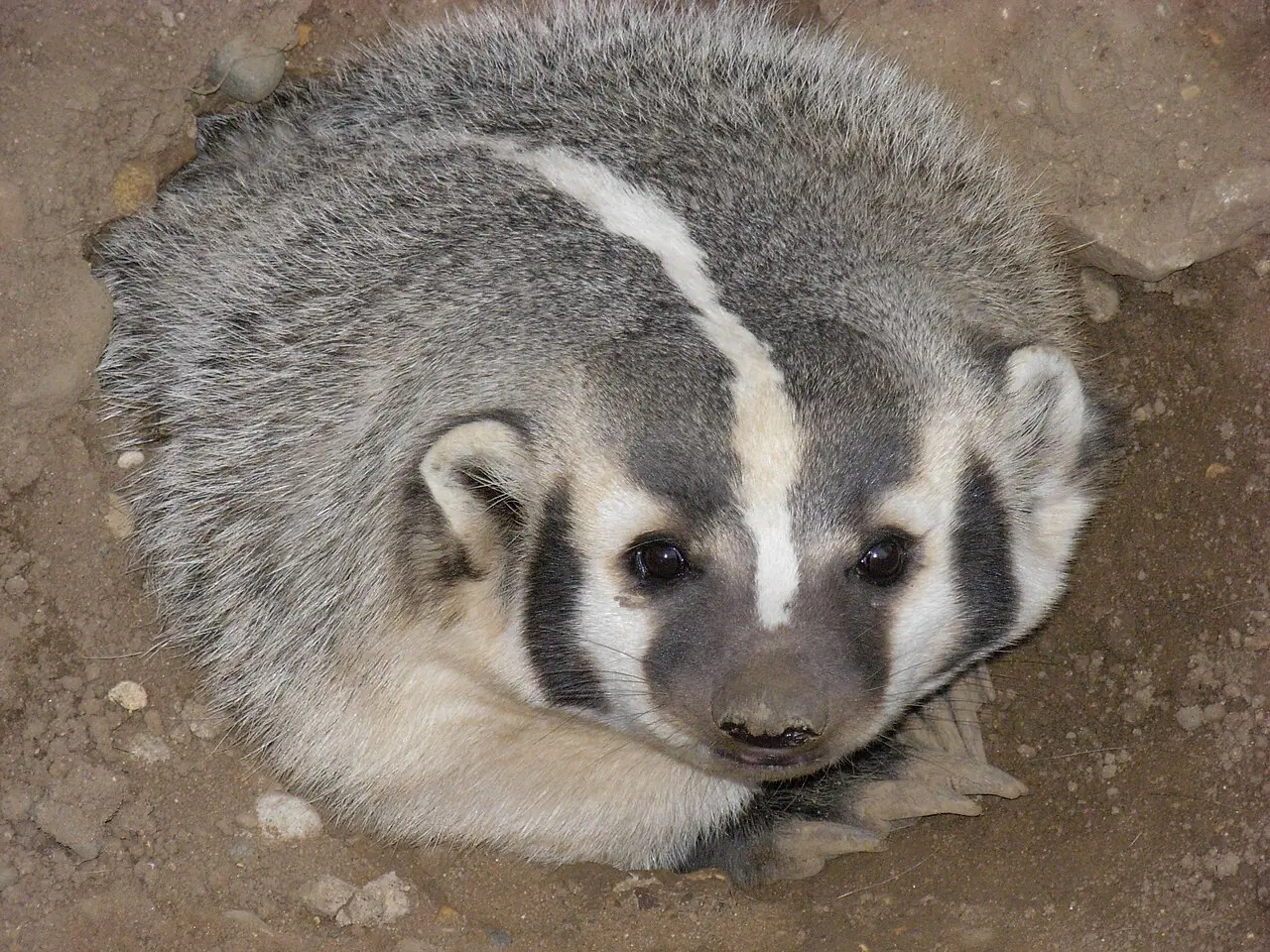
Wisconsin’s nickname comes from the lead-mining boom of the late 1820s in the southwest of the state, when miners sheltered in old shafts and dugouts like badgers. The label later became a point of pride, and the badger has been the state animal since 1957. “America’s Dairyland” has been on state license plates since 1939, and the state’s symbols reflect it: the dairy cow is the state domestic animal, milk the state beverage and cheese the state dairy product.
Robins, violets and maples
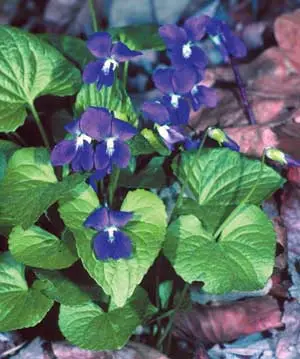
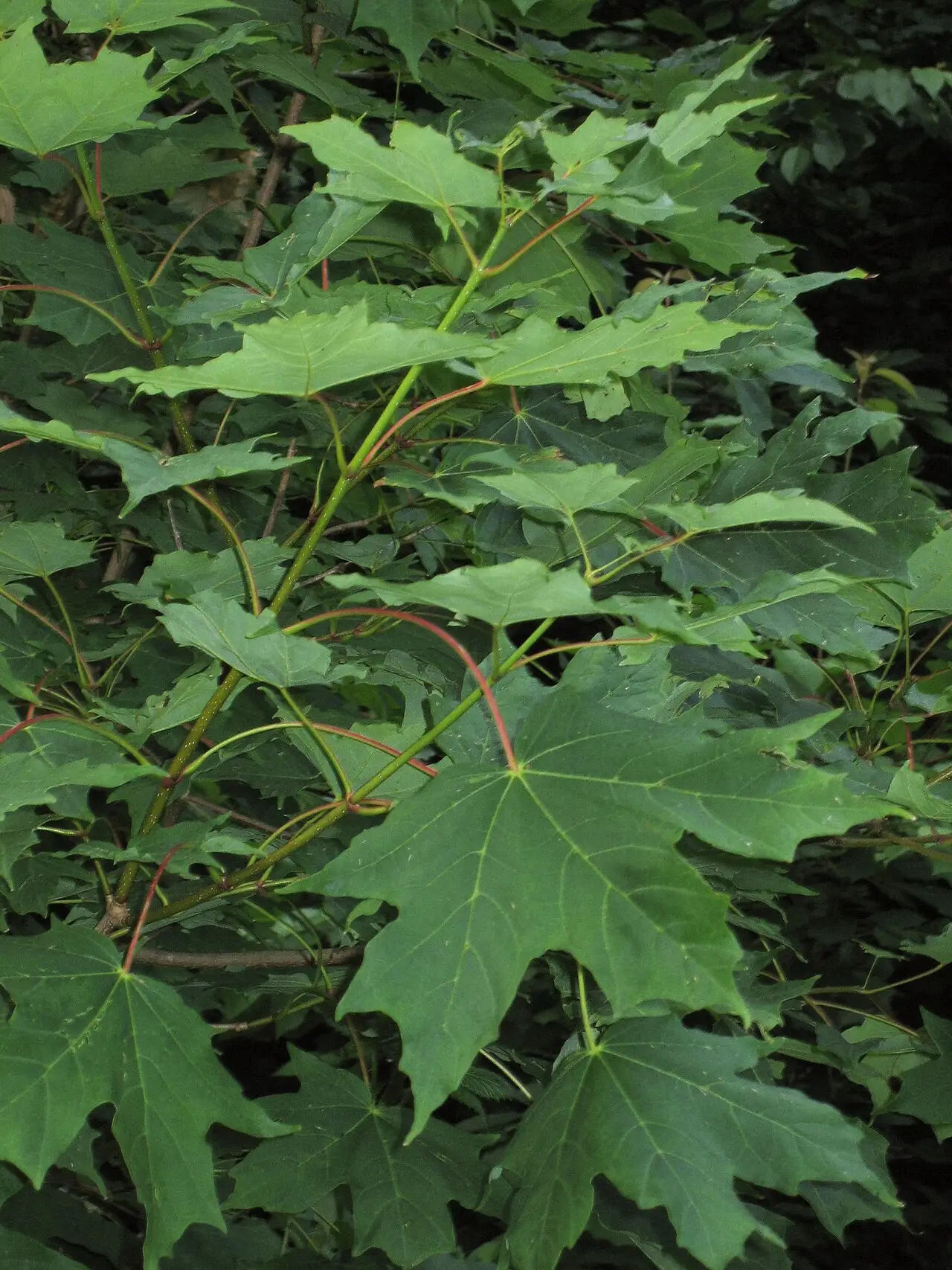
Wisconsin has 29 official state symbols, and schoolchildren chose the first three by vote long before they became law. The American robin is the state bird, the wood violet the state flower and the sugar maple the state tree, all made official in 1949. The muskellunge is the state fish, the American water spaniel, the only breed said to be native to Wisconsin, the state dog, and the polka the state dance. The cranberry, of which Wisconsin is the top producer, is the state fruit, and the kringle the state pastry. The blue state flag carries the coat of arms above the year of statehood. See every symbol on the Wisconsin symbols page.
Land and people
Wisconsin covers 65,496 square miles, 23rd among the states, including more than 11,000 square miles of water, much of it in the Great Lakes. It had about 5.97 million residents in 2025, 21st in the country. It borders Minnesota, Iowa, Illinois and Michigan. Milwaukee, with about 562,000 people, is the largest city, followed by Madison with about 286,000, Green Bay, Kenosha and Racine.
Wisconsin state symbols
All 29 official symbols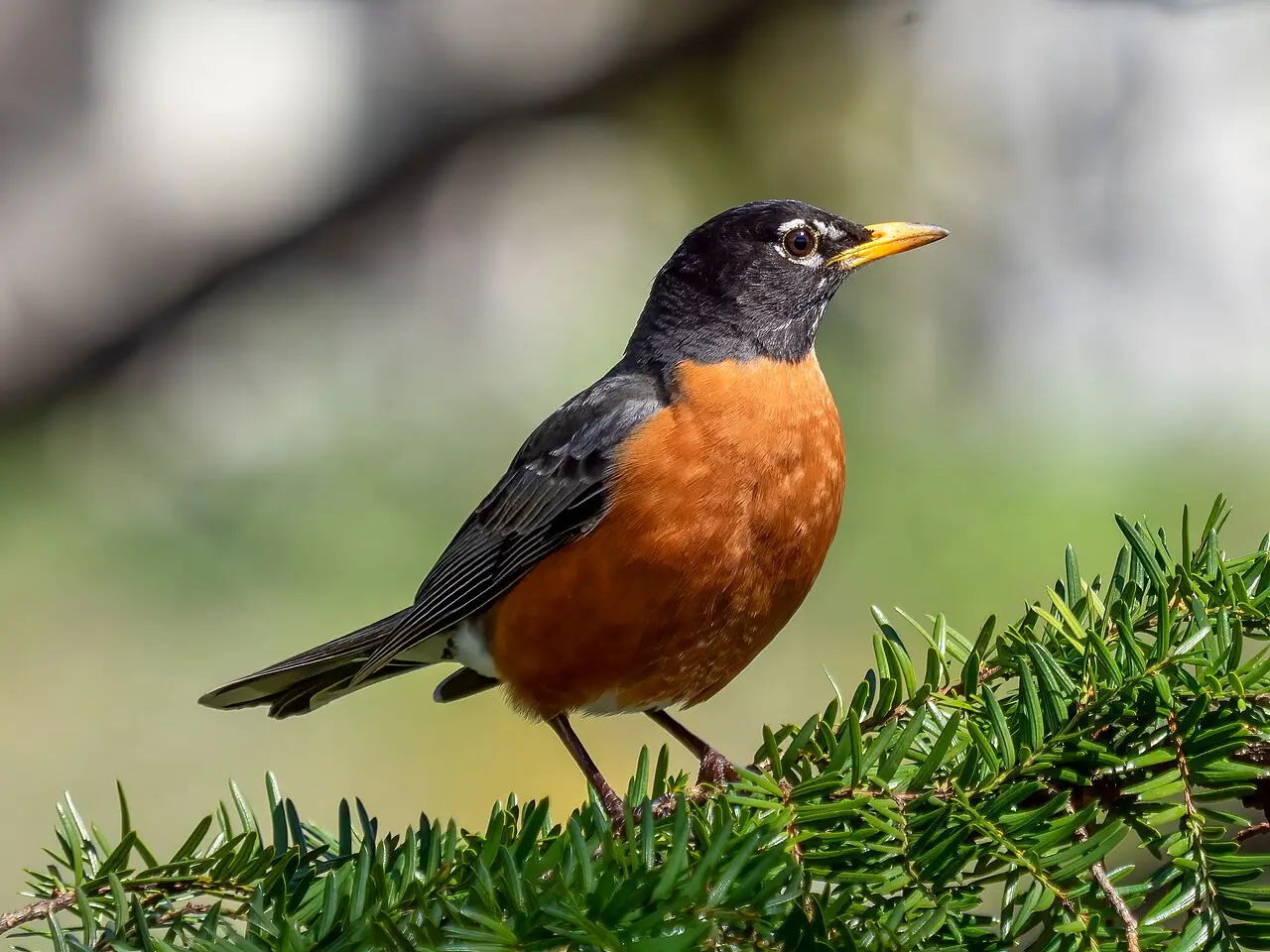
The capital: Madison
The capital of Wisconsin is Madison, where the territorial legislature first met in November 1838. When lawmakers chose it in 1836, Madison existed only as a platted town on paper between two of the Four Lakes, promoted by James Duane Doty, a former federal judge with a land interest there. Its Capitol, built one wing at a time after a 1904 fire and finished in 1917, has four equal wings around a central dome topped by a gilded statue called "Wisconsin."
- 1838–todayMadison
Where Wisconsin is
Wisconsin shares a border with 4 states: Iowa, Illinois, Michigan and Minnesota.
- Land area
- 54,158 sq mi
- Water area
- 11,339 sq mi
- Population density
- 110.3 people per sq mi (25th)
Wisconsin trivia
- The tune of 'On, Wisconsin!' was first written in 1909 as an entry for a new University of Minnesota football song before a friend talked composer William T. Purdy into dedicating it to Wisconsin.Source: Wisconsin Legislative Reference Bureau
- The state song's official words were written in 1913 by Charles D. Rosa and J. S. Hubbard, replacing the football lyrics with a more formal verse.Source: Wisconsin Legislative Reference Bureau
- The mosquito was among the losing candidates when Wisconsin picked its state insect, the honey bee.Source: Wisconsin Legislative Reference Bureau
- The mourning dove was protected from hunting when it became the state symbol of peace in 1971, but it was made a game bird again in 2001.Source: Wisconsin Legislative Reference Bureau
- The Assembly chamber received the world's first electric voting machine in 1917, at a cost of $11,600.Source: Wisconsin Department of Administration
- The current Capitol was finished in 1917 but not formally dedicated until 1965, 48 years later.Source: Wisconsin Department of Administration
Questions about Wisconsin
- What is the capital of Wisconsin?
- Madison, where the territorial legislature first met in 1838. It was chosen as the seat of government in 1836, when it existed only as a platted town on paper.
- Why is Wisconsin called the Badger State?
- The name dates to the lead-mining boom of the late 1820s in southwestern Wisconsin, when miners sheltered in old shafts and dugouts like badgers. The badger became the official state animal in 1957.
- What does Wisconsin mean?
- The name comes from a Miami word for the Wisconsin River. The Wisconsin Historical Society accepts the linguist Michael McCafferty's reading, "river running through a red place," probably a reference to the red sandstone bluffs of the Wisconsin Dells.
- What is Wisconsin's state motto?
- '"Forward," adopted in 1851.'
- Is "America's Dairyland" Wisconsin's official nickname?
- It is a slogan that has been on state license plates since 1939. No law makes it, or "the Badger State," the official nickname.
Photo credits (5)
- Flag of Wisconsin: Unknown author, Public domain, via Wikimedia Commons
- American robin: Rhododendrites, CC BY-SA 4.0, via Wikimedia Commons
- Wood violet: Unknown author, Public domain, via Wikimedia Commons
- Sugar maple: MPF, CC BY 2.5, via Wikimedia Commons
- Badger: Jonathunder, CC BY-SA 3.0, via Wikimedia Commons
Sources
- Wisconsin Timeline (States in the Senate) United States Senate · statehood
- Wisconsin State Capitol History Wisconsin Department of Administration · capital
- Wisconsin State Capitol Tours Wisconsin Department of Administration · capital
- "Wisconsin's Name: Where it Came From and What it Means" Wisconsin Historical Society
- Wisconsin State Symbols (Wisconsin Blue Book 2007-2008) Wisconsin Legislative Reference Bureau
- US Census Bureau Vintage 2025 population estimates; 2010 state area measurements