Idaho
The Gem State
Idaho became the 43rd state on July 3, 1890. Its capital and largest city is Boise, whose Capitol is the only one in the country heated by geothermal water. Idaho is known as the Gem State, and its name has one of the strangest stories of any state: it may have been made up.
- Capital
- BoiseCapital since 1865
- Statehood
- July 3, 189043rd state
- Population, 2025
- 2,029,73337th of 50
- Area
- 83,569 sq mi14th largest · 216,443 km²
- Largest city
- Boise238,429 people
- Abbreviation
- IDUS Postal Service code
- Motto
- Esto Perpetua“Let it be perpetual (also rendered 'Be perpetual' or 'It shall be perpetual')”
- Borders
- 6 statesCanada
A name nobody can explain
Idaho’s name has one of the oddest histories of any state. Around 1860 it was first used in the Colorado gold camps, where a settlement, today’s Idaho Springs, carried the name. Promoters suggested “Idaho” for the new territory that became Colorado, saying it was an Indian word meaning “gem of the mountains.” When the territory’s delegate learned the word had probably been invented, most likely by a lobbyist named George M. Willing, he asked Congress to use “Colorado” instead.
The name did not disappear. A steamboat called the Idaho, launched on the Columbia River in 1860, carried miners toward the new gold fields of the Clearwater and Salmon rivers, which became known as the Idaho mines. In 1863, when Congress created a new territory in the northern Rockies, a bill briefly called it “Montana,” but on the last night of the session the name was changed back to Idaho. The true origin of the word is still unknown.
Gold, a stolen seal and statehood
Gold drew settlers to Idaho in the early 1860s, and Congress created the Idaho Territory on March 4, 1863. Its first capital was Lewiston, in the north, but new gold strikes in the Boise Basin shifted the population south, and in 1864 the legislature moved the capital to Boise. Lewiston did not give up easily. Its residents put the territorial records under armed guard, and in 1865 the acting governor needed soldiers to carry the seal and archives to Boise. The capital page tells the story. Idaho became the 43rd state on July 3, 1890.
The Gem State
“The Gem State” echoes the story that Idaho meant “gem of the mountains,” and Idaho does have gems. The state gem is the star garnet, which shows a four- or six-rayed star and is found almost only in Idaho and India; the public can dig for them at a Forest Service site near St. Maries. No law makes the nickname official.
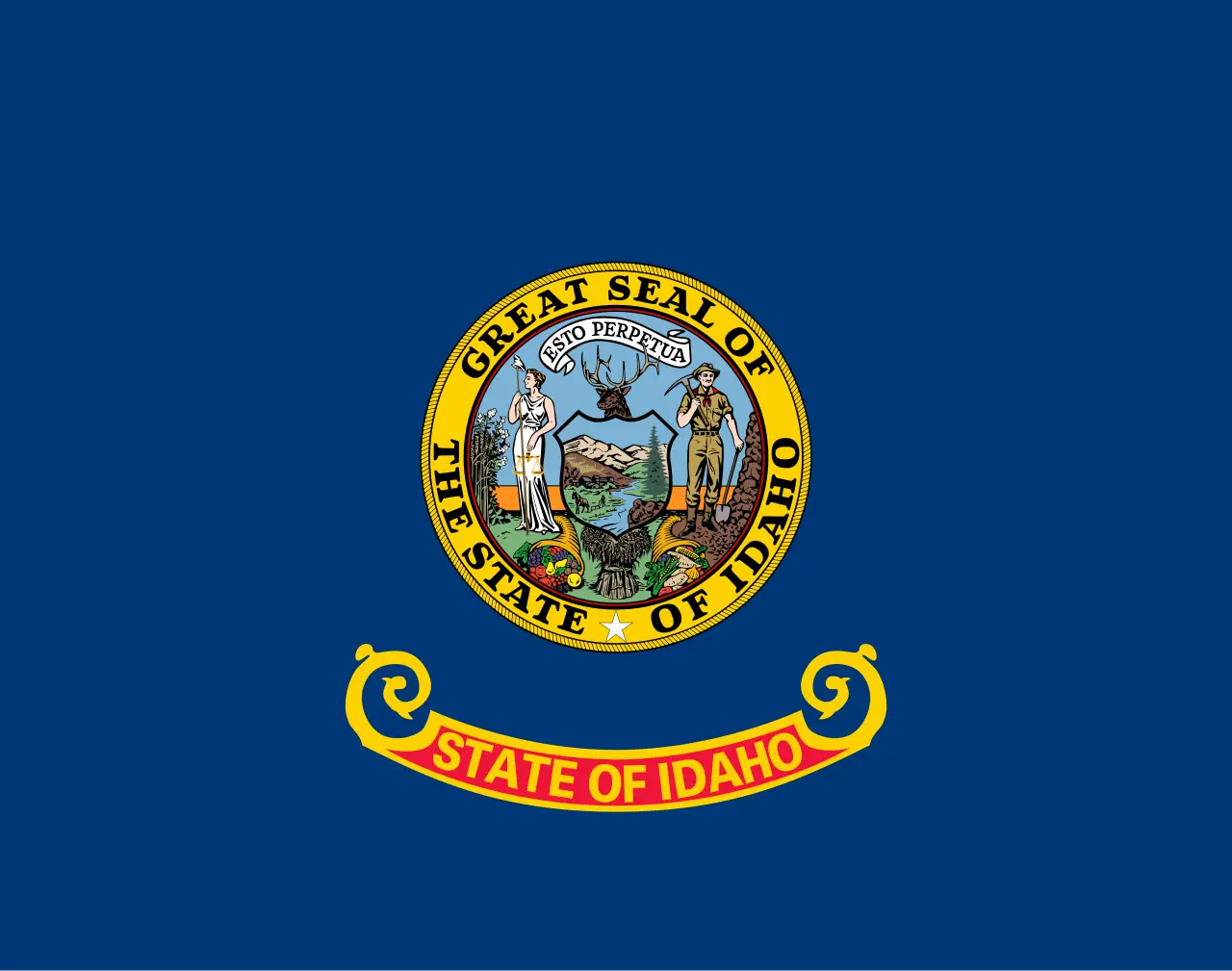
The state motto is Latin: Esto perpetua, usually translated “Let it be perpetual.” It appears on the state seal, which was designed in 1891 by Emma Edwards Green, who won a competition and became the only woman to design a US state seal.
Bluebirds, potatoes and huckleberries
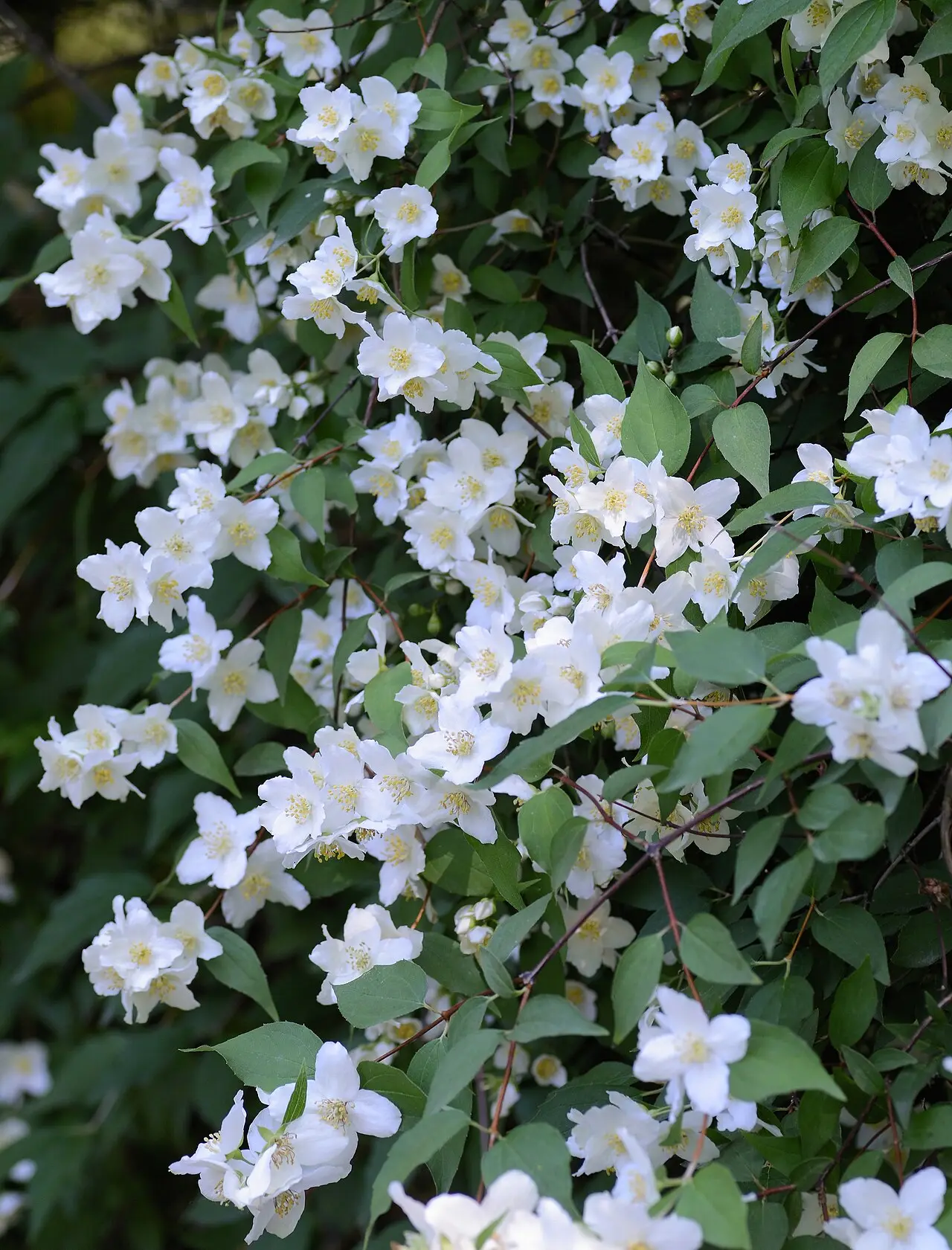
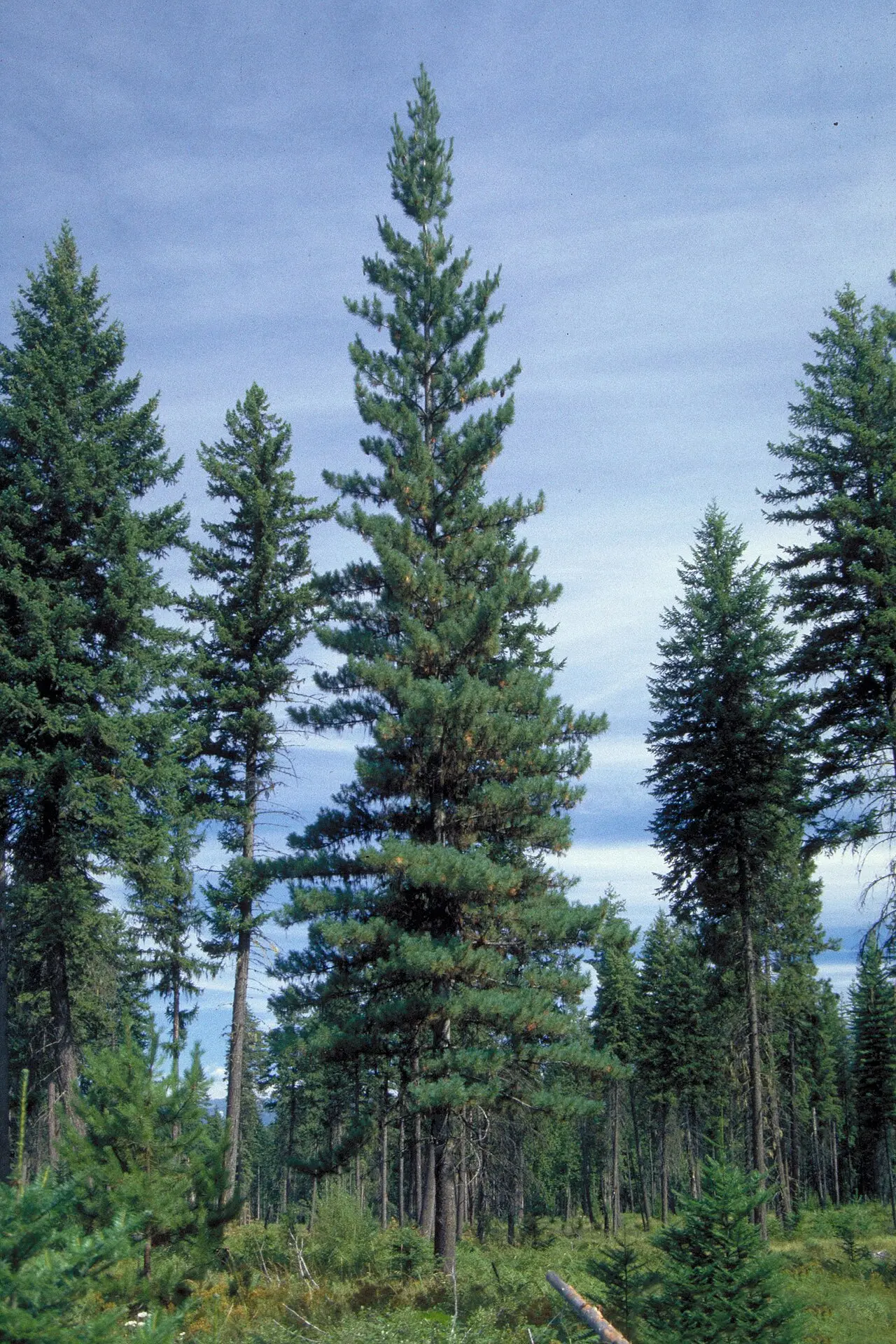
Idaho has 20 official symbols. The mountain bluebird and the syringa were both adopted in 1931, and the western white pine, which grows to great size in the forests of north Idaho, in 1935. Idaho’s most famous crop, the potato, became the state vegetable in 2002, and the huckleberry, a wild mountain berry Idahoans prize, the state fruit in 2000. The Appaloosa, the spotted horse bred by the Nez Perce, is the state horse, and the Hagerman horse, a fossil horse about 3.7 million years old, is the state fossil. In 2026 Idaho added hunting as its official state sport. See every symbol on the Idaho symbols page.
The flag shows the state seal on a blue field above a red band reading “State of Idaho.”
Land and people
Idaho covers 83,569 square miles, the 14th largest state, stretching from the Canadian border in its narrow northern panhandle to Nevada and Utah in the south. It also borders Washington, Oregon, Montana and Wyoming. It had about 2.03 million residents in 2025, 37th in the country, after growing by about 10 percent since 2020, one of the fastest rates in the nation. Most Idahoans live in the Boise area: Boise, Meridian, Nampa and Caldwell are four of the state’s five largest cities.
Idaho state symbols
All 20 official symbols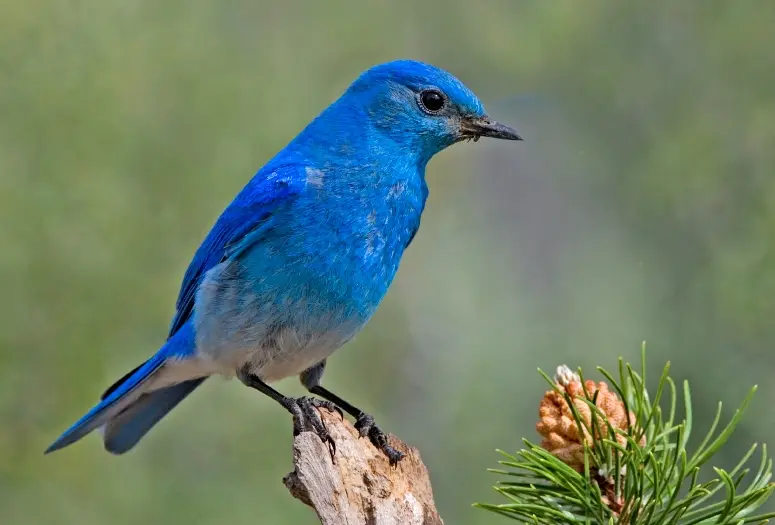
The capital: Boise
The capital of Idaho is Boise, the seat of government since April 1865. The first territorial capital was Lewiston, and when the legislature voted to move the capital south, Lewiston residents guarded the territorial records and the acting governor needed a military escort to carry the seal to Boise. Boise's Capitol, finished in 1920, is the only state capitol heated with geothermal water.
- 1865–todayBoise
Where Idaho is
Idaho shares a border with 6 states: Montana, Nevada, Oregon, Utah, Washington and Wyoming. It also borders Canada.
- Land area
- 82,643 sq mi
- Water area
- 926 sq mi
- Population density
- 24.6 people per sq mi (44th)
Idaho trivia
- Emma Edwards Green, who won the 1891 design competition for the Great Seal, is the only woman to have designed a U.S. state seal.Source: Office of the Governor of Idaho
- Idaho's is the only state capitol in the U.S. heated by geothermal water, drawn from about 3,000 feet underground.Source: Idaho State Capitol Commission
- Convicts from the old Idaho Penitentiary hauled the 10-ton sandstone blocks used to build the Capitol from the Table Rock quarry.Source: Idaho State Capitol Commission
- Star garnets, Idaho's state gem, are found almost exclusively in Idaho and India.Source: Idaho Secretary of State
- The state motto Esto Perpetua is attributed to the Venetian scholar Paolo Sarpi, who applied it to the Republic of Venice in 1623.Source: Idaho State Historical Society
Questions about Idaho
- What is the capital of Idaho?
- Boise. The territorial legislature made it the capital in 1864, replacing Lewiston, and the government arrived in April 1865.
- What does Idaho mean?
- No one knows for sure. It was promoted around 1860 as an Indian word meaning "gem of the mountains," but that was probably made up, most likely by a lobbyist named George M. Willing.
- Why is Idaho called the Gem State?
- The nickname echoes the old claim that Idaho meant "gem of the mountains," and the state is also known for gemstones such as the star garnet, found almost only in Idaho and India. No law makes the nickname official.
- Is Idaho one of the fastest-growing states?
- Yes. Its population grew by about 10 percent between 2020 and 2025, to about 2.03 million, one of the fastest rates in the country.
Photo credits (4)
- Flag of Idaho: Paul B. Evans, based on a work by the Adjutant General of Idaho and Emma Edwards Green, Public domain, via Wikimedia Commons
- Mountain bluebird: Elaine R. Wilson, CC BY-SA 2.5, via Wikimedia Commons
- Syringa: Alvesgaspar, CC BY-SA 3.0, via Wikimedia Commons
- Western white pine: Chris Schnepf, University of Idaho, USA, CC BY 3.0 us, via Wikimedia Commons
Sources
- Facts About Idaho Idaho State Capitol Commission · statehood
- Location of Idaho's Territorial Capital (Reference Series No. 344) Idaho State Historical Society · capital
- Idaho State Capitol (Reference Series No. 133) Idaho State Historical Society · capital
- The Naming of Idaho Idaho Legal History Society / Idaho State Bar
- How Idaho Got Its Name Idaho State Historical Society
- State Emblems Idaho Secretary of State
- US Census Bureau Vintage 2025 population estimates; 2010 state area measurements