Hawaii
The Aloha State
Hawaii became the 50th state on August 21, 1959, the newest state in the Union. It is the only state made up entirely of islands and the only one that was once an independent kingdom. Its capital is Honolulu, on Oʻahu, the seat of government since 1845, and its official nickname is the Aloha State.
- Capital
- HonoluluCapital since 1845
- Statehood
- August 21, 195950th state
- Population, 2025
- 1,432,82040th of 50
- Area
- 10,932 sq mi43rd largest · 28,313 km²
- Largest city
- HonoluluCounty-wide city
- Abbreviation
- HIUS Postal Service code
- Motto
- Ua mau ke ea o ka ʻāina i ka pono“The life of the land is perpetuated in righteousness”
- Borders
- No statesOcean coast
From kingdom to state
Hawaii was settled by Polynesian voyagers who crossed thousands of miles of open ocean in double-hulled canoes, long before any European sailed the Pacific. In the 1790s and 1800s Kamehameha I united the islands into a single Kingdom of Hawaiʻi, which was recognized by the United States and European powers as an independent nation.
The kingdom’s end came in 1893, when a group of American and European businessmen, backed by US Marines, overthrew Queen Liliʻuokalani. They set up a provisional government and then a Republic of Hawaii, and the United States annexed the islands in 1898. Hawaii was a US territory for six decades. After World War II, when Hawaii had been at the center of the war in the Pacific, Congress finally passed the Hawaii Admission Act, which President Eisenhower signed on March 18, 1959. Hawaii’s voters accepted statehood that June, and on August 21, 1959, a presidential proclamation made Hawaii the 50th state.
The name
Hawaii takes its name from its largest island, Hawaiʻi, often called the Big Island. In a tradition recorded by the 19th-century Hawaiian scholars Samuel Kamakau and Kepelino, the island was named for Hawaiʻiloa, a fisherman and navigator who found it on a long voyage from a homeland to the west, and the islands of Maui, Oʻahu and Kauaʻi were named for his children. Some scholars doubt parts of that tradition, and a Tahitian account credits a different hero.
A capital with a royal palace
Honolulu has been the capital since 1845, when Kamehameha III moved the kingdom’s seat from Lahaina on Maui. It is the only state capital with a royal palace: ʻIolani Palace, built for King Kalākaua and finished in 1882. After the 1893 overthrow the palace became the seat of government, and the legislature met there until the modern State Capitol opened in 1969. The capital page tells the story.
Aloha, by law
Hawaii’s nickname, the Aloha State, became official in 1959, and the state has written a good deal of its culture into law. A 1986 statute defines the “Aloha Spirit” through five Hawaiian virtues and says legislators, the governor and judges may consider it in carrying out their duties. Since 1978 Hawaiian has been an official language alongside English. The state motto, adopted in 1959, is in Hawaiian: Ua mau ke ea o ka ʻāina i ka pono, “The life of the land is perpetuated in righteousness.”
Symbols of the islands
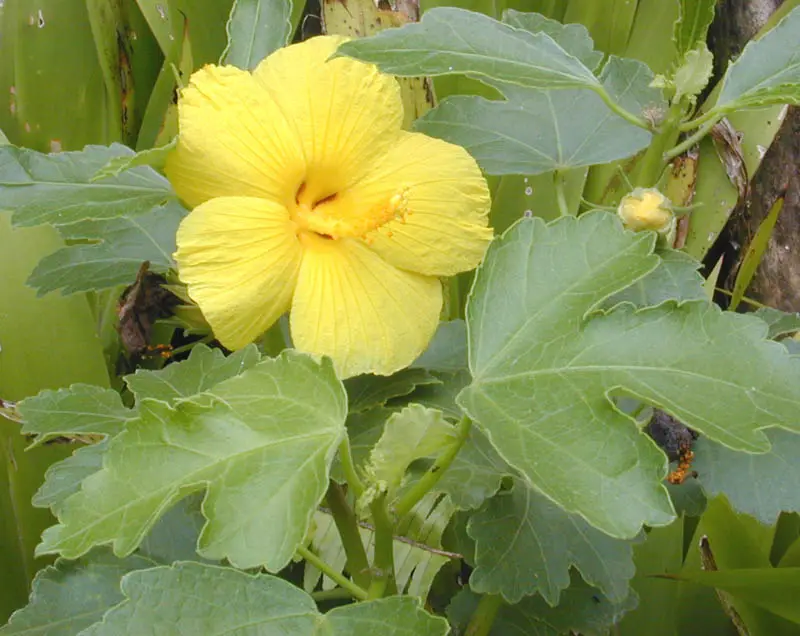
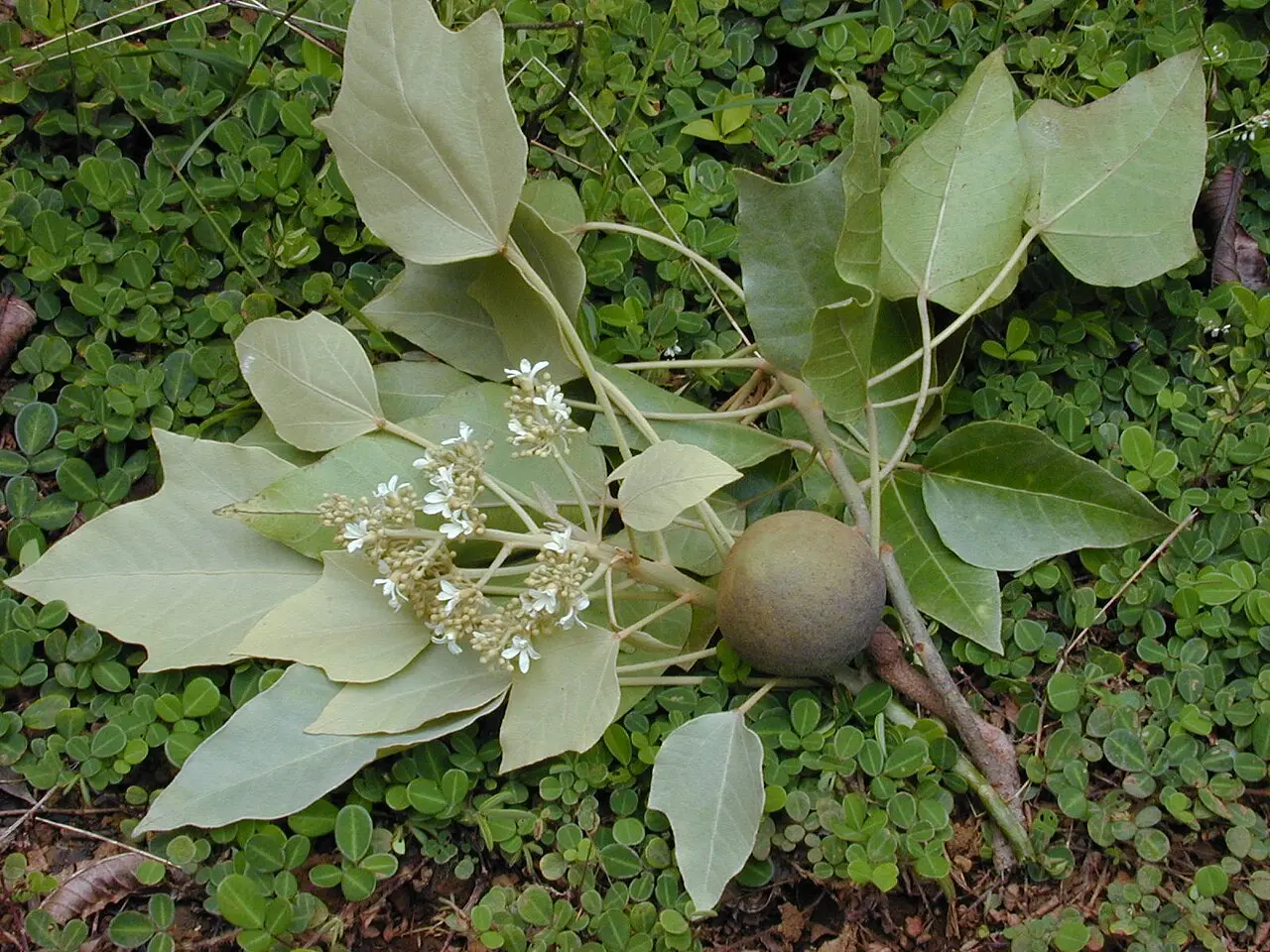
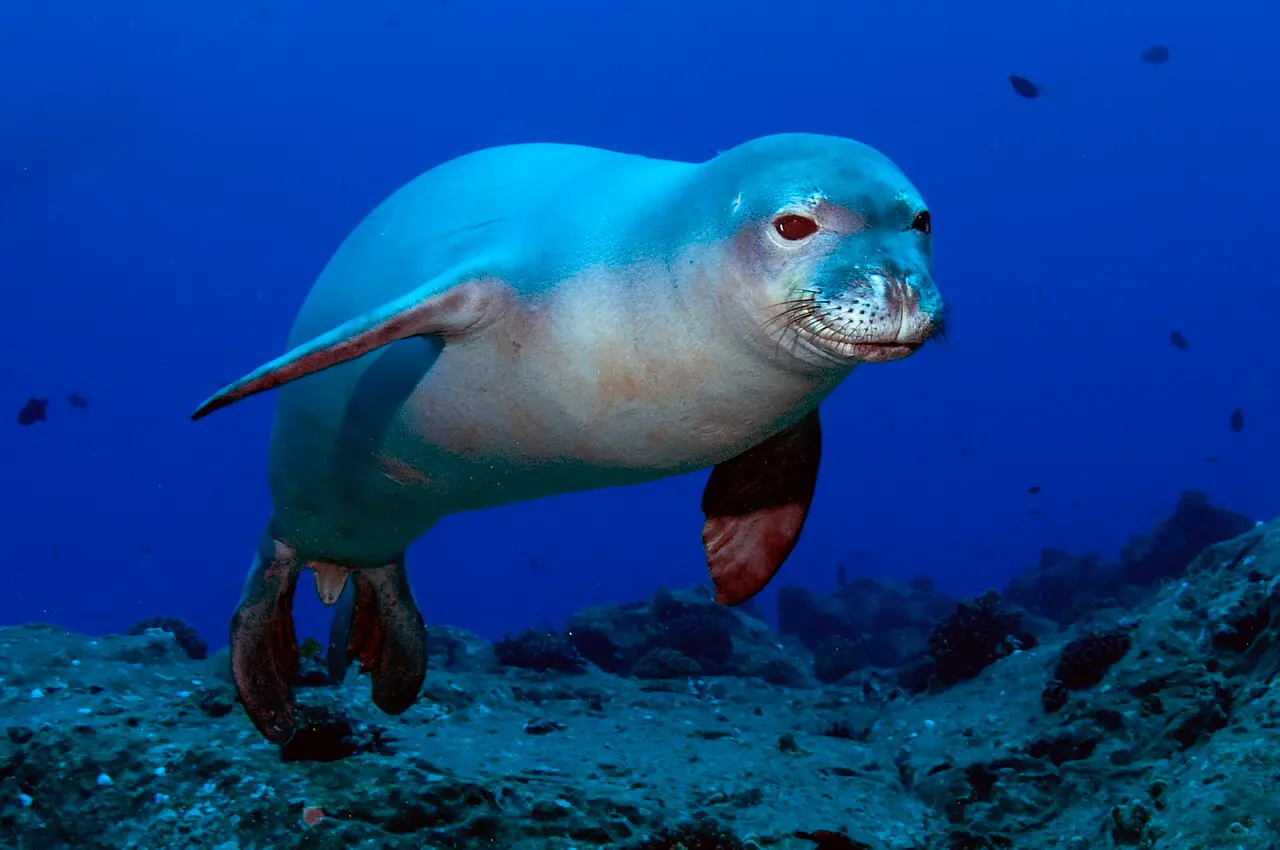
Hawaii has 29 official symbols, most of them drawn from the islands’ unique nature and culture. The nēnē, a goose found nowhere else, is the state bird, and the native yellow hibiscus, an endangered shrub, the state flower. The humuhumunukunukuāpuaʻa, a reef triggerfish with one of the longest names of any fish, is the state fish. Hawaii has three official mammals, the monk seal, the humpback whale and the hoary bat, and since 2024 an official snail for each island. The hula is the state dance, surfing and outrigger canoe paddling are state sports, and the shaka, the hand gesture with thumb and little finger extended, became the official state gesture in 2024. See every symbol on the Hawaii symbols page.
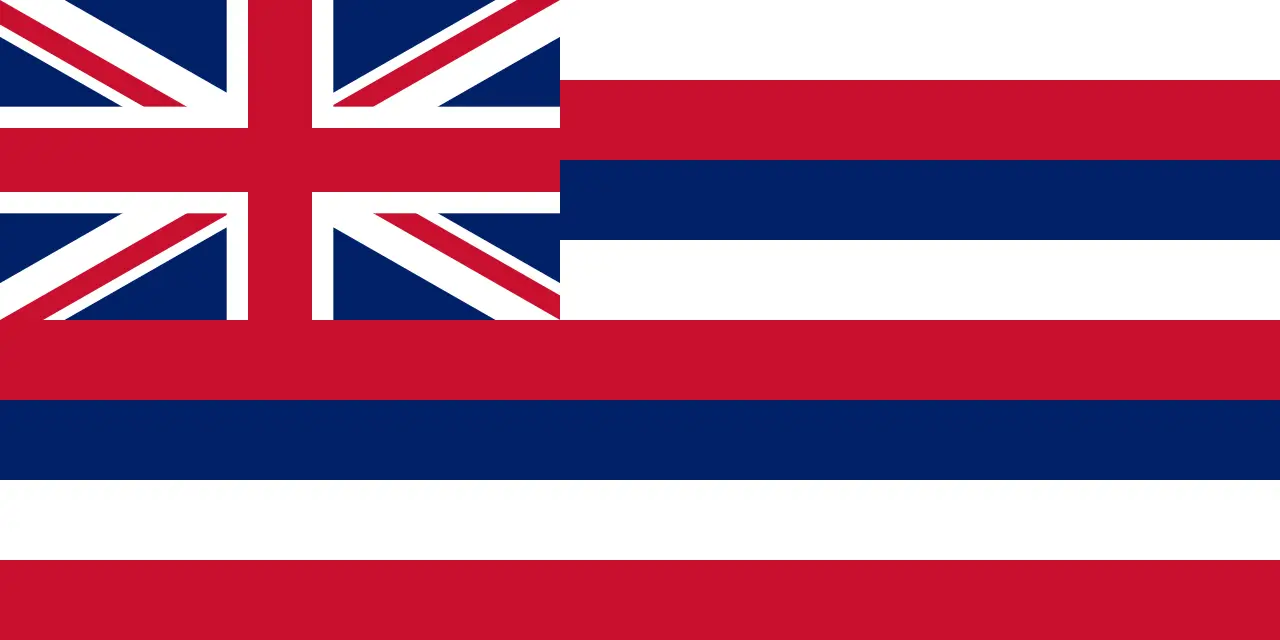
The flag, with the British Union Jack in its corner and eight stripes for the eight main islands, is older than the state: it dates from the Hawaiian Kingdom.
Land and people
Hawaii’s land area is only 6,423 square miles, and with surrounding waters its total area is 10,932 square miles. It had about 1.43 million residents in 2025, slightly fewer than in 2020. About seven in ten live on Oʻahu, and Honolulu, the capital and largest city, had about 350,000 people in its urban core at the 2020 census. Hawaii borders no other state; it lies about 2,400 miles from California in the middle of the Pacific Ocean.
Hawaii state symbols
All 29 official symbols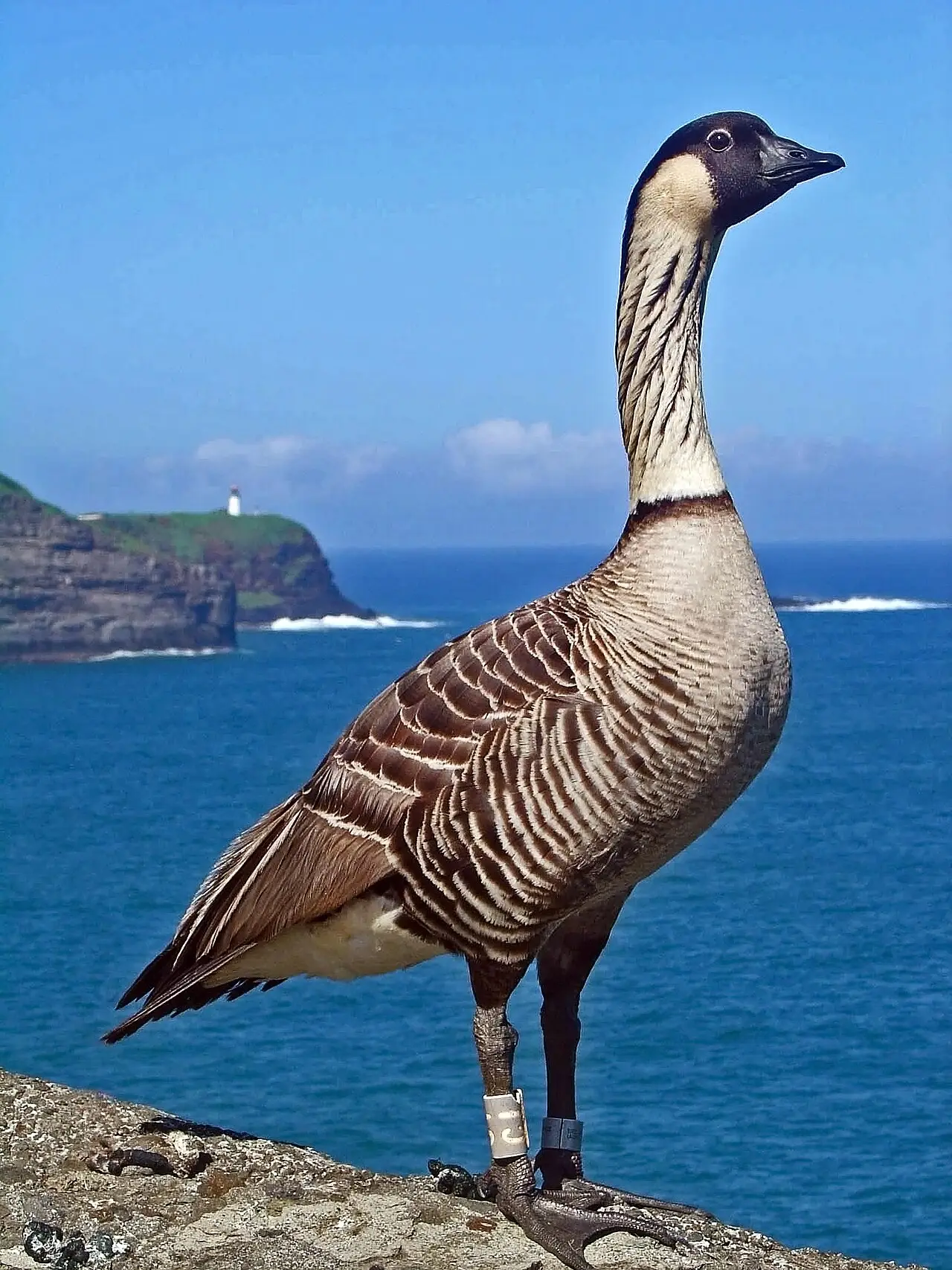
The capital: Honolulu
The capital of Hawaii is Honolulu, on the island of Oʻahu. It has been the seat of government since 1845, when King Kamehameha III moved the capital of the Hawaiian Kingdom there from Lahaina, on Maui. Honolulu stayed the capital through the kingdom's overthrow, annexation and statehood, and today its State Capitol is designed to suggest volcanoes rising from the sea.
- 1845–todayHonolulu
Where Hawaii is
Hawaii shares no land border with another state.
- Land area
- 6,423 sq mi
- Water area
- 4,509 sq mi
- Population density
- 223.1 people per sq mi (15th)
Hawaii trivia
- Hawaii's state seal is the Republic of Hawaii's seal with a new legend and a slightly smaller size (2 3/4 inches instead of 3).Source: Hawaii State Legislature (via Internet Archive)
- State law defines the "Aloha Spirit" and says legislators, the governor and judges may consider it when exercising their powers.Source: Hawaii State Legislature (via Internet Archive)
- Hawaii has three official mammals: the monk seal (state mammal), the humpback whale (marine mammal) and the hoary bat (land mammal).Source: Hawaii State Legislature (via Internet Archive)
- Since 2024 every main island, plus the Northwestern Hawaiian Islands, has its own official snail.Source: Hawaii State Legislature (via Internet Archive)
- Each of the eight main islands has an official color, from red for Hawaiʻi Island to gray for Kahoʻolawe.Source: Hawaii State Legislature (via Internet Archive)
Questions about Hawaii
- What is the capital of Hawaii?
- Honolulu, on the island of Oʻahu. Kamehameha III moved the kingdom's capital there from Lahaina, on Maui, in 1845, and the state constitution names Honolulu as the capital.
- When did Hawaii become a state?
- On August 21, 1959, as the 50th state. President Eisenhower had signed the Hawaii Admission Act on March 18, 1959, and Hawaii's voters accepted statehood that June.
- Does Hawaii have two official languages?
- Yes. Since the 1978 Constitutional Convention, English and Hawaiian have both been official languages of the state.
- What does the Hawaii state motto mean?
- "Ua mau ke ea o ka ʻāina i ka pono" means "The life of the land is perpetuated in righteousness."
Photo credits (5)
- Flag of Hawaii: Dbenbenn, Public domain, via Wikimedia Commons
- Nēnē: Brenda Zaun of U.S. Fish and Wildlife Service Headquarters, CC BY 2.0, via Wikimedia Commons
- Pua aloalo / maʻo hau hele: Unknown author, CC BY-SA 3.0, via Wikimedia Commons
- Kukui: Forest & Kim Starr, CC BY 3.0, via Wikimedia Commons
- Hawaiian monk seal: N3kt0n, CC BY-SA 3.0, via Wikimedia Commons
Sources
- Hawaii Statehood Dwight D. Eisenhower Presidential Library (National Archives) · statehood
- Constitution of the State of Hawaii (Article XV) Hawaii Legislative Reference Bureau · capital
- ʻIolani Palace National Park Service · capital
- The Discovery and Settlement of Polynesia University of Hawaiʻi (Dennis Kawaharada)
- US Census Bureau Vintage 2025 population estimates; 2010 state area measurements