Oregon
The Beaver State
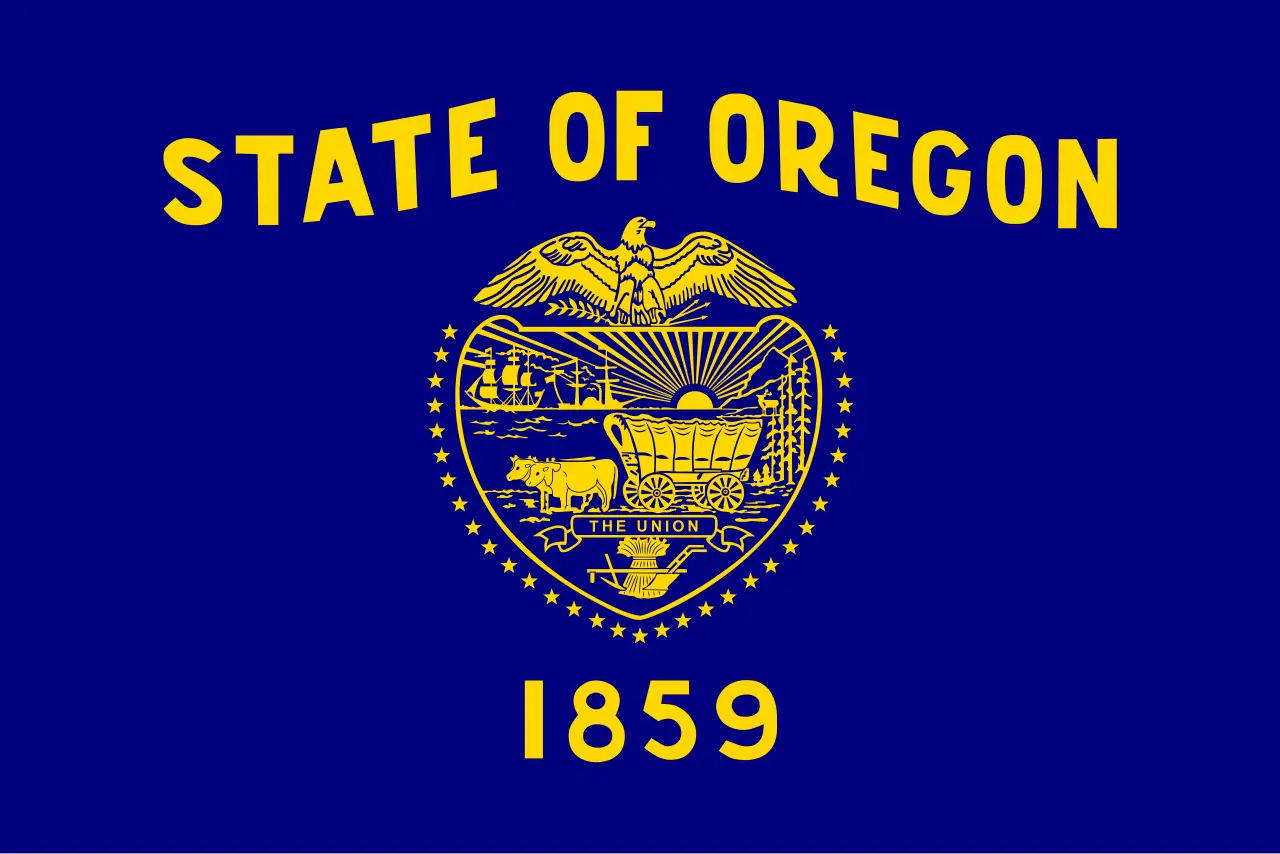
Oregon became the 33rd state on February 14, 1859, Valentine's Day. Its capital is Salem, chosen by voters over Portland in the 1860s, and its largest city is Portland. Oregon is known as the Beaver State, after the animal whose fur drew the first traders to the region, and its flag is the only state flag with a different design on each side: the state shield on the front and a beaver on the back.
- Capital
- SalemCapital since 1855
- Statehood
- February 14, 185933rd state
- Population, 2025
- 4,273,58627th of 50
- Area
- 98,379 sq mi9th largest · 254,799 km²
- Largest city
- Portland635,109 people
- Abbreviation
- ORUS Postal Service code
- Motto
- Alis Volat Propriis“She flies with her own wings”
- Borders
- 4 statesOcean coast
A name from a river
The name Oregon first shows up in writing as “Ouragon,” in a 1765 petition to the British crown by Major Robert Rogers, describing a great western river that was said to bear that name among Native peoples. That river is today’s Columbia, and the name passed to the Oregon Country and then to the state. Jonathan Carver popularized it in a 1778 travel book, writing of “the Oregon, or River of the West,” and William Cullen Bryant’s poem “Thanatopsis” helped fix it in American usage.
Where Rogers got the word is still argued. It may be a garbled French map label for the Wisconsin River, or linked to ooligan, the Chinook Jargon word for the candlefish, or to the Mohegan word wauregan, “the beautiful.” Scholars increasingly favor an Algonquian origin, and older guesses tying it to Spanish words have fallen out of favor.
From provisional government to statehood
In the 1840s the Oregon Country had a provisional government, with Oregon City as its seat from 1845. Oregon City remained the early capital of Oregon Territory. Oregon was admitted as the 33rd state by an act of Congress approved on February 14, 1859, and the seal and flag carry the year. The seal shows a covered wagon, an elk, mountains and the Pacific, where a British warship departs and an American ship arrives, under a banner reading “The Union.”
Salem
Salem’s road to becoming the capital was bumpy. A territorial act of 1851 named it the capital, but the governor disputed the choice until Congress confirmed it. In 1855 the legislature voted to move to Corvallis, only to return to Salem within the year. The 1857 constitution left the permanent seat of government to the voters, and in 1862 and 1864 Salem won by roughly two to one over Portland. Its marble Capitol was finished in 1938, after its predecessor burned. The capital page tells the story.
The Beaver State
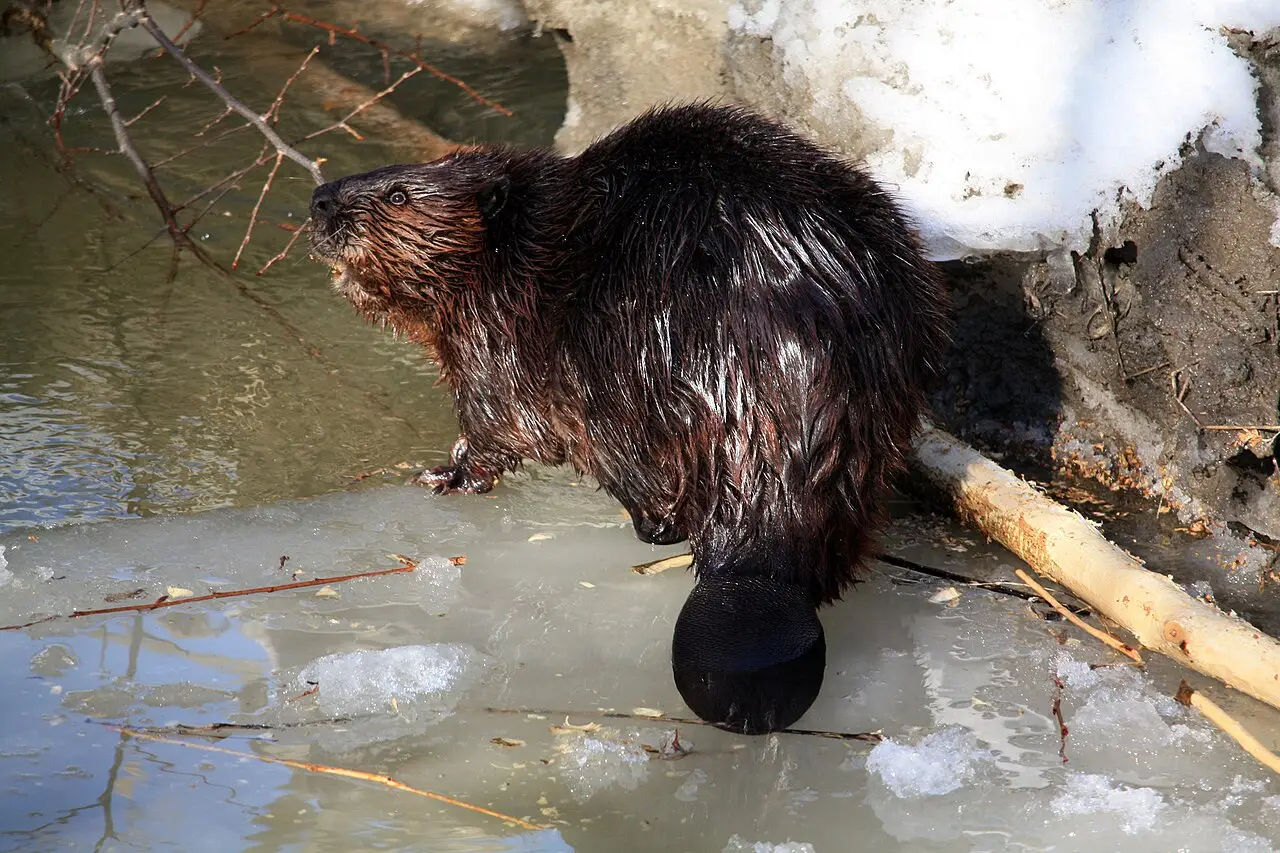
The beaver is woven through Oregon’s history. Its fur drew traders to the region; heavy trapping then wiped it out of much of the state, until managed protection let it return to many waterways. A beaver appeared on the territorial seal and on the “beaver money” coined in 1849, and today it is on the back of the state flag, the only state flag with two different sides. Surprisingly, the beaver was formally adopted as the state animal only in 1969, after The Oregonian pointed out that the Beaver State had no state animal. The motto is Alis volat propriis, “She flies with her own wings.”
Meadowlarks, grapes and firs
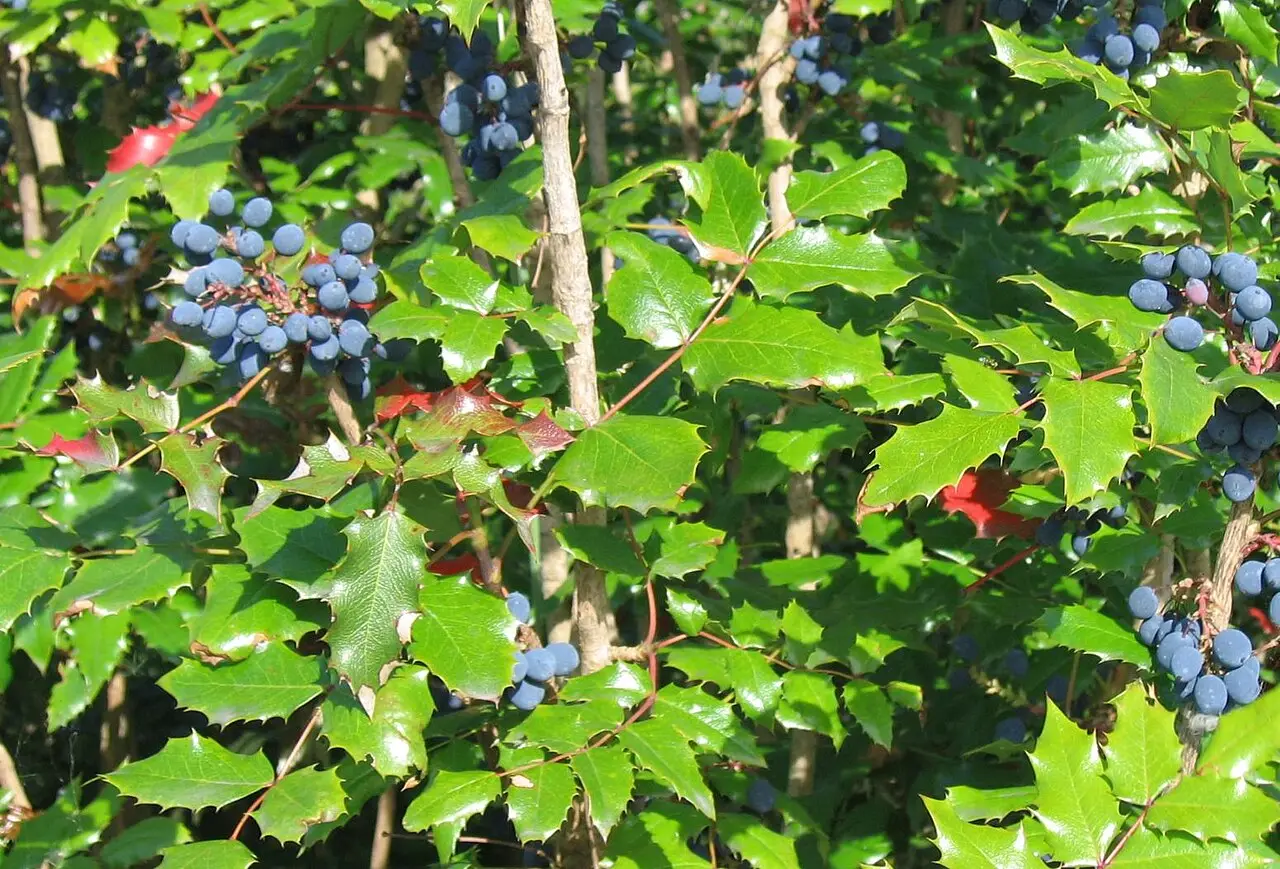
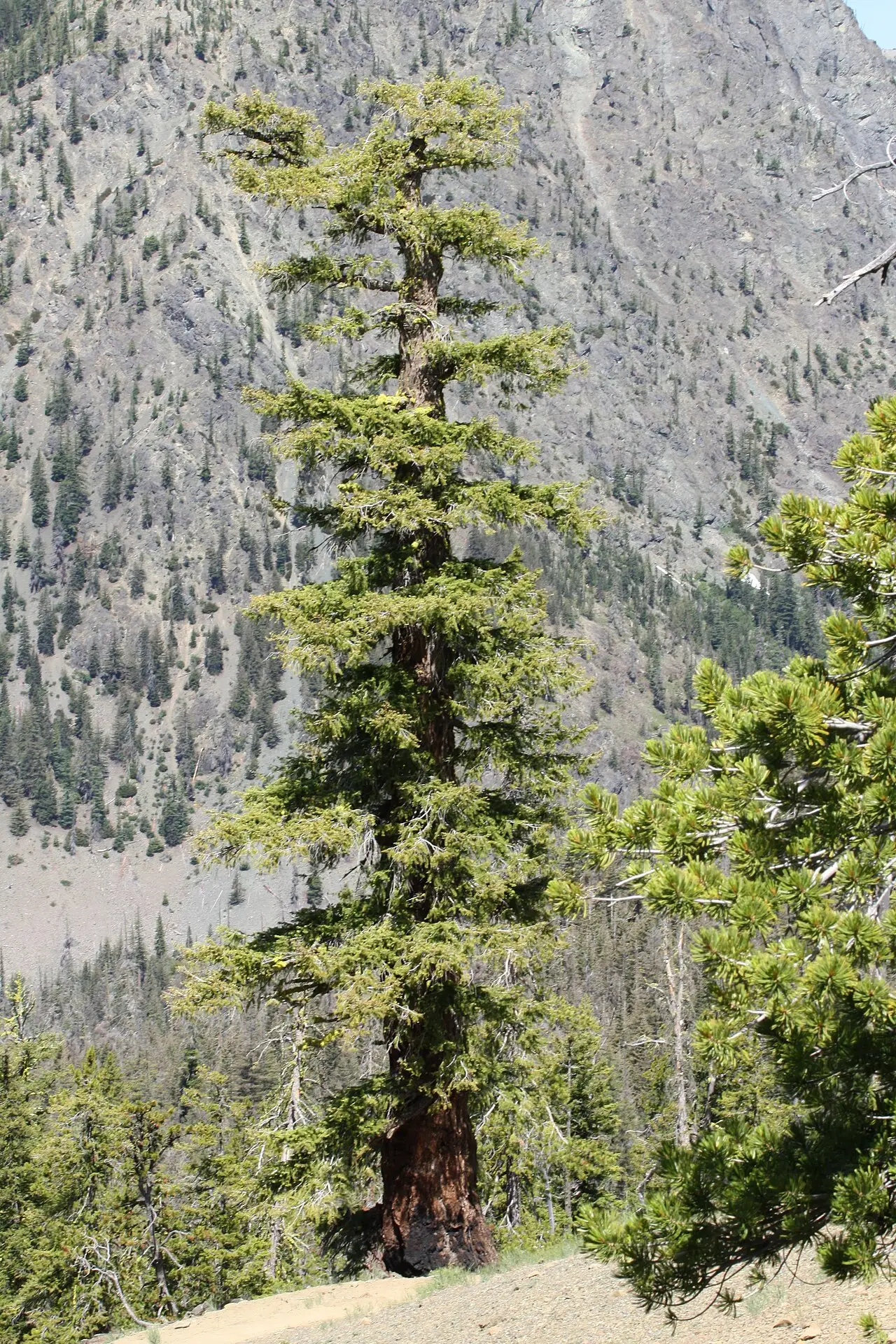
Oregon has 34 official state symbols. The western meadowlark, chosen by schoolchildren in 1927, is the state bird, and the Oregon grape, a holly-like shrub with yellow flowers, the state flower since 1899. The Douglas-fir, the backbone of western Oregon’s timber economy, is the state tree, and the Chinook salmon the state fish. Oregon’s tastes run to hazelnuts, pears, marionberry pie, Dungeness crab and, since 2025, the T-bone steak; the state microbe is brewer’s yeast, a nod to the state’s craft brewers. See every symbol on the Oregon symbols page.
Land and people
Oregon covers 98,379 square miles, 9th among the states, and had about 4.27 million residents in 2025, 27th in the country. It stretches from the Pacific coast across the Cascade Range to the sagebrush country of the east, and borders Washington, Idaho, Nevada and California. Portland, with about 635,000 people, is the largest city, followed by Salem, Eugene, Gresham and Hillsboro.
Oregon state symbols
All 34 official symbols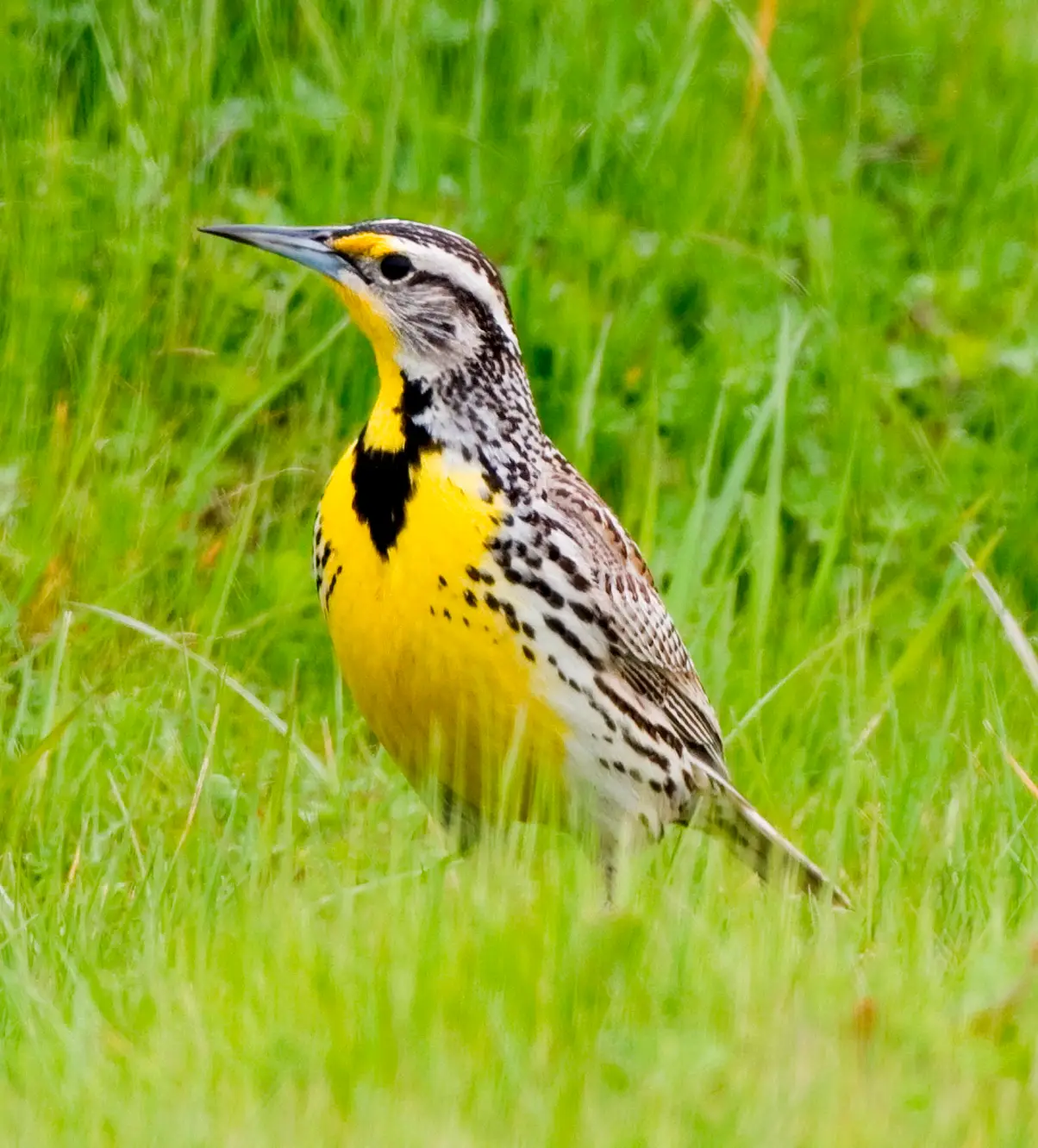
The capital: Salem
The capital of Oregon is Salem, the seat of government since the territorial legislature returned there from Corvallis in December 1855. Salem was first named the capital in 1851, taking over from Oregon City, and in the 1860s Oregon's voters chose it over Portland by about two to one. Two of its capitols burned; the current one, faced in Vermont marble, was finished in 1938.
- 1855–todaySalem
Where Oregon is
Oregon shares a border with 4 states: California, Idaho, Nevada and Washington.
- Land area
- 95,988 sq mi
- Water area
- 2,391 sq mi
- Population density
- 44.5 people per sq mi (39th)
Oregon trivia
- The first Oregon state flag, thought destroyed in the 1935 Capitol fire, was later found framed in a stairwell of Eastern Oregon University's Pierce Library in La Grande.Source: Oregon Historical Society (The Oregon Encyclopedia)
- The western meadowlark was picked by a 1927 schoolchildren's vote, but lawmakers did not formally recognize it until naming it the state songbird in 2017.Source: Oregon Secretary of State (Oregon Blue Book)
- Oregon's Capitol has burned twice: the first statehouse in December 1855, about a month after it opened, and the second in April 1935.Source: Willamette Heritage Center
- Oregon grows about 99 percent of the commercial hazelnut crop in the United States.Source: Oregon Secretary of State (Oregon Blue Book)
- The tater tot was invented in Ontario, Oregon, in 1953, a point cited by backers of the potato as state vegetable.Source: Oregon Historical Society (The Oregon Encyclopedia)
- Oregon's state motto changed in 1987 from 'The Union' back to the territorial-era Latin phrase meaning 'She flies with her own wings'.Source: OregonLaws (public.law), text of the Oregon Revised Statutes
Questions about Oregon
- What is the capital of Oregon?
- Salem. It became the territorial capital in the 1850s, and voters confirmed it as the state capital over Portland in 1862 and 1864.
- Why is Oregon called the Beaver State?
- For the beaver's central place in the fur trade that drew early explorers and traders to the region. The beaver became the state animal in 1969 and appears on the back of the state flag. No law formally adopts the nickname.
- Where does the name Oregon come from?
- It first appears in writing as "Ouragon" in a 1765 petition by Major Robert Rogers, describing a western river, today's Columbia. Its origin is still debated; scholars increasingly favor an Algonquian source.
- What is Oregon's state motto?
- '"Alis volat propriis," Latin for "She flies with her own wings."'
- Why is the Oregon flag different on each side?
- The front shows the shield from the state seal and the back a gold beaver. Oregon's is the only state flag with two different sides.
Photo credits (5)
- Flag of Oregon: User:Denelson83, Public domain, via Wikimedia Commons
- Western meadowlark: Kevin Cole from Pacific Coast, USA (en:User:Kevinlcole), CC BY 2.0, via Wikimedia Commons
- Oregon grape: The, CC BY-SA 3.0, via Wikimedia Commons
- Douglas-fir: Walter Siegmund, CC BY-SA 3.0, via Wikimedia Commons
- American beaver: Vlad Podvorny, CC BY 2.0, via Wikimedia Commons
Sources
- Oregon Almanac: Dance to Hops Production Oregon Secretary of State (Oregon Blue Book) · statehood
- Why is the city of Salem Oregon's Capital? Willamette Heritage Center · capital
- Oregon State Capitol and the Capitol Mall Willamette Heritage Center · capital
- Oregon, the Name Oregon Historical Society (The Oregon Encyclopedia)
- ORS Chapter 186 (state emblems) OregonLaws (text of the Oregon Revised Statutes)
- US Census Bureau Vintage 2025 population estimates; 2010 state area measurements