Wyoming
The Equality State
Wyoming became the 44th state on July 10, 1890. In 1869, as a territory, it became the first in the United States to give women the right to vote, and it kept that right at statehood, which is why it is called the Equality State and its motto is "Equal Rights." Its capital, Cheyenne, is also its largest city. Wyoming is the 10th-largest state by area but the least populous, with fewer than 600,000 people.
- Capital
- CheyenneCapital since 1869
- Statehood
- July 10, 189044th state
- Population, 2025
- 588,75350th of 50
- Area
- 97,813 sq mi10th largest · 253,335 km²
- Largest city
- Cheyenne66,507 people
- Abbreviation
- WYUS Postal Service code
- Motto
- Equal RightsEnglish
- Borders
- 6 statesLandlocked
A name from Pennsylvania
Wyoming’s name was borrowed from the East. It comes from a Delaware, or Lenape, word, recorded in forms such as mecheweami-ing, usually translated as “at the big plains” or “extensive meadows.” Settlers first gave it to the Wyoming Valley in Pennsylvania, and Thomas Campbell’s poem “Gertrude of Wyoming” spread it as a place name across the country. Congressman J. M. Ashley of Ohio used it in an 1865 bill for a new western territory, and in the 1868 Senate debate it beat alternatives such as Cheyenne, Shoshoni, Big Horn, Sweetwater and Lincoln. A former state historian, A. J. Mokler, argued that the Delaware people had carried the word west with them, so the choice was less arbitrary than it looks.
The Equality State
On December 10, 1869, Wyoming’s territorial governor signed a law that made Wyoming the first US territory to give women the right to vote. When Wyoming applied for statehood it kept women’s suffrage in its constitution, and December 10 is still celebrated as Wyoming Day. The legacy runs through the state’s symbols: the nickname is the Equality State, the motto, adopted in 1955, is “Equal Rights,” and the woman at the center of the Great Seal holds a banner reading “Equal Rights,” with broken chains at her wrists.
Wyoming became the 44th state on July 10, 1890, when President Benjamin Harrison signed the statehood bill introduced by the territorial delegate, Joseph M. Carey.
Cheyenne
Cheyenne grew up in 1867 along the route of the Union Pacific Railroad, and in 1869 Territorial Governor John A. Campbell named it his temporary seat of government. It has been the capital ever since, although it has never formally won the title: in a 1904 statewide vote it led every other town but fell short of a majority, so it simply stayed. Its Capitol, with a gold-leafed dome, was begun in 1886. The capital page tells the story.
Bison and the bucking horse
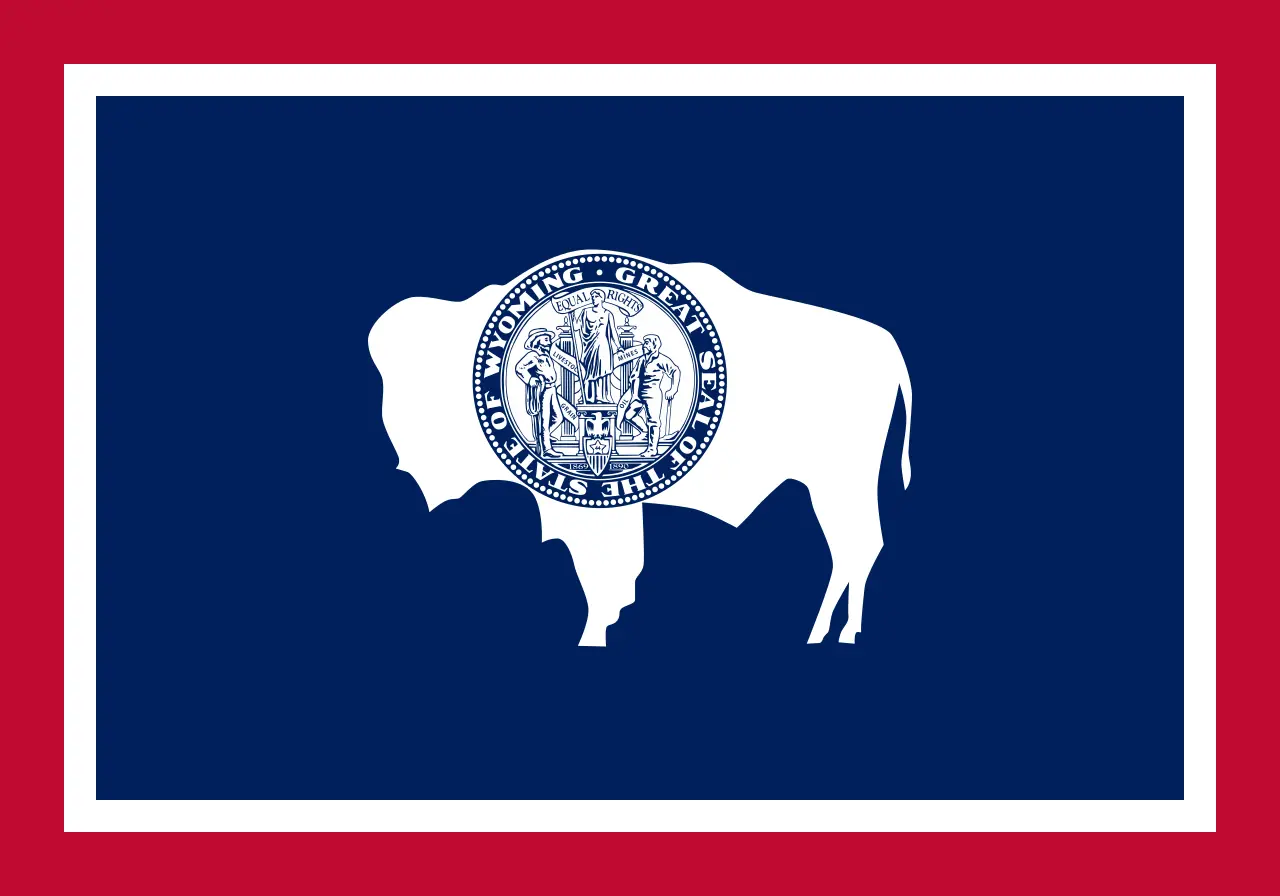
The state flag, adopted in 1917, shows a white bison on a blue field with the state seal branded on its side, inside a red and white border. Wyoming’s other famous emblem, the Bucking Horse and Rider, began as a National Guard insignia in World War I and has been on the state’s license plates since 1936. Wyoming is also known as the Cowboy State.
Paintbrush, meadowlarks and Triceratops
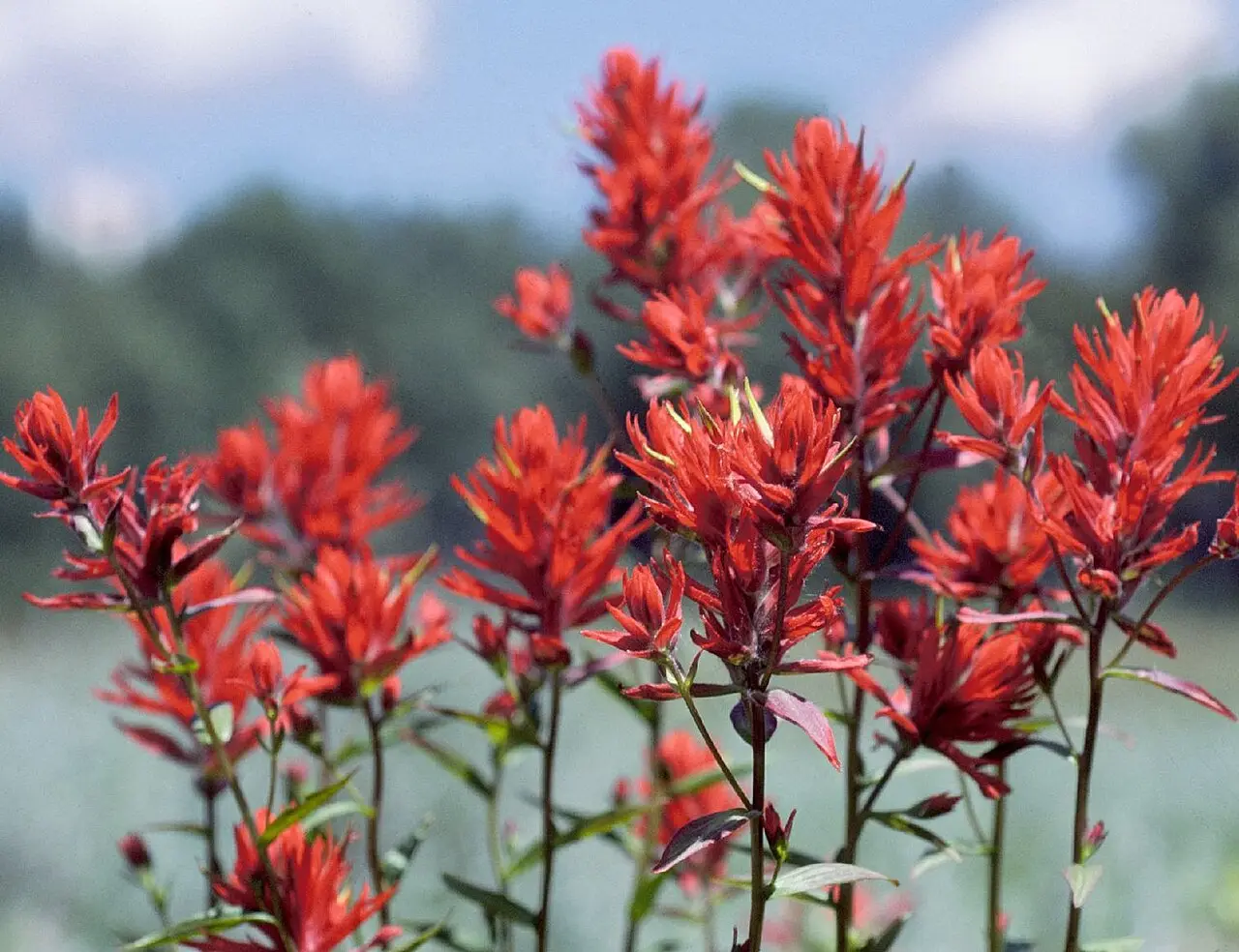
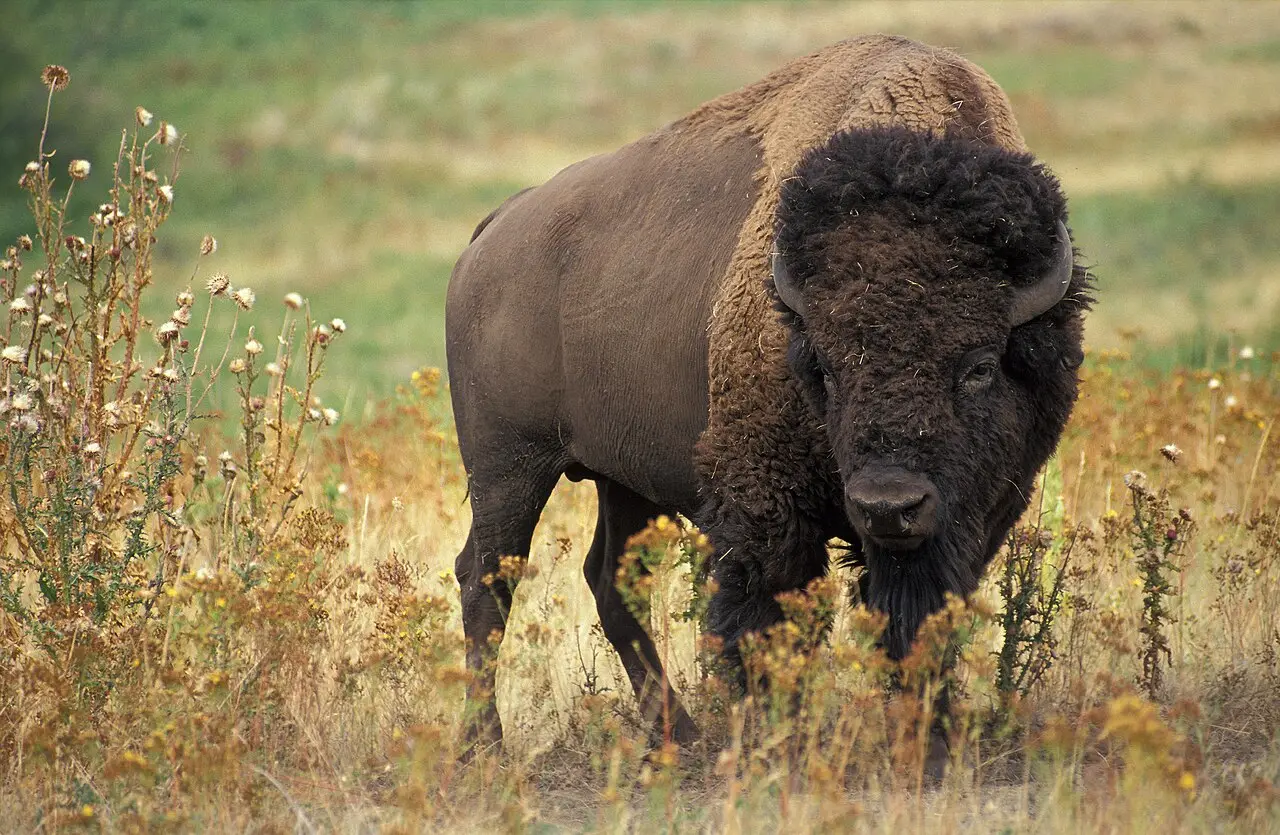
Wyoming has 22 official state symbols. The Indian paintbrush, whose scarlet color comes from bracts rather than petals, became the state flower in 1917, the same day as the flag. The western meadowlark is the state bird, the plains cottonwood the state tree and the American bison the state mammal. The state dinosaur, Triceratops, was chosen by an election, the state fossil is Knightia, a fish found in great numbers in the Green River Formation, and rodeo is the state sport. See them all on the Wyoming symbols page.
Land and people
Wyoming covers 97,813 square miles, 10th among the states, but it had only about 589,000 residents in 2025, the fewest of any state, with about 6 people per square mile. It borders Montana, South Dakota, Nebraska, Colorado, Utah and Idaho. Nearly all of Yellowstone National Park, established in 1872 as the world’s first national park, lies in Wyoming. Cheyenne, with about 67,000 people, is the largest city, followed by Casper, Gillette, Laramie and Rock Springs.
Wyoming state symbols
All 22 official symbols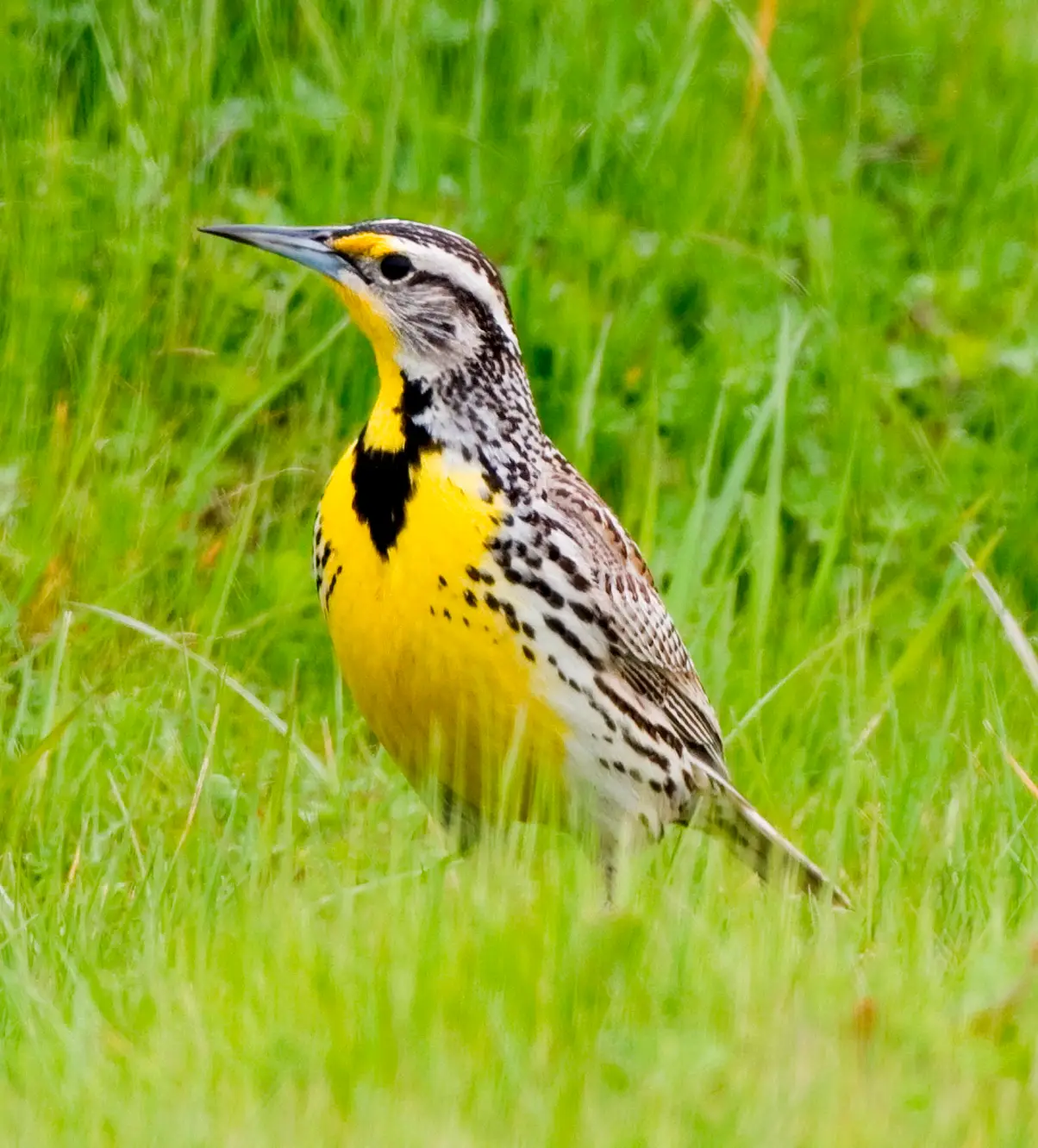
The capital: Cheyenne
The capital of Wyoming is Cheyenne, a town founded in 1867 along the Union Pacific Railroad and the seat of government since 1869. It has never formally been chosen as the permanent capital: when Wyoming voted on the question in 1904, Cheyenne led every rival but fell short of a majority, so it simply stayed. Its Capitol, begun in 1886, is a National Historic Landmark, partly because women's suffrage was written into the state constitution in its Territorial House Chamber.
- 1869–todayCheyenne
Where Wyoming is
Wyoming shares a border with 6 states: Colorado, Idaho, Montana, Nebraska, South Dakota and Utah.
- Land area
- 97,093 sq mi
- Water area
- 720 sq mi
- Population density
- 6.1 people per sq mi (49th)
Wyoming trivia
- November 29, the birthday of Nellie Tayloe Ross, the first woman governor of any U.S. state, is a Wyoming public holiday, though offices and schools stay open.Source: Wyoming Legislature
- Verna Keays won just $20 for designing the state flag, and in her original drawing the bison faced away from the flagpole until Grace Raymond Hebard insisted it be turned toward the staff.Source: WyoHistory.org (Wyoming State Historical Society)
- By law the state historian must keep at least six state flags on hand to lend to citizens for public occasions, in exchange for a deposit check.Source: Wyoming Legislature
- The state seal's central figure is modeled on the Winged Victory statue in the Louvre and is shown with broken chains hanging from her wrists to signify women's political standing in Wyoming.Source: Wyoming Legislature
- Wyoming's official state code is a ten-point "Code of the West" taken from the book Cowboy Ethics, including "Ride for the brand" and "Know where to draw the line."Source: Wyoming Legislature
- Wyoming has two official state songs: the march "Wyoming" (adopted 1955) and "Wyoming Where I Belong" by Annie and Amy Smith (adopted 2018).Source: State of Wyoming
Questions about Wyoming
- What is the capital of Wyoming?
- Cheyenne, the seat of government since 1869 and the state's largest city.
- Why is Wyoming called the Equality State?
- Because in 1869 it became the first US territory to give women the right to vote, and it kept that right when it became a state in 1890. The state motto is "Equal Rights."
- What does Wyoming mean?
- It comes from a Delaware (Lenape) word usually translated as "at the big plains" or "extensive meadows." It was first the name of the Wyoming Valley in Pennsylvania.
- What is the least populous state?
- Wyoming, with about 589,000 residents in 2025.
- Is Yellowstone in Wyoming?
- Mostly. About 96 percent of Yellowstone National Park, established in 1872 as the world's first national park, lies in Wyoming, with the rest in Montana and Idaho.
Photo credits (4)
- Flag of Wyoming: User:Dbenbenn, Public domain, via Wikimedia Commons
- Western meadowlark: Kevin Cole from Pacific Coast, USA (en:User:Kevinlcole), CC BY 2.0, via Wikimedia Commons
- Indian paintbrush: Unknown author, Public domain, via Wikimedia Commons
- American bison: Jack Dykinga, Public domain, via Wikimedia Commons
Sources
- A History of the Wyoming Capitol WyoHistory.org (Wyoming State Historical Society) · statehood
- Visit the Capitol Wyoming Department of Administration & Information · capital
- History of Wyoming's Name Wyoming State Library (Wyoming Places)
- Wyoming State Symbols (Student's Corner) Wyoming Secretary of State
- Wyoming Statutes, Title 8 (state symbols) Wyoming Legislature
- Park Facts National Park Service, Yellowstone National Park
- US Census Bureau Vintage 2025 population estimates; 2010 state area measurements