Connecticut
The Constitution State
Connecticut became the fifth state on January 9, 1788, when a convention in Hartford ratified the US Constitution. Its capital is Hartford, the seat of government since the colony was founded in 1636 and the only capital since 1875, when it stopped sharing the title with New Haven. Its official nickname is the Constitution State; its best-known unofficial one is the Nutmeg State.
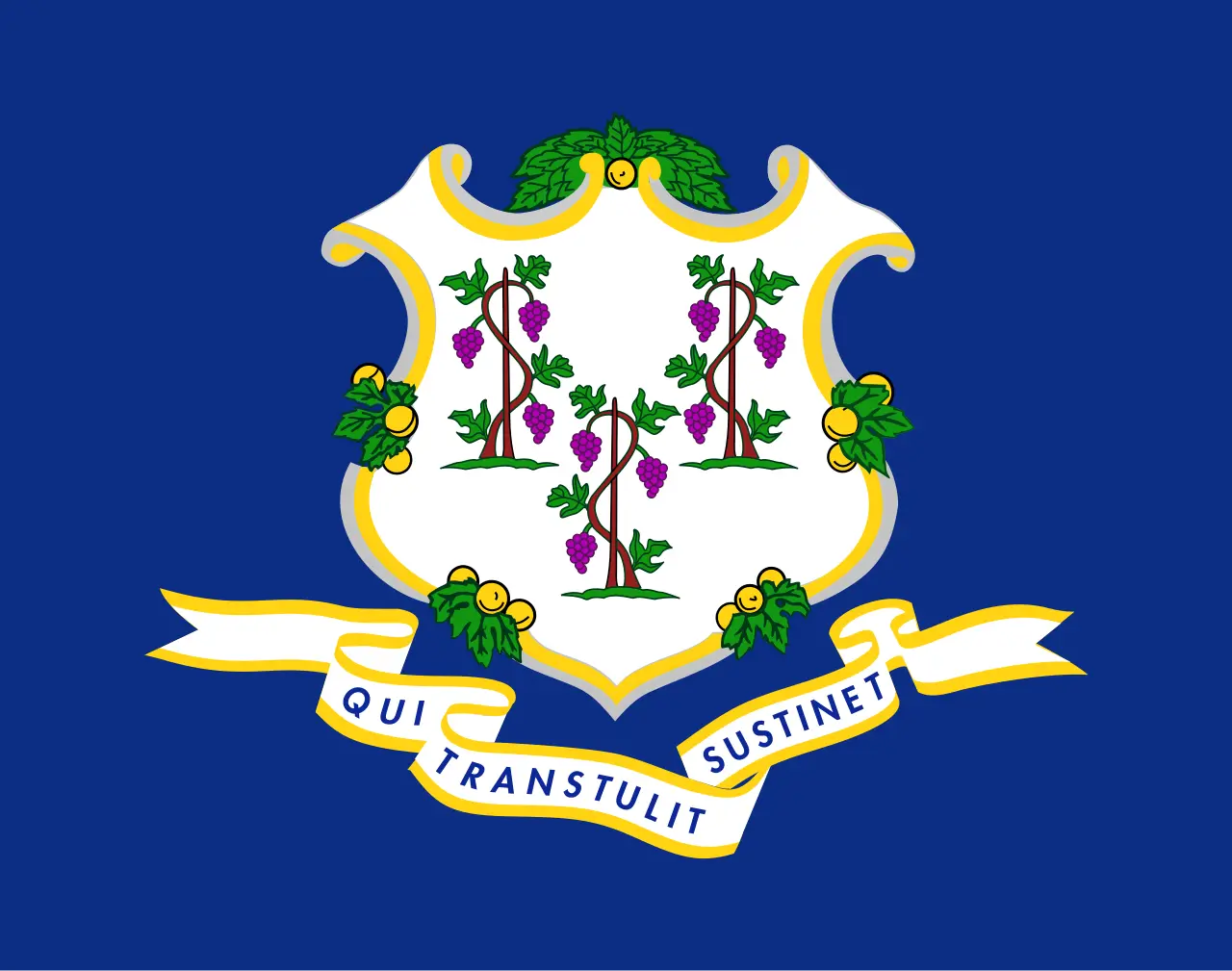
- Capital
- HartfordCapital since 1875
- Statehood
- January 9, 17885th state
- Population, 2025
- 3,688,49629th of 50
- Area
- 5,543 sq mi48th largest · 14,357 km²
- Largest city
- Bridgeport152,273 people
- Abbreviation
- CTUS Postal Service code
- Motto
- Qui Transtulit Sustinet“He Who Transplanted Still Sustains”
- Borders
- 3 statesOcean coast
The Constitution State
Connecticut’s official nickname points back to its earliest years. In 1638 and 1639 the river towns of Hartford, Windsor and Wethersfield adopted the Fundamental Orders, a written plan of government for the colony. In the 1800s the historian John Fiske and others called it the first written constitution, and Connecticut has embraced the idea ever since; the legislature made “the Constitution State” official in 1959. Some modern historians dispute the “first” claim, but the nickname has stuck. Connecticut also lived up to it in 1788, when a state convention in Hartford ratified the US Constitution by 128 votes to 40, making Connecticut the fifth state.
Nutmegs, provisions and steady habits
Connecticut has collected more nicknames than most states. “The Nutmeg State” recalls the Yankee peddlers who carried Connecticut goods across early America. One story says some of them sold fake nutmegs carved from wood. Another says the nutmegs were real, but customers who did not know to grate them thought they had been cheated. “The Provisions State” comes from the Revolutionary War, when Connecticut supplied so much food and cannon to the Continental Army that George Washington often turned to Governor Jonathan Trumbull for help. And “the Land of Steady Habits” refers to the strict morals and conservative customs of its people.
A long river and a hidden charter
The name Connecticut comes from the Connecticut River, which runs down the middle of the state. The state traces it to the Mohegan word Quinnehtukqut, “long river place” or “beside the long tidal river.” English colonists founded their first towns along its banks in the 1630s.
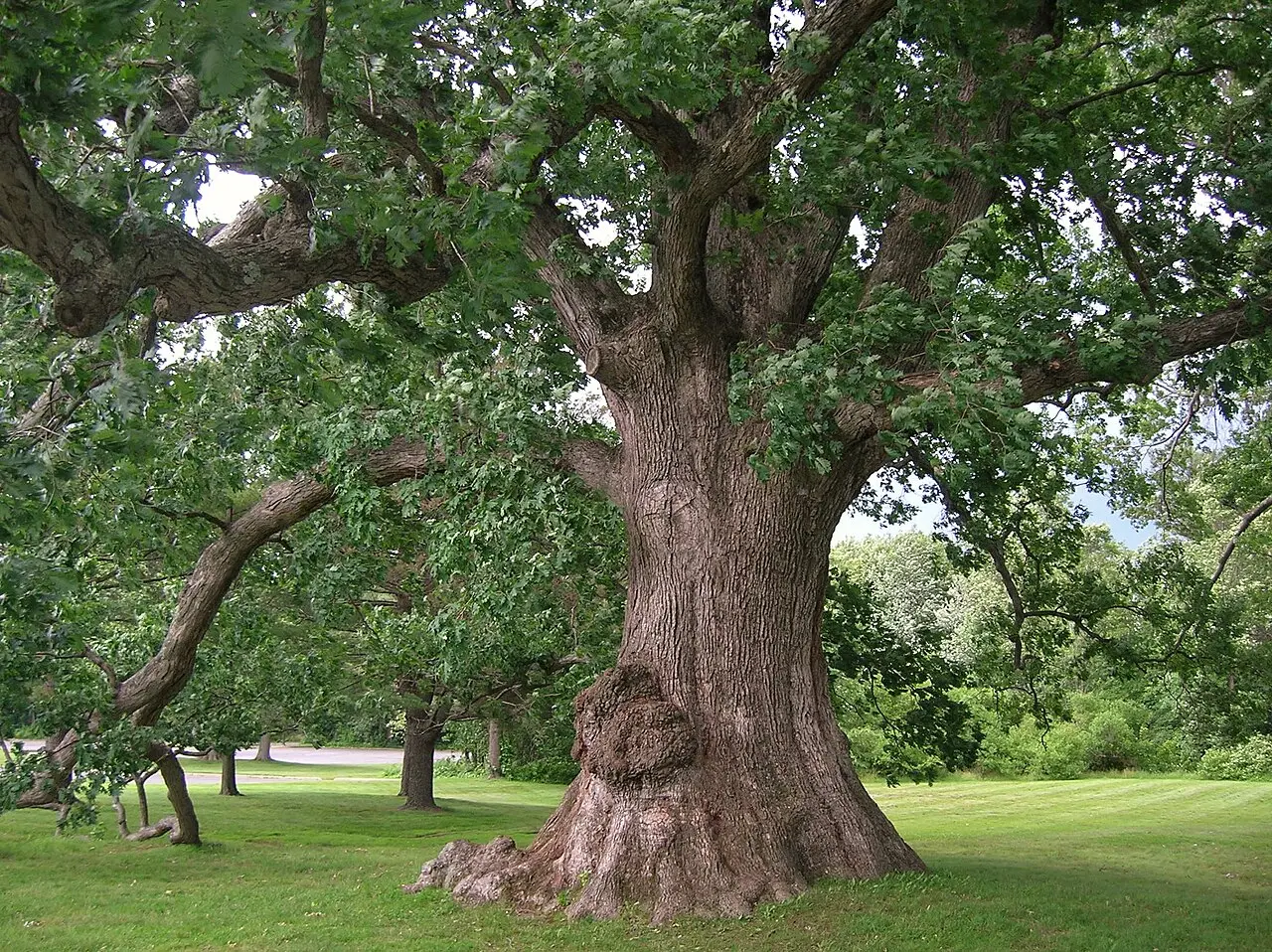
Connecticut’s most famous story involves a tree. In 1662 the colony received a royal charter from King Charles II that gave it unusual freedom to govern itself. In 1687 Sir Edmund Andros arrived to take it back. During a candle-lit meeting the charter disappeared, and by tradition it was hidden in a large white oak in Hartford, which became known as the Charter Oak. The tree fell in a storm in 1856, but the white oak is now the state tree, and the oak appears on the state quarter.
Two capitals for 174 years
From 1701 Connecticut had two capitals. The General Assembly met in Hartford in May and in New Haven in October, an arrangement that lasted through the Revolution and most of the 1800s. In 1873, tired of paying for two statehouses, the legislature voted for a single capital, Hartford outbid New Haven, and a constitutional amendment made it official in 1875. The capital page tells the story.
Symbols from whales to lollipops
Connecticut has 35 official symbols. The mountain laurel has been the state flower since 1907 and the American robin the state bird since 1943. The state animal is the sperm whale, chosen in 1975 for Connecticut’s whaling past, when ships from New London and Mystic hunted it across the oceans. The state ship is the USS Nautilus, the world’s first nuclear-powered submarine, built in Groton. Connecticut also names a state hero, Nathan Hale, and a state heroine, Prudence Crandall, who opened a school for Black girls in 1833. Newer additions include the Siberian Husky, the University of Connecticut’s mascot, and the lollipop, both in 2024, and in 2026 the spring peeper and Housatonic marble. See every symbol on the Connecticut symbols page.
The flag shows three grapevines on a white shield above the motto Qui transtulit sustinet, Latin for “He who transplanted still sustains,” a motto that has appeared on Connecticut’s seals since 1639.
Land and people
Connecticut is small: at 5,543 square miles it is the third smallest state, after Rhode Island and Delaware. It is also crowded, with about 3.69 million residents in 2025 and the fourth highest population density in the country. It borders New York, Massachusetts and Rhode Island, and its southern coast faces Long Island Sound. Its largest city is not its capital: Bridgeport is the largest, followed by Stamford, New Haven and Hartford.
Connecticut state symbols
All 35 official symbols


The capital: Hartford
The capital of Connecticut is Hartford. It has been a seat of government since the Connecticut Colony was founded in 1636, but from 1701 it shared the title with New Haven, and the legislature alternated between the two cities. In 1875 a constitutional amendment made Hartford the only capital, and its Gothic Capitol opened in 1879.
- 1701–1875Hartford and New Haven
- 1875–todayHartford
Where Connecticut is
Connecticut shares a border with 3 states: Massachusetts, New York and Rhode Island.
- Land area
- 4,842 sq mi
- Water area
- 701 sq mi
- Population density
- 761.8 people per sq mi (4th)
Connecticut trivia
- The trials of Cinque and the other Amistad captives opened in Hartford's Old State House in 1839.Source: State of Connecticut (reproduced from the Connecticut State Register & Manual, Secretary of the State)
- About 2,000 dinosaur footprints were found on a single rock layer in Rocky Hill in 1966, leading to the creation of Dinosaur State Park.Source: State of Connecticut (reproduced from the Connecticut State Register & Manual, Secretary of the State)
- In the 1890s Connecticut had the largest fleet of oyster steamers in the world.Source: State of Connecticut (reproduced from the Connecticut State Register & Manual, Secretary of the State)
- After Hartford became the sole capital, New Haven's old statehouse on the Green was torn down in 1889 before a crowd of about 3,000 people.Source: ConnecticutHistory.org (CT Humanities)
- A 2026 law declares Connecticut the birthplace of the Boys and Girls Club movement, which began with Hartford's Dashaway Club, founded in 1860 by four women.Source: Connecticut General Assembly
Questions about Connecticut
- What is the capital of Connecticut?
- Hartford. It was the seat of the Connecticut Colony from 1636, shared the capital with New Haven from 1701, and has been the sole capital since 1875.
- Why is Connecticut called the Constitution State?
- Because of the Fundamental Orders of 1638-39, a framework of government adopted by Hartford, Windsor and Wethersfield that some historians called the first written constitution. The nickname became official in 1959.
- Why is Connecticut called the Nutmeg State?
- The nickname comes from Connecticut's Yankee peddlers. One story says some sold fake nutmegs carved from wood; another says customers who did not know that real nutmegs must be grated assumed they were worthless wood.
- What is the largest city in Connecticut?
- Bridgeport, with about 152,000 people in 2025. Stamford, New Haven and Hartford follow, all between about 120,000 and 140,000.
Photo credits (5)
- Flag of Connecticut: Jean-Pierre Demailly, xrmap authors, Commons users (SVG), Public domain, via Wikimedia Commons
- American robin: Rhododendrites, CC BY-SA 4.0, via Wikimedia Commons
- Mountain laurel: Qwert1234, CC BY-SA 3.0, via Wikimedia Commons
- White oak: Marty Aligata, CC BY-SA 3.0, via Wikimedia Commons
- Sperm whale: Gabriel Barathieu, CC BY-SA 2.0, via Wikimedia Commons
Sources
- Connecticut Ratifies US Constitution - Today in History: January 9 ConnecticutHistory.org (CT Humanities) · statehood
- Connecticut's Capitals Connecticut State Library · capital
- Hartford and New Haven: A Tale of Two Capitals ConnecticutHistory.org (CT Humanities) · capital
- General Description and Facts State of Connecticut
- State Nicknames Connecticut State Library
- US Census Bureau Vintage 2025 population estimates; 2010 state area measurements