New York
The Empire State
New York became the 11th state on July 26, 1788, when a convention at Poughkeepsie ratified the US Constitution by a vote of just 30 to 27. Its capital is Albany, the seat of government since 1797, while New York City, with about 8.6 million people, is by far the largest city in the country. New York is known as the Empire State, and its motto is "Excelsior," "Ever upward."
- Capital
- AlbanyCapital since 1797
- Statehood
- July 26, 178811th state
- Population, 2025
- 20,002,4274th of 50
- Area
- 54,555 sq mi27th largest · 141,297 km²
- Largest city
- New York8,584,629 people
- Abbreviation
- NYUS Postal Service code
- Motto
- Excelsior“Ever upward”
- Borders
- 5 statesCanada · Ocean coast
From New Amsterdam to New York
New York was Dutch before it was English. The colony of New Netherland, with its chief town of New Amsterdam, grew from the 1620s. In 1664 King Charles II of England granted the territory to his brother James, Duke of York, and that September an English squadron under Richard Nicolls forced Director-General Peter Stuyvesant to give up New Amsterdam. The colony and its town were renamed New York, after the duke’s title.
Revolution and a moving capital
The Revolution drove the new state government out of New York City, which the British army held, and it kept moving. In April 1777 a convention at Kingston adopted the first state constitution, and the first state Senate met there that September; on October 16, 1777, British troops burned the town. For the next two decades the legislature rotated among Poughkeepsie, Albany, Fishkill, Kingston and, after the war, New York City.
The 11th state
New York was closely divided over the federal Constitution. A ratifying convention at Poughkeepsie approved it on July 26, 1788, by a vote of 30 to 27, making New York the 11th state to ratify.
Albany
In late 1796 lawmakers left New York City’s Federal Hall planning to reconvene in Albany, and acts passed in 1797 made Albany the permanent capital. It was central, a growing hub of trade and transport, and safer than New York City, which was exposed to attack from the sea and to yellow fever. Albany’s granite Capitol took from 1867 to 1899 to build. The capital page tells the story.
The Empire State
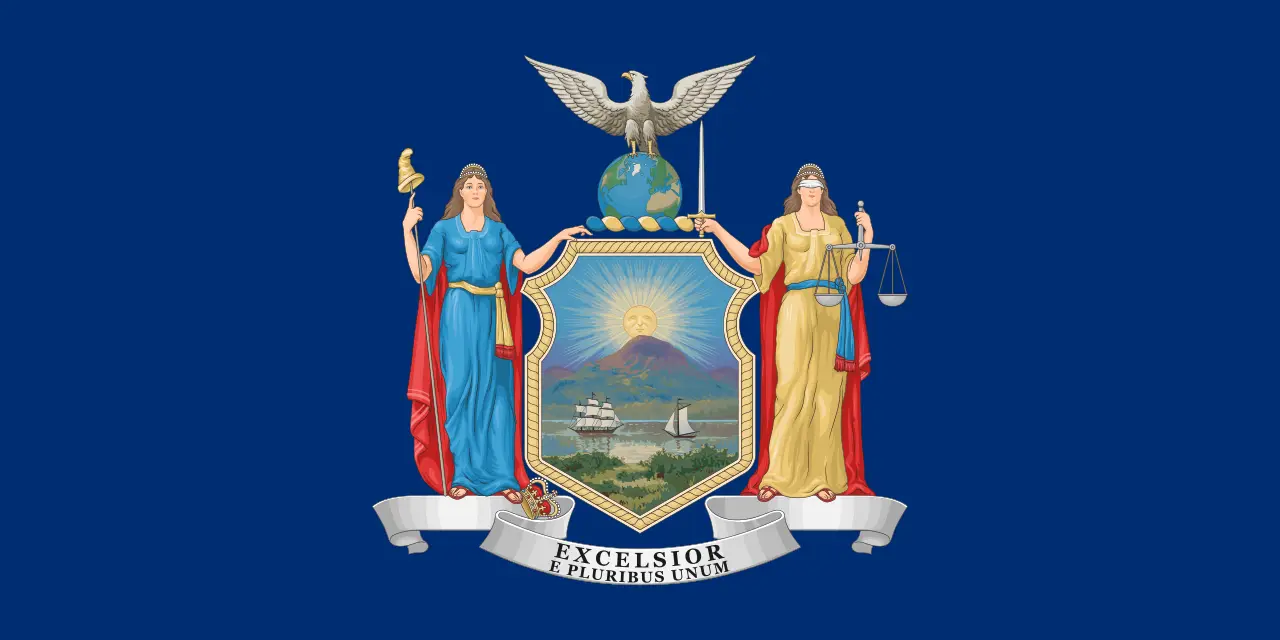
The origin of New York’s nickname is uncertain. A frequently cited lead is George Washington’s description of New York as the “seat of the Empire” in 1784 or 1785, and the name was well established long before the Empire State Building borrowed it. It is not set in law. The motto, Excelsior, “Ever upward,” has been on the state arms since 1778, and in 2020 the state budget added a second line, E pluribus unum, “Out of many, one.” The arms, with Liberty and Justice on either side of a shield showing the sun rising behind mountains over a river, are on the blue state flag.
Bluebirds, roses and beavers
New York has 24 official state symbols. The eastern bluebird became the state bird in 1970, the rose the state flower in 1955 and the sugar maple the state tree in 1956. The American beaver, whose pelts drew the first fur traders to the Albany area, is the state animal. Food and farming are well represented, with the apple, the apple muffin, milk and yogurt. The state song, “I Love New York,” began as a 1977 tourism jingle, and the “I Love New York” slogan and heart logo by Milton Glaser became official in 2009. See every symbol on the New York symbols page.
Land and people
New York covers 54,555 square miles, 27th among the states, including more than 7,400 square miles of water. It had about 20 million residents in 2025, 4th in the country, slightly fewer than in 2020. It is the only state that borders both the Atlantic Ocean and the Great Lakes, with Canada beyond them to the north. Its neighbors are Vermont, Massachusetts, Connecticut, New Jersey and Pennsylvania. New York City, with about 8.58 million people, is the largest city, followed by Buffalo, Yonkers, Rochester and Syracuse. Albany has about 102,000.
New York state symbols
All 24 official symbols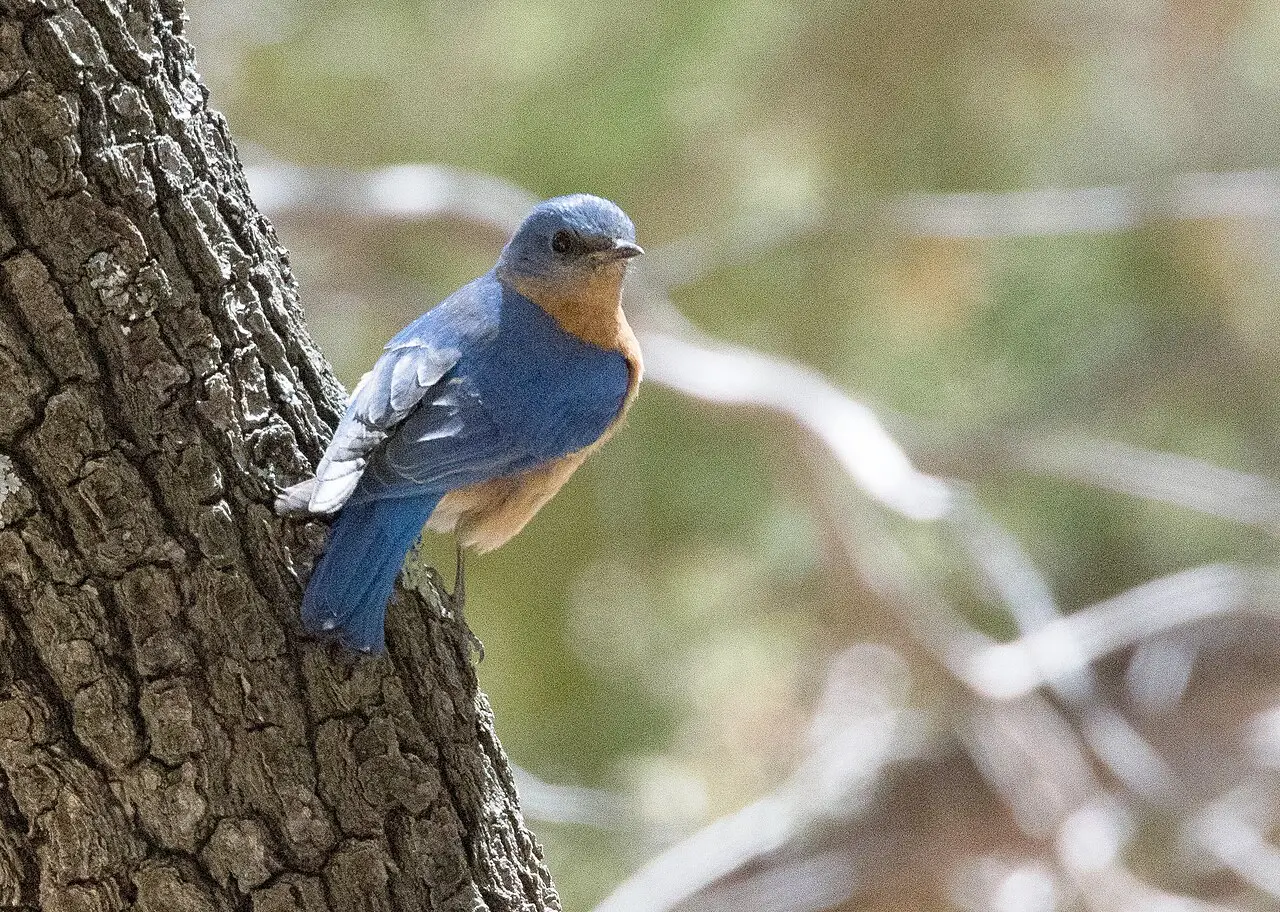



The capital: Albany
The capital of New York is Albany, the seat of government since 1797. During and after the Revolution the legislature moved among Kingston, Poughkeepsie, New York City and other towns, before lawmakers settled on Albany, a central and safer site. Albany's granite Capitol took from 1867 to 1899 to build. With about 102,000 people, Albany is far smaller than New York City.
- 1784–1796New York City
- 1797–todayAlbany
Where New York is
New York shares a border with 5 states: Connecticut, Massachusetts, New Jersey, Pennsylvania and Vermont. It also borders Canada.
- Land area
- 47,126 sq mi
- Water area
- 7,429 sq mi
- Population density
- 424.4 people per sq mi (8th)
New York trivia
- Two separate sections of New York's State Law are both numbered 87: one names the state reptile and the other the state bush.Source: New York State Senate
- New York's state dog is not a breed at all: any trained working dog, from guide dogs to herding dogs, qualifies.Source: New York State Senate
- Stone carvers hid 77 faces in the Capitol, among them Abraham Lincoln, Frederick Douglass and Susan B. Anthony.Source: New York State Office of General Services (Empire State Plaza)
- New York has had five versions of its Great Seal since the first one in 1777; the version in use today dates from 1882.Source: New York Department of State
- New York's state sport, baseball, was proposed by a class of fourth graders at Cooperstown Elementary School.Source: New York State Senate
- The state fossil, a sea scorpion, lived in a shallow sea that once covered a band of New York running roughly along today's Thruway.Source: New York State Library
Questions about New York
- What is the capital of New York?
- Albany. It has been the capital since 1797. New York City is the largest city but has not been the state capital since 1796.
- Why is New York called the Empire State?
- The origin is uncertain. A frequently cited lead is George Washington's description of New York, in 1784 or 1785, as the "seat of the Empire." The nickname was in use long before the Empire State Building borrowed it, and it is not set in law.
- What does Excelsior mean?
- It is Latin for "Ever upward." It has been New York's motto since the state arms were adopted in 1778.
- Who is New York named after?
- James, Duke of York, brother of King Charles II of England, who was granted the Dutch colony of New Netherland in 1664.
- Was New York City ever the capital of New York?
- Yes. It was the colonial capital, and after the Revolution the state legislature met there from 1784 until 1796, before moving to Albany.
Photo credits (5)
- Flag of New York: State of New York, Public domain, via Wikimedia Commons
- Eastern bluebird: Bettina Arrigoni, CC BY 2.0, via Wikimedia Commons
- Rose: User:Tigerente, CC BY-SA 3.0, via Wikimedia Commons
- Sugar maple: MPF, CC BY 2.5, via Wikimedia Commons
- American beaver: Vlad Podvorny, CC BY 2.0, via Wikimedia Commons
Sources
- New York Ratifies Constitution (Today in History: July 26) Library of Congress · statehood
- The Capitol's History & Architecture New York State Office of General Services (Empire State Plaza) · capital
- Senate House State Historic Site New York State Office of Parks, Recreation and Historic Preservation · capital
- New Amsterdam Becomes New York American Heritage
- New York State Emblems New York Department of State
- New York State Emblems New York State Library
- US Census Bureau Vintage 2025 population estimates; 2010 state area measurements