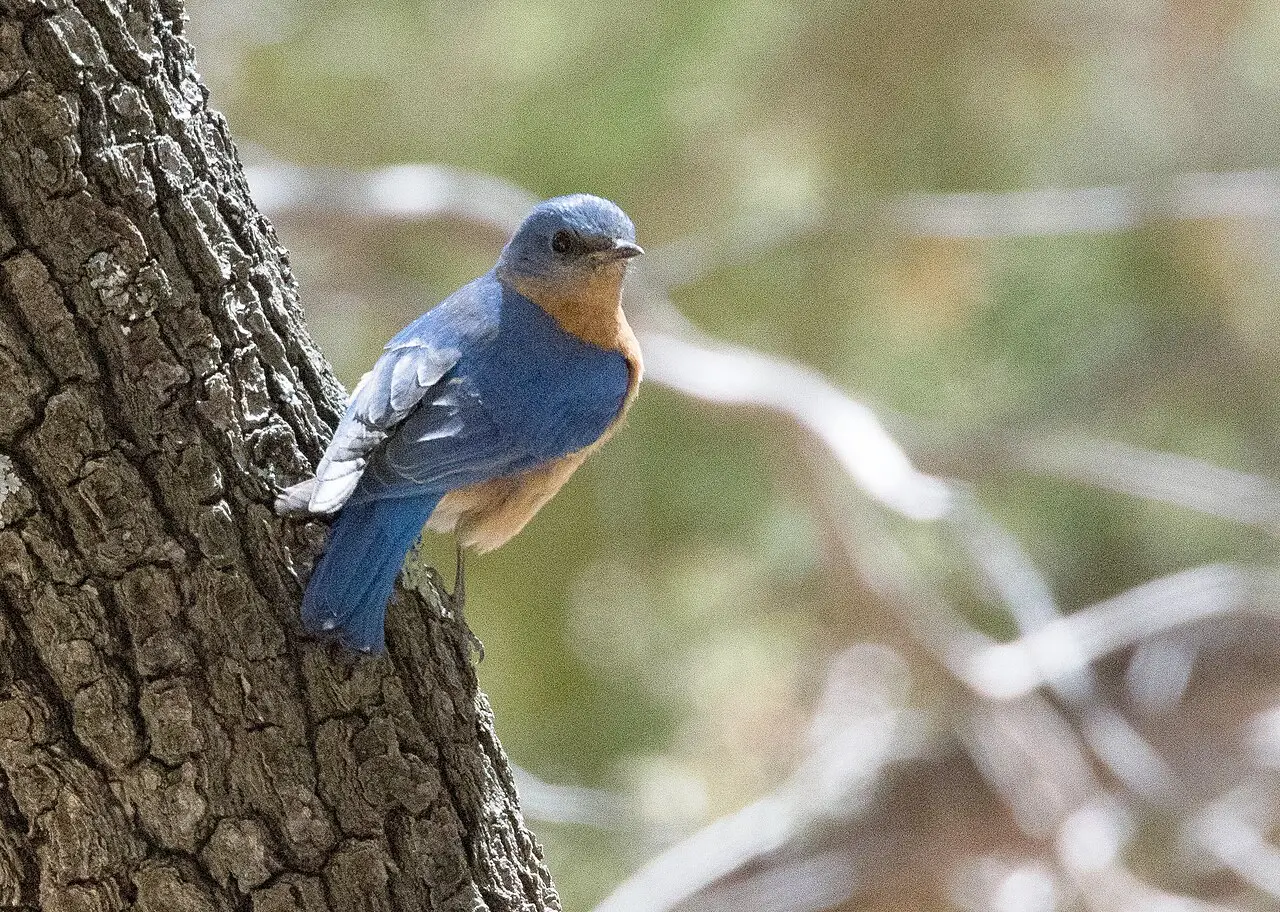
Eastern bluebird, the state bird of New York
The state bird of New York is the eastern bluebird, adopted in 1970. It is a small thrush with a bright blue back and a rusty red-brown breast, and it is one of the first birds to return to New York in spring. Its numbers fell sharply by the 1950s, but nest boxes set out along fence rows helped it recover. Missouri shares it as state bird.
How to recognize it
The eastern bluebird is a small thrush, about 6 to 8 inches long, weighing roughly an ounce. Males are bright blue on the back, wings and head, with a rusty red-brown throat and breast and a white belly. Females show the same pattern in duller, grayish-blue tones, and juveniles are heavily spotted, with only a little blue. Its call is a soft, musical chur-wi or tru-ly, and its song a gentle warble.
How it lives
Bluebirds eat mostly insects, such as crickets, grasshoppers and beetles, along with spiders and earthworms, and switch to berries and seeds in colder months. A bluebird watches from a low perch, spotting insects up to about 100 feet away, then drops or hovers to catch them. It nests in tree cavities or nest boxes, usually raising two broods of four or five eggs a year. In fall, as many as 50 birds may huddle together overnight for warmth.
Where to see one in New York
Bluebirds live in open country with scattered trees: fields, meadows, farms, orchards and roadsides. In New York the bluebird is one of the first birds back in spring. Look in open fields and orchards from early spring, especially from April through July, when males sing from fence posts. The Department of Environmental Conservation suggests its Five Rivers Environmental Education Center in Delmar and its Stony Kill Farm Environmental Education Center, and many preserves keep monitored nest-box trails. Many bluebirds head south in fall, but some stay through winter where food is available.
A comeback
Bluebird numbers fell sharply by the middle of the 20th century. They have climbed back steadily since, helped by volunteers who put up and monitor nest boxes along fence rows and trails, and the species is now of low conservation concern.
The state bird since 1970
Governor Nelson Rockefeller signed the law making the eastern bluebird New York’s state bird on May 18, 1970. Missouri is the only other state with the eastern bluebird as state bird.
Questions about the New York state bird
- What is the state bird of New York?
- The eastern bluebird (Sialia sialis), adopted in 1970.
- When do bluebirds return to New York?
- Early in spring; the bluebird is one of the first birds back. Many leave in fall, but some stay through winter where food is available.
- Where can I see bluebirds in New York?
- In open fields and orchards, especially from April through July, when males sing from fence posts. The DEC suggests its Five Rivers Environmental Education Center in Delmar and Stony Kill Farm Environmental Education Center.
- Why did bluebirds decline in New York?
- Their numbers fell sharply by the mid-20th century. They have climbed back steadily since, helped by volunteer-run nest-box trails.
Sources
- Eastern Bluebird New York State Department of Environmental Conservation
- Eastern Bluebird National Audubon Society
- New York State Emblems New York State Library
- Eastern Bluebird Minnesota Breeding Bird Atlas (University of Minnesota / Audubon Minnesota)