South Carolina
The Palmetto State
South Carolina became the eighth state on May 23, 1788, when a convention in Charleston ratified the US Constitution. Its capital is Columbia, a city planned from scratch in 1786 near the center of the state, and its largest city is Charleston, the old colonial capital. South Carolina is known as the Palmetto State, after the palmetto-log fort on Sullivan's Island that withstood a British fleet on June 28, 1776; the palmetto is on its flag and its seal.
- Capital
- ColumbiaCapital since 1790
- Statehood
- May 23, 17888th state
- Population, 2025
- 5,570,27423rd of 50
- Area
- 32,020 sq mi40th largest · 82,933 km²
- Largest city
- Charleston159,423 people
- Abbreviation
- SCUS Postal Service code
- Motto
- Dum Spiro Spero; Animis Opibusque Parati“While I breathe, I hope; Prepared in mind and resources”
- Borders
- 2 statesOcean coast
Named for a king
Carolina is built on Carolus, the Latin form of Charles. King Charles I used the name in his 1629 grant of the region to his attorney general, Sir Robert Heath, and Charles II reissued the territory to eight Lords Proprietors in 1663. Charles Town, the colony’s first settlement, was founded in 1670 and moved to its peninsula by 1680. The colony was later split, and in 1710 the proprietors gave the northern part its own governor; the southern part became South Carolina.
The palmetto fort
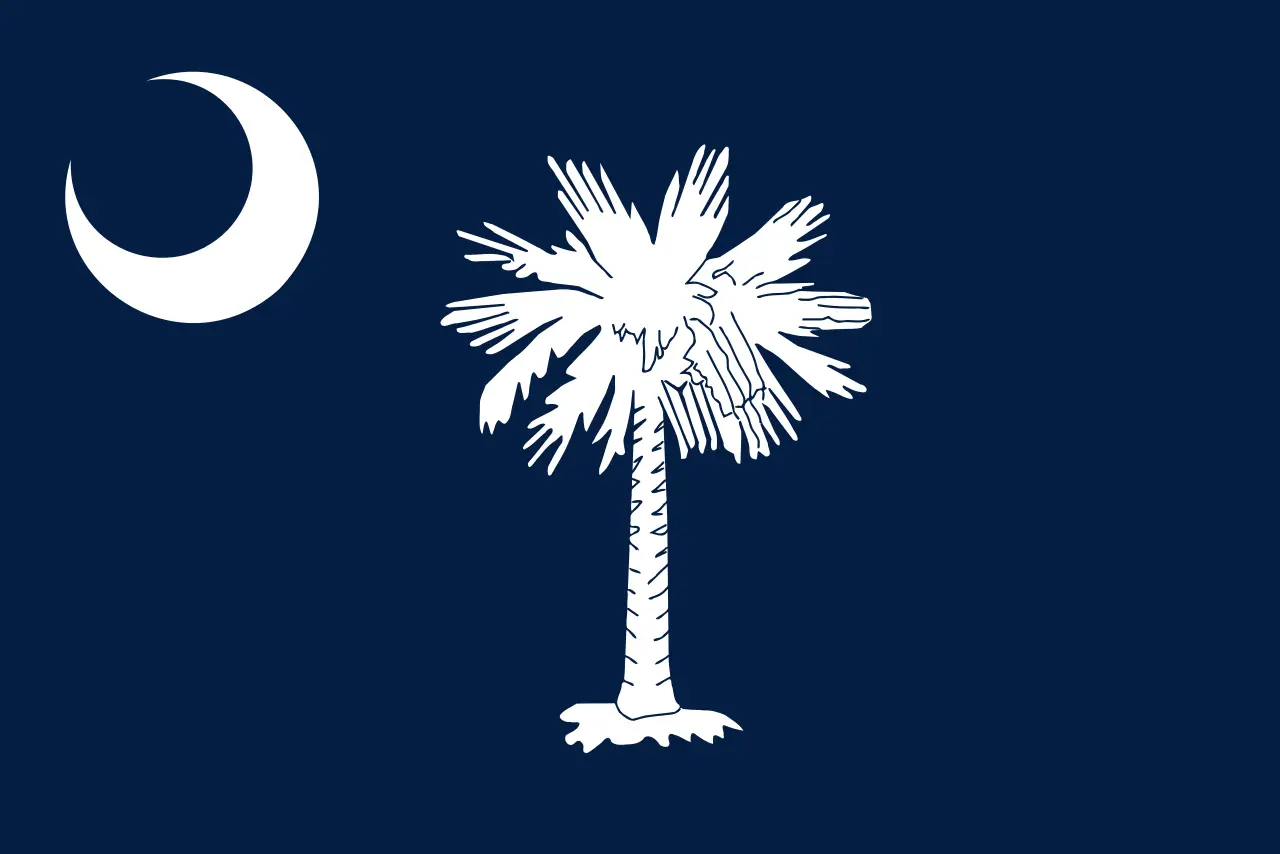
South Carolina’s nickname comes from a battle of the Revolution. On June 28, 1776, a British fleet attacked a fort on Sullivan’s Island built of palmetto logs. The spongy logs absorbed the cannonballs, and the fort held. Over it flew a blue flag with a white crescent, made for Colonel William Moultrie’s troops; when its staff was shot away, Sergeant William Jasper rescued it. That flag, with a palmetto added in 1861, is today’s state flag.
The eighth state
A state convention meeting in Charleston ratified the US Constitution on May 23, 1788, making South Carolina the eighth state. The state’s two mottoes, both on the Great Seal of 1776, are Dum spiro spero, “While I breathe, I hope,” and Animis opibusque parati, “Prepared in mind and resources.”
A capital in the middle
Charleston was the seat of government from colonial times, but the upcountry wanted a capital closer to it. In 1786 the General Assembly voted to move to a central site and laid out a new city near the geographic center of the state, named Columbia for Christopher Columbus. Lowcountry politicians resisted, and the legislature did not hold its first session there until 1790. The State House, begun in the 1850s, still bears the marks of Union shells fired at it in February 1865 and was not finished until 1903. The capital page tells the story.
Wrens, jessamine and palmettos
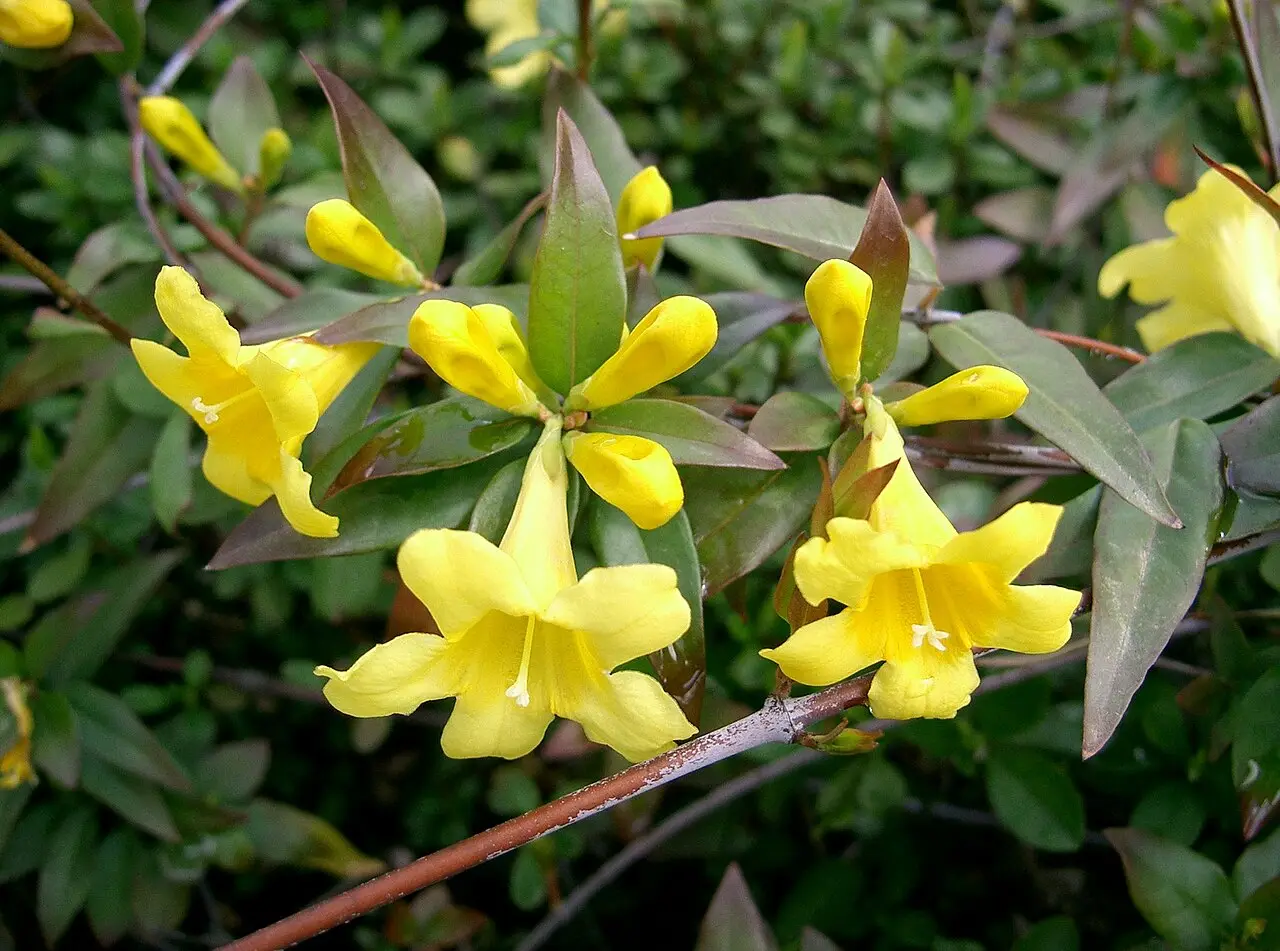
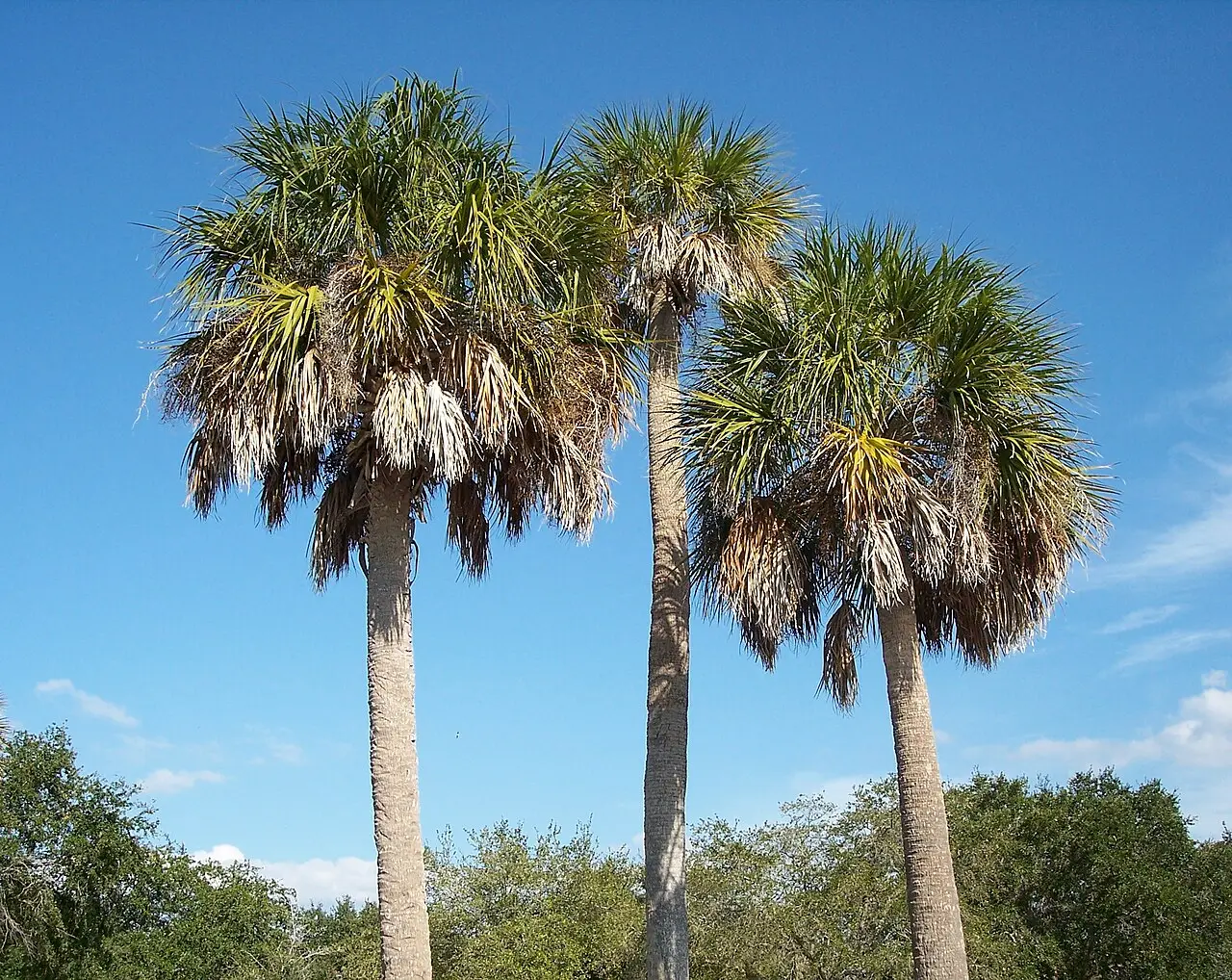
South Carolina has 59 official state symbols, one of the longest lists of any state. The Carolina wren is the state bird, the yellow jessamine, one of the first flowers of spring, the state flower, and the sabal palmetto the state tree. The list reflects the state’s culture and coast: the shag as state dance and beach music as its popular music, the sweetgrass basket, the Boykin spaniel, the loggerhead sea turtle, boiled peanuts, barbecue as the state picnic cuisine and Porgy and Bess, set in Charleston, as the state opera. See them all on the South Carolina symbols page.
Land and people
South Carolina covers 32,020 square miles, 40th among the states, and had about 5.57 million residents in 2025, 23rd in the country and up nearly 9 percent from 2020, the third-fastest growth of any state after Idaho and Florida. It borders North Carolina and Georgia and faces the Atlantic. Charleston, with about 159,000 people, is the largest city, followed by Columbia, North Charleston, Mount Pleasant and Rock Hill.
South Carolina state symbols
All 59 official symbols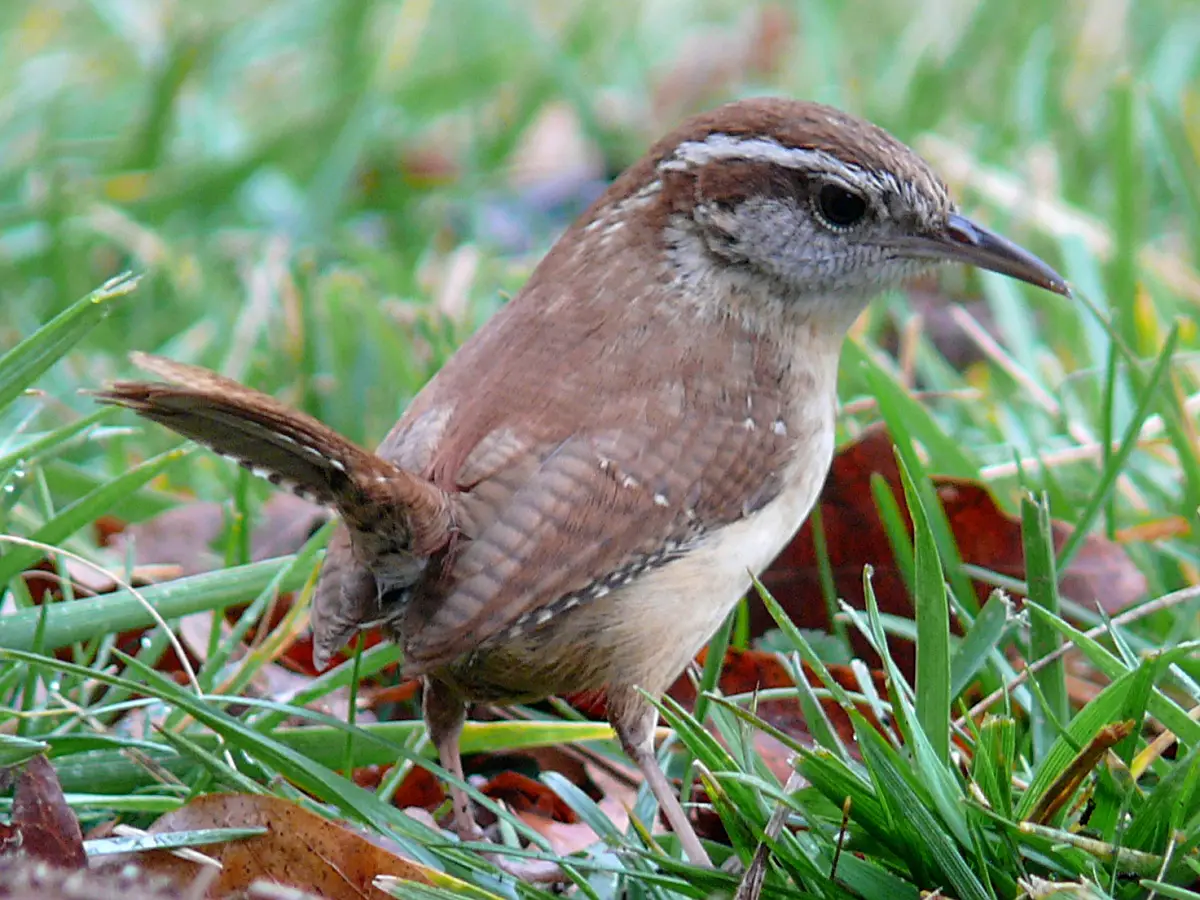
The capital: Columbia
The capital of South Carolina is Columbia, where the General Assembly has met since 1790. In 1786 lawmakers voted to leave coastal Charleston for a new city laid out near the center of the state, answering upcountry demands for a capital closer to them. Columbia's State House took about 50 years to build, and brass markers on its walls show where Union artillery struck it in 1865.
- 1783–1790Charleston
- 1790–todayColumbia
Where South Carolina is
South Carolina shares a border with 2 states: Georgia and North Carolina.
- Land area
- 30,061 sq mi
- Water area
- 1,960 sq mi
- Population density
- 185.3 people per sq mi (18th)
South Carolina trivia
- South Carolina has three official state songs: "Carolina" (1911), "South Carolina On My Mind" (1984) and "Carolina When I Die" (2026).Source: South Carolina Legislature
- The mockingbird was South Carolina's first state bird; the Carolina wren replaced it in 1948.Source: South Carolina Legislative Services Agency (Student Connection)
- The mace of the South Carolina House of Representatives is the oldest legislative mace still in use in the United States.Source: South Carolina Legislative Services Agency (Student Connection)
- The Senate's current Sword of State was a gift in 1951 from Lord Halifax, a former British ambassador to the U.S., after the original sword was stolen in 1941.Source: South Carolina Legislative Services Agency (Student Connection)
- Mammoth teeth found in a South Carolina swamp in 1725 are credited as the first scientific identification of a North American vertebrate fossil.Source: South Carolina Legislative Services Agency (Student Connection)
- South Carolina was a pioneer of American tea growing and is home to the Charleston Tea Plantation on Wadmalaw Island.Source: South Carolina Legislative Services Agency (Student Connection)
Questions about South Carolina
- What is the capital of South Carolina?
- Columbia, the capital since the General Assembly first met there in 1790. Charleston, the largest city, was the colonial capital.
- Why is South Carolina called the Palmetto State?
- Because of the fort of palmetto logs on Sullivan's Island whose spongy walls absorbed British cannon fire on June 28, 1776. The palmetto has been on the flag and seal ever since, and it is the state tree. No law formally adopts the nickname, but the official flag pledge uses it.
- What are South Carolina's state mottoes?
- The state has two, both on the Great Seal. "Dum spiro spero" means "While I breathe, I hope," and "Animis opibusque parati" means "Prepared in mind and resources."
- Where does the name Carolina come from?
- From Carolus, the Latin form of Charles. King Charles I used the name in a 1629 land grant, and Charles II reissued the territory to eight Lords Proprietors in 1663.
- What is the largest city in South Carolina?
- Charleston, with about 159,000 people, just ahead of Columbia, the capital.
Photo credits (5)
- Flag of South Carolina: Design by South Carolina General Assembly, SVG by Steve Hall, Public domain, via Wikimedia Commons
- Carolina wren: Ken Thomas, Public domain, via Wikimedia Commons
- Yellow jessamine: KENPEI, CC BY-SA 3.0, via Wikimedia Commons
- Sabal palmetto: Mmcknight4, Public domain, via Wikimedia Commons
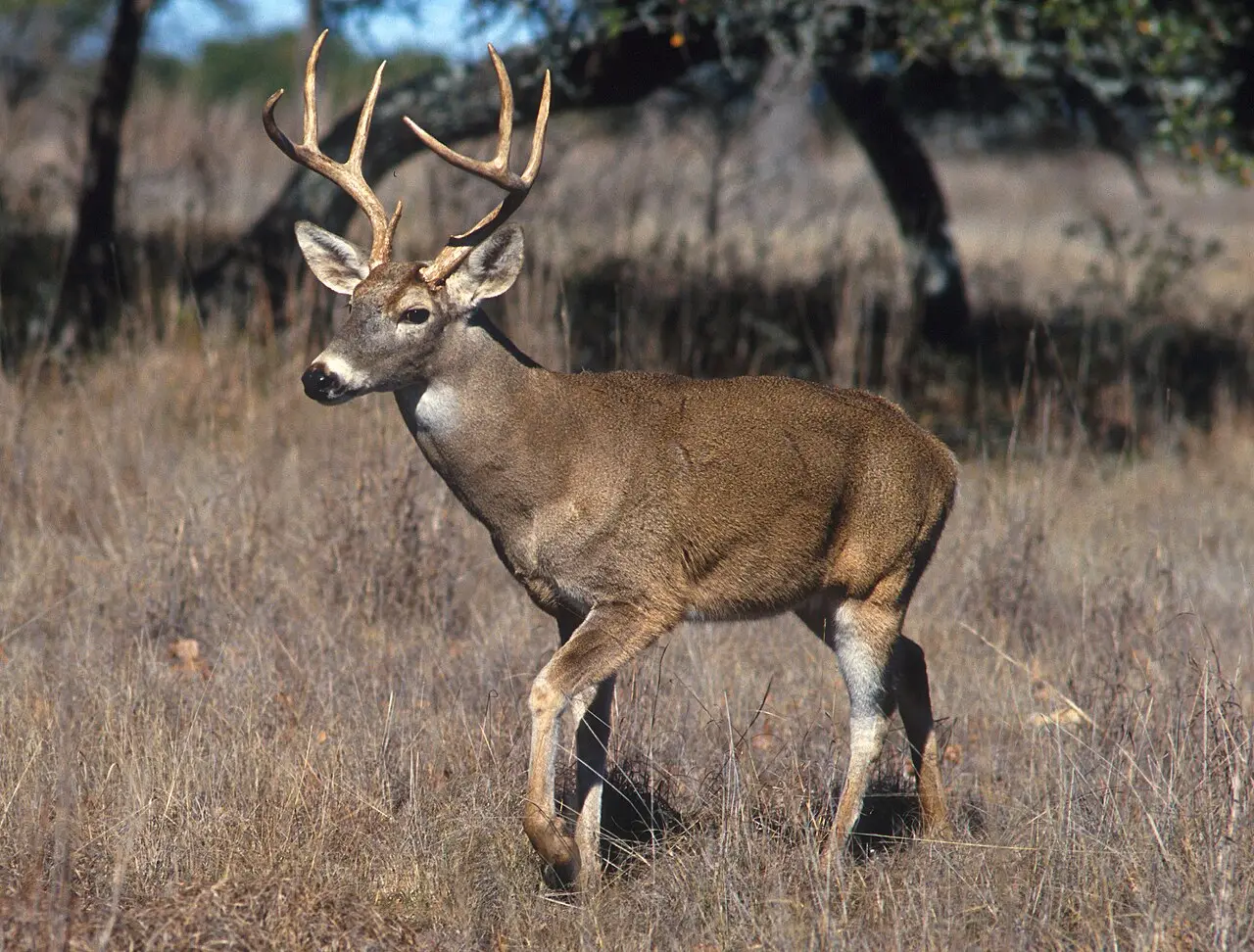
- White-tailed deer: USDA photo by Scott Bauer, Public domain, via Wikimedia Commons
Sources
- Ratification of the Constitution by the State of South Carolina; May 23, 1788 The Avalon Project, Yale Law School · statehood
- The State House History South Carolina Legislature · capital
- Visiting the State House South Carolina Legislature · capital
- State Names and Nicknames NCpedia (State Library of North Carolina)
- Columbia South Carolina Encyclopedia
- Seals, Flags, House and Senate Emblems South Carolina Legislative Services Agency (Student Connection)
- South Carolina Code of Laws, Title 1, Chapter 1 (state emblems) South Carolina Legislature
- US Census Bureau Vintage 2025 population estimates; 2010 state area measurements