South Carolina state symbols
South Carolina has 59 official state symbols, one of the longest lists in the country. The oldest are the Great Seal of 1776 and the flag of 1861; the newest, from 2026, include a state migratory bird, the prothonotary warbler, and a third official state song. Most are written into Title 1, Chapter 1 of the South Carolina Code.
Bird, flower and tree
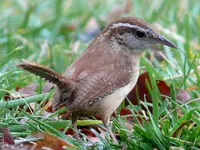
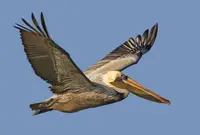
South Carolina’s flower came first among its natural symbols. A legislative commission named in 1923 recommended the yellow jessamine because it grows in every part of the state and is one of the first signs of spring, and the General Assembly adopted it on February 1, 1924. The sabal palmetto, recalling the palmetto-log fort of 1776, became the state tree in 1939. The mockingbird was the first state bird, but a 1948 act replaced it with the Carolina wren. Later laws added the wild turkey as game bird, the wood duck, the eastern brown pelican as seabird in 2024, and the prothonotary warbler as migratory bird in 2026.
Wildlife
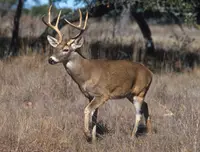
The white-tailed deer and the striped bass both became symbols in 1972; the Santee Cooper lakes were the original home of landlocked striped bass. A fifth-grade class from Ninety Six asked for the loggerhead sea turtle, the state reptile since 1988, which nests on South Carolina beaches. Third graders in Spartanburg campaigned for the spotted salamander, adopted in 1999. The Carolina mantis became the state insect in 1988, chosen as a native, beneficial insect that helps control crop pests, and the Carolina wolf spider, the largest wolf spider in North America, the state spider in 2000. In 2009 the Legislature named the bottlenose dolphin, the North Atlantic right whale, which visits the coast in its calving season, and the wood duck in a single act.
Dogs, horses and mules
The Boykin spaniel, the state dog since 1985, is the only breed first developed by South Carolinians, prized as both a hunting dog and a family pet. In 2010 the Marsh Tacky, a rare horse of colonial Spanish descent found only in South Carolina that carried people and loads in early Lowcountry communities, became the state heritage horse, and the mule the state heritage work animal.
From the ground
Amethyst became the state gemstone and blue granite the state stone in 1969; despite its name, the granite is gray and only looks bluish when polished. The Columbian mammoth became the state fossil in 2014: mammoth teeth dug from a South Carolina swamp in 1725 are credited as the first scientific identification of a North American vertebrate fossil. The lettered olive, named by the South Carolina naturalist Edmund Ravenel for markings that look like writing, is the state shell.
Food and drink
Peaches, grown commercially in South Carolina since the 1860s, became the state fruit in 1984, along with milk. Collard greens became the state vegetable in 2011 after a campaign started by a Lexington third grader. Boiled peanuts became the state snack food in 2006, and barbecue the state picnic cuisine in 2014. South Carolina grown tea is the state hospitality beverage; the Charleston Tea Plantation on Wadmalaw Island still grows plants descended from early South Carolina stock.
Music, dance and crafts
The shag, the state dance since 1984, and beach music, the state popular music since 2001, go together. The spiritual became the state music in 1999; spirituals were first written down on St. Helena Island during the Civil War. Porgy and Bess, set on Charleston’s fictional Catfish Row, is the state opera. The sweetgrass basket, a Lowcountry craft practiced for more than 300 years and among the oldest art forms of African origin in the United States, is the state Lowcountry handcraft. Indigo blue, the color of Colonel William Moultrie’s uniforms and the flag, became the state color in 2008 at a third grader’s suggestion, and the Carolina Tartan is shared with North Carolina.
Flag, seal, song, motto and nickname
-
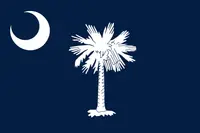 1861
A white palmetto tree centered on an indigo-blue field, with a white crescent in the upper corner nearest the staff. The blue and the crescent come from the uniforms and cap badges of Moultrie's Revolutionary troops; the palmetto, added in 1861, honors the 1776 defense of the palmetto-log fort on Sullivan's Island.
- 1776
Great Seal of South Carolina
SealTwo ovals joined by palmetto branches: on the left a palmetto standing over a fallen oak, ringed by 'Animis Opibusque Parati'; on the right Spes, the goddess of hope, walking along a beach at sunrise over cast-off weapons, ringed by 'Dum Spiro Spero'. William Henry Drayton and Arthur Middleton were the main designers, and President John Rutledge first used the seal on May 22, 1777.
The General Assembly authorized a Great Seal on April 2, 1776.
Use restricted: S.C. Code § 38-57-45 bars insurers, insurance agencies and HMOs from using the state seal or anything derived from it in advertising without state approval; no general statute restricting other uses was found.
Resolution of the General Assembly, April 2, 1776, authorizing the President and Privy Council to have a Great Seal made
- 1911
Carolina
SongThe lyrics are in the public domain. Official page.
"Carolina," with words by the poet Henry Timrod and music by Anne Custis Burgess, became the state song by resolution in 1911. South Carolina has two more official songs: "South Carolina On My Mind" (1984) and "Carolina When I Die" (2026).
Concurrent Resolution of the General Assembly, February 11, 1911 (not codified)
-
Dum Spiro Spero; Animis Opibusque Parati
MottoLatin, meaning “While I breathe, I hope; Prepared in mind and resources”.
South Carolina has two mottoes, one on each half of the Great Seal. No law adopts them separately from the seal.
Animals
-
 1948
Carolina wren
BirdThryothorus ludovicianusThe 1948 act replaced the mockingbird, which an earlier act had made the state bird. The small, rusty-brown wren with a white eyebrow stripe lives across the whole state and sings in every season.
S.C. Code § 1-1-630 (1948 Act No. 693) · South Carolina Legislative Services Agency (Student Connection)
- 1976
Wild turkey
Wild game birdMeleagris gallopavo -
 2024
Eastern brown pelican
SeabirdPelecanus occidentalisThe act's preamble notes that the first eastern brown pelican was described from Charleston Harbor in 1789 and that the species recovered after being listed as endangered in 1970, helped by the 1972 DDT ban.
S.C. Code § 1-1-612 (2024 Act No. 186, H.5246) · South Carolina Legislature
- 2026
Prothonotary warbler
Migratory birdProtonotaria citreaThe act highlights the golden songbird's use of South Carolina's swamps and bottomland forests, such as Francis Beidler Forest in Four Holes Swamp, as breeding habitat, and its role as an indicator of wetland health.
S.C. Code § 1-1-613 (2026 Act No. 98, S.383, the Prothonotary Warbler Recognition Act) · South Carolina Legislature
- 2009
Wood duck
DuckAix sponsaThe act became law without the governor's signature in June 2009; the statute notes the bird is also called the summer duck or Carolina duck.
S.C. Code § 1-1-711 (2009 Act No. 58) · South Carolina Legislative Services Agency (Student Connection)
-
 1972
White-tailed deer
AnimalOdocoileus virginianus -
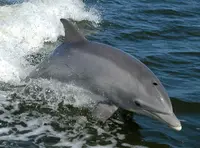 2009
Bottlenose dolphin
Marine mammalTursiops truncatus -
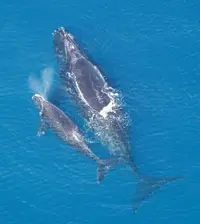 2009
North Atlantic right whale
Migratory marine mammalEubalaena glacialisRight whales visit South Carolina's coast during their calving season and remain critically endangered despite protection since the 1930s.
S.C. Code § 1-1-713 (2009 Act No. 58) · South Carolina Legislative Services Agency (Student Connection)
- 1985
Boykin spaniel
DogIt is the only dog breed that was first developed by South Carolinians, prized as a hunting dog and family pet.
S.C. Code § 1-1-655 (1985 Act No. 31) · South Carolina Legislative Services Agency (Student Connection)
- 2010
Marsh Tacky (state heritage horse)
HorseA rare horse of colonial Spanish descent found only in South Carolina, it carried people and hauled loads in early Lowcountry communities.
S.C. Code § 1-1-714 (2010 Act No. 240) · South Carolina Legislative Services Agency (Student Connection)
- 2010
Mule
Heritage work animal -
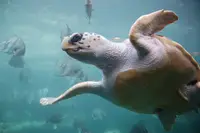 1988
Loggerhead sea turtle
ReptileCaretta carettaA fifth-grade class from Ninety Six asked for the designation; the federally threatened turtle nests on South Carolina beaches.
S.C. Code § 1-1-625 (1988 Act No. 588) · South Carolina Legislative Services Agency (Student Connection)
-
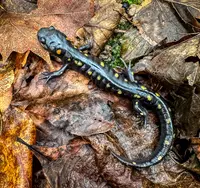 1999
Spotted salamander
AmphibianAmbystoma maculatumThird graders at Woodlands Heights Elementary School in Spartanburg campaigned for it; the salamander is common in the state's Piedmont and mountains and less common in the Coastal Plain.
S.C. Code § 1-1-699 (1999 Act No. 79) · South Carolina Legislative Services Agency (Student Connection)
-
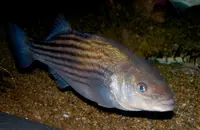 1972
Striped bass (rockfish)
FishMorone saxatilisThe Santee Cooper lakes were the original home of landlocked striped bass, and the fish has since been stocked in the state's major reservoirs.
S.C. Code § 1-1-640 (1972 Act No. 1333) · South Carolina Legislative Services Agency (Student Connection)
-
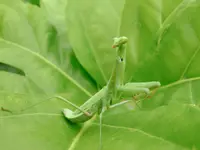 1988
Carolina mantis
InsectStagmomantis carolinaThe statute gives the reasons: a native, beneficial and easily recognized insect that symbolizes entomology's role in controlling crop pests and serves as a living science lesson for schoolchildren.
S.C. Code § 1-1-645 (1988 Act No. 591) · South Carolina Legislature
- 1994
Eastern tiger swallowtail
ButterflyPapilio glaucusThe Garden Club of South Carolina singled it out as a pollinator of orchards and gardens.
S.C. Code § 1-1-647 (1994 Act No. 319) · South Carolina Legislative Services Agency (Student Connection)
- 2000
Carolina wolf spider
SpiderHogna carolinensisIt is the largest wolf spider species in North America.
S.C. Code § 1-1-701 (2000 Act No. 389, Part II) · South Carolina Legislative Services Agency (Student Connection)
- 1984
Lettered olive
ShellAmericoliva sayanaSouth Carolina naturalist Edmund Ravenel named the shell, inspired by markings that resemble writing.
S.C. Code § 1-1-695 (1984 Act No. 360) · South Carolina Legislative Services Agency (Student Connection)
Plants and fungi
-
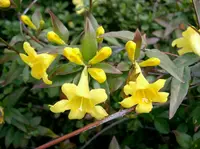 1924
Yellow jessamine
FlowerGelsemium sempervirensA commission named in 1923 recommended the vine, citing that it grows in every part of the state and is one of the first signs of spring. Sprigs of jessamine are etched on the blade of the Senate's Sword of State.
Adopted by the House and Senate on February 1, 1924, on the report of a legislative commission (not codified) · South Carolina Legislative Services Agency (Student Connection)
-
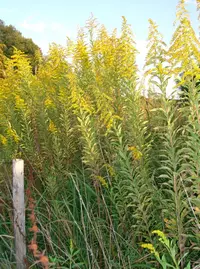 2003
Goldenrod
WildflowerSolidago altissimaThe designation followed a push by the state wildflower chairman of the Garden Club of South Carolina.
S.C. Code § 1-1-704 (2003 Act No. 31) · South Carolina Legislative Services Agency (Student Connection)
-
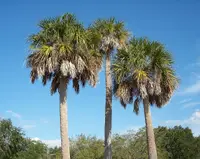 1939
Sabal palmetto (cabbage palmetto)
TreeSabal palmettoThe palmetto recalls the 1776 defense of the fort on Sullivan's Island, whose palmetto-log walls absorbed British cannonballs.
S.C. Code § 1-1-660 (Joint Resolution No. 63 of 1939) · South Carolina Legislative Services Agency (Student Connection)
- 2023
Venus flytrap
Carnivorous plantDionaea muscipulaThe act's preamble notes that the Carolinas are one of only two places in the world where the plant grows natively and that South Carolina's last remaining wild population is in Horry County.
S.C. Code § 1-1-661 (2023 Act No. 11, S.581) · South Carolina Legislature
- 2001
Indian grass
GrassSorghastrum nutansThe statute expressly says the designation is not an endorsement of the grass as a commercial product.
S.C. Code § 1-1-677 (2001 Act No. 94) · South Carolina Legislative Services Agency (Student Connection)
Earth and sky
- 2014
Columbian mammoth
FossilMammuthus columbiMammoth teeth dug from a South Carolina swamp in 1725 are credited as the first scientific identification of a North American vertebrate fossil.
S.C. Code § 1-1-691 (2014 Act No. 177, H.4482) · South Carolina Legislative Services Agency (Student Connection)
- 1969
Amethyst
Gemstone - 1969
Blue granite (state stone)
RockDespite the name, the stone is gray and only takes on a bluish tint when polished.
S.C. Code § 1-1-620 (1969 Act No. 345) · South Carolina Legislative Services Agency (Student Connection)
Food and drink
-
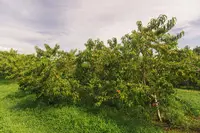 1984
Peach
FruitPrunus persicaPeaches have been grown commercially in South Carolina since the 1860s.
S.C. Code § 1-1-680 (1984 Act No. 360) · South Carolina Legislative Services Agency (Student Connection)
- 2011
Collard greens
VegetableBrassica oleraceaLexington third grader Mary Grace Wingard started the effort; Lexington County leads the state in collard production.
S.C. Code § 1-1-681 (2011 Act No. 38) · South Carolina Legislative Services Agency (Student Connection)
- 2006
Boiled peanuts
Snack foodThe statute adds that nothing in it requires schools to serve peanuts, especially to children with food allergies.
S.C. Code § 1-1-682 (2006 Act No. 270) · South Carolina Legislative Services Agency (Student Connection)
- 2014
Barbecue
Picnic cuisine - 1984
Milk
BeverageLawmakers pointed to dairy farms in nearly every county as a reason for the choice.
S.C. Code § 1-1-690 (1984 Act No. 360) · South Carolina Legislative Services Agency (Student Connection)
- 1995
South Carolina grown tea
Hospitality beverageCamellia sinensisSouth Carolina was a pioneer of American tea growing, and the Charleston Tea Plantation on Wadmalaw Island still grows plants descended from early South Carolina stock.
S.C. Code § 1-1-692 (1995 Act No. 31) · South Carolina Legislative Services Agency (Student Connection)
Songs, words and language
- 2000
The Richardson Waltz
WaltzThe tune came from the music-loving Richardson family of the 1800s and was later arranged by Mary Richardson Briggs.
S.C. Code § 1-1-667 (2000 Act No. 389, Part I, the Richardson Waltz Act) · South Carolina Legislative Services Agency (Student Connection)
- 1999
The spiritual
MusicSpirituals were first written down in South Carolina on St. Helena Island during the Civil War, work that led to an 1867 book of slave songs.
S.C. Code § 1-1-688 (1999 Act No. 64) · South Carolina Legislative Services Agency (Student Connection)
- 2001
Beach music
Popular musicThe rhythm-and-blues-based style is closely tied to the shag, the state dance.
S.C. Code § 1-1-689 (2001 Act No. 15) · South Carolina Legislative Services Agency (Student Connection)
- 2001
Porgy and Bess
OperaThe Gershwin opera, set on Charleston's fictional Catfish Row and based on DuBose Heyward's novel Porgy, premiered in New York in 1935. The statute bars state agencies from using copyrighted material from the opera without permission from the Heyward and Gershwin estates or their licensing agent.
S.C. Code § 1-1-693 (2001 Act No. 94) · South Carolina Legislative Services Agency (Student Connection)
- 2026
Dum Spiro Spero (While I Breathe, I Hope)
Choral anthem - 1987
English
Language - 1966
I salute the flag of South Carolina and pledge to the Palmetto State love, loyalty and faith.
Pledge to the state flag
Culture and history
- 1984
Shag
Dance - 1994
Square dance
American folk dance - 2008
Indigo blue
ColorsA third grader asked her state senator to propose it, citing Colonel William Moultrie's uniforms, the flag's background and the indigo crop's importance to the colonial economy.
S.C. Code § 1-1-710 (2008 Act No. 200) · South Carolina Legislative Services Agency (Student Connection)
- 2002
Carolina Tartan
TartanShared with North Carolina, it varies a tartan linked to King Charles II, whose 1663 grant created Carolina.
S.C. Code § 1-1-703 (2002 Act No. 303) · South Carolina Legislative Services Agency (Student Connection)
- 2000
From the Mountains to the Sea
TapestryThe all-cotton tapestry depicts every region of the state and hangs at the South Carolina Cotton Museum in Bishopville.
S.C. Code § 1-1-702 (2000 Act No. 354) · South Carolina Legislative Services Agency (Student Connection)
- 2006
Sweetgrass basket
Lowcountry handcraftLowcountry basket makers have practiced the craft for more than 300 years; it is among the oldest art forms of African origin in the United States.
S.C. Code § 1-1-676 (2006 Act No. 234) · South Carolina Legislative Services Agency (Student Connection)
Government emblems
- 2012
Honor and Remember Flag
Emblem of service and sacrificeIt honors members of the U.S. armed forces who died in the line of duty.
S.C. Code § 1-1-713A (2012 Act No. 237) · South Carolina Legislative Services Agency (Student Connection)
Places and institutions
- 1992
South Carolina Botanical Garden at Clemson University
Botanical garden - 1997
South Carolina Railroad Museum (Fairfield County)
Railroad museumThe statute makes the designation conditional on a five-dollar fee paid to the Secretary of State.
S.C. Code § 1-1-705 (1997 Act No. 155, Part II, Section 60A) · South Carolina Legislative Services Agency (Student Connection)
- 2004
South Carolina Tobacco Museum (Mullins)
Tobacco museum - 2001
Camden Military Academy
Military academy - 2001
South Carolina Hall of Fame (Myrtle Beach Convention Center)
Hall of fame - 2000
South Carolina Artisans Center (Walterboro)
Folk art and crafts center - 2001
Abbeville Opera House
Rural drama theaterBuilt in 1908 and restored, the opera house still stages live theater.
S.C. Code § 1-1-709 (2001 Act No. 48) · South Carolina Legislative Services Agency (Student Connection)
- 2011
South Carolina Pecan Festival (Florence County)
Pecan festival - 2024
South Carolina Poultry Festival (Lexington County)
Poultry festival
Questions about South Carolina's symbols
- What is the South Carolina state bird?
- The Carolina wren, adopted in 1948 to replace the mockingbird, the first state bird.
- What is the South Carolina state flower?
- The yellow jessamine, adopted by the General Assembly on February 1, 1924. The state wildflower is goldenrod.
- What is the South Carolina state dance?
- The shag, adopted in 1984. The square dance is the state's American folk dance, and beach music, closely tied to the shag, is the state popular music.
- What is the South Carolina state dog?
- The Boykin spaniel, adopted in 1985, the only dog breed first developed by South Carolinians.
- What is South Carolina's state snack?
- Boiled peanuts, adopted in 2006.
Photo credits (14)
- Flag of South Carolina: Design by South Carolina General Assembly, SVG by Steve Hall, Public domain, via Wikimedia Commons
- Carolina wren: Ken Thomas, Public domain, via Wikimedia Commons
- Eastern brown pelican: Alan D. Wilson, www.naturespicsonline.com (original photograph), Papa Lima Whiskey…, CC BY-SA 3.0, via Wikimedia Commons
- Yellow jessamine: KENPEI, CC BY-SA 3.0, via Wikimedia Commons
- Goldenrod: KENPEI, CC BY-SA 3.0, via Wikimedia Commons
- Sabal palmetto: Mmcknight4, Public domain, via Wikimedia Commons
- White-tailed deer: USDA photo by Scott Bauer, Public domain, via Wikimedia Commons
- Bottlenose dolphin: NASA, Public domain, via Wikimedia Commons
- North Atlantic right whale: Unknown author, Public domain, via Wikimedia Commons
- Loggerhead sea turtle: ukanda, CC BY 2.0, via Wikimedia Commons
- Spotted salamander: Andrew Murray, CC BY 4.0, via Wikimedia Commons
- Striped bass: Steven G. Johnson, CC BY-SA 3.0, via Wikimedia Commons
- Carolina mantis: Matthew T Rader, CC BY-SA 4.0, via Wikimedia Commons
- Peach: Allagash Brewing, CC BY 2.0, via Wikimedia Commons
Something out of date? Tell us and we will check it against the law.
Sources
- Seals, Flags, House & Senate Emblems South Carolina Legislative Services Agency (Student Connection)
- Dances, Music & Poets South Carolina Legislative Services Agency (Student Connection)
- South Carolina Code of Laws, Title 1, Chapter 1 (state emblems) South Carolina Legislature
- Student Connection, state symbols South Carolina Legislative Services Agency