Colorado
The Centennial State
Colorado became the 38th state on August 1, 1876, a hundred years after the Declaration of Independence, which is why it is called the Centennial State. Its capital and largest city is Denver, the "Mile High City." Colorado has the highest average elevation of any state, and its name is Spanish for "colored red."
- Capital
- DenverCapital since 1867
- Statehood
- August 1, 187638th state
- Population, 2025
- 6,012,56120th of 50
- Area
- 104,094 sq mi8th largest · 269,601 km²
- Largest city
- Denver740,613 people
- Abbreviation
- COUS Postal Service code
- Motto
- Nil Sine Numine“Nothing without Providence (or the Deity)”
- Borders
- 6 statesLandlocked
The Centennial State
Colorado was carved out of the Kansas, Nebraska, Utah and New Mexico territories after gold was found near present-day Denver in 1858. The “Pikes Peak or Bust” rush brought tens of thousands of prospectors, and in 1861 Congress created the Colorado Territory. Statehood took longer. Congress passed an enabling act in 1875, Colorado voters approved a state constitution on July 1, 1876, by about 15,400 votes to 4,100, and on August 1, 1876, President Ulysses S. Grant proclaimed Colorado the 38th state. Because that was the hundredth anniversary year of the Declaration of Independence, Colorado has been known ever since as the Centennial State, though the nickname has never been made official.
A river’s name
Colorado is a Spanish word meaning “colored red.” Spanish explorers used it for the Colorado River, whose muddy water runs reddish through the canyons of Utah and Arizona. When Congress created the territory in 1861, the House bill actually called it Idaho, and Jefferson and Arcadia were also suggested. The Senate swapped in Colorado, reasoning that the great river rose in the territory’s mountains. There was a catch: the upper part of the river, inside Colorado, was then called the Grand River. Only in 1921, at Colorado’s urging, did Congress rename it the Colorado.
Denver and the mile-high step
Denver became the territorial capital in 1867, after brief stints in Colorado City and Golden, and a statewide vote in 1881 made it the permanent capital over Pueblo, Colorado Springs, Cañon City and Salida. The gold-domed Capitol, built of Colorado granite, is famous for a step on its west side engraved “One Mile Above Sea Level.” Later surveys found the true mile-high point on other steps, and there are now three markers. The capital page tells the story.
High country
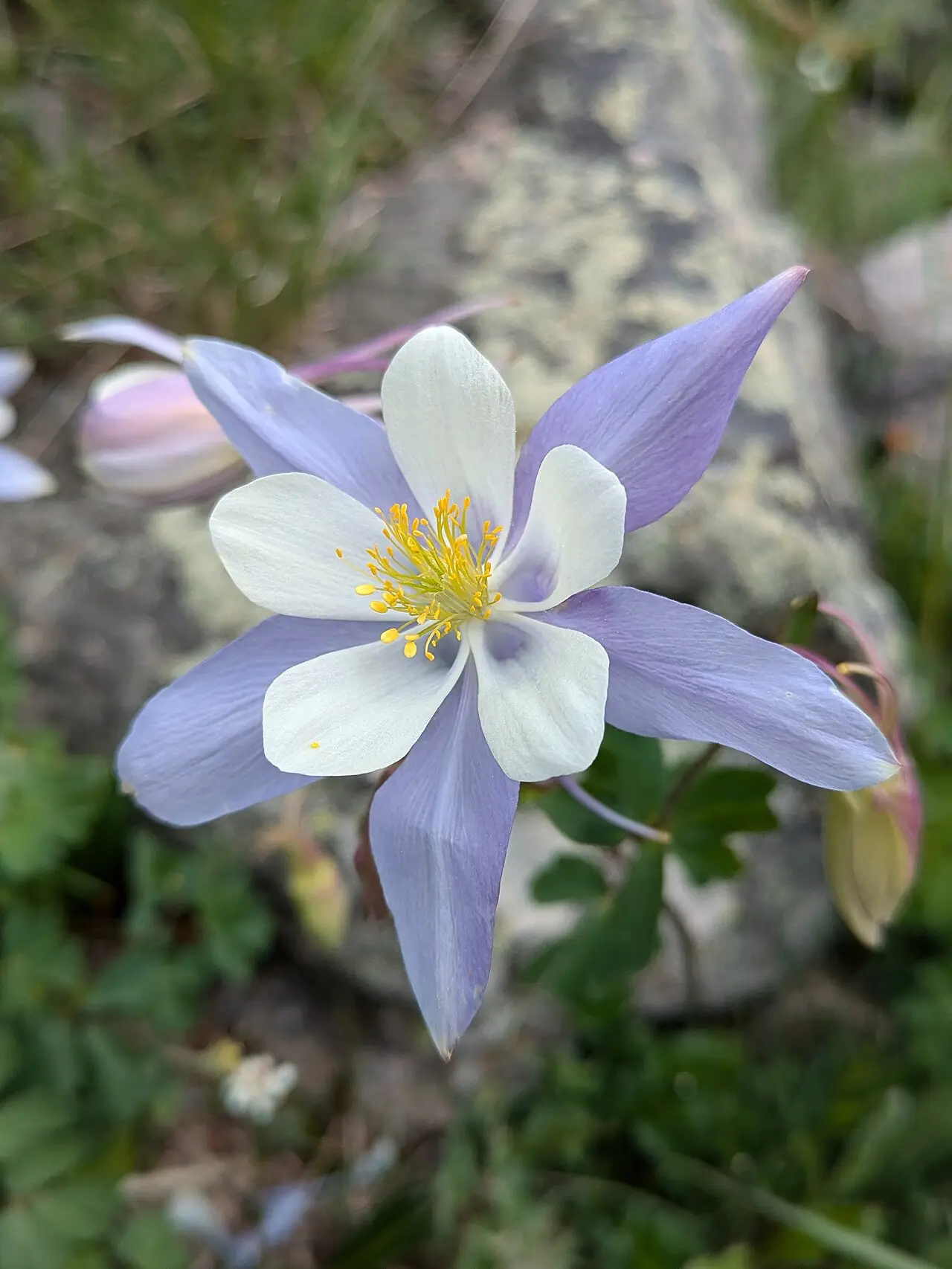
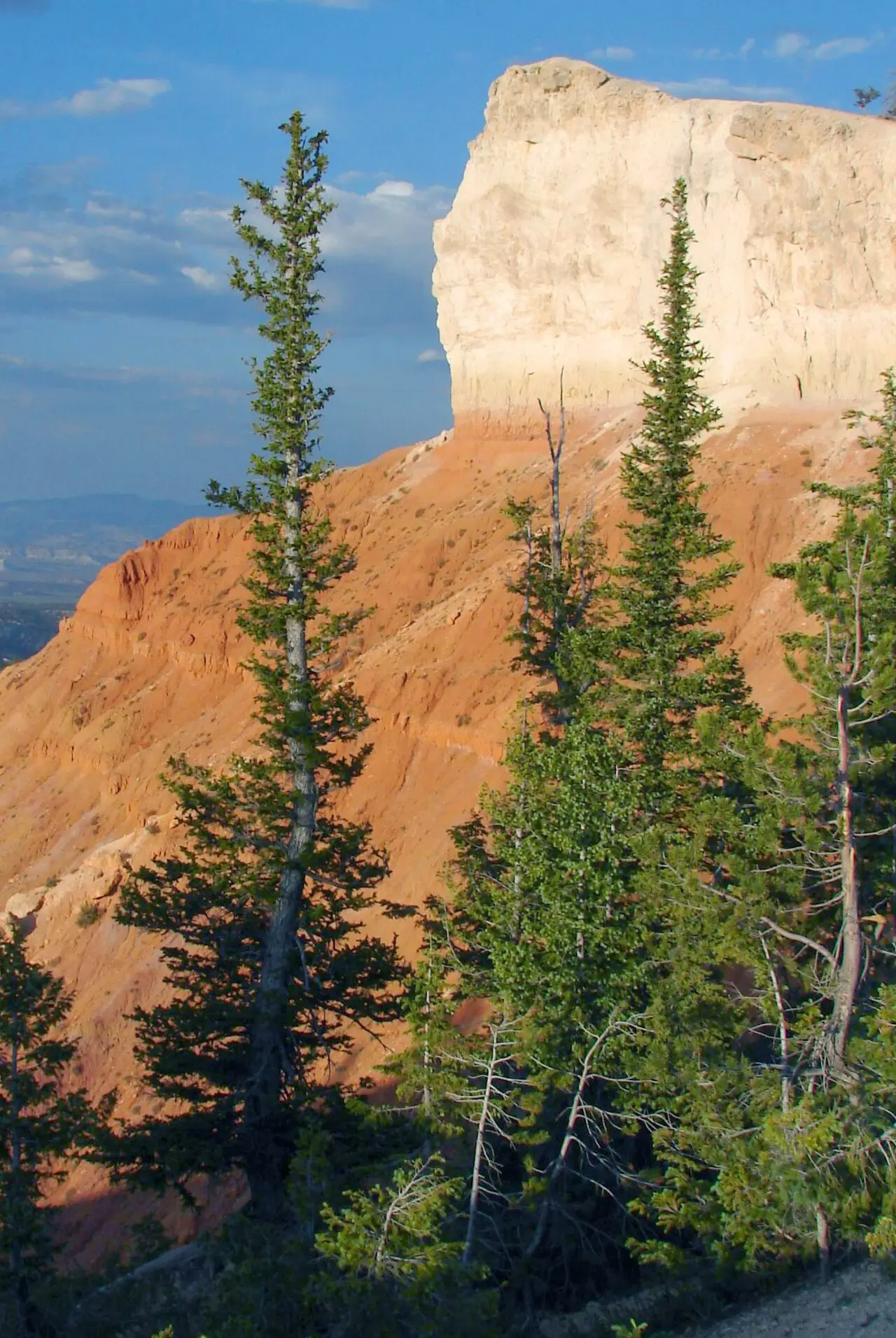
Colorado has the highest average elevation of any state, and the Rocky Mountains run through its center. Many of its symbols come from that high country: the Rocky Mountain columbine, the state flower since 1899; the Colorado blue spruce, chosen by schoolchildren in 1892; the bighorn sheep, the state animal; and aquamarine, mined at around 14,000 feet on Mount Antero. Skiing and snowboarding are the official state winter sport, and pack burro racing, a race run beside a burro carrying a miner’s pack, is the official summer heritage sport.
The eastern third of the state is high plains, and its symbols are different. The state bird is the lark bunting, a prairie bird whose males are black with bold white wing patches, and the state grass is blue grama, which holds the prairie soil in place.
Symbols chosen by students
Colorado has 26 official symbols, and an unusual number came from young people. A fourth-grade class campaigned for two years for Stegosaurus, which Governor Richard Lamm made the state fossil by executive order in 1982. Other fourth graders proposed the western painted turtle as the state reptile in 2008. Students also pushed for the western tiger salamander, the state’s shelter pets and the winter sport, and Girl Scouts led the campaigns for Yule marble, the state rock, and the claret cup cactus. The state rock has a famous résumé: Yule marble from Gunnison County was used for the Lincoln Memorial and the Tomb of the Unknown Soldier. See every symbol on the Colorado symbols page.
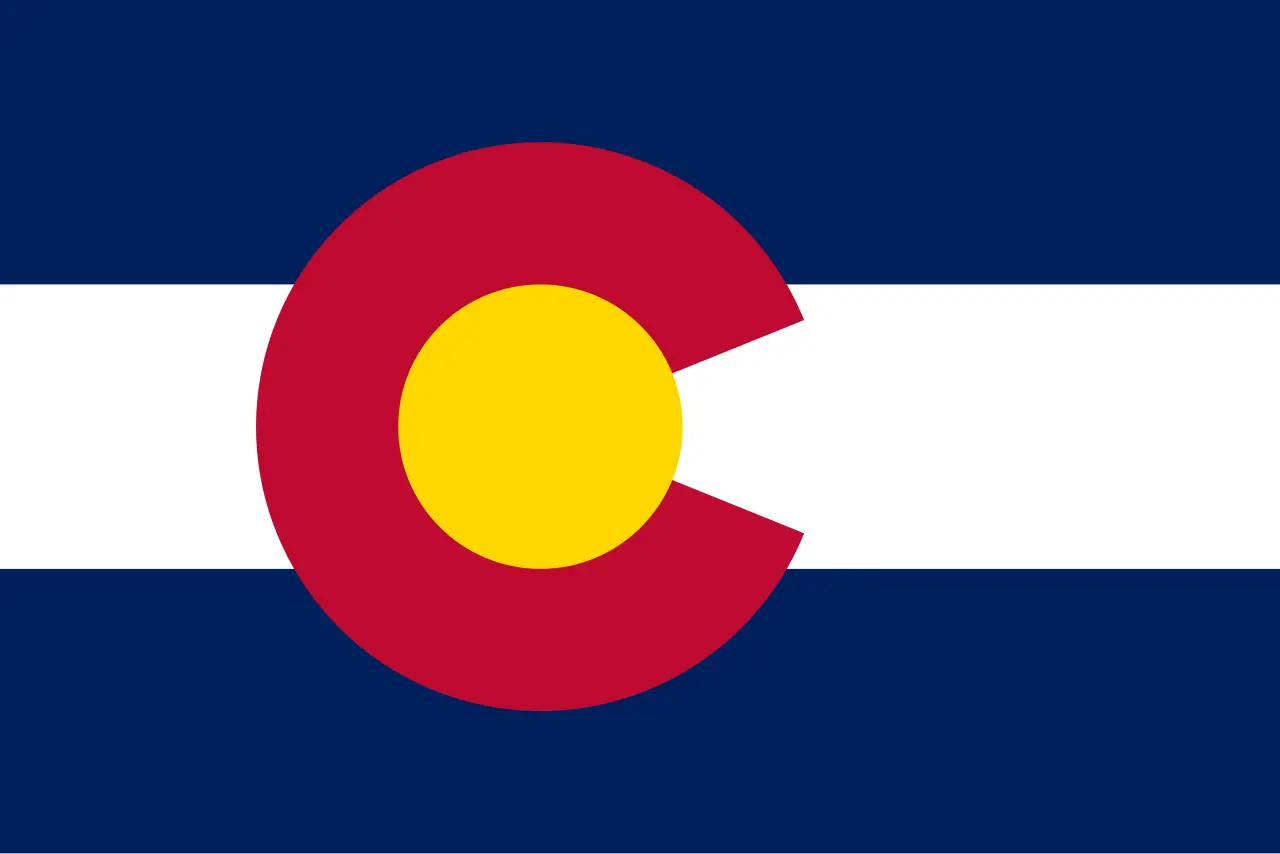
The flag, with its red C around a gold disk, is one of the most recognizable state flags. The motto, Nil sine numine, Latin for “Nothing without Providence,” has been on the seal since territorial days.
Land and people
Colorado covers 104,094 square miles, the eighth largest state, and had about 6.01 million residents in 2025, 20th in the country. It borders Wyoming, Nebraska, Kansas, Oklahoma, New Mexico and Utah, and touches Arizona at the Four Corners. Most Coloradans live along the Front Range, where the plains meet the mountains: Denver, with about 741,000 people, is the largest city, followed by Colorado Springs, Aurora and Fort Collins.
Colorado state symbols
All 26 official symbols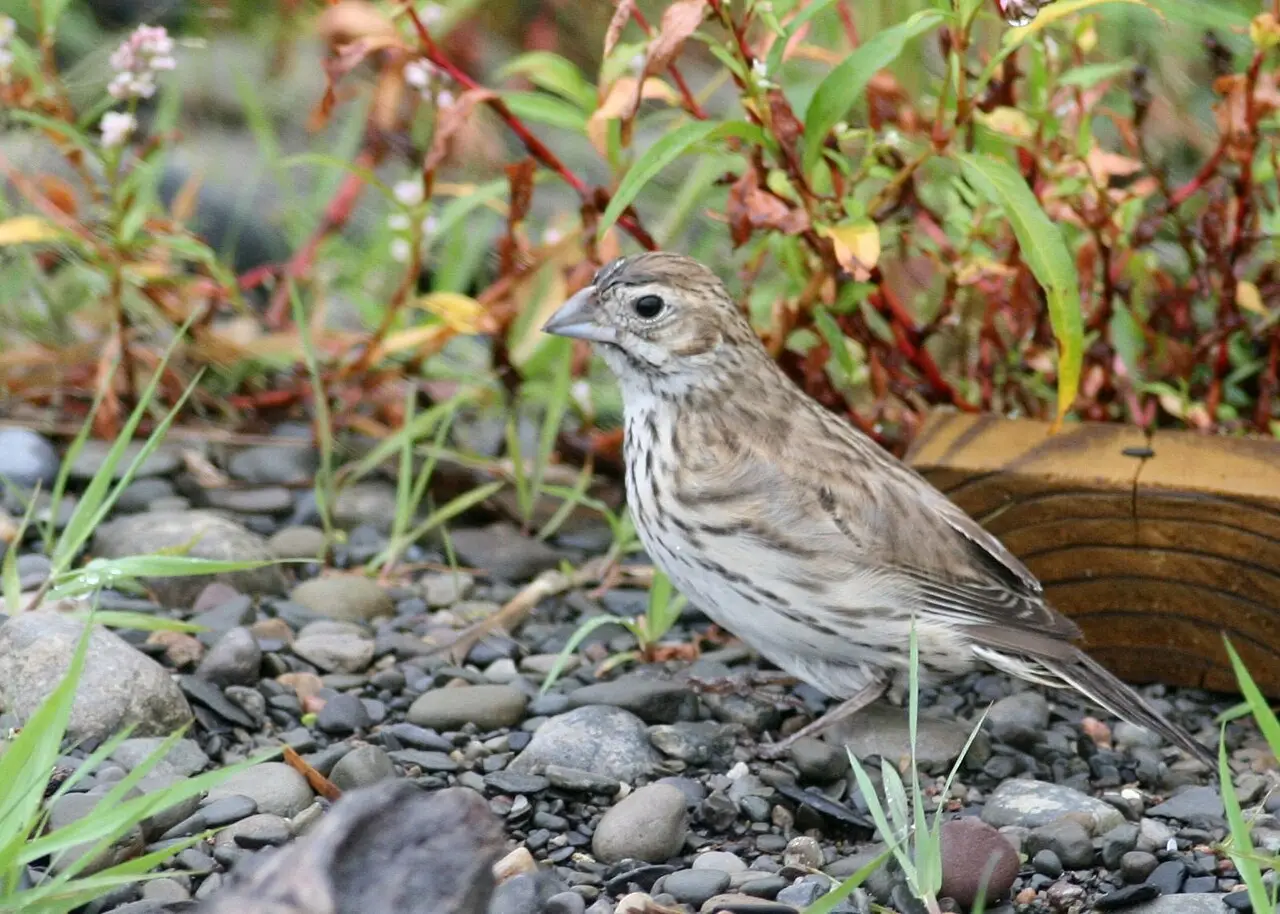
The capital: Denver
The capital of Colorado is Denver, the seat of government since 1867, when Colorado was still a territory. Before that the territorial capital was briefly Colorado City and then Golden. In 1881 Colorado voters made Denver the permanent capital, and its gold-domed Capitol, finished in 1894, has a west step engraved "One Mile Above Sea Level."
- 1867–todayDenver
Where Colorado is
Colorado shares a border with 6 states: Kansas, Nebraska, New Mexico, Oklahoma, Utah and Wyoming.
- Land area
- 103,642 sq mi
- Water area
- 452 sq mi
- Population density
- 58.0 people per sq mi (36th)
Colorado trivia
- On the Capitol's west steps, the fifteenth step is engraved 'One Mile Above Sea Level,' but later surveys added markers on the eighteenth (1969) and thirteenth (2003) steps.Source: Colorado State Capitol (Department of Personnel & Administration)
- The rose onyx inside the Capitol is believed to be the entire known supply of that stone, all taken from one quarry near Beulah.Source: Colorado State Capitol (Department of Personnel & Administration)
- Yule marble, the state rock, was also used for the Lincoln Memorial and the Tomb of the Unknown Soldier.Source: Colorado State Archives
- People treated the rainbow trout as Colorado's state fish for 40 years, but it never had official status. The native greenback cutthroat got the title in 1994.Source: Colorado State Archives
- Colorado's dogs and cats are state pets only if they were adopted from a Colorado shelter or rescue.Source: Colorado.Public.Law (text of the Colorado Revised Statutes)
Questions about Colorado
- What is the capital of Colorado?
- Denver. It became the territorial capital in 1867 and was confirmed as the permanent state capital by a statewide vote in 1881.
- Why is Colorado called the Centennial State?
- Because it became a state on August 1, 1876, the centennial year of the Declaration of Independence.
- What does Colorado mean?
- It is Spanish for "colored red." Spanish explorers gave the name to the Colorado River for its reddish, muddy water, and Congress gave the river's name to the territory in 1861.
- Is Denver really a mile high?
- Yes, at the Capitol. A step on the west side of the Capitol is engraved "One Mile Above Sea Level," although later surveys moved the exact mile-high point to other steps.
Photo credits (4)
- Flag of Colorado: Original: Andrew Carlyle Carson Vector: Fleminra, Public domain, via Wikimedia Commons
- Lark bunting: Ryan Douglas, CC BY-SA 3.0, via Wikimedia Commons
- White and lavender columbine: MtBotany, CC BY-SA 4.0, via Wikimedia Commons
- Colorado blue spruce: Quinn Dombrowski from Chicago, USA, CC BY-SA 2.0, via Wikimedia Commons
Sources
- Proclamation 230 – Admission of Colorado into the Union The American Presidency Project (UC Santa Barbara) · statehood
- Time Machine Tuesday: Colorado Territorial Capitals and Capitols Colorado Virtual Library (Colorado State Library) · capital
- History of the Capitol Colorado State Capitol (Department of Personnel & Administration) · capital
- The Mighty Colorado River, Once Known as Merely Grand Colorado LegiSource, Office of Legislative Legal Services
- Symbols and Emblems Colorado State Archives
- "1876: Perseverance leads to statehood" Colorado LegiSource, Office of Legislative Legal Services
- US Census Bureau Vintage 2025 population estimates; 2010 state area measurements