Lark bunting, the state bird of Colorado
The state bird of Colorado is the lark bunting, adopted in 1931. It is a stocky prairie bird of the eastern plains. In spring the males turn coal black with big white wing patches and sing while gliding down from the sky. Its numbers have fallen sharply since 1970.
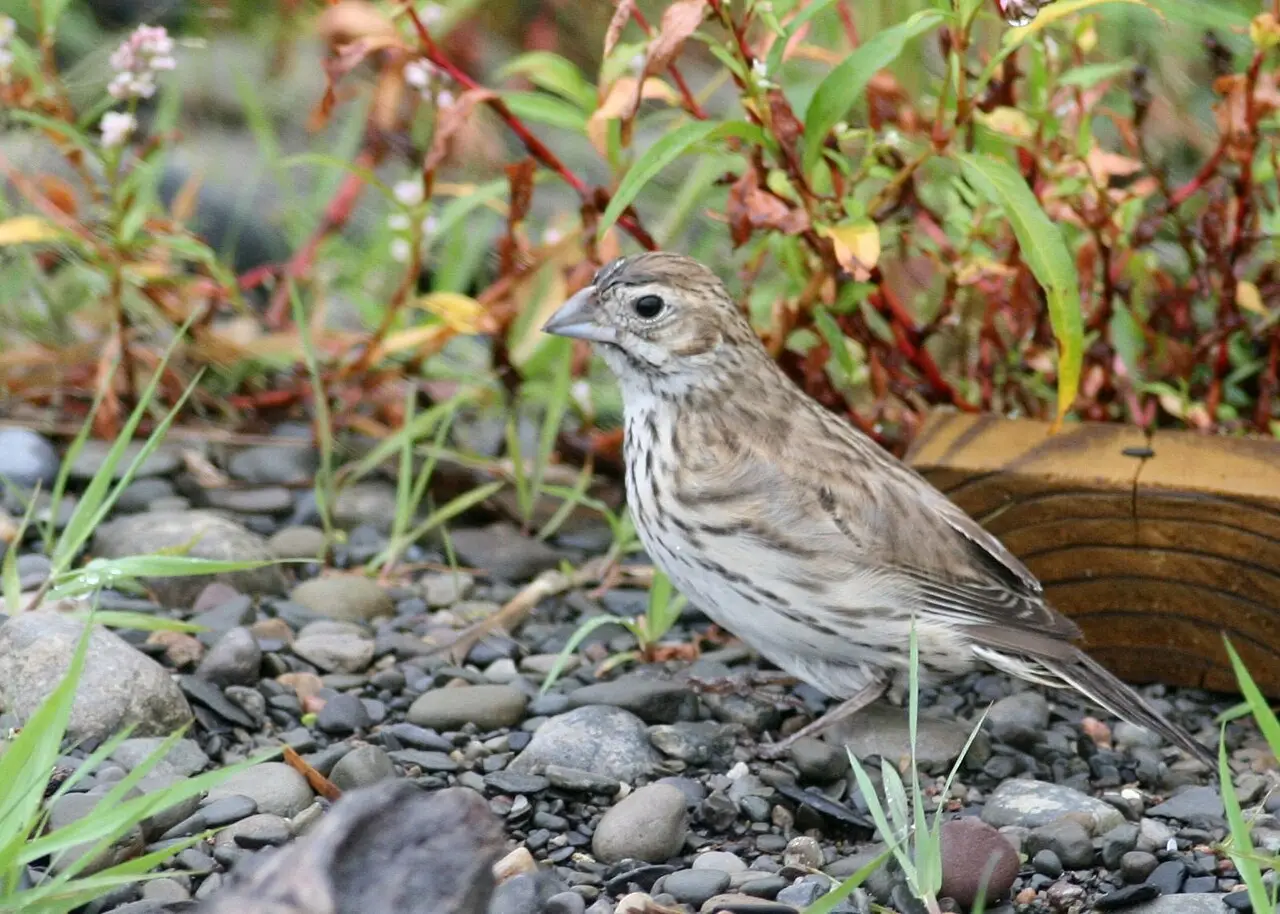
How to recognize it
The lark bunting is a stocky, sparrow-sized bird about five and a half to seven inches long, with a thick, conical, blue-gray bill made for cracking seeds.
In breeding season the male is unmistakable: completely black, with large white patches on its wings that flash in flight. Females, young birds and males in winter look completely different. They are brown above and pale with brown streaks below, much like a large sparrow, but they still show a patch of white in the wing.
The male’s song flight is the best way to find one. He climbs steeply into the air, then glides down while pouring out a long song of trills and whistles.
Where it lives
The lark bunting lives only in the grasslands and shrubsteppe of North America. It breeds on the Great Plains, in native prairie mixed with some sagebrush or shrubs, and in hayfields. In Colorado that means the eastern plains. In fall the birds gather in flocks and move south to spend the winter from the southern Plains into northern Mexico.
How it lives
In summer about two-thirds of a lark bunting’s diet in Colorado is insects, such as grasshoppers and beetles, which it chases on foot or catches in the air. The rest is seeds, which become its main food in winter. Females build nests on the ground, tucked at the base of a shrub, a cactus or a clump of grass, and pairs often nest close together, almost in loose colonies.
Where to see one
Pawnee National Grassland, about 35 miles northeast of Fort Collins, is one of the best places to see lark buntings in Colorado. They arrive in May, and May and June are the best months to watch the males’ song flights. Drive slowly along the grassland’s gravel roads and watch the fence lines and the sky.
A bird in steep decline
The lark bunting is still fairly common, with a breeding population of about 10 million, but it is disappearing quickly. Partners in Flight lists it as a “Common Bird in Steep Decline,” estimating that its numbers have fallen by 86 percent since 1970. The likely cause is the loss and change of the native prairie and desert grassland it depends on, much of which has been plowed or developed.
The state bird since 1931
Colorado adopted the lark bunting in 1931, by House Bill 222, approved on April 29. The law, now section 24-80-910 of the Colorado Revised Statutes, names it with the scientific name of its day, spelled calamospiza melancorys stejneger.
Questions about the Colorado state bird
- What is the state bird of Colorado?
- The lark bunting (Calamospiza melanocorys), adopted on April 29, 1931.
- Where can I see a lark bunting in Colorado?
- On the eastern plains in late spring and summer. Pawnee National Grassland, about 35 miles northeast of Fort Collins, is one of the best places, especially in May and June.
- Is the lark bunting endangered?
- No, but it is declining fast. Partners in Flight lists it as a common bird in steep decline, down an estimated 86 percent since 1970, mainly because of the loss of native grassland.
- Do lark buntings live in Colorado all year?
- No. They arrive on the plains in May to breed and spend the winter farther south, from the southern Plains into northern Mexico.
Sources
- Lark Bunting identification Cornell Lab of Ornithology
- Lark Bunting life history Cornell Lab of Ornithology
- "Birding escapes: Pawnee National Grasslands, Colorado" Cornell Lab of Ornithology
- C.R.S. § 24-80-910 (state bird) Colorado.Public.Law (text of the Colorado Revised Statutes)