Kansas state symbols
Kansas has 35 official state symbols. The oldest are the seal and motto of 1861; the newest is the Kansas Railroad Hall of Fame, designated in 2026. Kansas has three official fossils, one for the sea, one for the air and one for land, and many of its symbols were proposed by schoolchildren.
Symbols of the prairie
Many Kansas symbols come from the grasslands that once covered the state. The wild sunflower has been the state flower since 1903, the western meadowlark the state bird since 1937 and the cottonwood, which grows in every Kansas county and gave early settlers their building timber, the state tree since 1937. The American buffalo, which once roamed the Kansas plains in vast herds, became the state animal in 1955. Little bluestem, a prairie grass, was added in 2010, and Harney silt loam, a prairie soil, in 1990.
Chosen by students
Kansas children have a long record of shaping its symbols. More than 121,000 schoolchildren voted for the meadowlark, and the statute still says the bird was chosen because they preferred it. Schoolchildren petitioned for the honeybee in 1976. A sixth-grade class in Caldwell nominated the ornate box turtle during the state’s 125th birthday year in 1986. A second-grade class at OK Elementary in Wichita began the campaign for the barred tiger salamander in 1993. An Overland Park fourth grader, Casey Friend, pushed for the 2018 law that named a state rock, mineral, gemstone and fish. And students from Sabetha, Valley Falls and Healy backed the sandhill plum as state fruit in 2022.
Three fossils
During the Cretaceous period much of Kansas lay under a shallow inland sea, and its fossils reflect that. In 2014 the legislature named two: Tylosaurus, a giant mosasaur, a sea-going reptile that grew more than 40 feet long, as the state marine fossil, and Pteranodon, a flying reptile with a wingspan of more than 24 feet, as the state flying fossil. Neither was a dinosaur.
In 2023 Kansas added a dinosaur: Silvisaurus condrayi, a one-ton armored ankylosaur about 13 feet long, as the state land fossil. Rancher Warren Condray found its skeleton on his Ottawa County land in 1955, and his grandson, a Goddard teacher, testified for the bill with his sixth graders. It is the only dinosaur thought to have lived on land in what is now Kansas; other Kansas dinosaurs are known from carcasses that drifted out into the sea.
Rocks, gems and grapes
The 2018 law named Greenhorn limestone the state rock, galena, a lead ore whose mining the law credits with drawing settlers to the region, the state mineral, and jelinite, a rare amber once called kansasite, the state gemstone. In 2019 Kansas named two official wine grapes, Chambourcin for red wine and Vignoles for white.
Trains, festivals and an elevator
Kansas grew up with the railroads, and two recent symbols honor them: Atchison, Topeka and Santa Fe locomotive No. 3415, built in 1919, as the state steam locomotive, and the Abilene & Smoky Valley Railroad as the state heritage railroad, both in 2024. In 2026 Wichita’s Great Plains Transportation Museum became the home of the official Kansas Railroad Hall of Fame. Kansas also has official festivals for wheat in Wellington and watermelon in Clyde, an official stone bridge capital in Cowley County, which has 18 stone arch bridges built before 1910, and an official cage elevator in the Capitol.
The main symbols
The flag, the western meadowlark and the sunflower each have their own page. The state song is “Home on the Range,” and Kansas also has two official marches, “The Kansas March” (1935) and “Here’s Kansas” (1992). The 1925 state banner, a sunflower on blue, is still on the books alongside the flag.
Flag, seal, song, motto and nickname
-
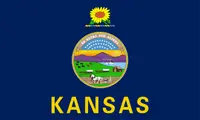 1927
Flag of Kansas
FlagA dark blue field carries the state seal, topped by a crest of a sunflower on a twisted gold-and-blue bar, with KANSAS in gold block letters beneath; the word was added in 1961.
K.S.A. 73-701, 73-702; L. 1927, ch. 281; amended L. 1961, ch. 376 and L. 1963, ch. 394
- 1861
Great Seal of Kansas
SealA prairie scene with a rising sun in the east, a steamboat on a river, a settler's cabin and a man plowing with a pair of horses, ox-wagons heading west, and a herd of buffalo retreating, pursued by two Indians on horseback, with the motto above and 34 stars below. State Senator John J. Ingalls proposed the design, later modified.
Use restricted: K.S.A. 75-203: the seal is kept in the governor's office and may be used only to attest the governor's proclamations, commissions and warrants, state obligations, and authentications required under federal law or interstate comity.
K.S.A. 75-201 to 75-203 (joint resolution of May 25, 1861, L. 1861, ch. 78; L. 1879, ch. 166)
- 1947
Home on the Range
SongThe lyrics are in the public domain. Official page.
K.S.A. 73-1301; L. 1947, ch. 433
- 1861
Ad astra per aspera
MottoLatin, meaning “To the stars through difficulties”.
K.S.A. 75-201 (joint resolution of May 25, 1861, L. 1861, ch. 78)
Animals
-
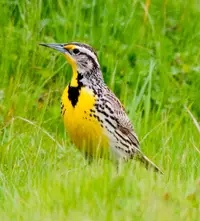 1937
Western meadowlark
BirdSturnella neglectaThe statute itself says the bird was chosen because Kansas schoolchildren preferred it in a vote. The Kansas Historical Society puts the number of students who took part at more than 121,000.
K.S.A. 73-901; L. 1937, ch. 319 · Kansas Office of Revisor of Statutes
-
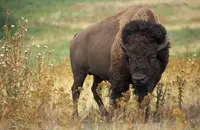 1955
American buffalo (American bison)
MammalBison bisonKansas law designates it the official state animal; the statute gives the name as Bos or Bison americanus. The Revisor notes that the legislature's reasons appear in a preamble to the 1955 session law.
K.S.A. 73-1401; L. 1955, ch. 343 · Kansas Office of Revisor of Statutes
-
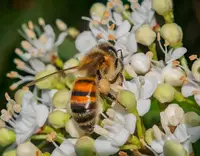 1976
Honeybee
InsectApis melliferaAccording to the Kansas Historical Society, schoolchildren petitioned for the honeybee and the legislature acted the same year.
K.S.A. 73-1601; L. 1976, ch. 325 · Kansas Office of Revisor of Statutes
-
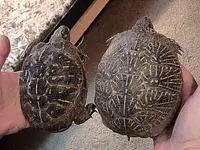 1986
Ornate box turtle
ReptileTerrapene ornataA sixth-grade class in Caldwell nominated the turtle during the state's 125th birthday year, per the Kansas Historical Society.
K.S.A. 73-1901; L. 1986, ch. 277 · Kansas Office of Revisor of Statutes
-
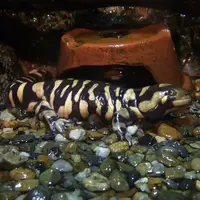 1994
Barred tiger salamander
AmphibianAmbystoma mavortiumThe campaign began in March 1993 with a second-grade class at OK Elementary in Wichita, according to the Kansas Historical Society. The statute describes its range as stretching from the tallgrass prairie of eastern Kansas to the high plains in the west.
K.S.A. 73-2301; L. 1994, ch. 79, § 10 · Kansas Office of Revisor of Statutes
-
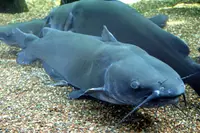 2018
Channel catfish
FishIctalurus punctatusThe fish was added to the 2018 rock-and-mineral bill during its passage, per the Kansas Historical Society.
K.S.A. 73-4001; L. 2018, ch. 34, § 4 · Kansas Office of Revisor of Statutes
Plants and fungi
-
 1903
Wild native sunflower
FlowerHelianthus annuusThe 1903 law is unusual in carrying its own preamble, which praises the sunflower as easy to draw, carve or embroider and links it to frontier days. The act names it both the state flower and the state's floral emblem.
K.S.A. 73-1801; L. 1903, ch. 479 · Kansas Office of Revisor of Statutes
-
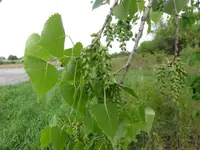 1937
Cottonwood
TreePopulus deltoidesThe Kansas Historical Society notes the cottonwood grows in every Kansas county and was used by early settlers for building.
K.S.A. 73-1001; L. 1937, ch. 318 · Kansas Office of Revisor of Statutes
- 2010
Little bluestem
GrassSchizachyrium scopariumLittle bluestem, a native bunchgrass of the Kansas prairie that turns copper red in fall, became the state grass in 2010.
K.S.A. 73-3001; L. 2010, ch. 77 · Kansas Office of Revisor of Statutes
Earth and sky
- 1990
Harney silt loam
SoilThe Kansas Historical Society says designation followed a five-year effort and that the name Harney traces to a Wichita word for the Pawnee.
K.S.A. 73-2201; L. 1990, ch. 264 · Kansas Office of Revisor of Statutes
- 2014
Tylosaurus (official state marine fossil)
FossilTylosaurusThe statute describes it as a giant mosasaur of the Cretaceous inland sea that reached more than 40 feet in length. The Kansas Historical Society points out that it was a sea-going reptile, not a dinosaur.
K.S.A. 73-3301; L. 2014, ch. 22, § 1 · Kansas Office of Revisor of Statutes
- 2014
Pteranodon (official state flying fossil)
FossilPteranodonDesignated in the same 2014 act as the marine fossil; the statute credits it with a wingspread of more than 24 feet.
K.S.A. 73-3401; L. 2014, ch. 22, § 2 · Kansas Office of Revisor of Statutes
- 2023
Silvisaurus condrayi (official state land fossil)
FossilSilvisaurus condrayiThe act describes it as a one-ton armored ankylosaur about 13 feet long. Rancher Warren Condray found the skeleton on his Ottawa County land in 1955; his grandson, a Goddard teacher, testified for the bill with his sixth-grade students, according to the University of Kansas. It is the only known dinosaur from the Dakota Formation in Kansas and the only one thought to have lived on land in what is now Kansas; other Kansas dinosaurs, such as the nodosaur Niobrarasaurus and the hadrosaur Claosaurus, are known from carcasses that washed out into the inland sea. The single known specimen is held by the KU Natural History Museum.
- 2018
Greenhorn limestone
RockOverland Park fourth-grader Casey Friend pushed for the 2018 rock, mineral, gemstone and fish designations, with Rep. Jan Kessinger sponsoring the bill, per the Kansas Historical Society.
K.S.A. 73-3701; L. 2018, ch. 34, § 1 · Kansas Office of Revisor of Statutes
- 2018
Galena
MineralThe statute credits galena mining, a lead ore, with driving population growth in the region before statehood.
K.S.A. 73-3801; L. 2018, ch. 34, § 2 · Kansas Office of Revisor of Statutes
- 2018
Jelinite
GemstoneJelinite is a type of amber once called kansasite, taken from bedrock near the Smoky Hill River.
K.S.A. 73-3901; L. 2018, ch. 34, § 3 · Kansas Office of Revisor of Statutes
Food and drink
- 2022
Sandhill plum (Chickasaw plum)
FruitPrunus angustifoliaStudents from Sabetha, Valley Falls and Healy supported the bill, according to the Kansas Historical Society.
K.S.A. 73-4201; L. 2022, ch. 54 · Kansas Office of Revisor of Statutes
- 2019
Chambourcin
Red wine grapeChambourcin, a French-American hybrid grape grown by Kansas wineries, became the official red wine grape in 2019.
K.S.A. 73-4101; L. 2019, ch. 57, § 7 · Kansas Office of Revisor of Statutes
- 2019
Vignoles
White wine grapeVignoles, a hybrid white wine grape, was named the official white wine grape in the same 2019 law as Chambourcin.
K.S.A. 73-4102; L. 2019, ch. 57, § 8 · Kansas Office of Revisor of Statutes
Songs, words and language
- 1935
"The Kansas March" by Duff E. Middleton
MarchDesignated the official state march.
K.S.A. 73-801; L. 1935, ch. 262 · Kansas Office of Revisor of Statutes
- 1992
"Here's Kansas" by Bill Post
MarchAdded in 1992 as a second official march alongside "The Kansas March."
K.S.A. 73-802; L. 1992, ch. 187 · Kansas Office of Revisor of Statutes
- 2007
English
LanguageEnglish has been the official language of Kansas since 2007.
K.S.A. 73-2801; L. 2007, ch. 186, § 1 · Kansas Office of Revisor of Statutes
Culture and history
- 2024
Atchison, Topeka and Santa Fe No. 3415 (Pacific class 4-6-2)
Steam locomotiveThe statute notes the engine was built in 1919.
K.S.A. 73-4301; L. 2024, ch. 56, § 7 · Kansas Office of Revisor of Statutes
- 2016
Kansas State Capitol cage elevator
Cage elevatorInstalled in 1923; the law requires it be kept running for officials, workers and visitors.
K.S.A. 73-3501; L. 2016, ch. 42, § 1 · Kansas Office of Revisor of Statutes
Government emblems
Places and institutions
- 2024
Abilene & Smoky Valley Railroad
Heritage railroadThe Abilene & Smoky Valley Railroad, a heritage line that runs excursion trains from Abilene, became the official state heritage railroad in 2024.
K.S.A. 73-4401; L. 2024, ch. 56, § 8 · Kansas Office of Revisor of Statutes
- 2009
William Inge Theatre Festival, Independence
Theatre festival - 2012
Kansas Wheat Festival, Wellington
Wheat festival - 2012
Watermelon festival, Clyde
Watermelon festival - 2016
Cowley County
Stone bridge capitalThe statute cites 18 laid stone arch bridges built before 1910, 17 of which still carry daily traffic.
K.S.A. 73-3601; L. 2016, ch. 1, § 1 · Kansas Office of Revisor of Statutes
- 2026
Kansas Railroad Hall of Fame at the Great Plains Transportation Museum, Wichita
Railroad hall of fameThe act designates the Wichita museum as the official site of the hall of fame and creates a selection committee to manage it.
L. 2026, ch. 108 (Senate Bill 353); codified as K.S.A. 73-4501 to 73-4504 (Supp.) · Kansas Secretary of State
Questions about Kansas's symbols
- What is the Kansas state animal?
- The American buffalo, or bison, adopted in 1955.
- What are the Kansas state fossils?
- Kansas has three. Tylosaurus, a giant sea reptile, is the state marine fossil and Pteranodon, a flying reptile, the state flying fossil, both adopted in 2014. Silvisaurus condrayi, an armored dinosaur, became the state land fossil in 2023.
- What is the Kansas state song?
- "Home on the Range," adopted in 1947. Its words began as a poem by Brewster Higley, published in a Kansas newspaper in the early 1870s.
- Does Kansas have a state fish?
- Yes. The channel catfish, adopted in 2018.
Photo credits (9)
- Flag of Kansas: Xrmap, Public domain, via Wikimedia Commons
- Western meadowlark: Kevin Cole from Pacific Coast, USA (en:User:Kevinlcole), CC BY 2.0, via Wikimedia Commons
- Wild native sunflower: Jon Sullivan, Public domain, via Wikimedia Commons
- Cottonwood: R. A. Nonenmacher, CC BY-SA 4.0, via Wikimedia Commons
- American buffalo: Jack Dykinga, Public domain, via Wikimedia Commons
- Honeybee: Didier Descouens, CC BY-SA 4.0, via Wikimedia Commons
- Ornate box turtle: The, CC BY-SA 2.5, via Wikimedia Commons
- Barred tiger salamander: Daiju Azuma, CC BY-SA 2.5, via Wikimedia Commons
- Channel catfish: Ryan Somma, CC BY-SA 2.0, via Wikimedia Commons
Something out of date? Tell us and we will check it against the law.
Sources
- K.S.A. 73-702 Kansas Office of Revisor of Statutes
- K.S.A. 75-201 Kansas Office of Revisor of Statutes
- K.S.A. 73-1301 Kansas Office of Revisor of Statutes
- Kansas Statutes, Chapter 73 (state symbols) Kansas Office of Revisor of Statutes
- Kansas State Symbols Kansas Historical Society
- Kansas designates Silvisaurus condrayi official state land fossil University of Kansas