Kentucky
The Bluegrass State
Kentucky became the 15th state on June 1, 1792, the first state west of the Appalachian Mountains. Its capital is Frankfort, one of the smallest state capitals, while Louisville and Lexington are its big cities. Kentucky is known as the Bluegrass State, and officially it is a commonwealth.
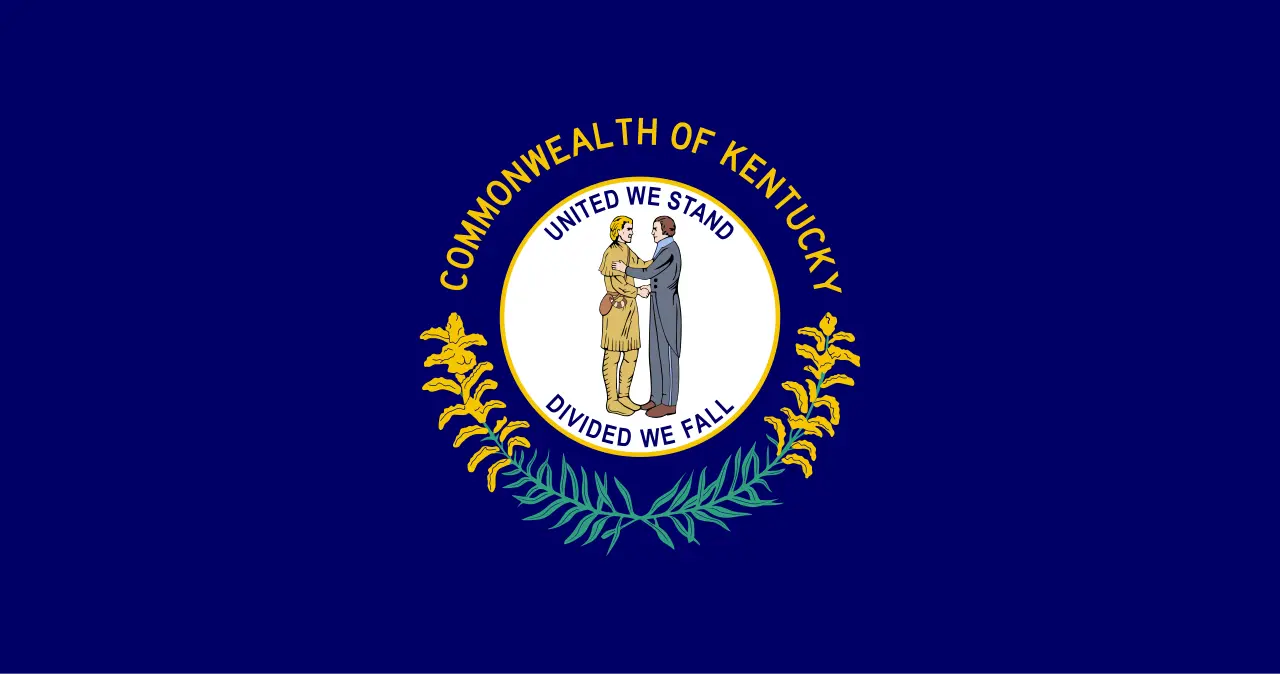
- Capital
- FrankfortCapital since 1793
- Statehood
- June 1, 179215th state
- Population, 2025
- 4,606,86426th of 50
- Area
- 40,408 sq mi37th largest · 104,656 km²
- Largest city
- Louisville641,962 people
- Abbreviation
- KYUS Postal Service code
- Motto
- United We Stand, Divided We FallEnglish
- Borders
- 7 statesLandlocked
The first state across the mountains
Kentucky was once the western frontier of Virginia. Settlers followed Daniel Boone and others through the Cumberland Gap in the 1770s and 1780s, and the population grew so quickly that Kentuckians soon wanted their own government. After a series of conventions, Virginia agreed to let Kentucky go, and on June 1, 1792, Kentucky became the 15th state, the first west of the Appalachian Mountains.
Like Virginia, Kentucky calls itself a commonwealth. Its official name is the Commonwealth of Kentucky, though legally it is a state like any other.
The name
The name Kentucky comes from a Native American language, but no single origin has been proven. Proposed sources include Iroquoian words for meadow, prairie or level land, a Wyandot phrase often rendered “land of tomorrow,” and a Shawnee term said to mean “at the head of the river.” The famous phrase “dark and bloody ground” traces back to John Filson’s 1784 history of Kentucky; it is not a documented translation of any Native word.
Frankfort, the small capital
When Kentucky needed a capital in 1792, several towns competed, including Lexington and Louisville. Frankfort won mainly because of a generous pledge from a landowner, Andrew Holmes, who offered his log house as a temporary capitol, town lots, building materials, including 1,500 pounds of nails, and $3,000 in gold. Frankfort has held on to the title ever since, even after two of its capitols burned. With about 28,700 residents in 2025, it is one of the smallest state capitals in the country. The capital page tells the story.
The Bluegrass State
Kentucky is known as the Bluegrass State, for the bluegrass that grows in the rich limestone pastures around Lexington, the heart of the state’s horse country. The Thoroughbred is the official state horse, and bluegrass music, named for the Blue Grass Boys, the band of Kentuckian Bill Monroe, is the official state music.
The state motto is “United We Stand, Divided We Fall,” on the seal since 1792. It comes from John Dickinson’s 1768 “Liberty Song,” a favorite of Isaac Shelby, Kentucky’s first governor. In 2002 Kentucky added a Latin motto too, Deo gratiam habeamus, usually translated “Let us be grateful to God.”
Symbols
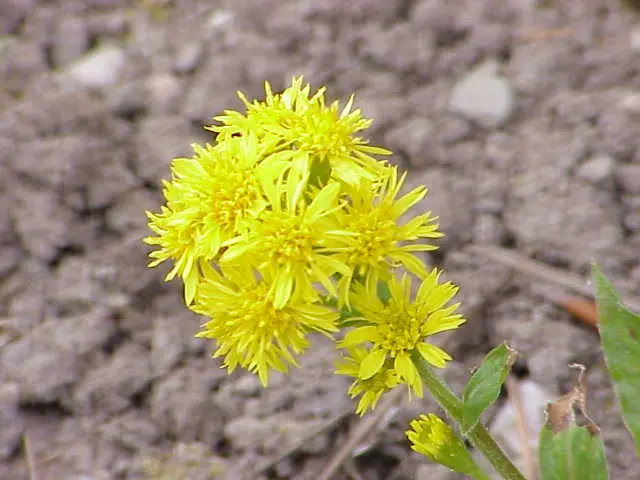
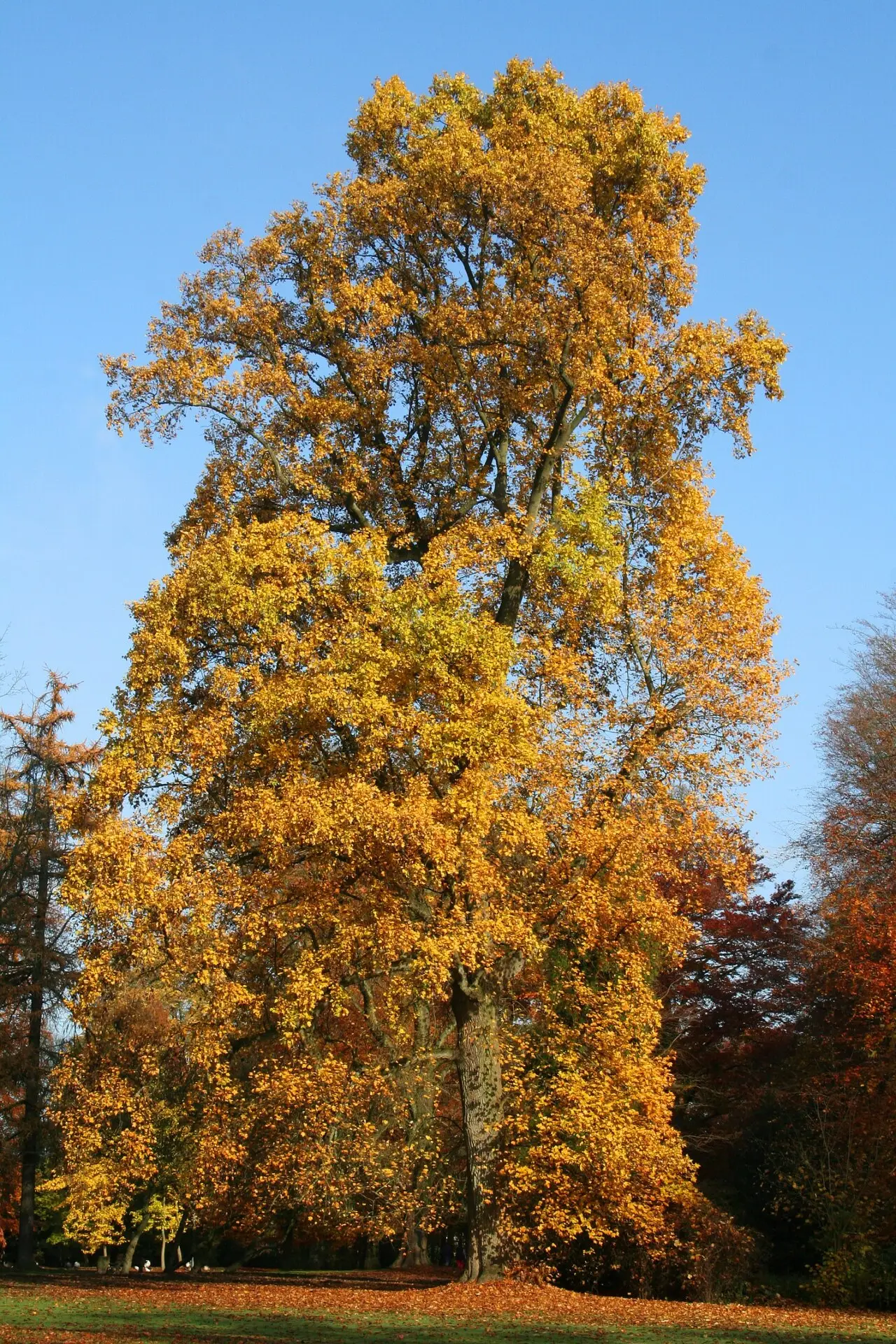
Kentucky has about 50 official symbols. The cardinal became the state bird in 1926, making Kentucky the first of seven states to choose it, and goldenrod the state flower the same year. The tulip poplar is the state tree. The state song is Stephen Foster’s “My Old Kentucky Home,” adopted in 1928; in 1986 the legislature replaced a racial slur in its lyrics with the word “people.” Kentucky also has an official soft drink, Ale-8-One, an official gun, the Kentucky long rifle, and an official sports car, the Corvette, built in Bowling Green. In 2026 the legislature added a state dog, the Treeing Walker Coonhound, and made shelter cats and dogs the official pets. See every symbol on the Kentucky symbols page.
The flag shows the state seal, two friends embracing, on navy blue, framed by goldenrod.
Land and people
Kentucky covers 40,408 square miles, 37th among the states, and had about 4.61 million residents in 2025, 26th in the country. It borders seven states: Ohio, Indiana and Illinois across the Ohio River to the north, and Missouri, Tennessee, Virginia and West Virginia. The Mississippi River forms its short western edge. Louisville, with about 642,000 people, is the largest city, followed by Lexington, Bowling Green and Owensboro.
Kentucky state symbols
All 50 official symbols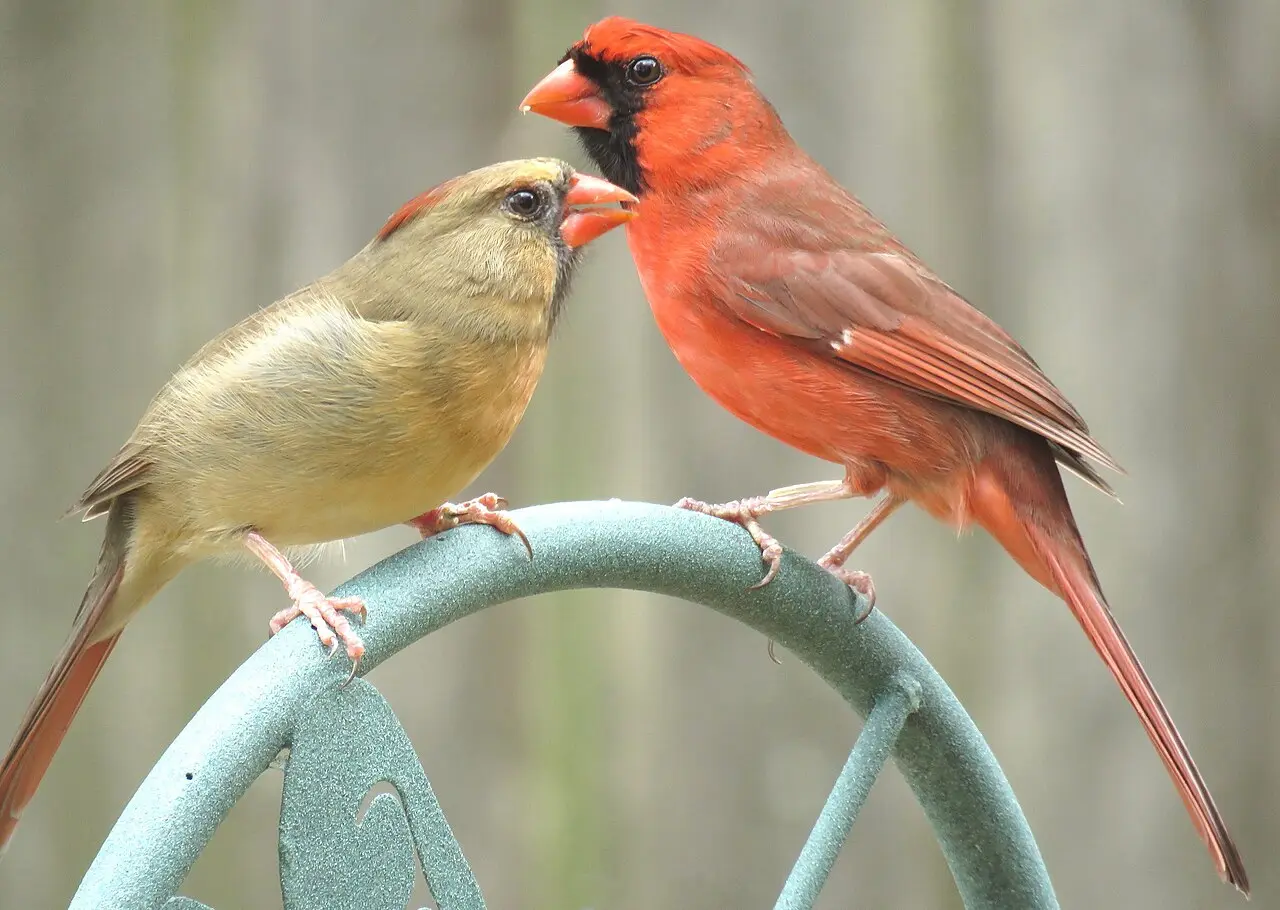
The capital: Frankfort
The capital of Kentucky is Frankfort, chosen in 1792 and the seat of government since 1793. It beat Lexington, Louisville and other towns largely because a local landowner offered his house, building materials and $3,000 in gold. Frankfort has had four capitols, two of which burned, and with fewer than 30,000 residents it is one of the smallest state capitals.
- 1792–1793Lexington
- 1793–todayFrankfort
Where Kentucky is
Kentucky shares a border with 7 states: Illinois, Indiana, Missouri, Ohio, Tennessee, Virginia and West Virginia.
- Land area
- 39,486 sq mi
- Water area
- 921 sq mi
- Population density
- 116.7 people per sq mi (24th)
Kentucky trivia
- In 2024 Kentucky reshuffled three geology symbols: coal went from state mineral to state rock, Kentucky agate from state rock to state gemstone, and calcite became the state mineral.Source: Kentucky Legislative Research Commission
- Frankfort's winning bid to be capital reportedly included 1,500 pounds of nails, 10 boxes of glass and £50 worth of locks and hinges.Source: Kentucky Historical Society
- A $1,000,000 federal repayment for Civil War damages helped Kentucky pay for its current capitol.Source: Kentucky Historical Society / Kentucky Legislative Research Commission
- The original state seal was made by a Lexington silversmith, David Humphreys, for twelve pounds, and was later lost when the capitol burned.Source: Kentucky Secretary of State
- The state motto comes from John Dickinson's 1768 "Liberty Song," a favorite of first governor Isaac Shelby.Source: Kentucky Secretary of State
- Before the tulip poplar, the Kentucky coffeetree was the official state tree from 1976 until the law was changed in 1994.Source: University of Kentucky Cooperative Extension Service
Questions about Kentucky
- What is the capital of Kentucky?
- Frankfort. It was chosen in December 1792, and the legislature first met there in 1793.
- Why is Kentucky called the Bluegrass State?
- For the bluegrass that grows in the rich pastures of central Kentucky, the region around Lexington known as the Bluegrass. The nickname is traditional and not written into law.
- Is Kentucky a state or a commonwealth?
- Both. Kentucky's official name is the Commonwealth of Kentucky, but legally it is a state like any other. Massachusetts, Pennsylvania and Virginia also call themselves commonwealths.
- What does Kentucky mean?
- The name comes from a Native American language, but no single origin has been proven. Suggestions include Iroquoian words for meadow or level land and a Shawnee term said to mean "at the head of the river." The phrase "dark and bloody ground" comes from a 1784 book, not from a documented translation.
Photo credits (4)
- Flag of Kentucky: Commonwealth of Kentucky, Public domain, via Wikimedia Commons
- Kentucky cardinal: patricia pierce, CC BY 2.0, via Wikimedia Commons
- Goldenrod: Kurt Stüber [1], CC BY-SA 3.0, via Wikimedia Commons
- Tulip poplar: Jean-Pol GRANDMONT, CC BY 3.0, via Wikimedia Commons
Sources
- From Then Til Now: Kentucky History at a Glance Kentucky Historical Society · statehood
- Frankfort Chosen as Capital (Historical Marker) Kentucky Historical Society · capital
- Frankfort Chosen as Capital ExploreKYHistory, Kentucky Historical Society · capital
- A History of the Daniel Boone National Forest, Appendix A USDA Forest Service
- The Kentucky State Seal Kentucky Secretary of State
- US Census Bureau Vintage 2025 population estimates; 2010 state area measurements