Florida
The Sunshine State
Florida became the 27th state on March 3, 1845. Its capital is Tallahassee, chosen in 1823 as a halfway point between Pensacola and St. Augustine, and its largest city is Jacksonville. Known as the Sunshine State, Florida is now the third most populous state, with about 23.5 million people.
- Capital
- TallahasseeCapital since 1824
- Statehood
- March 3, 184527th state
- Population, 2025
- 23,462,5183rd of 50
- Area
- 65,758 sq mi22nd largest · 170,312 km²
- Largest city
- Jacksonville1,017,689 people
- Abbreviation
- FLUS Postal Service code
- Motto
- In God We TrustEnglish
- Borders
- 2 statesOcean coast
La Florida
Florida’s name is one of the oldest European place names in the United States. In April 1513 the Spanish explorer Juan Ponce de León, the first known European to reach the peninsula, claimed it for Spain and called it La Florida. The usual explanation combines two reasons: he arrived during the Easter season, known in Spanish as Pascua Florida, the “flowery feast,” and the land was thick with plants. Historians still debate how much each counted.
Spain founded St. Augustine in 1565, the oldest continuously occupied European settlement in the continental United States, and held Florida for most of the next two and a half centuries, apart from twenty years of British rule. In 1821 Spain ceded Florida to the United States. Congress set up a territorial government in 1822, and on March 3, 1845, President John Tyler signed the act that made Florida the 27th state.
A capital in the middle
When Florida became American, its two main towns, Pensacola in the west and St. Augustine in the east, were hundreds of miles apart, and the territorial legislature had to travel between them. In 1823 two commissioners chose a site roughly halfway between, among the hills of the Panhandle: Tallahassee. The legislature first met there in 1824, in log cabins. The capital page tells the story, including how protesters saved the old Capitol when the new tower went up in the 1970s.
The Sunshine State
“The Sunshine State” first appeared on Florida’s license plates in 1949, and state law still provides for it on standard plates, but no law adopting it as the official nickname can be found. The official motto is “In God We Trust,” which has been on the state seal since 1868 and was adopted as the motto by law in 2006.
Florida is famously flat. Its highest natural point, in Walton County in the Panhandle, is only 345 feet above sea level, the lowest high point of any state. Nearly a fifth of its total area is water.
Oranges, alligators and manatees
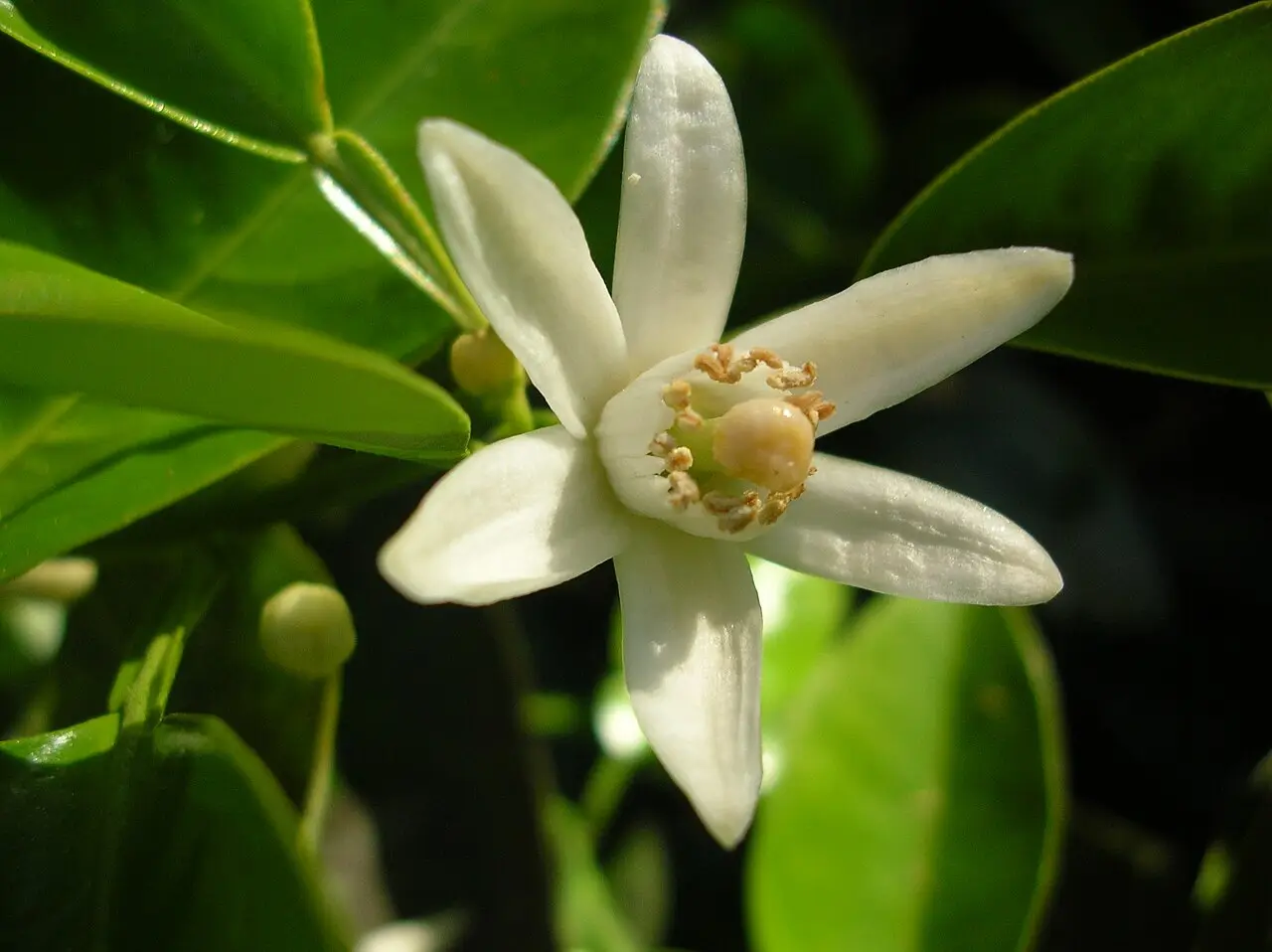
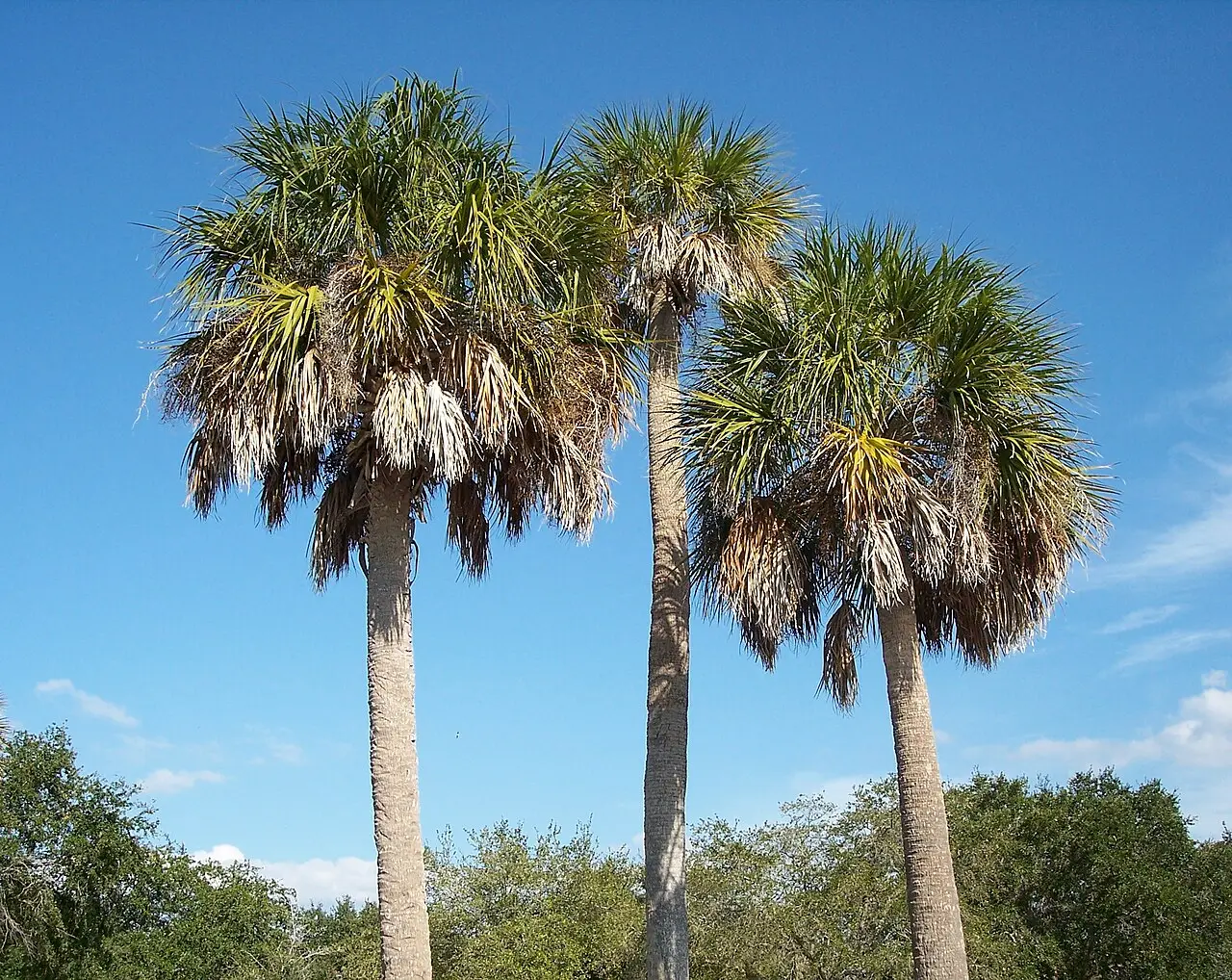
Florida has 46 official symbols, and many of them come from its citrus groves and its wildlife. The orange blossom has been the state flower since 1909, orange juice the state beverage since 1967 and the orange the state fruit since 2005. The state animal is the Florida panther, chosen by a statewide vote of students in 1982. The American alligator is the state reptile, the manatee the state marine mammal, and the gopher tortoise, whose burrows shelter more than 350 other species, the state tortoise. The state bird is the mockingbird, adopted in 1927, though recent bills have tried to replace it with the flamingo. Key lime pie is the official state pie. See every symbol on the Florida symbols page.
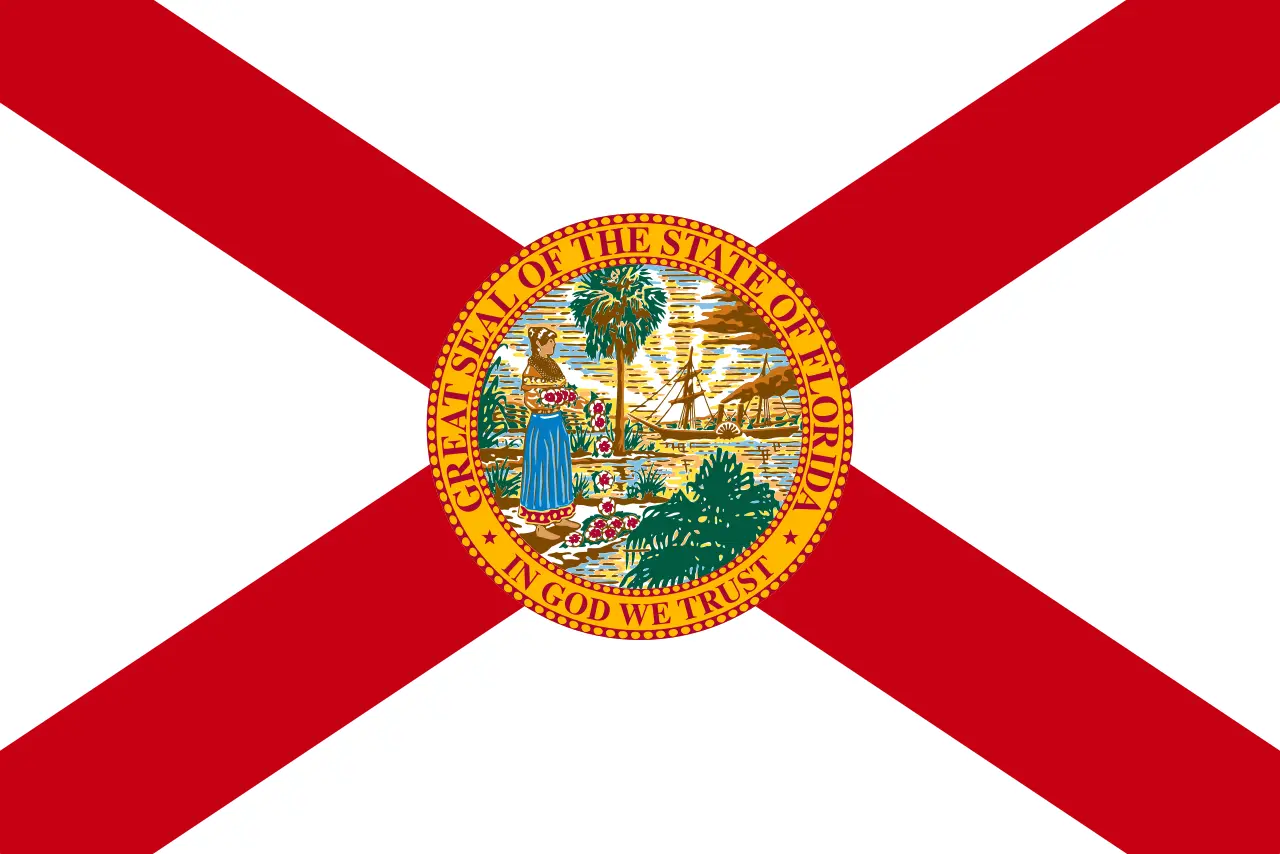
The flag is white with a red diagonal cross and the state seal at its center.
Land and people
Florida covers 65,758 square miles, 22nd among the states, of which more than 12,000 square miles is water. With about 23.5 million residents in 2025, it is the third most populous state, after California and Texas, and it has added nearly 2 million people since 2020. It borders only Alabama and Georgia by land, and the rest of its long boundary is coastline on the Atlantic Ocean and the Gulf. Jacksonville is the largest city, followed by Miami, Tampa and Orlando, although metropolitan Miami is by far the largest urban area.
Florida state symbols
All 46 official symbols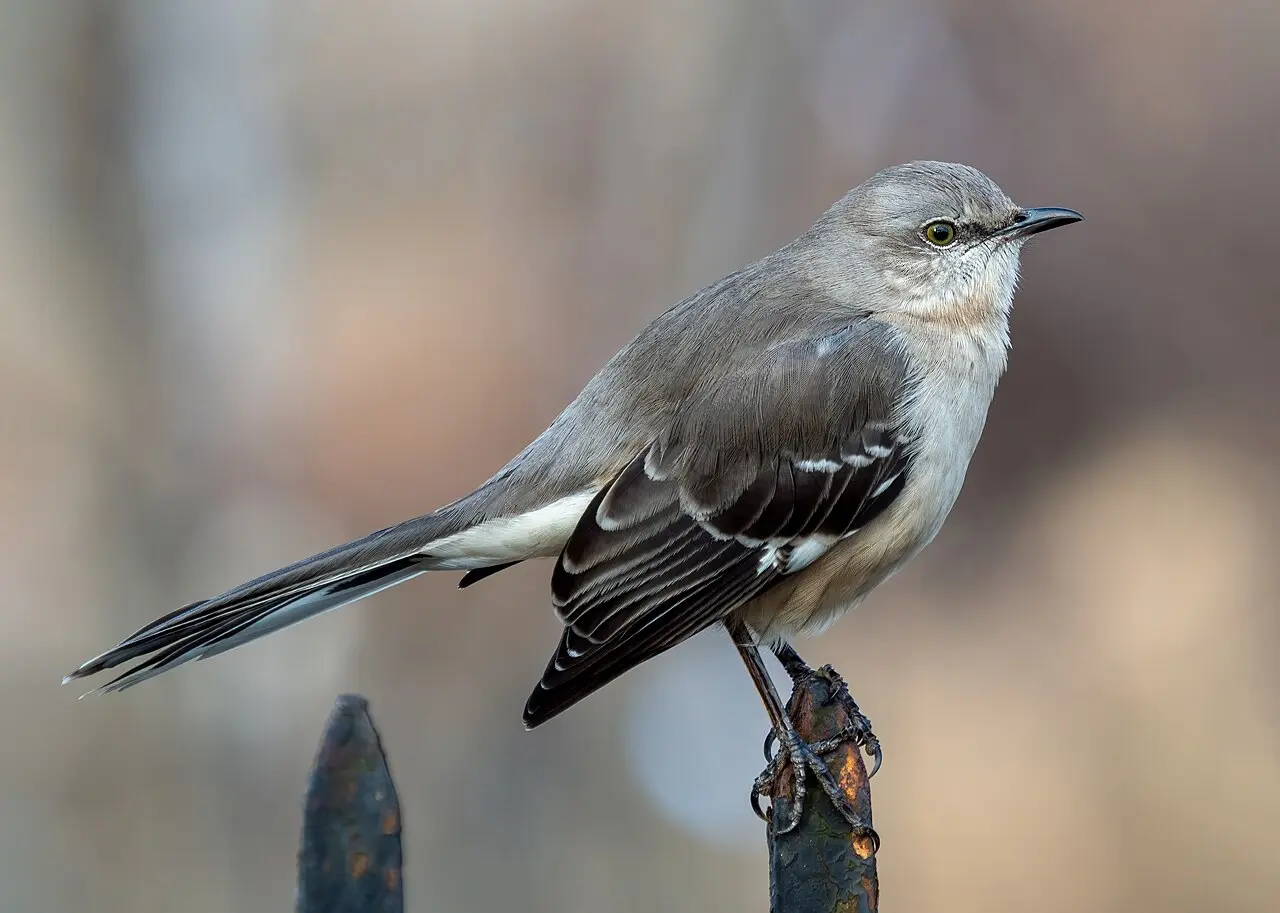
The capital: Tallahassee
The capital of Florida is Tallahassee, the seat of government since 1824. It was chosen as a compromise: Florida's two main towns, Pensacola and St. Augustine, were hundreds of miles apart, and commissioners picked a spot roughly halfway between them. Today the 1845 Historic Capitol stands in front of a 22-story tower finished in 1977.
- 1824–todayTallahassee
Where Florida is
Florida shares a border with 2 states: Alabama and Georgia.
- Land area
- 53,625 sq mi
- Water area
- 12,133 sq mi
- Population density
- 437.5 people per sq mi (7th)
Florida trivia
- Florida's highest natural point, in Walton County, is only 345 feet above sea level.Source: Florida Department of State
- Florida's law names 'the porpoise, also commonly known as the dolphin' as its saltwater mammal, though porpoises and dolphins are different animals.Source: Florida Department of State
- More than 350 other species share the burrows dug by the gopher tortoise, the state tortoise.Source: Florida Department of State
- A magnolia on the Historic Capitol grounds was grown from a cutting of the one Andrew Jackson planted at the White House.Source: Florida Historic Capitol Museum
- A time capsule placed under the Historic Capitol's west steps by the state's Sesquicentennial Commission is due to be opened in 2045.Source: Florida Historic Capitol Museum
Questions about Florida
- What is the capital of Florida?
- Tallahassee. It has been the seat of government since the territorial Legislative Council first met there in November 1824.
- What is the largest city in Florida?
- Jacksonville, with just over 1 million people in 2025. Miami, Tampa and Orlando follow. Jacksonville's size comes partly from its 1968 merger with Duval County.
- Why is Florida called the Sunshine State?
- The phrase has appeared on Florida license plates since 1949, and state law still provides for it on standard plates. It is often said to have become the official nickname in 1970, but no law adopting it could be found.
- Where does the name Florida come from?
- From Spanish. Juan Ponce de León claimed the peninsula for Spain in April 1513 and called it La Florida, probably because he arrived in the Easter season, Pascua Florida, and because of the land's lush plant life.
Photo credits (4)
- Flag of Florida: Template:Brendon Tiana, Public domain, via Wikimedia Commons
- Northern mockingbird: Rhododendrites, CC BY-SA 4.0, via Wikimedia Commons
- Orange blossom: Lynda, CC BY 2.0, via Wikimedia Commons
- Sabal palm: Mmcknight4, Public domain, via Wikimedia Commons
Sources
- Saluting 150th Anniversary of Florida Statehood (S. Res. 84), Congressional Record, March 2, 1995, p. S3437 U.S. Government Publishing Office / Congress.gov · statehood
- City History City of Tallahassee · capital
- About the Historic Capitol Florida Historic Capitol Museum · capital
- "April 2: \"La Florida\" Claimed for Spain" Florida Center for Instructional Technology, University of South Florida
- Florida Statutes, Chapter 15 (state emblems) The Florida Legislature
- US Census Bureau Vintage 2025 population estimates; 2010 state area measurements