Mockingbird, the state bird of Florida
The state bird of Florida is the northern mockingbird, adopted in 1927. It is a slim gray songbird famous for mimicking other birds, and it lives in yards, parks and roadsides across Florida all year. Recent bills have tried to replace it with the American flamingo, but the mockingbird has kept its title.
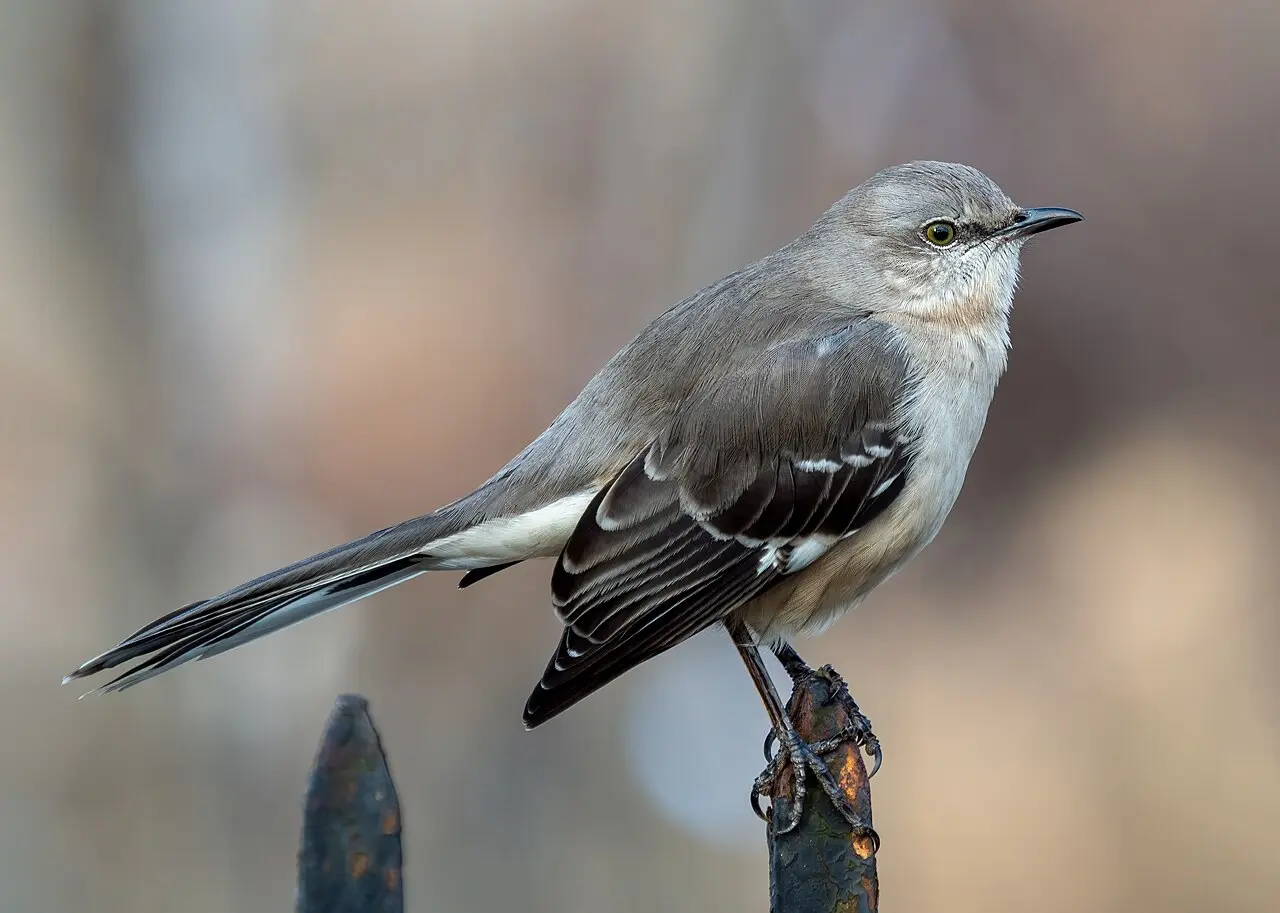
How to recognize it
The northern mockingbird is a slim, long-tailed songbird about eight to ten inches long. It is pale gray above and whitish below, with white patches on its wings and white outer tail feathers that flash when it flies. Males and females look alike; young birds have dark streaks on their breasts.
When it crosses open ground, a mockingbird often stops and half-opens its wings, flashing the white patches. Scientists are not sure why; it may startle insects into moving.
Its song is the real giveaway. A mockingbird strings together long runs of phrases, musical and harsh, repeating each one three or more times before moving on, and many are copied from other birds. In Florida males sing mainly from February through August and again from September into early November, often at night. Its call is a harsh chack.
How it lives
Mockingbirds eat roughly half insects and other small animals, such as beetles, grasshoppers, caterpillars, ants and spiders, and half berries and wild fruit, relying more on fruit in fall and winter. They nest in dense shrubs or trees, usually three to ten feet off the ground, and defend their nests boldly, diving at cats and even people who come too close.
Where to see one in Florida
The mockingbird lives in Florida all year and is common across the state. Look in suburban yards, hedges, parks and along roadsides, where singing males perch on wires, rooftops, chimneys and treetops.
A bird that came back
The northern mockingbird is common and widespread today, and it is protected under the federal Migratory Bird Treaty Act. It was not always so secure at the northern edge of its range. From the late 1700s to the early 1900s, mockingbirds were trapped in large numbers for the cage-bird trade, prized for their singing. Once that trade ended, they recovered and have since spread northward.
The state bird since 1927
Florida’s legislature named the mockingbird the state bird in 1927, by Senate Concurrent Resolution No. 3. Because the designation rests on a resolution rather than a statute, it is not in the Florida Statutes, unlike most of Florida’s symbols.
In recent years bills have been filed in several sessions to replace the mockingbird, which Florida shares with four other states, with the American flamingo. The 2026 version, Senate Bill 150, would also have named the Florida scrub-jay, a bird found only in Florida, as the state songbird. It died in committee on March 13, 2026, so the mockingbird remains Florida’s state bird.
Questions about the Florida state bird
- What is the state bird of Florida?
- The northern mockingbird (Mimus polyglottos), designated by a concurrent resolution of the Legislature in 1927.
- Is the flamingo Florida's state bird?
- No. Bills to make the American flamingo the state bird have been filed in recent sessions. The 2026 version, which would also have named the Florida scrub-jay the state songbird, died in committee in March 2026.
- Which other states have the mockingbird as state bird?
- Arkansas, Mississippi, Tennessee and Texas. Florida and Texas were the first, both in 1927.
- When do mockingbirds sing in Florida?
- Mainly from February through August, and again from September to early November. Males often sing at night.
Sources
- Northern Mockingbird National Audubon Society
- SB 150 (2026) bill analysis The Florida Senate
- SB 150 (2026) bill history The Florida Senate
- State Bird (archived copy, July 25, 2026) Florida Department of State (via Internet Archive)