Sunflower, the state flower of Kansas
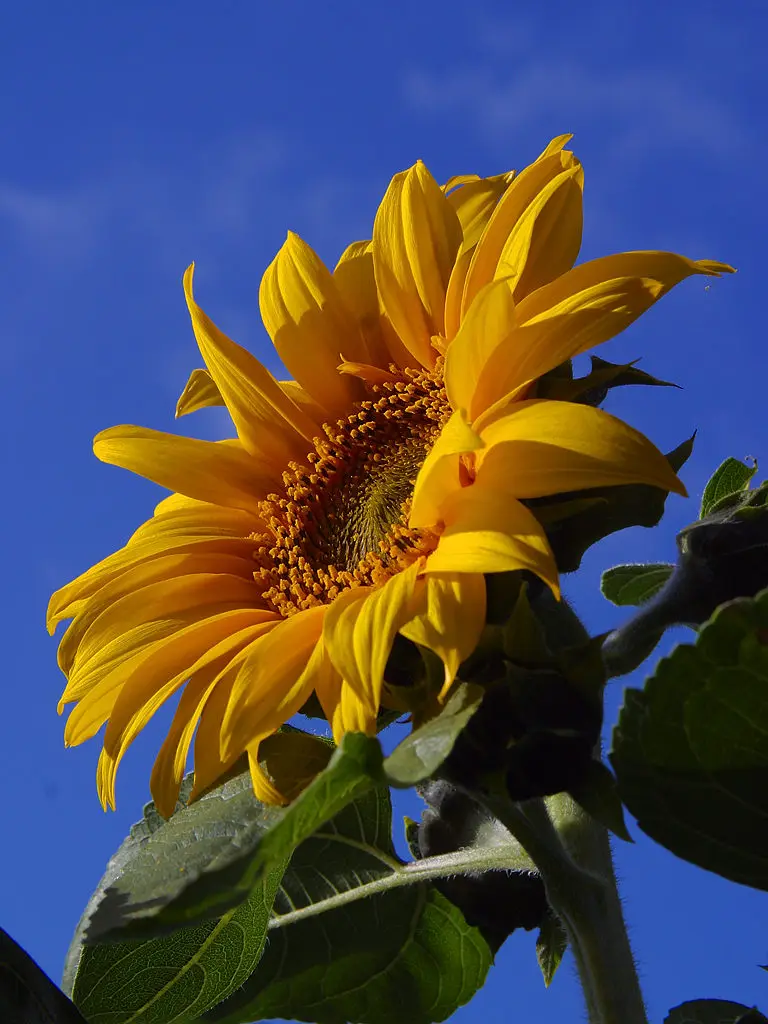
The state flower of Kansas is the wild native sunflower, adopted in 1903, and it gave Kansas its nickname, the Sunflower State. The common wild sunflower is a tall, coarse plant with bright yellow flower heads that line Kansas roadsides from July to September. The law that adopted it is unusual: it begins with a preamble praising the sunflower.
How to recognize it
The common wild sunflower is a coarse, upright annual, usually 2 to 10 feet tall and sometimes taller, with rough, hairy stems. Its leaves are long-stalked and triangular to heart-shaped, often four inches to more than a foot long. The flower heads are three to six inches across, with 17 or more bright yellow rays around a reddish-brown to purplish center. Wild plants are usually branched and carry many smaller heads, unlike the single giant head of a crop sunflower.
In Kansas it blooms from July through September, and the seeds ripen in the flat central disk.
Where it grows
The common sunflower is native to North America and grows throughout Kansas, on open and disturbed ground, along roadsides, at the edges of fields and in low, moist areas. It is so common that the USDA plant guide calls it a widespread roadside weed. Its seeds feed many birds, including meadowlarks, as well as small mammals.
Where to see it
From midsummer to early fall, look along almost any Kansas road. Wild sunflowers line highways, field edges and vacant lots across the state, and in late summer whole roadsides can turn yellow.
A crop with deep roots
Native Americans grew the sunflower more than a thousand years ago, for its seeds and oil, and modern crop sunflowers descend from this wild species. It hybridizes easily with other sunflowers.
A law with a preamble
Kansas adopted the sunflower in 1903. The law, now K.S.A. 73-1801, is unusual because it begins with a preamble explaining the choice. It praises the sunflower as easy to draw, carve or embroider and as a reminder of frontier days, and it says the sunflower had already given Kansas its name around the world. The act names it both the state flower and the state’s floral emblem.
The sunflower appears elsewhere in Kansas symbols too: it crowns the state seal on the flag, and it fills the old 1925 state banner, which is still described in the law.
Questions about the Kansas state flower
- What is the state flower of Kansas?
- The wild native sunflower, adopted in 1903. The law names "the helianthus or wild native sunflower"; the common wild sunflower, Helianthus annuus, is the species usually meant.
- When do sunflowers bloom in Kansas?
- From July through September.
- Is the wild sunflower the same as the crop sunflower?
- The crop sunflower was developed from the wild common sunflower. Native Americans grew it more than a thousand years ago, and modern seed and oil sunflowers descend from it.
- Why is Kansas called the Sunflower State?
- Because of the wild sunflower. The 1903 law that adopted it already described the sunflower as the flower that had given Kansas its name around the world.
Sources
- K.S.A. 73-1801 (state flower) Kansas Office of Revisor of Statutes
- Helianthus annuus, common sunflower Kansas Wildflowers and Grasses
- "Plant Guide: Common Sunflower" USDA Natural Resources Conservation Service
- PLANTS profile data: Helianthus annuus (HEAN3) USDA NRCS PLANTS