Vermont state symbols
Vermont has 31 official state symbols, almost all in Chapter 11 of Title 1 of the Vermont Statutes. The oldest are the seal of 1779 and the red clover, the state flower since 1894; the newest is the bear's head tooth mushroom of 2024. Vermont has several unusual entries, including three state rocks, two state fossils that are specific museum specimens, and an official state flavor, maple.
Clover, thrush and maple
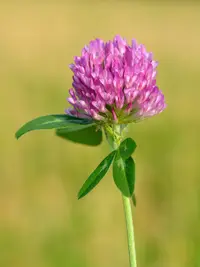
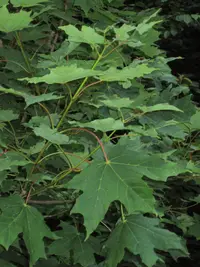
Vermont’s natural symbols began with the red clover, named the state flower in 1894 as a nod to the state’s farming and dairy heritage. The hermit thrush became the state bird in 1941 and the sugar maple the state tree in 1949. In 1994 Vermont tied two symbols together, naming maple, from the Vermont sugar maple, the official state flavor.
Animals
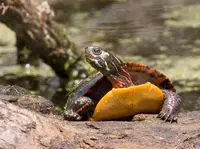
The Morgan horse became the state animal in 1961, and the honeybee the state insect in 1978. The monarch became the state butterfly in 1987, the northern leopard frog the state amphibian in 1998, and the painted turtle, praised as hardy in cold weather and colored like the state’s fall foliage, the state reptile in 1994 after students in Cornwall pushed for it. In 2012 Vermont named two state fish, the brook trout for cold water and the walleye for warm water. Randall Lineback cattle are the state heritage livestock breed.
Rocks, gems and fossils
A single 1992 act named the state gem, grossular garnet, the state mineral, talc, and three state rocks, marble, granite and slate. Vermont’s two state fossils are specific specimens: the fossilized white whale skeleton at the University of Vermont, named the state marine fossil in 1993, and the Mount Holly mammoth tooth and tusk, kept at the Mount Holly Community Historical Museum, named the state terrestrial fossil in 2014. The Tunbridge series became the state soil in 1985.
Food and drink
Milk became the state beverage in 1983. A 1999 law named the apple the state fruit and apple pie the state pie. The Gilfeather turnip, a white-fleshed cross between a turnip and a rutabaga developed by John Gilfeather in Wardsboro around 1902 and known for a sweet taste after hard frost, became the state vegetable in 2016; Gilfeather reportedly trimmed the tops and roots off the turnips he sold so buyers could not grow their own. In 2024, after students at Compass School and Windham Elementary School researched the choice, the bear’s head tooth mushroom, edible, native and with no toxic look-alikes, became the state mushroom, making Vermont the sixth state with one.
Sports and pastimes
Skiing and snowboarding became the state winter sports in 2012, and the Governor Aiken bucktail streamer the state fly-fishing fly in 2014.
Flag, seal, song, motto and nickname
-
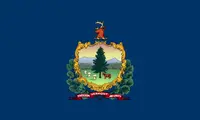 1923
Flag of Vermont
FlagA blue field bearing the state coat of arms: a pine tree, three sheaves of grain and a cow in front of blue mountains, with a buck's-head crest, crossed pine branches and the motto "Vermont; Freedom and Unity" on a scroll below.
1 V.S.A. § 495 (1923 act, H.63)
- 1779
Great Seal of Vermont
SealA pine tree in the center with a sheaf of grain and a cow, set among wooded hills, and the motto "Freedom & Unity". The current seal is a larger, deeper-cut reproduction of the original designed by Ira Allen, cut by Reuben Dean of Windsor and accepted by the General Assembly on February 20, 1779.
The law allows its use for commemorative medals and public displays not connected with advertising, as long as the use does not imply state endorsement.
1 V.S.A. § 493
- 2000
These Green Mountains
SongThe lyrics are still under copyright, so they are not reproduced here. Official page.
"These Green Mountains" became the state song in 2000, chosen through a Vermont Arts Council contest that drew more than 100 entries. It replaced "Hail, Vermont!" (1938).
1 V.S.A. § 514 (1999, No. 99 (Adj. Sess.), § 2)
-
Freedom and Unity
MottoEnglish.
"Freedom and Unity" appears on the coat of arms and the seal. In 2015 Vermont added a second, Latin motto, "Stella quarta decima fulgeat," "May the 14th star shine bright," for its place as the 14th state.
1 V.S.A. § 491(2)
Animals
-
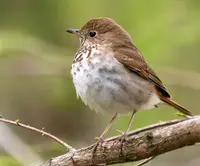 1941
Hermit thrush
BirdCatharus guttatus -
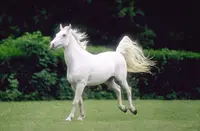 1961
Morgan horse
MammalEquus caballusThe statute designates it the "State Animal"; Vermont has no separately designated state mammal.
1 V.S.A. § 500 (1961, No. 42, § 1) · Vermont General Assembly
-
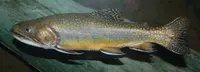 2012
Brook trout
FishSalvelinus fontinalisThe statute calls it the State Cold Water Fish and pairs it with a State Warm Water Fish, the walleye.
1 V.S.A. § 501 (2011, No. 82 (Adj. Sess.), § 2) · Vermont General Assembly
-
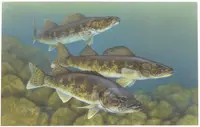 2012
Walleye
Warm water fishSander vitreusThe statute uses the name "walleye pike" for this fish.
1 V.S.A. § 501 (2011, No. 82 (Adj. Sess.), § 2) · Vermont General Assembly
-
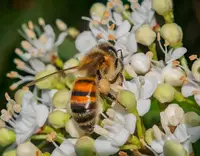 1978
Honeybee
InsectApis mellifera -
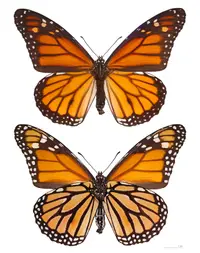 1987
Monarch
ButterflyDanaus plexippus -
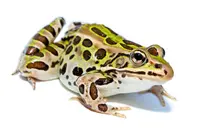 1998
Northern leopard frog
AmphibianLithobates pipiens - 2006
Randall Lineback cattle
Heritage livestock breedBos taurus -
 1994
Painted turtle
ReptileChrysemys pictaStudents at the Cornwall school pushed for the designation; Sen. Elizabeth Ready introduced the joint resolution in January 1994. The resolution praised the turtle as hardy in cold weather, common in Vermont and colored like the state's autumn foliage. As a joint resolution it took effect on House passage without the governor's signature.
J.R.S. 57 (1994 joint resolution, not codified) · Vermont General Assembly (Senate Natural Resources committee materials)
Plants and fungi
-
 1894
Red clover
FlowerTrifolium pratense -
 1949
Sugar maple
TreeAcer saccharumThe statute naming maple as the state flavor specifies maple from the Vermont sugar maple tree, tying two symbols together.
- 2024
Bear's head tooth mushroom
MushroomHericium americanumRep. Michelle Bos-Lun of Westminster sponsored the bill (H.664) after students at Compass School and Windham Elementary School researched and chose the species. Students looked for a mushroom that is edible, native to the Northeast, grows on trees and has no toxic look-alikes, and several of them testified to legislative committees. Governor Phil Scott signed it on May 7, 2024, making Vermont the sixth state with an official mushroom.
Earth and sky
- 1985
Tunbridge soil series
Soil - 1992
Grossular garnet
GemstoneThe gem, the three state rocks and the state mineral were all designated by the same 1992 act.
1 V.S.A. § 506 (1991, No. 221 (Adj. Sess.), § 1) · Vermont General Assembly
- 1992
Marble, granite and slate
RockVermont names three state rocks rather than one.
1 V.S.A. § 507 (1991, No. 221 (Adj. Sess.), § 2) · Vermont General Assembly
- 1992
Talc
Mineral - 1993
White whale (beluga) fossil skeleton at UVM's Perkins Geology Museum
FossilDelphinapterus leucasThe statute designates a specific specimen, the fossilized white whale skeleton held by the University of Vermont, as the State Marine Fossil.
1 V.S.A. § 509(a) (1993, No. 66, § 1) · Vermont General Assembly
- 2014
Mount Holly mammoth tooth and tusk
Terrestrial fossilThe statute designates the specimen kept at the Mount Holly Community Historical Museum.
1 V.S.A. § 509(b) (2013, No. 116 (Adj. Sess.), § 15a) · Vermont General Assembly
Food and drink
- 1983
Milk
Beverage - 1994
Maple
FlavorThe law specifies maple from the Vermont sugar maple tree.
1 V.S.A. § 510 (1993, No. 139 (Adj. Sess.), § 1) · Vermont General Assembly
- 1999
Apple pie
DessertThe statute titles it the "State Pie"; it was enacted in the same 1999 act as the state fruit.
1 V.S.A. § 512 (1999, No. 15, § 1) · Vermont General Assembly
- 1999
Apple
FruitMalus domestica - 2016
Gilfeather turnip
VegetableThe variety was developed by John Gilfeather on his farm in Wardsboro, with the earliest known mention around 1902. It is a white-fleshed cross between a turnip and a rutabaga, known for a sweet taste after hard frost. Gilfeather reportedly trimmed the tops and roots off the turnips he sold so that buyers could not grow their own.
1 V.S.A. § 519 (2015, No. 127 (Adj. Sess.), § 1) · Vermont Public
Songs, words and language
- 2015
Stella quarta decima fulgeat (May the 14th star shine bright)
Latin mottoThis is a second, Latin motto alongside the main motto "Freedom and Unity"; the phrase alludes to Vermont being the 14th state.
1 V.S.A. § 518 (2015, No. 6, § 1) · Vermont General Assembly
Culture and history
- 2012
Skiing and snowboarding
SportThe statute designates them the State Winter Sports.
1 V.S.A. § 516 (2011, No. 77 (Adj. Sess.), § 2) · Vermont General Assembly
- 2014
Governor Aiken bucktail streamer
Fly fishing fly
Government emblems
- —
Coat of Arms, Crest and Badge of Vermont
Coat of armsThe shield shows a pine tree between three sheaves and a red cow, with blue mountains under a yellow sky; the crest is a buck's head and the badge is two crossed pine branches.
Questions about Vermont's symbols
- What is the Vermont state bird?
- The hermit thrush, adopted in 1941.
- What is the Vermont state flavor?
- Maple, specifically maple from the Vermont sugar maple tree, adopted in 1994.
- What is the Vermont state animal?
- The Morgan horse, adopted in 1961.
- What are Vermont's state rocks?
- Vermont has three, marble, granite and slate, all named in 1992. Talc is the state mineral and grossular garnet the state gem.
- What is the Gilfeather turnip?
- Vermont's state vegetable since 2016, a white-fleshed cross between a turnip and a rutabaga developed by John Gilfeather on his farm in Wardsboro and known for a sweet taste after hard frost.
Photo credits (11)
- Flag of Vermont: User:SimtropolitanOriginal by User:Denelson83, Public domain, via Wikimedia Commons
- Hermit thrush: Rhododendrites, CC BY-SA 4.0, via Wikimedia Commons
- Red clover: Ivar Leidus, CC BY-SA 4.0, via Wikimedia Commons
- Sugar maple: MPF, CC BY 2.5, via Wikimedia Commons
- Morgan horse: Srdjan Živulovič, Attribution, via Wikimedia Commons
- Brook trout: and (C)2007 Derek Ramsey (Ram-Man), CC BY-SA 2.5, via Wikimedia Commons
- Walleye: Timothy Knepp, Public domain, via Wikimedia Commons
- Honeybee: Didier Descouens, CC BY-SA 4.0, via Wikimedia Commons
- Monarch: Didier Descouens, CC BY-SA 4.0, via Wikimedia Commons
- Northern leopard frog: Brian Gratwicke, CC BY 2.0, via Wikimedia Commons
- Painted turtle: Jmalik, CC BY-SA 3.0, via Wikimedia Commons
Something out of date? Tell us and we will check it against the law.
Sources
- Fun with flags Vermont Historical Society
- Vermont Statutes Online, Title 1, Chapter 11: Flag, Insignia, Seal, etc. Vermont General Assembly
- "Rep. Michelle Bos-Lun: Vermont has a state mushroom" VTDigger
- Vermont gets a state vegetable, the Gilfeather turnip Vermont Public