Connecticut state symbols
Connecticut has 35 official state symbols. The oldest is the seal, whose design goes back to the Saybrook Colony seal of 1639; the newest are the spring peeper and Housatonic marble, which took effect on October 1, 2026. Connecticut names more people and offices than most states, including a state hero, a state heroine and a state composer.
Laurel, robin and oak
Connecticut’s first symbols came early. The mountain laurel, a native evergreen shrub with clusters of pink and white flowers, became the state flower in 1907. The American robin followed as the state bird in 1943, and the white oak as the state tree in 1947, in memory of the Charter Oak where the colony’s charter was hidden in 1687.
Whales, oysters and the sea
Connecticut’s coast and its maritime past run through its list. The sperm whale became the state animal in 1975, chosen both for Connecticut’s history and because it is endangered. In the 1800s Connecticut was second only to Massachusetts in American whaling, and sperm whales were the main quarry of ships from New London and Mystic. The eastern oyster became the state shellfish in 1989; in the 1890s Connecticut had the largest fleet of oyster steamers in the world. The American shad, which runs up the Connecticut River every spring, is the state fish.
Two ships are on the list. The USS Nautilus, built in Groton, was the world’s first nuclear-powered submarine and is now a museum there. The Amistad, a re-creation of the schooner whose African captives rebelled in 1839, is the state’s flagship and tall ship ambassador.
People and offices
Connecticut honors people as well as plants and animals. Nathan Hale, a Coventry native and Yale graduate who was hanged by the British as a spy in 1776, became the state hero in 1985. Prudence Crandall, who opened the first academy for African American girls in New England in Canterbury in 1833 and was tried twice under a law meant to close it, became the state heroine in 1995. Charles Ives, the Danbury-born composer who also ran an insurance agency and won the 1947 Pulitzer Prize for his Third Symphony, is the state composer. The state also appoints a poet laureate and a state troubadour every three years.
Fossils and the first flight debate
Connecticut’s dinosaurs left footprints rather than bones. In 1966 about 2,000 large three-toed tracks, called Eubrontes, were uncovered on a single rock layer in Rocky Hill, and the site became Dinosaur State Park. Eubrontes became the state fossil in 1991, and in 2017 the state added Dilophosaurus as the state dinosaur; the animal that made the tracks appears to have been closely related to it.
The same 2017 law named Gustave Whitehead’s No. 21 the state’s pioneering aircraft. Whitehead claimed to have flown it near Bridgeport in August 1901, more than two years before the Wright brothers. Most aviation historians reject the claim, but Connecticut has embraced it. The state’s other aircraft, the F4U Corsair, is less controversial: the gull-winged fighter of World War II and Korea was built in large numbers in Stratford.
The newest symbols
Recent additions have come with stories. In 2024 Connecticut adopted the Siberian Husky as the state dog, after UConn’s mascot Jonathan “testified” before a legislative committee, and the lollipop as the state candy, honoring George Smith of New Haven, who is credited with inventing the modern lollipop in 1908. In 2026 a law proposed by fifth graders at Bethlehem Elementary School made the spring peeper, a tiny frog whose calls announce spring, the state amphibian, and seventh graders from Mansfield Middle School won the title of state rock for Housatonic marble.
Michaela Petit’s Four-O’Clocks, the children’s state flower adopted in 2015, honors an 11-year-old killed in the 2007 Cheshire home invasion; four-o’clocks she had planted with her father were among the few things saved from the family home.
The main symbols
The flag, the robin and the mountain laurel each have their own page. Connecticut’s seal and arms may be reproduced only with the approval of the Secretary of the State, so they are described here but not shown.
Flag, seal, song, motto and nickname
-
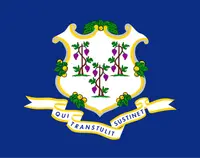 1897
An azure blue field bearing the state arms: a white rococo shield with three fruiting grapevines, a gold and silver border with white oak leaves and acorns, and a white streamer below lettered QUI TRANSTULIT SUSTINET in dark blue. Official size is 5 ft 6 in by 4 ft 4 in.
C.G.S. § 3-107 (description amended by P.A. 90-156)
- 1784
Great Seal of Connecticut
SealAn ellipse bordered by the legend SIGILLUM REIPUBLICAE CONNECTICUTENSIS, with three grapevines bearing grapes in the center and the motto QUI TRANSTULIT SUSTINET on a ribbon below. It descends from the Saybrook Colony seal brought from England in 1639; the 1784 version replaced the colonial legend after independence.
Use restricted: C.G.S. § 3-106a: the arms and seal, or imitations, may be reproduced only under the direction and with the approval of the Secretary of the State, for official purposes or for memorial and educational uses the Secretary approves
C.G.S. § 3-106 (description first fixed by statute in 1931); § 3-106a (reproduction)
- 1978
Yankee Doodle
SongThe lyrics are in the public domain. Official page.
C.G.S. § 3-110c (P.A. 78-4)
-
Qui Transtulit Sustinet
MottoLatin, meaning “He Who Transplanted Still Sustains”.
C.G.S. §§ 3-105, 3-106, 3-107 (motto prescribed as part of the state arms, seal and flag)
- 1959
The Constitution State
NicknameRefers to the Fundamental Orders of 1638-39, which historian John Fiske and others described as the first written constitution; some modern historians dispute that claim. Designated by 1959 P.A. 121, now C.G.S. § 3-110a.
Animals
-
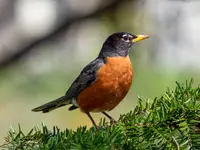 1943
American robin
BirdTurdus migratoriusThe legislature adopted the robin as state bird in 1943. Colonists named this migratory thrush after the familiar English robin; many robins actually spend the whole winter in New England.
C.G.S. § 3-109 · State of Connecticut (reproduced from the Connecticut State Register & Manual, Secretary of the State)
-
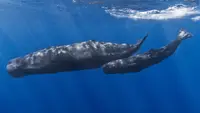 1975
Sperm whale
MammalPhyseter macrocephalusChosen in 1975 for its role in Connecticut history and because it is an endangered species. In the 1800s Connecticut was second only to Massachusetts in American whaling, and sperm whales were the main quarry of ships sailing from New London, Mystic and other ports.
C.G.S. § 3-109a (P.A. 75-165) - designated as the 'state animal' · State of Connecticut (reproduced from the Connecticut State Register & Manual, Secretary of the State)
-
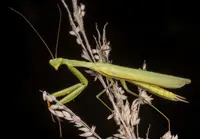 1977
Praying mantis (European mantis)
InsectMantis religiosaIt became the state insect on October 1, 1977. The European mantis is not native to Connecticut but is found statewide from late spring until cold weather; it eats aphids, flies and other insects.
C.G.S. § 3-109b (P.A. 77-243) · State of Connecticut (reproduced from the Connecticut State Register & Manual, Secretary of the State)
- 1989
Eastern oyster
ShellfishCrassostrea virginicaNamed state shellfish in 1989. Oysters were a staple for Native peoples and early colonists; oyster farming became a major industry by the late 1800s.
C.G.S. § 3-109c (P.A. 89-321) · State of Connecticut (reproduced from the Connecticut State Register & Manual, Secretary of the State)
-
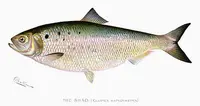 2003
American shad
FishAlosa sapidissimaA migratory herring that swims up the Connecticut River from the ocean each spring to spawn. The spring shad run was an important source of food for Native peoples and early colonists.
- 2024
Siberian Husky
DogThe bill began as House Bill 5304; UConn's husky mascot Jonathan XV 'testified' in its favor before the Government Administration and Elections Committee in March 2024. The law took effect in October 2024.
C.G.S. § 3-109e (P.A. 24-121, § 1) · The Daily Campus (UConn)
-
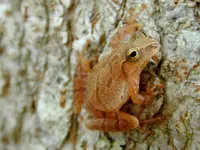 2026
Spring peeper
AmphibianPseudacris cruciferThe idea came from fifth graders at Bethlehem Elementary School; Sen. Eric Berthel and Rep. Karen Reddington-Hughes carried the bill, which passed the House 136-0. Governor approved the act May 19, 2026.
P.A. 26-67, § 2 (effective October 1, 2026; not yet codified) · Connecticut General Assembly
Plants and fungi
-
 1907
Mountain laurel
FlowerKalmia latifoliaThe General Assembly named the mountain laurel the state flower in 1907. Linnaeus gave the shrub its scientific name, honoring Peter Kalm, who sent him specimens in 1750, and describing its broad leaves; older folk names include calico bush and spoonwood.
C.G.S. § 3-108 · State of Connecticut (reproduced from the Connecticut State Register & Manual, Secretary of the State)
- 2015
Michaela Petit's Four-O'Clocks
Children's flowerMirabilis jalapaThe designation honors 11-year-old Michaela Petit, killed in the 2007 Cheshire home invasion; four-o'clocks she had planted with her father were among the few things saved from the family home. The bill was proposed by Rep. Al Adinolfi of Cheshire.
-
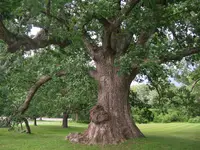 1947
White oak
TreeQuercus albaThe white oak recalls the Charter Oak, the tree in which Connecticut's 1662 royal charter was reportedly hidden in 1687 to keep it from Sir Edmund Andros; the Charter Oak fell in a storm on August 21, 1856.
C.G.S. § 3-110 · State of Connecticut (reproduced from the Connecticut State Register & Manual, Secretary of the State)
Earth and sky
- 1977
Garnet (almandine)
MineralConnecticut is one of the world's finest sources of almandine garnet, named state mineral by the 1977 General Assembly. Its hardness made garnet a valuable abrasive, used in grinding wheels and garnet sandpaper.
C.G.S. § 3-110b (P.A. 77-293) · State of Connecticut (reproduced from the Connecticut State Register & Manual, Secretary of the State)
- 1991
Eubrontes dinosaur footprints
FossilEubrontesEubrontes is a large three-toed track from early Jurassic sandstone of the Connecticut Valley. About 2,000 Eubrontes tracks uncovered on one rock layer in Rocky Hill in 1966 led to the creation of Dinosaur State Park.
C.G.S. § 3-110g (P.A. 91-70) · State of Connecticut (reproduced from the Connecticut State Register & Manual, Secretary of the State)
- 2017
Dilophosaurus
DinosaurThe state's official fossil page notes that the Eubrontes track maker appears closely related to Dilophosaurus, though no skeleton of the track maker has been found in Connecticut.
C.G.S. § 3-110r (P.A. 17-204, § 4) · State of Connecticut (reproduced from the Connecticut State Register & Manual, Secretary of the State)
- 2026
Housatonic marble
RockSeventh graders from Mansfield Middle School, whose science classes voted on candidate rocks, testified for Housatonic marble, arguing a state rock should be one commonly found in Connecticut.
P.A. 26-67, § 3 (effective October 1, 2026; not yet codified) · The Connecticut Mirror
Food and drink
- 2024
Lollipop
CandyLawmakers chose the lollipop over a push for Orange-based Pez; George Smith of New Haven is credited with inventing the modern lollipop in 1908.
C.G.S. § 3-110s (P.A. 24-121, § 2) · Greenwich Time / Hearst Connecticut Media
Songs, words and language
- 1985
State Poet Laureate (office)
Poet laureateThe Commissioner of Economic and Community Development now designates a poet laureate every three years.
C.G.S. § 3-110f (P.A. 85-221) · Connecticut General Assembly
- 1991
State Troubadour or Trobairitz (office)
TroubadourThe post is filled every three years by the Commissioner of Economic and Community Development; the female form 'trobairitz' was added in 2018.
C.G.S. § 3-110h (P.A. 91-157) · Connecticut General Assembly
- 1991
Charles Edward Ives
ComposerIves, born in Danbury in 1874, combined composing with running a large insurance agency and won the 1947 Pulitzer Prize for his Third Symphony. The same law created a Charles Edward Ives Memorial Composer Laureate position.
C.G.S. § 3-110i (P.A. 91-318) · State of Connecticut (reproduced from the Connecticut State Register & Manual, Secretary of the State)
- 2003
"Nutmeg" by Stanley L. Ralph
Cantata"Nutmeg," by Stanley L. Ralph, is Connecticut's official state cantata, adopted in 2003. It takes its name from the state's nickname.
- 2013
Ballroom polka
PolkaThe ballroom polka became Connecticut's state polka in 2013, alongside the square dance, the state folk dance since 1995.
C.G.S. § 3-110o (P.A. 13-210, § 1) · Connecticut General Assembly
- 2013
"Beautiful Connecticut Waltz" by Joseph Leggo of Newington
Second song"Beautiful Connecticut Waltz," by Joseph Leggo of Newington, was named the state's second song in 2013. The official state song is "Yankee Doodle."
C.G.S. § 3-110p (P.A. 13-210, § 2) · Connecticut General Assembly
Culture and history
- 1983
USS Nautilus (SSN-571)
ShipBuilt in Connecticut, Nautilus was the world's first nuclear-powered submarine and sailed more than 500,000 nautical miles in a 25-year career. It is a National Historic Landmark berthed at the Submarine Force Library and Museum in Groton.
C.G.S. § 3-110d (P.A. 83-313) · State of Connecticut (reproduced from the Connecticut State Register & Manual, Secretary of the State)
- 1985
Nathan Hale
HeroThe designation, effective October 1, 1985, was promoted by the Nathan Hale Chapter of the Sons of the American Revolution. Hale, a Coventry native and Yale graduate, was hanged by the British as a spy on September 22, 1776.
C.G.S. § 3-110e(a) (P.A. 85-311) · State of Connecticut (reproduced from the Connecticut State Register & Manual, Secretary of the State)
- 1995
Prudence Crandall
HeroineIn 1833 Crandall opened the first academy for African-American women in New England, in Canterbury; she was tried twice under a law aimed at closing it, and the school shut in 1834. The legislature later granted her an annual pension in 1886.
C.G.S. § 3-110e(b) (P.A. 95-20) · State of Connecticut (reproduced from the Connecticut State Register & Manual, Secretary of the State)
- 1995
Connecticut State Tartan
TartanIts colors stand for Long Island Sound (blue), forests (green), granite (gray), autumn leaves (red and yellow) and snow (white).
- 1995
Square dance (state folk dance)
Dance - 2003
Freedom Schooner Amistad (state flagship and tall ship ambassador)
FlagshipThe ship is a re-creation of La Amistad, whose African captives revolted in 1839; their trials opened at Hartford's Old State House that year.
- 2005
F4U Corsair
AircraftThe gull-winged World War II and Korean War fighter-bomber was built in large numbers in Stratford by Vought-Sikorsky.
- 2017
Gustave Whitehead's No. 21
Pioneering aircraftWhitehead claimed to have flown the No. 21 near Bridgeport on August 14, 1901, more than two years before the Wright brothers; most aviation historians reject the claim.
C.G.S. § 3-110q (P.A. 17-204, § 3) · Connecticut General Assembly
Government emblems
- 1931
Arms of the State
ArmsThe General Assembly adopted the official arms on March 24, 1931: a white rococo shield with three fruiting grapevines, a border of white oak leaves and acorns, and the motto on a streamer below; the vine description was revised in 1990 (P.A. 90-156).
C.G.S. § 3-105 · State of Connecticut (reproduced from the Connecticut State Register & Manual, Secretary of the State)
Questions about Connecticut's symbols
- What is the Connecticut state animal?
- The sperm whale, adopted in 1975 for its role in Connecticut's whaling history and because it is an endangered species.
- What is the Connecticut state song?
- "Yankee Doodle," adopted in 1978. Connecticut also has a second state song, "Beautiful Connecticut Waltz," and a state cantata, "Nutmeg."
- Who are Connecticut's state hero and heroine?
- The state hero is Nathan Hale, hanged by the British as a spy in 1776. The state heroine is Prudence Crandall, who opened an academy for Black girls in Canterbury in 1833.
- What is the Connecticut state dog?
- The Siberian Husky, adopted in 2024. The University of Connecticut's mascot, a husky named Jonathan, "testified" for the bill.
Photo credits (8)
- Flag of Connecticut: Jean-Pierre Demailly, xrmap authors, Commons users (SVG), Public domain, via Wikimedia Commons
- Mountain laurel: Qwert1234, CC BY-SA 3.0, via Wikimedia Commons
- American robin: Rhododendrites, CC BY-SA 4.0, via Wikimedia Commons
- Sperm whale: Gabriel Barathieu, CC BY-SA 2.0, via Wikimedia Commons
- Praying mantis: Didier Descouens, CC BY-SA 4.0, via Wikimedia Commons
- American shad: Shermon Foote Denton, Public domain, via Wikimedia Commons
- White oak: Marty Aligata, CC BY-SA 3.0, via Wikimedia Commons
- Spring peeper: USGS, Public domain, via Wikimedia Commons
Something out of date? Tell us and we will check it against the law.
Sources
- The State Flag State of Connecticut (reproduced from the Connecticut State Register & Manual, Secretary of the State)
- The Great Seal State of Connecticut (reproduced from the Connecticut State Register & Manual, Secretary of the State)
- Connecticut General Statutes, Title 3, Chapter 33 (Secretary), §§ 3-105 to 3-110s Connecticut General Assembly
- State Symbols State of Connecticut
- Public Act 26-67 (spring peeper and Housatonic marble) Connecticut General Assembly