Hawaii state symbols
Hawaii has 29 official state symbols. The flag dates from the Hawaiian Kingdom, and the newest symbol is the ʻōpae ʻula, a tiny red shrimp adopted in 2025. Hawaii's list stands out for its native species, its Hawaiian names and its cultural symbols, from the hula to the shaka and the legally defined Aloha Spirit.
Native species first
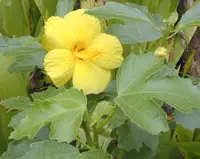
Many of Hawaii’s symbols are plants and animals found nowhere else on Earth. The nēnē, the state bird since 1988, is a goose that evolved in the islands. The state flower, adopted the same year, is the maʻo hau hele, a native yellow hibiscus that is now endangered in the wild. In 2022 the legislature added the ʻōhiʻa lehua, a native tree with red pom-pom flowers, as the state endemic tree, while keeping the kukui, or candlenut, brought by early Polynesian settlers, as the state tree it has been since 1959.
The animals are equally local. The Hawaiian monk seal, one of the world’s most endangered seals, became the state mammal in 2008; the ʻōpeʻapeʻa, or Hawaiian hoary bat, the islands’ only native land mammal, became the state land mammal in 2015; and the humpback whale, which spends the winter in Hawaii’s waters, has been the state marine mammal since 1979. In 2024 Hawaii adopted official snails for each of the main islands plus the Northwestern Hawaiian Islands, nine species in all, many of them rare. In 2025 it added the ʻōpae ʻula, a small red shrimp that lives only in Hawaii’s anchialine pools, brackish ponds near the shore.
The fish with the famous name
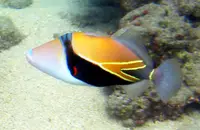
The state fish is the humuhumunukunukuāpuaʻa, a reef triggerfish, adopted in 2006. Its long Hawaiian name, often translated as “triggerfish with a snout like a pig,” is a favorite tongue-twister for visitors, and the fish can grunt like a pig when it is caught.
Culture written into law
Hawaii has turned much of its culture into official symbols. The hula is the state dance. Surfing is the official individual sport and outrigger canoe paddling the official team sport. The ʻukulele is the official modern instrument and the pahu drum the official traditional one, both adopted in 2015. In 2024 the shaka, the hand sign with thumb and little finger extended, became the official state gesture, and the law describes how to make it.
Most unusual of all is the Aloha Spirit, defined by a 1986 statute. The law describes aloha through five virtues: akahai, kindness; lōkahi, unity; ʻoluʻolu, agreeableness; haʻahaʻa, humility; and ahonui, patience. It says that legislators, the governor and judges may consider the Aloha Spirit in exercising their powers.
Island by island
Since 2000 each of the eight main islands has had its own official color and flower or lei material. Hawaiʻi Island is red, with the ʻōhiʻa lehua; Maui pink, with the lokelani rose; Oʻahu golden yellow, with the ʻilima; Kauaʻi purple, with the mokihana; Molokaʻi green, with the kukui blossom; Lānaʻi orange, with the kaunaʻoa; Niʻihau white, with its pūpū shells; and Kahoʻolawe gray, with the hinahina.
The main symbols
The flag, the nēnē and the yellow hibiscus each have their own page. The state song, “Hawaiʻi Ponoʻī,” was written by King Kalākaua, with music by Henri Berger, and served as the kingdom’s anthem before it became the state song in 1967.
Flag, seal, song, motto and nickname
-
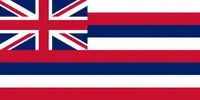 1845
Flag of Hawaii
FlagEight horizontal stripes of white, red and blue, one for each main island, with a jack in the upper hoist corner made of a blue field with crossed white and red saltires under a white-bordered red cross. The fly is twice the hoist.
Haw. Const. art. XV, § 3; Haw. Rev. Stat. § 5-19 (L 1990, c 215, pt of §2)
- 1959
Great Seal of Hawaii
SealA circular seal 2 3/4 inches across with a quartered shield flanked by Kamehameha I and the goddess of Liberty holding the Hawaiian flag, a rising sun with the words "State of Hawaii, 1959" above, the state motto below, and a phoenix rising from flames among taro leaves, banana foliage and maidenhair fern.
Use restricted: Haw. Rev. Stat. § 5-6: using the great seal or coat of arms in advertising or for commercial purposes, or in a way that suggests official approval, is a misdemeanor; informational use in newspapers, periodicals and books is exempt.
Haw. Rev. Stat. § 5-5 (L 1901, c 16, §1; am L 1959, c 272, §2)
- 1967
Hawaiʻi Ponoʻī
SongWritten in 1874. The lyrics are in the public domain.
Haw. Rev. Stat. § 5-10 (L 1967, c 301, §2; am L 1990, c 215, §3)
- 1959
Ua mau ke ea o ka ʻāina i ka pono
MottoHawaiian, meaning “The life of the land is perpetuated in righteousness”.
Haw. Rev. Stat. § 5-9 (L 1959, JR 4, §1; am L 1979, c 145, §2); Haw. Const. art. XV, § 5 (1978)
- 1959
The Aloha State
NicknameAdopted by joint resolution in 1959 as the state's official "popular" name; it refers to aloha, the Hawaiian word for love and greeting that state law also defines as the Aloha Spirit.
Animals
-
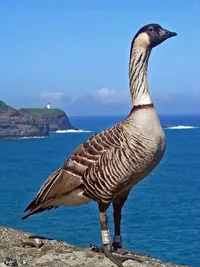 1988
Nēnē (Hawaiian goose)
BirdBranta sandvicensisThe statute names the bird as Branta sandwicensis; Branta sandvicensis is the spelling now used by ornithological authorities.
Haw. Rev. Stat. § 5-17 (L 1988, c 178, §1) · Hawaii State Legislature (via Internet Archive)
-
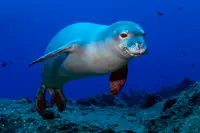 2008
Hawaiian monk seal
MammalNeomonachus schauinslandiThe statute uses the older genus name Monachus; the species is now placed in Neomonachus.
Haw. Rev. Stat. § 5-12.5 (L 2008, c 72, §2) · Hawaii State Legislature (via Internet Archive)
-
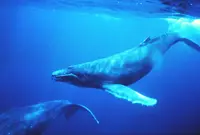 1979
Humpback whale (koholā)
Marine mammalMegaptera novaeangliaeHumpback whales migrate thousands of miles from Alaska to Hawaii's warm waters each winter to mate and give birth. Their Hawaiian name is koholā.
Haw. Rev. Stat. § 5-12 (L 1979, c 110, §1) · Hawaii State Legislature (via Internet Archive)
- 2015
ʻŌpeʻapeʻa (Hawaiian hoary bat)
Land mammalLasiurus cinereus semotusHawaii therefore has three official mammals: a mammal (monk seal), a marine mammal (humpback whale) and a land mammal (hoary bat).
Haw. Rev. Stat. § 5-12.2 (L 2015, c 13, §2) · Hawaii State Legislature (via Internet Archive)
-
 2006
Humuhumunukunukuāpuaʻa (reef triggerfish)
FishRhinecanthus rectangulusThe statute calls it the rectangular triggerfish.
Haw. Rev. Stat. § 5-11.5 (L 2006, c 67, §2) · Hawaii State Legislature (via Internet Archive)
-
 2009
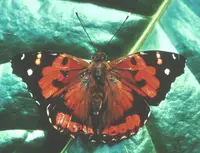
Pulelehua (Kamehameha butterfly)
InsectVanessa tameameaThe Kamehameha butterfly, or pulelehua, is one of only two butterflies native to Hawaii. It is orange and black and named for the royal line of Kamehameha.
Haw. Rev. Stat. § 5-11.3 (L 2009, c 15, §1) · Hawaii State Legislature (via Internet Archive)
- 2024
Nine native land and sea snails, one for each main island plus the Northwestern Hawaiian Islands
Island snailsHawaiʻi: hini hini kua mauna (Succinea konaensis); Maui: pūpū kua mauna (Lyropupa striatula); Kahoʻolawe: pūpū kua mauna (Pleuropoma laciniosa kahoolawensis); Lānaʻi: pūpū kuahiwi (Auriculella lanaiensis). Molokaʻi: pūpū kuahiwi (Laminella venusta); Oʻahu: kāhuli (Kaala subrutila); Kauaʻi: Erinna newcombi; Niʻihau: kahelelaniʻilaʻula (Collonista verruca); Northwestern Hawaiian Islands: naka kua mauna (Endodonta christenseni).
Haw. Rev. Stat. § 5-11.2 (L 2024, c 4, §2) · Hawaii State Legislature (via Internet Archive)
- 2025
ʻŌpae ʻula (Hawaiian red shrimp)
ShrimpHalocaridina rubraThe small red shrimp lives only in Hawaii's anchialine pools, brackish ponds near the shore; lawmakers said the designation would draw attention to protecting those pools. The act was approved May 19, 2025, and took effect July 1, 2025.
L 2025, Act 71 (HB 345), adding a new section to HRS chapter 5 · Hawaii State Legislature
Plants and fungi
-
 1988
Pua aloalo / maʻo hau hele (native yellow hibiscus)
FlowerHibiscus brackenridgeiThe 1988 law (L 1988, c 177) named only the state flower; the official flower or lei material of each of the eight main islands was added to the same statute (HRS § 5-16) in 2000 by Act 165, which also created the official island colors.
Haw. Rev. Stat. § 5-16 (L 1988, c 177, §1; am L 2000, c 165, §3) · Hawaii State Legislature (via Internet Archive)
-
 1959
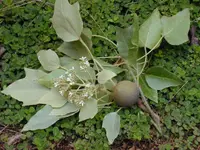
Kukui (candlenut tree)
TreeAleurites moluccanusDesignated by joint resolution in 1959; the statute spells the species Aleurites moluccana.
Haw. Rev. Stat. § 5-8 (L 1959, JR 3, §1) · Hawaii State Legislature (via Internet Archive)
- 2022
ʻŌhiʻa lehua
Endemic treeMetrosideros polymorphaHawaii added this separate endemic-tree designation in 2022, keeping the kukui as the official state tree.
Haw. Rev. Stat. § 5-8.5 (L 2022, c 25, §2) · Hawaii State Legislature (via Internet Archive)
- 2007
Kalo (taro)
PlantColocasia esculentaKalo, or taro, was the staple food of ancient Hawaiians, pounded into poi, and holds a central place in Hawaiian culture and tradition.
Haw. Rev. Stat. § 5-15.5 (L 2007, c 36, §2; am L 2008, c 71, §1) · Hawaii State Legislature (via Internet Archive)
- 2023
Limu kala
LimuSargassum echinocarpumLimu kala is a native seaweed with a traditional role in Hawaiian healing and reconciliation ceremonies.
Haw. Rev. Stat. § 5-15.7 (L 2023, c 230, §2) · Hawaii State Legislature (via Internet Archive)
- 2000
Official flower or lei material of each main island
Island flowersFlowers: Hawaiʻi ʻōhiʻa lehua, Maui lokelani (damask rose), Oʻahu ʻilima. Lei materials: Kauaʻi mokihana, Molokaʻi kukui blossom, Lānaʻi kaunaʻoa (native dodder), Niʻihau pūpū shells, Kahoʻolawe hinahina (native heliotrope).
Haw. Rev. Stat. § 5-16 (L 1988, c 177, §1; am L 2000, c 165, §3) · Hawaii State Legislature (via Internet Archive)
Earth and sky
- 1987
Black coral
GemstoneBlack coral grows in deep water off the islands and has long been made into jewelry. The law names black coral without specifying a species.
Haw. Rev. Stat. § 5-15 (L 1987, c 9, §1) · Hawaii State Legislature (via Internet Archive)
Food and drink
- 1986
The Aloha Spirit
SpiritThe statute defines aloha through five Hawaiian virtues (akahai, lōkahi, ʻoluʻolu, haʻahaʻa, ahonui) and says state officials and judges may give it consideration in carrying out their duties.
Haw. Rev. Stat. § 5-7.5 (L 1986, c 202, §1) · Hawaii State Legislature (via Internet Archive)
Songs, words and language
- 2024
Shaka
GestureThe law describes the gesture: thumb and little finger extended, middle three fingers curled, often with the wrist rocked back and forth.
Haw. Rev. Stat. § 5-23 (L 2024, c 85, §2) · Hawaii State Legislature (via Internet Archive)
- 1978
Hawaiian (official language alongside English)
LanguageThe 1978 Constitutional Convention made English and Hawaiian the official languages of the state; Hawaiian is required for public acts only where a law says so. HRS § 5-6.5 lets Hawaiian be used on all state emblems and, since 2022, requires top officials and department heads to show a Hawaiian name for their office on websites and letterhead.
Haw. Const. art. XV, § 4; Haw. Rev. Stat. § 5-6.5 (L 1978, c 207, §1; am L 2022, c 170, §3) · Hawaii Legislative Reference Bureau
Culture and history
- 2015
ʻUkulele (official ʻauana, or modern, instrument)
Instrument - 2015
Pahu (drum)
Traditional instrumentThe pahu, a sharkskin-covered drum carved from a log, is the official traditional instrument, while the ʻukulele is the official modern one.
Haw. Rev. Stat. § 5-10.5 (L 2015, c 6, §2) · Hawaii State Legislature (via Internet Archive)
- 1999
Hula
Dance - 1998
Surfing (official individual sport)
Sport - 1986
Outrigger canoe paddling
Team sportOutrigger canoe paddling, rooted in the voyaging canoes that brought the first Hawaiians, became the official state team sport in 1986.
Haw. Rev. Stat. § 5-14 (L 1986, c 219, §2) · Hawaii State Legislature (via Internet Archive)
- 2000
Official colors of the eight main islands
Island colorsHawaiʻi red, Maui pink, Oʻahu golden yellow, Kauaʻi purple, Molokaʻi green, Lānaʻi orange, Niʻihau white, Kahoʻolawe gray.
Haw. Rev. Stat. § 5-16.5 (L 2000, c 165, §2) · Hawaii State Legislature (via Internet Archive)
Questions about Hawaii's symbols
- What is the Hawaii state fish?
- The humuhumunukunukuāpuaʻa, or reef triggerfish (Rhinecanthus rectangulus), adopted in 2006.
- What is the Hawaii state mammal?
- Hawaii has three: the Hawaiian monk seal is the state mammal (2008), the humpback whale the state marine mammal (1979) and the Hawaiian hoary bat the state land mammal (2015).
- What is the Aloha Spirit law?
- A 1986 law that defines the Aloha Spirit through five Hawaiian virtues, akahai, lōkahi, ʻoluʻolu, haʻahaʻa and ahonui, and says state officials and judges may consider it in their work.
- Does each Hawaiian island have its own flower?
- Yes. Since 2000 each of the eight main islands has an official flower or lei material and an official color. Oʻahu's flower is the ʻilima and its color golden yellow, for example, while Maui's is the lokelani and pink.
Photo credits (8)
- Flag of Hawaii: Dbenbenn, Public domain, via Wikimedia Commons
- Nēnē: Brenda Zaun of U.S. Fish and Wildlife Service Headquarters, CC BY 2.0, via Wikimedia Commons
- Pua aloalo / maʻo hau hele: Unknown author, CC BY-SA 3.0, via Wikimedia Commons
- Kukui: Forest & Kim Starr, CC BY 3.0, via Wikimedia Commons
- Hawaiian monk seal: N3kt0n, CC BY-SA 3.0, via Wikimedia Commons
- Humpback whale: Dr. Louis M. Herman, Public domain, via Wikimedia Commons
- Humuhumunukunukuāpuaʻa: Qyd (talk · contribs), CC BY 2.5, via Wikimedia Commons
- Pulelehua: Unknown author, Public domain, via Wikimedia Commons
Something out of date? Tell us and we will check it against the law.
Sources
- HRS §5-19 Description of the Hawaiian flag (Internet Archive capture of the Legislature's official HRS page) Hawaii State Legislature (via Internet Archive)
- HRS §5-5 State seal, description (Internet Archive capture of the Legislature's official HRS page) Hawaii State Legislature (via Internet Archive)
- HRS §5-10 State song (Internet Archive capture of the Legislature's official HRS page) Hawaii State Legislature (via Internet Archive)
- Constitution of the State of Hawaii, Article XV Hawaii Legislative Reference Bureau