Wisconsin state symbols
Wisconsin has 29 official state symbols, most of them listed in section 1.10 of the Wisconsin Statutes, which also requires the state's Blue Book to print them. The oldest are the motto "Forward," from 1851, and the coat of arms of 1881; the newest are cheese and ginseng, both named in 2017. Schoolchildren voted for the first natural symbols decades before the Legislature made them official.
Chosen by schoolchildren
Wisconsin’s children picked its first natural symbols. In an 1893 vote they chose the maple over the oak, the pine and the elm. In 1908 they narrowed the flower candidates to four, the violet, wild rose, trailing arbutus and white water lily, and the violet won a final vote on Arbor Day 1909. In 1926 and 1927 the robin drew twice as many votes as any other bird. A 1948 student vote put the sugar maple first again, and in 1949 the Legislature made all three official.
Badgers, deer and muskies
Legislators had tried to name the muskellunge the state fish as early as 1939, and the 1955 bill passed both houses unanimously. In 1957 four Jefferson County elementary pupils asked for a bill to make the badger the state animal, after learning that it had never been made official. Lawmakers from northern counties countered with a bill for the white-tailed deer, and the Legislature settled the dispute by naming both: the badger as the state animal and the deer as the state wildlife animal. The dairy cow became the state domestic animal in 1972, with the honor rotated among the state’s purebred breeds.
Stones, soil and a fossil
In 1971 the Legislature named galena, the lead ore, the state mineral and red granite, quarried in several parts of the state, the state rock. The same year it made the mourning dove the state symbol of peace and took it off the list of game birds, though a rising population led the state to reopen dove hunting in 2001. Antigo silt loam, a level, silty soil of north-central Wisconsin that supports dairy farming, potatoes and timber, became the state soil in 1983, after a campaign led by the UW-Madison soil scientist Francis D. Hole. The trilobite Calymene celebra, a sea creature from the shallow seas that once covered Wisconsin, became the state fossil in 1986.
A bee, a dog and a dance
A third-grade class in Marinette and the Wisconsin Honey Producers Association won the honey bee its title as state insect in 1978; the losing candidates included the monarch, the dragonfly, the ladybug and even the mosquito. Eighth graders in New London worked for years to make the American water spaniel, said to be the only breed native to Wisconsin, the state dog in 1986. A second-grade class in Madison asked for the polka, the state dance since 1994.
Dairy and the table
Milk became the state beverage in 1988, when Wisconsin was the leading milk-producing state, and corn the state grain in 1990. Fifth graders in Kenosha County chose the cranberry over the cherry as state fruit in 2004; Wisconsin leads the nation in cranberry production. The kringle became the state pastry through a line in the 2013 state budget, and in 2017 the Legislature named cheese the state dairy product and ginseng the state herb.
Flag, seal, song, motto and nickname
-
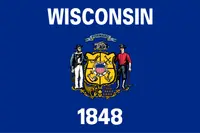 1863
The state coat of arms centered on a royal blue field, with 'WISCONSIN' in white capitals above it and the statehood year '1848' in white below; yellow knotted fringe is optional.
Wis. Stat. § 1.08 (1863 J.R. 4; ch. 111, Laws of 1913; current design ch. 286, Laws of 1979)
- 1881
Great Seal of Wisconsin
SealThe coat of arms inside an ornamental border, with 'Great Seal of the State of Wisconsin' arched above and a curved row of 13 stars below. It authenticates the governor's official acts other than approval of laws.
Wisconsin has had seals since its territorial days in 1836; the present design was recast in 1881. The great seal is kept by the secretary of state.
Wis. Const. art. XIII, § 4; Wis. Stat. § 14.45
- 1959
On, Wisconsin!
SongWritten in 1909. The lyrics are in the public domain. Official page.
The tune of "On, Wisconsin!" was written in 1909 by William T. Purdy as an entry for a new University of Minnesota football song, before a friend persuaded him to dedicate it to Wisconsin. The state's official words were written in 1913 by Charles D. Rosa and J. S. Hubbard, and it became the state song in 1959. Wisconsin also has a state ballad, "Oh Wisconsin, Land of My Dreams," and a state waltz, "The Wisconsin Waltz."
Ch. 170, Laws of 1959; Wis. Stat. § 1.10(1)
- 1851
Forward
MottoEnglish.
By tradition, Governor Nelson Dewey and Edward Ryan chose "Forward" in 1851 in place of the proposed "Excelsior."
Wis. Stat. § 1.07
Animals
-
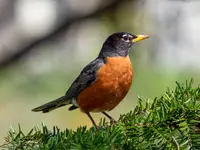 1949
American robin
BirdTurdus migratoriusIn a 1926-27 vote by Wisconsin schoolchildren, the robin drew twice as many votes as any rival. It became the official bird in 1949.
Ch. 218, Laws of 1949; Wis. Stat. § 1.10(3)(f) · Wisconsin Legislative Reference Bureau
-
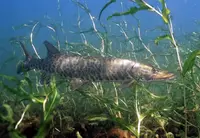 1955
Muskellunge
FishEsox masquinongyLegislators had tried to name the muskie the state fish as early as 1939, with the trout a distant alternative. The 1955 bill passed both houses unanimously.
Ch. 18, Laws of 1955; Wis. Stat. § 1.10(3)(g) · Wisconsin Legislative Reference Bureau
-
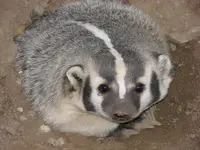 1957
Badger
MammalTaxidea taxusThe statute calls the badger the 'state animal'. Four Jefferson County elementary pupils asked for the bill after learning from a historical society publication that the badger had never been made official. Lawmakers from northern counties countered with a bill for the white-tailed deer, and the legislature settled the dispute by designating both animals.
Ch. 209, Laws of 1957; Wis. Stat. § 1.10(3)(h) · Wisconsin Legislative Reference Bureau
-
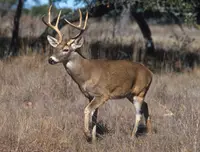 1957
White-tailed deer
Wildlife animalOdocoileus virginianusNamed as part of the 1957 compromise with badger supporters; deer advocates pointed to the large native herd and the economic value of the annual hunt.
Ch. 147, Laws of 1957; Wis. Stat. § 1.10(3)(j) · Wisconsin Legislative Reference Bureau
- 1972
Dairy cow
Domestic animalBos taurusLawmakers described the designation as an overdue recognition of the cow's contribution to the state, in keeping with the 'America's Dairyland' slogan already on license plates. A 1972 executive order named the first official dairy cow, and the agriculture department now rotates the honor among the state's purebred breeds.
Ch. 167, Laws of 1971; Wis. Stat. § 1.10(3)(i) · Wisconsin State Legislature
-
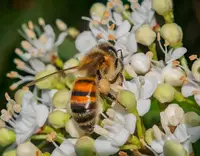 1978
Honey bee
InsectApis melliferaA third-grade class at Holy Family School in Marinette and the Wisconsin Honey Producers Association requested the bill. Other candidates included the monarch butterfly, dragonfly, ladybug and even the mosquito; a proposal to let all elementary pupils vote failed.
Ch. 326, Laws of 1977; Wis. Stat. § 1.10(3)(L) · Wisconsin Legislative Reference Bureau
- 1986
American water spaniel
DogCanis lupus familiarisEighth graders taught by Lyle Brumm at Washington Junior High School in New London worked for years to win the designation. New London physician Fred J. Pfeifer is credited with developing the breed, the only one native to Wisconsin.
1985 Wis. Act 295; Wis. Stat. § 1.10(3)(k) · Wisconsin Legislative Reference Bureau
Plants and fungi
-
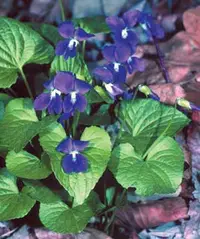 1949
Wood violet
FlowerViola sororiaSchoolchildren picked four finalists in 1908 (violet, wild rose, trailing arbutus and white water lily), and the violet won a final vote held on Arbor Day 1909. The legislature made it official in 1949 in the same act that created § 1.10.
Ch. 218, Laws of 1949; Wis. Stat. § 1.10(3)(e) · Wisconsin Legislative Reference Bureau
-
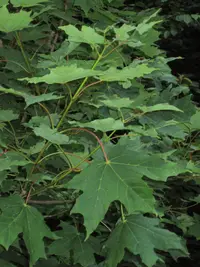 1949
Sugar maple
TreeAcer saccharumSchoolchildren first chose the maple in an 1893 vote, ahead of the oak, pine and elm. A 1948 student vote run by the Youth Centennial Committee again put the sugar maple first, and the 1949 legislature adopted it despite a push by supporters of the white pine.
Ch. 218, Laws of 1949; Wis. Stat. § 1.10(3)(c) · Wisconsin Legislative Reference Bureau
- 2017
Ginseng
HerbPanax quinquefolius
Earth and sky
- 1971
Galena
MineralLead sulfide (PbS)The Kenosha Gem and Mineral Society requested the bill to promote interest in geology. Galena was judged against criteria set by the Wisconsin Geological Society, including abundance, economic value, history and native origin.
Ch. 14, Laws of 1971; Wis. Stat. § 1.10(3)(n) · Wisconsin Legislative Reference Bureau
- 1971
Red granite
RockDesignated in the same 1971 act as galena; it was chosen for its economic importance, as it is quarried in several parts of the state.
Ch. 14, Laws of 1971; Wis. Stat. § 1.10(3)(o) · Wisconsin Legislative Reference Bureau
- 1983
Antigo silt loam
SoilSoil scientist Francis D. Hole of UW-Madison led the campaign, meant to remind residents of their duty to care for the soil. The soil is a level, silty, glacially derived soil named for the city of Antigo, found mostly in north-central Wisconsin, and supports dairy farming, potatoes and timber.
1983 Wis. Act 33; Wis. Stat. § 1.10(3)(p) · Wisconsin Legislative Reference Bureau
- 1986
Trilobite
FossilCalymene celebraThe Wisconsin Geological Society proposed it; the mastodon was its main competitor. Trilobites were marine arthropods that lived in the shallow seas that covered Wisconsin hundreds of millions of years ago.
1985 Wis. Act 162; Wis. Stat. § 1.10(3)(m) · Wisconsin Legislative Reference Bureau
Food and drink
- 1988
Milk
BeverageAdopted to honor Wisconsin's standing as the leading milk-producing state, with backing from World Dairy Expo and dairy groups.
1987 Wis. Act 279; Wis. Stat. § 1.10(3)(b) · Wisconsin Legislative Reference Bureau
- 1990
Corn
GrainZea maysSponsors said the designation would highlight corn's role as a cash crop and its uses in feed, sweeteners, ethanol and plastics.
1989 Wis. Act 162; Wis. Stat. § 1.10(3)(d) · Wisconsin Legislative Reference Bureau
- 2004
Cranberry
FruitVaccinium macrocarponFifth graders at Trevor Grade School in Kenosha County chose the cranberry over the cherry as a class project. Wisconsin leads the nation in cranberry production.
2003 Wis. Act 174; Wis. Stat. § 1.10(3)(r) · Wisconsin Legislative Reference Bureau
- 2013
Kringle
PastryThe designation was written into the 2013-15 state budget act rather than a stand-alone bill.
2013 Wis. Act 20, § 1b; Wis. Stat. § 1.10(3)(t) · Wisconsin State Legislature
- 2017
Cheese
Dairy product
Songs, words and language
- 2001
"Oh Wisconsin, Land of My Dreams"
BalladShari Sarazin of Mauston set to music a poem her grandmother, Erma Barrett of Juneau County, wrote in the 1920s. It was designated in the 2001-03 state budget act.
2001 Wis. Act 16; Wis. Stat. § 1.10(1m) · Wisconsin Legislative Reference Bureau
- 2001
"The Wisconsin Waltz"
WaltzWords and music are by Eddie Hansen, a Waupaca native who once worked as a theater organist. It was designated in the 2001-03 state budget act, alongside the state ballad.
2001 Wis. Act 16; Wis. Stat. § 1.10(1r) · Wisconsin Legislative Reference Bureau
Culture and history
- 1994
Polka
DanceA second-grade class at Charles Lindbergh Elementary School in Madison asked for the bill, supported by the Wisconsin Polka Boosters and the Wisconsin Folk Museum.
1993 Wis. Act 411; Wis. Stat. § 1.10(2) · Wisconsin Legislative Reference Bureau
- 2008
Wisconsin state tartan
TartanThe statute defines the tartan by thread count: muted blue, scarlet, gray, black, dark green, dark yellow and dark brown.
2007 Wis. Act 217; Wis. Stat. § 1.10(3)(s) · Wisconsin State Legislature
Government emblems
- 1971
Mourning dove
Symbol of peaceZenaida macrouraConservation groups spent more than a decade seeking protection for the dove; the 1971 act made it the symbol of peace and took it off the list of game birds. A rising population led the state to reopen it as a game bird in 2001, ending its protected status.
Ch. 129, Laws of 1971; Wis. Stat. § 1.10(3)(a) · Wisconsin Legislative Reference Bureau
- 1881
Wisconsin coat of arms
Coat of armsThe quartered shield shows a plow, a pick and shovel, an arm with hammer and an anchor, for farming, mining, manufacturing and navigation. A sailor and a yeoman flank the shield, a horn of plenty and a pyramid of 13 lead ingots sit below it, and a badger and the motto 'Forward' are above.
Ch. 280, Laws of 1881; now Wis. Stat. § 1.07 · Wisconsin Legislative Reference Bureau
Questions about Wisconsin's symbols
- What is the Wisconsin state animal?
- The badger, adopted in 1957. The same year the white-tailed deer was named the state wildlife animal, to settle a dispute between badger fans and deer advocates.
- What is the Wisconsin state bird?
- The American robin, chosen by schoolchildren in 1926-27 and adopted in 1949.
- What is the Wisconsin state fish?
- The muskellunge, or muskie, adopted unanimously in 1955.
- What is the Wisconsin state dance?
- The polka, adopted in 1994 after a second-grade class in Madison asked for it.
- Does Wisconsin have a state pastry?
- Yes, the kringle, named in the 2013 state budget act.
Photo credits (8)
- Flag of Wisconsin: Unknown author, Public domain, via Wikimedia Commons
- Wood violet: Unknown author, Public domain, via Wikimedia Commons
- American robin: Rhododendrites, CC BY-SA 4.0, via Wikimedia Commons
- Sugar maple: MPF, CC BY 2.5, via Wikimedia Commons
- Muskellunge: Engbretson, Eric / U.S. Fish and Wildlife Service, Public domain, via Wikimedia Commons
- Badger: Jonathunder, CC BY-SA 3.0, via Wikimedia Commons
- White-tailed deer: USDA photo by Scott Bauer, Public domain, via Wikimedia Commons
- Honey bee: Didier Descouens, CC BY-SA 4.0, via Wikimedia Commons
Something out of date? Tell us and we will check it against the law.
Sources
- Wisconsin State Symbols (Wisconsin Blue Book 2007-2008, pp. 962-966) Wisconsin Legislative Reference Bureau
- Wis. Stat. § 14.45, Great and lesser seals Wisconsin State Legislature
- Wis. Stat. § 1.10 (state song, symbols and designations) Wisconsin State Legislature