North Dakota state symbols
North Dakota has 26 official state symbols, most of them in Chapter 54-02 of the Century Code. The oldest are the seal and motto of 1889 and the wild prairie rose of 1907; the newest, all from 2025, are Knife River flint, rhubarb and a state waltz. Schoolchildren proposed several, including the chokecherry, the ladybug and curling.
Rose, elm and meadowlark
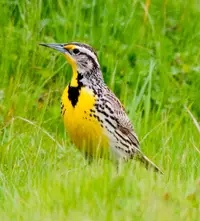
North Dakota’s first symbol after the seal was the wild prairie rose, adopted in 1907, whose pink and green the University of North Dakota’s first graduating class had already chosen as school colors in 1889. In 1947 the Legislature named the American elm, once common statewide and able to survive extreme cold, as state tree, the western meadowlark as state bird and the “North Dakota Hymn” as state song. Dutch elm disease has since killed many of the state’s elms.
From the prairie
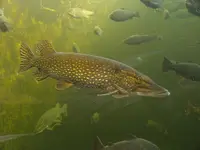
Several symbols come from the land. Teredo petrified wood, adopted in 1967, is about 60 million years old and riddled with holes bored by shipworm clams before the wood turned to stone. The northern pike became the state fish in 1969 by resolution, so it does not appear in the Century Code. Western wheatgrass, a tough native grass found in every county, became the state grass in 1977, and milk, honoring the dairy industry, the state beverage in 1983. The Nokota horse, believed to descend from Sitting Bull’s herds, was named the honorary state equine in 1993.
Chosen by students
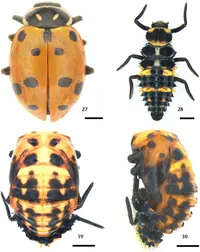
Children have proposed many of North Dakota’s recent symbols. Elementary students in Williston suggested the chokecherry, which Governor John Hoeven signed into law as state fruit in 2007. Students in Kenmare came up with the convergent lady beetle, the state insect since 2011. A Bismarck sixth grader proposed curling and attended the signing when Governor Doug Burgum made it the state sport in 2023. In 2025 a Bismarck family of homeschooled children persuaded lawmakers to name rhubarb the state vegetable, arguing that it had sustained North Dakotans through the Depression and the Dust Bowl.
Music and dance
North Dakota has an official march, James D. Ployhar’s “Flickertail March,” first designated in 1975 under the title “Spirit of the Land,” and an official American folk dance, the square dance, since 1995. In 2025 Chuck Suchy’s “Dancing Dakota” became the state waltz, after Suchy performed it for a House committee, and in the same session Knife River flint became the state rock.
Emblems and institutions
The state coat of arms, adopted in 1957, is an arrowhead-shaped gold and green shield bearing the words “Strength From the Soil” and three stars for the three branches of government; it also appears on the governor’s flag. English became the official language in 1987. Two museums hold official titles: the North Dakota Museum of Art in Grand Forks, founded in 1972 as the University of North Dakota’s art galleries, and the Mandan Railroad Museum, whose designation law bars state funding.
Flag, seal, song, motto and nickname
-
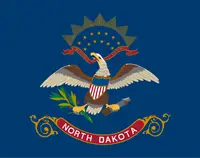 1911
A blue field fringed in yellow with a bald eagle holding an olive branch and a sheaf of arrows, a striped shield on its breast, an "E Pluribus Unum" ribbon in its beak, thirteen stars and a sunburst above, and a "North Dakota" scroll below. By law it must match the regimental flag of the First North Dakota Infantry in the Spanish-American War and Philippine Insurrection apart from the state name.
N.D. Cent. Code § 54-02-02 (amended 2011 N.D. Sess. Laws ch. 384)
- 1889
Great Seal of North Dakota
SealA tree in an open field ringed at its base by three wheat bundles, with a plow, anvil and sledge on one side and a bow with three arrows plus a mounted Indian chasing a bison toward the setting sun on the other. An arc of 42 stars and the state motto curve over the tree, with "Great Seal" at the top, "State of North Dakota" at the bottom, and "October 1st" and "1889" on either side.
The seal carries an arc of 42 stars, although North Dakota was the 39th state. State law makes it a misdemeanor to use the seal for political or commercial purposes; other uses need the secretary of state's approval.
Use restricted: N.D. Cent. Code § 54-02-01: use on political or commercial items or in advertising is a class B misdemeanor; other uses need Secretary of State approval.
N.D. Const. art. XI, § 2; N.D. Cent. Code § 54-02-01
- 1947
North Dakota Hymn
SongWritten in 1926. The lyrics are still under copyright, so they are not reproduced here. Official page.
The words of the "North Dakota Hymn" date from 1926, and it was first performed in 1927. It became the state song in 1947.
N.D. Cent. Code § 54-02-04
- 1889
Liberty and Union Now and Forever, One and Inseparable
MottoEnglish.
Since 2011 North Dakota has also had a Latin motto, "Serit ut alteri saeclo prosit," "One sows for the benefit of another age," which supplements the English motto on the seal.
N.D. Const. art. XI, § 2 (motto appears on the great seal)
- 1957
Peace Garden State
NicknameHonors the International Peace Garden on the North Dakota-Manitoba border. The phrase went on state license plates in 1956 and proved popular enough that the Legislative Assembly made it the official nickname the next year.
Animals
-
 1947
Western meadowlark
BirdSturnella neglectaKansas, Montana, Nebraska, Oregon and Wyoming share the same state bird.
N.D. Cent. Code § 54-02-06 · State Historical Society of North Dakota (NDStudies.gov)
-
 1969
Northern pike
FishEsox luciusDesignated by legislative resolution rather than by statute, so it does not appear in the Century Code.
- 1993
Nokota horse (honorary equine)
HorseThe statute calls it an "honorary equine" in recognition of the breed's role in state history; the horses are believed to descend from Sitting Bull's herds.
N.D. Cent. Code § 54-02-15 · State Historical Society of North Dakota (NDStudies.gov)
-
 2011
Convergent lady beetle (ladybug)
InsectHippodamia convergensKenmare elementary students came up with the idea; Rep. Glen Froseth was the lead sponsor.
N.D. Cent. Code § 54-02-19 (2011 N.D. Sess. Laws ch. 386, H.B. 1219) · North Dakota Legislative Branch
Plants and fungi
-
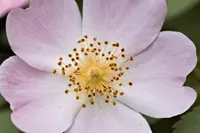 1907
Wild prairie rose
FlowerRosa blanda or Rosa arkansanaThe statute names two native rose species, Rosa blanda and Rosa arkansana, rather than a single one. The flower's pink and green had already been picked as school colors by the University of North Dakota's first graduating class in 1889.
N.D. Cent. Code § 54-02-03 · State Historical Society of North Dakota (NDStudies.gov)
-
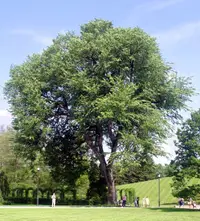 1947
American elm
TreeUlmus americanaOnce common statewide and able to survive extreme cold, the tree has since been heavily thinned by Dutch elm disease.
N.D. Cent. Code § 54-02-05 · State Historical Society of North Dakota (NDStudies.gov)
- 1977
Western wheatgrass
GrassPascopyrum smithiiA tough native grass found in every county; North Dakota Tourism credits the state chapter of the Society for Range Management with selecting it.
N.D. Cent. Code § 54-02-10 · State Historical Society of North Dakota (NDStudies.gov)
Earth and sky
- 1967
Teredo petrified wood
FossilThe fossil wood, roughly 60 million years old, is riddled with holes bored by small shipworm clams (teredos) before the wood turned to stone.
N.D. Cent. Code § 54-02-08 · State Historical Society of North Dakota (NDStudies.gov)
- 2025
Knife River flint
RockThe bill passed the House 89-1 and the Senate 44-2.
N.D. Cent. Code § 54-02-21 (H.B. 1186, 2025) · North Dakota Legislative Branch
Food and drink
- 1983
Milk
BeverageChosen in recognition of the state's dairy industry.
N.D. Cent. Code § 54-02-12 · State Historical Society of North Dakota (NDStudies.gov)
- 2007
Chokecherry
FruitPrunus virginianaElementary students in Williston proposed it, and Governor John Hoeven signed the bill.
N.D. Cent. Code § 54-02-17 · State Historical Society of North Dakota (NDStudies.gov)
- 2025
Rhubarb
VegetableRheum rhabarbarumA Bismarck family of homeschooled children brought the idea to Rep. Matthew Heilman, and argued at the hearing that rhubarb sustained North Dakotans through the Depression and Dust Bowl years.
N.D. Cent. Code § 54-02-22 (H.B. 1334, 2025) · Minot Daily News
Songs, words and language
- 1975
Flickertail March (James D. Ployhar)
MarchAccording to North Dakota Tourism the piece was first designated under the title "Spirit of the Land" and renamed in 1989.
- 2011
Serit ut alteri saeclo prosit (One sows for the benefit of another age)
Latin mottoSponsored by Rep. Joe Heilman of Fargo; it supplements, and does not replace, the English motto on the seal.
N.D. Cent. Code § 54-02-18 (2011 N.D. Sess. Laws ch. 385, H.B. 1346) · North Dakota Legislative Branch
- 2025
Dancing Dakota (Chuck Suchy)
WaltzIntroduced by Rep. Todd Porter; Suchy performed the song for the House committee, and the same bill created a state troubadour designation.
N.D. Cent. Code § 54-02-23 (H.B. 1397, 2025) · North Dakota Legislative Branch
- 1987
English
Language
Culture and history
- 1995
Square dance
DanceThe statute styles it the official American folk dance of North Dakota.
N.D. Cent. Code § 54-02-16 · State Historical Society of North Dakota (NDStudies.gov)
- 2023
Curling
SportPrime sponsor was Sen. Sean Cleary of Bismarck; Governor Doug Burgum signed the bill on March 23, 2023, with the Bismarck sixth-grader who proposed the idea in attendance.
N.D. Cent. Code § 54-02-20 (S.B. 2229, 2023) · North Dakota Legislative Branch
Government emblems
- 1957
North Dakota coat of arms
Coat of armsAn arrowhead-shaped gold and green shield bearing the words "Strength From the Soil" and three stars for the three branches of government; it also appears on the governor's flag.
Places and institutions
- —
North Dakota Museum of Art (Grand Forks)
Art museumFounded in 1972 as the University of North Dakota art galleries and later designated the North Dakota art museum.
N.D. Cent. Code § 54-02-11 · North Dakota Legislative Branch
- —
Mandan Railroad Museum
Railroad museumEstablished in Mandan in 1972; the designation statute bars state funding of the museum.
N.D. Cent. Code § 54-02-14 · North Dakota Legislative Branch
Questions about North Dakota's symbols
- What is the North Dakota state bird?
- The western meadowlark, adopted in 1947. Five other states share it.
- What is the North Dakota state flower?
- The wild prairie rose, adopted in 1907. The law covers two native species, Rosa blanda and Rosa arkansana.
- What is the North Dakota state fossil?
- Teredo petrified wood, about 60 million years old, riddled with holes bored by shipworm clams before the wood turned to stone.
- What is the official sport of North Dakota?
- Curling, adopted in 2023 after a Bismarck sixth grader proposed it.
- What is the Nokota horse?
- A breed believed to descend from Sitting Bull's herds. North Dakota named it the "honorary equine" in 1993 for its role in state history.
Photo credits (6)
- Flag of North Dakota: Unknown authorUnknown author, Public domain, via Wikimedia Commons
- Wild prairie rose: Iurie Nistor, CC0, via Wikimedia Commons
- American elm: User Henryhartley on en.wikipedia, CC BY-SA 3.0, via Wikimedia Commons
- Western meadowlark: Kevin Cole from Pacific Coast, USA (en:User:Kevinlcole), CC BY 2.0, via Wikimedia Commons
- Northern pike: Georg Mittenecker, CC BY-SA 2.5, via Wikimedia Commons
- Convergent lady beetle: Celli, Almeida, Basílio and Castro (2021), CC BY 4.0, via Wikimedia Commons
Something out of date? Tell us and we will check it against the law.
Sources
- North Dakota Century Code Chapter 54-02: State Emblems, Symbols, and Awards North Dakota Legislative Branch
- Constitution of North Dakota, Article XI: General Provisions North Dakota Legislative Branch
- Part 5: Symbols - North Dakota Hymn State Historical Society of North Dakota (NDStudies.gov)
- "Part 5: Symbols" State Historical Society of North Dakota