South Dakota state symbols
South Dakota has 24 official state symbols, most of them set out in Chapter 1-6 of the state's codified laws. The oldest are the seal and motto of 1889, from a design first proposed at the 1885 constitutional convention; the newest is the traditional flute, the state's indigenous musical instrument since 2022. Food symbols include kuchen, fry bread and chislic, the official state nosh.
Flower, bird and animal
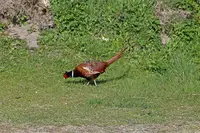
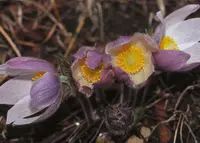
The pasque flower became the state flower in 1903, along with its own motto, “I Lead,” a nod to its early bloom; the secretary of state says no other state floral emblem has a motto. The ring-necked pheasant, an Asian bird first released successfully in Spink County in 1908, became the state bird in 1943, and the coyote the state animal in 1949. In 1947 the Legislature named the Black Hills spruce the state tree, noting that its very name identifies the state.
Stones, grass and soil
In 1966 South Dakota named two stones: rose quartz, found near Custer in the 1880s and mined in the southern Black Hills, as the state mineral stone, and the Fairburn agate, named for the town where it was first found and prized for its thin, sharply contrasting bands, as the state gemstone. Western wheatgrass, a long-lived grass found across the state and nicknamed bluestem wheatgrass for its bluish leaves, became the state grass in 1970, and Houdek, a deep prairie loam used for both cropland and rangeland, the state soil in 1990.
Fish, bees and a dinosaur
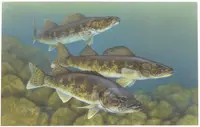
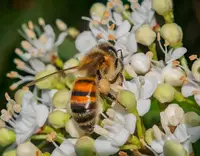
The honey bee became the state insect in 1978, recognizing the importance of honey production to the farm economy, and the walleye, the fish South Dakota anglers pursue most, the state fish in 1982. Triceratops became the state fossil in 1988; a skeleton found in Harding County in 1927 is on display at the Museum of Geology of the South Dakota School of Mines and Technology in Rapid City.
Gold, fiddles and rodeo
Black Hills gold, jewelry with grape-and-leaf designs in green, rose and yellow gold, became the state jewelry in 1988; the law notes that courts have ruled the name may be used only for jewelry made in the Black Hills. The fiddle became the state instrument in 1989, rodeo the state sport in 2003 and the traditional flute the state indigenous musical instrument in 2022.
Food and drink
South Dakota’s food symbols reflect the people who settled it. Milk, from a major state industry, is the official drink. Kuchen, a German-Russian pastry of sweet dough with a custard filling, often topped with fruit, became the state dessert in 2000. Fry bread, long part of Native American family meals, fairs and powwows, became the state bread in 2005, and chislic the state nosh in 2018.
Flag, seal, song, motto and nickname
-
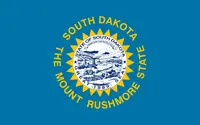 1963
A sky-blue field with the state seal in the center, ringed by a serrated gold sun; gold lettering arcs above ("South Dakota") and below ("The Mount Rushmore State"). Indoor flags carry gold fringe on three sides.
SDCL § 1-6-4
- 1889
Great Seal of South Dakota
SealInside a circle, a smelter and mine buildings with hills stand on the left, a farmer plowing behind a team of horses with cattle and a cornfield on the right, and a river with a steamboat between them; the motto runs along the top, with "State of South Dakota," "Great Seal" and 1889 in the outer ring.
The seal and motto were first proposed by Dr. Joseph Ward, founder of Yankton College, and adopted at the 1885 constitutional convention, four years before statehood. Reproducing the seal for any for-profit, commercial purpose without the secretary of state's authorization is a misdemeanor, though the law does not limit artistic or satirical uses.
Use restricted: SDCL § 1-6-3.1: reproducing the seal for any for-profit, commercial purpose without authorization from the secretary of state is a Class 1 misdemeanor
S.D. Const. art. XXI, § 1; SDCL §§ 1-6-1, 1-6-2
- 1943
Hail! South Dakota
SongThe lyrics are still under copyright, so they are not reproduced here. Official page.
"Hail! South Dakota," words and music by Deecort Hammitt, became the state song in 1943.
SDCL § 1-6-7
- 1889
Under God the People Rule
MottoEnglish.
S.D. Const. art. XXI, § 1
- 1992
The Mount Rushmore State
NicknameRefers to the Mount Rushmore sculpture in the Black Hills; the same 1992 act put the phrase on the state flag.
Animals
-
 1943
Ring-necked pheasant
BirdPhasianus colchicusThe pheasant is an Asian native; the Secretary of State credits A. E. Cooper and E. L. Ebbert with the first successful release, in Spink County in 1908. Designated by the 1943 Legislature (SL 1943, ch 272).
SDCL § 1-6-9 · South Dakota Legislature (Legislative Research Council)
-
 1949
Coyote
MammalCanis latransThe statute calls it the "state animal"; it was designated in 1949 (SL 1949, ch 242).
SDCL § 1-6-8 · South Dakota Legislature (Legislative Research Council)
-
 1982
Walleye
FishSander vitreusThe walleye is the fish South Dakota anglers pursue most, especially in the Missouri River reservoirs and the northeastern glacial lakes. A separate section (SDCL § 1-6-15.1) names the museum in Webster as the State Fishing Museum.
SDCL § 1-6-15 · South Dakota Legislature (Legislative Research Council)
-
 1978
Honey bee
InsectApis melliferaChosen in 1978 to recognize honey production's importance to the farm economy.
SDCL § 1-6-14 · South Dakota Legislature (Legislative Research Council)
Plants and fungi
-
 1903
American pasque flower
FlowerPulsatilla patens subsp. multifidaThe statute pairs the flower with its own motto, "I Lead"; the Secretary of State says no other state's floral emblem carries a motto. Its lavender blooms are among the first signs of spring on the prairie.
SDCL § 1-6-10 · South Dakota Legislature (Legislative Research Council)
- 1947
Black Hills spruce
TreePicea glauca var. densataA naturally occurring variety of white spruce native to South Dakota; the 1947 law praises it as a tree whose very name identifies the state.
SDCL § 1-6-11 · South Dakota Legislature (Legislative Research Council)
- 1970
Western wheatgrass
GrassPascopyrum smithiiA long-lived, cool-season grass found across the state; its bluish leaves earned it the nickname bluestem wheatgrass.
SDCL § 1-6-13 · South Dakota Legislature (Legislative Research Council)
Earth and sky
- 1966
Rose quartz
MineralThe law calls it the state "mineral stone"; pink quartz was found near Custer in the 1880s and is mined in the southern Black Hills.
SDCL § 1-6-12 · South Dakota Legislature (Legislative Research Council)
- 1966
Fairburn agate
GemstoneNamed for the town of Fairburn, where it was first found; it is prized for thin, sharply contrasting color bands.
SDCL § 1-6-12 · South Dakota Legislature (Legislative Research Council)
- 1988
Triceratops
FossilA Triceratops skeleton found in Harding County in 1927 is displayed at the Museum of Geology of the South Dakota School of Mines and Technology in Rapid City.
SDCL § 1-6-16.1 · South Dakota Legislature (Legislative Research Council)
- 1990
Houdek
SoilA deep, well-drained loam formed under prairie grass, used widely for both cropland and rangeland.
SDCL § 1-6-16.4 · South Dakota Legislature (Legislative Research Council)
Food and drink
- 1986
Milk
BeverageThe statute calls it the official state drink; dairy is a major South Dakota industry.
SDCL § 1-6-16 · South Dakota Legislature (Legislative Research Council)
- 2000
Kuchen
DessertA German-Russian pastry of sweet dough with a custard filling, often topped with fruit.
SDCL § 1-6-16.7 · South Dakota Legislature (Legislative Research Council)
- 2005
Fry bread
BreadDesignated by House Bill 1205 in 2005; fry bread has long been part of Native American family meals, fairs and powwows.
SDCL § 1-6-16.9 · South Dakota Legislature (Legislative Research Council)
- 2018
Chislic
Nosh
Culture and history
- 1988
Black Hills gold
JewelryThe statute notes that courts have ruled the name "Black Hills gold" may be used only for jewelry made in the Black Hills. The jewelry features grape-and-leaf motifs in green, rose and yellow gold.
SDCL § 1-6-16.2 · South Dakota Legislature (Legislative Research Council)
- 1989
Fiddle
Instrument - 2003
Rodeo
Sport - 2022
Traditional flute
Indigenous musical instrument
Questions about South Dakota's symbols
- What is the South Dakota state bird?
- The ring-necked pheasant, adopted in 1943. It is native to Asia and was first released successfully in South Dakota in 1908.
- What is the South Dakota state animal?
- The coyote, adopted in 1949.
- What is the South Dakota state flower?
- The American pasque flower, which comes with its own motto, "I Lead."
- What is chislic?
- South Dakota's official state nosh, designated in 2018.
- What is Black Hills gold?
- South Dakota's state jewelry, adopted in 1988, made with grape-and-leaf designs in green, rose and yellow gold. The law notes that courts have ruled the name may be used only for jewelry made in the Black Hills.
Photo credits (6)
- Flag of South Dakota: xrmap, Public domain, via Wikimedia Commons
- Ring-necked pheasant: W. Bulach, CC BY-SA 4.0, via Wikimedia Commons
- American pasque flower: Don Poggensee, USDA Natural Resources Conservation Service, Public domain, via Wikimedia Commons
- Coyote: Yathin S Krishnappa, CC BY-SA 3.0, via Wikimedia Commons
- Walleye: Timothy Knepp, Public domain, via Wikimedia Commons
- Honey bee: Didier Descouens, CC BY-SA 4.0, via Wikimedia Commons
Something out of date? Tell us and we will check it against the law.
Sources
- SDCL § 1-6-4 — State flag--Description South Dakota Legislature (Legislative Research Council)
- SDCL § 1-6-3.1 — Use of state seal--Authorization--Violation as misdemeanor South Dakota Legislature (Legislative Research Council)
- SDCL § 1-6-7 — State song South Dakota Legislature (Legislative Research Council)
- SDCL Chapter 1-6 (state emblems) South Dakota Legislature
- State Seal and Symbols South Dakota Secretary of State