Dogwood, the state flower of North Carolina
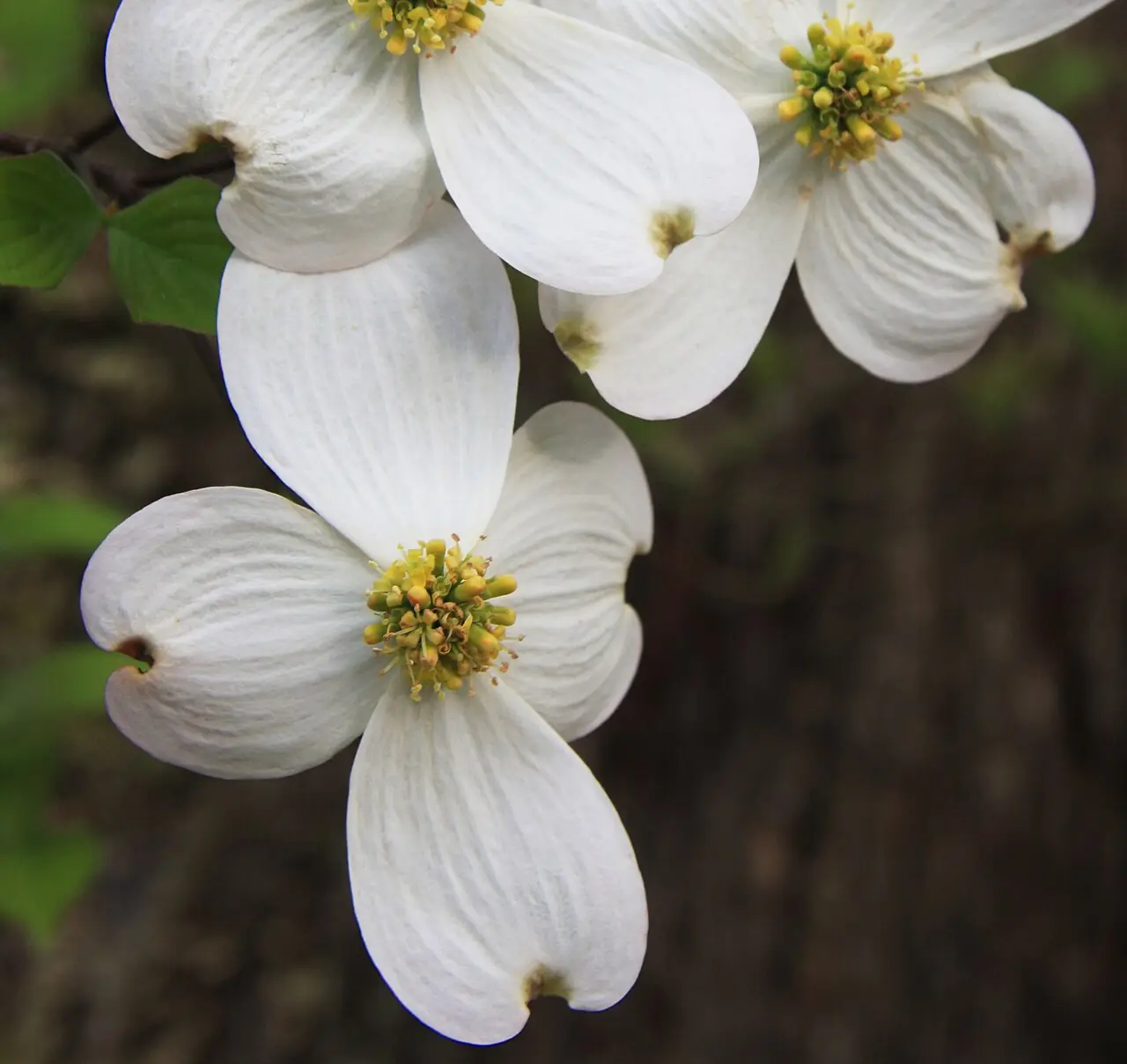
The state flower of North Carolina is the dogwood, adopted in 1941 for its abundance in every part of the state. The law names "the dogwood" without picking a species, but the flowering dogwood is the one understood and pictured as the state flower. Its white spring "flowers" are really four petal-like bracts around a cluster of tiny true flowers.
How to recognize it
The flowering dogwood is a small tree, usually 15 to 25 feet tall, with a wider, rounded, spreading crown. What looks like one large flower is really a tight cluster of tiny greenish-white true flowers ringed by four white, sometimes pink, petal-like bracts about 2 inches long, each with a notch at its tip. It blooms in early spring, around March to May, before or as the leaves come out.
The leaves are opposite and oval, 2.5 to 6 inches long, with veins that curve toward the tip, and they turn red to maroon in fall. Shiny red oval fruits about half an inch long ripen in clusters from late summer into fall, and older trees have dark bark broken into small blocks.
Which dogwood?
The 1941 law names “the dogwood” and no particular species. Three dogwoods grow wild in North Carolina, the alternate-leaf, gray and flowering dogwoods, and the flowering dogwood is the one understood and pictured as the state flower.
Where it grows
The flowering dogwood is native to North Carolina and the eastern United States. It grows in all three of the state’s regions, the mountains, the Piedmont and the coastal plain, usually in the understory of deciduous woods and along forest edges, up to about 4,500 feet. It is also a popular garden tree, so it is common in yards and parks. At higher elevations, above about 1,800 feet, a disease called dogwood anthracnose is a serious threat.
Where to see it
Look for dogwoods blooming in spring in deciduous woods and woodland edges across the state, and in yards and parks.
Food for wildlife
Dogwood fruit is bitter and not eaten by people, but songbirds, wild turkeys, quail, deer, squirrels and other wildlife eat it, and the tree is a host plant for the spring azure butterfly.
The state wildflower
North Carolina also has a separate state wildflower, the Carolina lily, adopted in 2003. Its nodding, red-orange, brown-spotted flowers with swept-back petals bloom mostly in July and August, in woods from the mountains to the coast.
Questions about the North Carolina state flower
- What is the state flower of North Carolina?
- The dogwood, adopted in 1941. The flowering dogwood (Cornus florida) is the species usually pictured.
- When do dogwoods bloom in North Carolina?
- In early spring, around March to May, before or as the leaves come out.
- Are dogwood berries edible?
- Not for people; they are bitter. But songbirds, wild turkeys, quail, deer, squirrels and other wildlife eat them.
- What is North Carolina's state wildflower?
- The Carolina lily (Lilium michauxii), adopted in 2003. Its nodding red-orange flowers bloom mostly in July and August.
Sources
- Cornus florida NC State Extension Gardener Plant Toolbox
- State Flower of North Carolina NCpedia (State Library of North Carolina)
- State Wildflower of North Carolina NCpedia (State Library of North Carolina)