North Carolina state symbols
North Carolina has 43 official state symbols. The oldest is the flag of 1885, followed by the motto of 1893; the newest came in a burst in 2013, when the Legislature named a state frog, salamander, marsupial, fossil, art medium and folk art in a single act. Students proposed many of the others, from the Venus flytrap to stock car racing.
Bird, flower and tree
North Carolina chose its flower and bird in the 1940s. The dogwood, which the 1941 act praised for its abundance in every part of the state, came first. The bird took two tries. In 1933 the Legislature made the Carolina chickadee the state bird, then repealed the resolution about a week later, partly because members disliked its nickname, the tomtit. A decade later the North Carolina Bird Club held a statewide poll in which more than 23,000 votes were cast for 26 birds; the cardinal led with about 5,000, and it became the state bird in 1943. The pine followed as state tree in 1963.
Wildlife
The gray squirrel became the state mammal in 1969, after Representative Basil Barr of Ashe County surveyed schoolchildren about their favorite. The red drum, also called channel bass, became the state saltwater fish in 1971, and the eastern box turtle the state reptile in 1979, when a 12-year-old from Cary brought two pet box turtles to the Senate committee hearing. The Plott hound, descended from five hunting dogs that the German immigrant Johannes Plott brought to America in 1750, is the state dog. Students at Shawboro Elementary School in Currituck County asked for the Colonial Spanish Mustang, the breed linked to the wild horses of the Currituck Outer Banks, which became the state horse in 2010.
In 2013 the Legislature added several animals at once: the Pine Barrens treefrog and the marbled salamander, chosen in a public poll by the North Carolina Herpetological Society that drew more than 6,000 votes; the Virginia opossum, the only marsupial found north of Mexico; and, as the state fossil, the teeth of the megalodon shark, an idea from an eighth-grade science project at Newport Middle School.
Plants of the Carolinas
The Venus flytrap, the state carnivorous plant since 2005, grows wild only in a small coastal area of the Carolinas, mostly within about 75 miles of Wilmington. The Fraser fir, proposed by eighth graders in Spruce Pine who researched the Christmas tree industry, became the official Christmas tree the same year. The Carolina lily, named for the French botanist André Michaux, became the state wildflower in 2003, after Representative Rex Baker and his wife saved a patch of the lilies from a road-widening project.
Stones and gold
The emerald became the official precious stone in 1973 and granite the state rock in 1979. Gold became the state mineral in 2011, at the request of a fourth-grade class; it recalls North Carolina’s gold rush, which began when 12-year-old Conrad Reed found gold in Cabarrus County in 1799.
Food and drink
The sweet potato became the state vegetable in 1995 after fourth graders in Wilson campaigned for two years; earlier bills had proposed collards or corn. A 2001 law named the scuppernong grape the state fruit and the strawberry and blueberry the state berries. When milk became the state beverage in 1987, a few House members voted “moo.”
Culture
North Carolina’s cultural symbols range widely. The shad boat, a sturdy fishing boat developed around Roanoke Island in the 1870s, is the state historical boat. Clogging is the official folk dance and the shag the official popular dance. The Carolina Tartan became official in 1991, after a representative showed off kilts in it at a committee hearing; South Carolina adopted the same tartan in 2002. Clay, for the state’s pottery tradition, is the official art medium, and the giant scrap-metal whirligigs of Vollis Simpson, who began building them at about age 65, are the state folk art. Students calling themselves the Pit Crew won stock car racing its place as the state sport in 2011, and the bill was signed at Charlotte Motor Speedway.
Flag, seal, song, motto and nickname
-
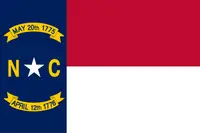 1885
A blue union at the hoist holds a white star flanked by gilt letters N and C, with gold scrolls above and below bearing the dates May 20th 1775 and April 12th 1776. The fly is two equal horizontal bars, red over white.
N.C. Laws 1885, c. 291; G.S. 144-1 (amended 1991, c. 361)
- 1971
Great Seal of North Carolina
SealLiberty stands holding a capped pole and a scroll marked Constitution, beside a seated Plenty holding wheat and a cornucopia, with mountains and a three-masted ship behind them. The dates May 20, 1775 and April 12, 1776 and the motto Esse Quam Videri appear on the seal.
The seal's design was standardized in 1971, and in 1983 the date April 12, 1776, was added. Under the state constitution the governor keeps the Great Seal.
G.S. 147-26 (design standardized by 1971, c. 167; amended 1983, c. 257 to add the date April 12, 1776)
- 1927
The Old North State
SongWritten in 1835. The lyrics are in the public domain. Official page.
"The Old North State" was written by William Gaston in 1835 and became the state song in 1927. North Carolina also has an official toast of the same name, adopted in 1957.
Public Laws 1927 (G.S. 149-1)
- 1893
Esse Quam Videri
MottoLatin, meaning “To be, rather than to seem”.
N.C. Laws 1893, c. 145
Animals
-
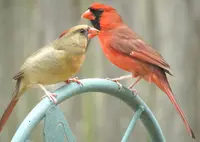 1943
Cardinal
BirdCardinalis cardinalisThe North Carolina Bird Club ran a statewide poll in which more than 23,000 votes were cast for 26 candidate birds; the cardinal led with about 5,000 votes, ahead of the dove with 3,395. In 1933 the legislature briefly made the Carolina chickadee the state bird, then repealed the resolution about a week later, partly because lawmakers disliked its nickname, the tomtit.
N.C. Sess. Laws 1943, c. 595 (G.S. 145-2) · NCpedia (State Library of North Carolina)
-
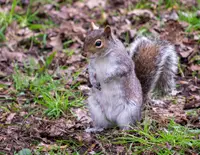 1969
Gray squirrel
MammalSciurus carolinensisRep. Basil Barr of Ashe County introduced the bill after surveying schoolchildren about their favorite mammal.
N.C. Sess. Laws 1969, c. 1207 · NCpedia (State Library of North Carolina)
- 1989
Plott hound
DogThe breed traces to five hunting dogs that German immigrant Johannes Plott brought to America in 1750; it is the only recognized dog breed developed in North Carolina.
N.C. Sess. Laws 1989, c. 773 · NCpedia (State Library of North Carolina)
- 2010
Colonial Spanish Mustang
HorseStudents at Shawboro Elementary School in Currituck County, working with the Corolla Wild Horse Fund, asked for the designation; the breed is linked to the wild horses of the Currituck Outer Banks.
N.C. Sess. Law 2010-6 · NCpedia (State Library of North Carolina)
- 1979
Eastern box turtle
ReptileTerrapene carolina carolinaRep. Chris Barker of New Bern sponsored the bill; a 12-year-old from Cary brought two pet box turtles to the Senate committee hearing.
N.C. Sess. Laws 1979, c. 154 (G.S. 145-9) · NCpedia (State Library of North Carolina)
- 2013
Pine Barrens treefrog
FrogDryophytes andersoniiThe North Carolina Herpetological Society proposed it after a public poll that drew more than 6,000 votes.
N.C. Sess. Law 2013-189 · NCpedia (State Library of North Carolina)
- 2013
Marbled salamander
SalamanderAmbystoma opacumChosen in the same Herpetological Society poll as the state frog.
N.C. Sess. Law 2013-189 · NCpedia (State Library of North Carolina)
-
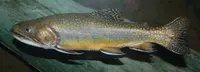 2005
Southern Appalachian brook trout (official freshwater trout)
FishSalvelinus fontinalisDesignated as the official freshwater trout by the same 2005 act that named the state Christmas tree.
N.C. Sess. Laws 2005, c. 387 · NCpedia (State Library of North Carolina)
-
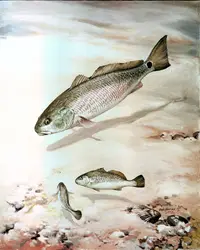 1971
Channel bass (red drum)
Saltwater fishSciaenops ocellatusN.C. Sess. Laws 1971, c. 274 (G.S. 145-6) · NCpedia (State Library of North Carolina)
-
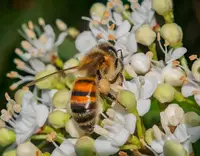 1973
Honeybee
InsectApis melliferaHoneybees pollinate several of the state's major crops, and in the 19th century North Carolina led the nation in beeswax production.
N.C. Sess. Laws 1973, c. 55 · NCpedia (State Library of North Carolina)
- 2012
Eastern tiger swallowtail
ButterflyPapilio glaucusThe same act named official livermush festivals in Shelby and Marion and the Swansboro Mullet Festival.
N.C. Sess. Law 2012-29 · NCpedia (State Library of North Carolina)
- 1965
Scotch bonnet
ShellSemicassis granulataRep. Moncie Daniels of Dare County promised a shell to every supporting legislator but could find only two, which made some colleagues doubt such a scarce shell.
N.C. Sess. Laws 1965, c. 681 (G.S. 145-4) · NCpedia (State Library of North Carolina)
- 2013
Virginia opossum
MarsupialDidelphis virginianaIt is the only marsupial found north of Mexico.
N.C. Sess. Law 2013-189 · NCpedia (State Library of North Carolina)
Plants and fungi
-
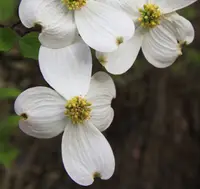 1941
Dogwood
FlowerCornus floridaThe 1941 act cited the dogwood's abundance in every part of the state; the statute names the dogwood generally, and the flowering dogwood is the species usually pictured.
N.C. Sess. Laws 1941, c. 289 (G.S. 145-1) · NCpedia (State Library of North Carolina)
-
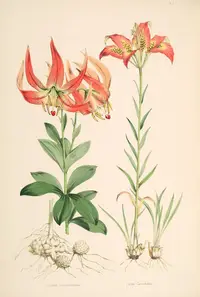 2003
Carolina lily
WildflowerLilium michauxiiRep. Rex Baker of Stokes County sponsored the bill after he and his wife saved a patch of the lilies from a road-widening project; it took him two years to get it passed. The species is named for the French botanist Andre Michaux, who made several collecting trips to North Carolina beginning in 1787.
N.C. Sess. Laws 2003, c. 426 (G.S. 145-19) · NCpedia (State Library of North Carolina)
-
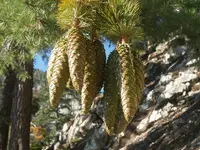 1963
Pine
TreePinusThe 1963 act named the pine in general rather than one species; a 2023 amendment (S.L. 2023-63, s. 8) kept the pine as the state tree and designated the longleaf pine (Pinus palustris) as the emblem representing the trees of North Carolina.
N.C. Sess. Laws 1963, c. 41 (G.S. 145-3) · NCpedia (State Library of North Carolina)
- 2005
Venus flytrap
Carnivorous plantDionaea muscipulaStudents at North Stanly High School proposed it; it grows wild only in a small coastal area of the Carolinas, mostly within about 75 miles of Wilmington.
N.C. Sess. Laws 2005, c. 74 (G.S. 145-22) · NCpedia (State Library of North Carolina)
- 2005
Fraser fir
Christmas treeAbies fraseriEighth graders at Harris Middle School in Spruce Pine researched the Fraser fir industry and suggested the designation.
N.C. Sess. Laws 2005, c. 387 · NCpedia (State Library of North Carolina)
Earth and sky
- 2013
Fossilized teeth of the megalodon shark
FossilOtodus megalodonThe idea came from an eighth-grade science project at Newport Middle School in Carteret County.
N.C. Sess. Law 2013-189 (G.S. 145-41) · NCpedia (State Library of North Carolina)
- 1973
Emerald (official precious stone)
GemstoneN.C. Sess. Laws 1973, c. 136 (G.S. 145-8) · NCpedia (State Library of North Carolina)
- 2011
Gold
MineralSenate Majority Leader Harry Brown introduced the bill for a fourth-grade class at Clyde Erwin Magnet Elementary School; four senators voted no, citing quartz and feldspar producers back home.
N.C. Sess. Law 2011-233 · NCpedia (State Library of North Carolina)
- 1979
Granite
RockThe act's preamble credited granite with providing jobs and adorning public buildings.
N.C. Sess. Laws 1979, c. 906 · NCpedia (State Library of North Carolina)
Food and drink
- 2001
Scuppernong grape
FruitVitis rotundifoliaN.C. Sess. Laws 2001, c. 488 (G.S. 145-18) · NCpedia (State Library of North Carolina)
- 2001
Strawberry
Red berryFragariaN.C. Sess. Laws 2001, c. 488 (G.S. 145-18) · NCpedia (State Library of North Carolina)
- 2001
Blueberry
Blue berryVacciniumN.C. Sess. Laws 2001, c. 488 (G.S. 145-18) · NCpedia (State Library of North Carolina)
- 1995
Sweet potato
VegetableIpomoea batatasFourth graders at Elvie Street School in Wilson campaigned for two years with letters to legislators; earlier bills in the 1980s had proposed collards or corn.
N.C. Sess. Laws 1995, c. 521 · NCpedia (State Library of North Carolina)
- 1987
Milk
BeverageThe state Milk Commission requested the designation; the bill passed the Senate 39-3 and the House 93-3, with a few members voting "moo".
N.C. Sess. Laws 1987, c. 347 · NCpedia (State Library of North Carolina)
Songs, words and language
- 1987
English
LanguageSen. Frank Block of New Hanover County sponsored the bill, which drew debate over whether it was unfair to immigrants.
N.C. Sess. Laws 1987, c. 480 (G.S. 145-12) · NCpedia (State Library of North Carolina)
- 1957
"The Old North State" (A Toast)
ToastLeonora Monteiro Martin wrote the verses for a 1904 banquet in Richmond, Virginia; Mary Burke Kerr later set them to music.
N.C. Sess. Laws 1957, c. 777 (G.S. 149-2) · NCpedia (State Library of North Carolina)
- 2007
Official salute to the North Carolina flag
Flag saluteSen. Katie Dorsett of Guilford County introduced the bill, which passed both chambers unanimously; the wording had long been used by civic and women's clubs.
N.C. Sess. Laws 2007, c. 36 · NCpedia (State Library of North Carolina)
Culture and history
- 2005
Clogging (official folk dance)
DanceN.C. Sess. Laws 2005, c. 218 (G.S. 145-24) · NCpedia (State Library of North Carolina)
- 2005
Shagging
Popular danceN.C. Sess. Laws 2005, c. 218 (G.S. 145-24) · NCpedia (State Library of North Carolina)
- 1991
Carolina Tartan
TartanRep. Bill Hurley of Fayetteville showed off kilts in the tartan during a committee hearing; the House approved it 86-3. South Carolina adopted the same tartan in 2002.
N.C. Sess. Laws 1991, c. 85 · NCpedia (State Library of North Carolina)
- 1945
Red and blue
ColorsThe act specifies the shades of red and blue used in the state flag and the U.S. flag.
N.C. Sess. Laws 1945, c. 878 · NCpedia (State Library of North Carolina)
- 2011
Stock car racing
SportStudents from Lake Norman Elementary and Mount Mourne IB School in Iredell County, calling themselves the Pit Crew, pushed the idea; Gov. Bev Perdue signed it at Charlotte Motor Speedway.
N.C. Sess. Law 2011-187 · NCpedia (State Library of North Carolina)
- 1987
Shad boat
Historical boatGeorge Washington Creef developed the shad boat around Roanoke Island in the 1870s as a sturdy, shallow-draft fishing workboat.
N.C. Sess. Law 1987-366 · NCpedia (State Library of North Carolina)
- 2013
Clay
Art mediumThe act's preamble points to the state's clay-rich soil and the pottery tradition of the Seagrove area.
N.C. Sess. Law 2013-189 (G.S. 145-46) · NCpedia (State Library of North Carolina)
- 2013
Whirligigs of Vollis Simpson
Folk artSimpson, a machinist from Lucama, began building giant wind-driven sculptures from scrap metal at about age 65.
N.C. Sess. Law 2013-189 · NCpedia (State Library of North Carolina)
Government emblems
- 2010
Honor and Remember Flag
Honor and remember flagIt honors members of the U.S. armed forces who died in service; North Carolina was the fifth state to recognize it.
N.C. Sess. Law 2010-145 · NCpedia (State Library of North Carolina)
Questions about North Carolina's symbols
- What is the North Carolina state bird?
- The northern cardinal, adopted in 1943 after a statewide poll by the North Carolina Bird Club.
- What is the North Carolina state flower?
- The dogwood, adopted in 1941. The flowering dogwood is the species usually pictured.
- What is the North Carolina state tree?
- The pine, adopted in 1963. Since 2023 the longleaf pine has been named the emblem representing the state's trees.
- What is the North Carolina state dog?
- The Plott hound, the only recognized dog breed developed in North Carolina. Its foundation stock was five hunting dogs that Johannes Plott brought from Germany in 1750.
- Why is the Venus flytrap a North Carolina symbol?
- It grows wild only in a small coastal area of the Carolinas, mostly within about 75 miles of Wilmington. It became the state carnivorous plant in 2005, after students at North Stanly High School proposed it.
Photo credits (9)
- Flag of North Carolina: Unknown author, Public domain, via Wikimedia Commons
- Cardinal: patricia pierce, CC BY 2.0, via Wikimedia Commons
- Dogwood: Dcrjsr, CC BY 3.0, via Wikimedia Commons
- Carolina lily: Unknown author, Public domain, via Wikimedia Commons
- Pine: Mitch from Costa Mesa, CA, USA, CC BY-SA 2.0, via Wikimedia Commons
- Gray squirrel: Dominic Nelson, CC BY-SA 4.0, via Wikimedia Commons
- Southern Appalachian brook trout: and (C)2007 Derek Ramsey (Ram-Man), CC BY-SA 2.5, via Wikimedia Commons
- Channel bass: Hines, Robert W, Public domain, via Wikimedia Commons
- Honeybee: Didier Descouens, CC BY-SA 4.0, via Wikimedia Commons
Something out of date? Tell us and we will check it against the law.
Sources
- State Flag of North Carolina NCpedia (State Library of North Carolina)
- State Seal of North Carolina NCpedia (State Library of North Carolina)
- State Song of North Carolina: "The Old North State" NCpedia (State Library of North Carolina)
- North Carolina State Symbols NCpedia (State Library of North Carolina)
- G.S. 145-3 (state tree) North Carolina General Assembly