Scarlet carnation, the state flower of Ohio
The state flower of Ohio is the scarlet carnation, adopted in 1904 in memory of President William McKinley, an Ohioan who wore a red carnation as a good-luck charm. The flower was bred in Alliance by a local doctor, Levi Lamborn, and the city still calls itself the Carnation City. Unlike most state flowers it is not native: it is a cultivated garden and florist flower from the Mediterranean.
How to recognize it
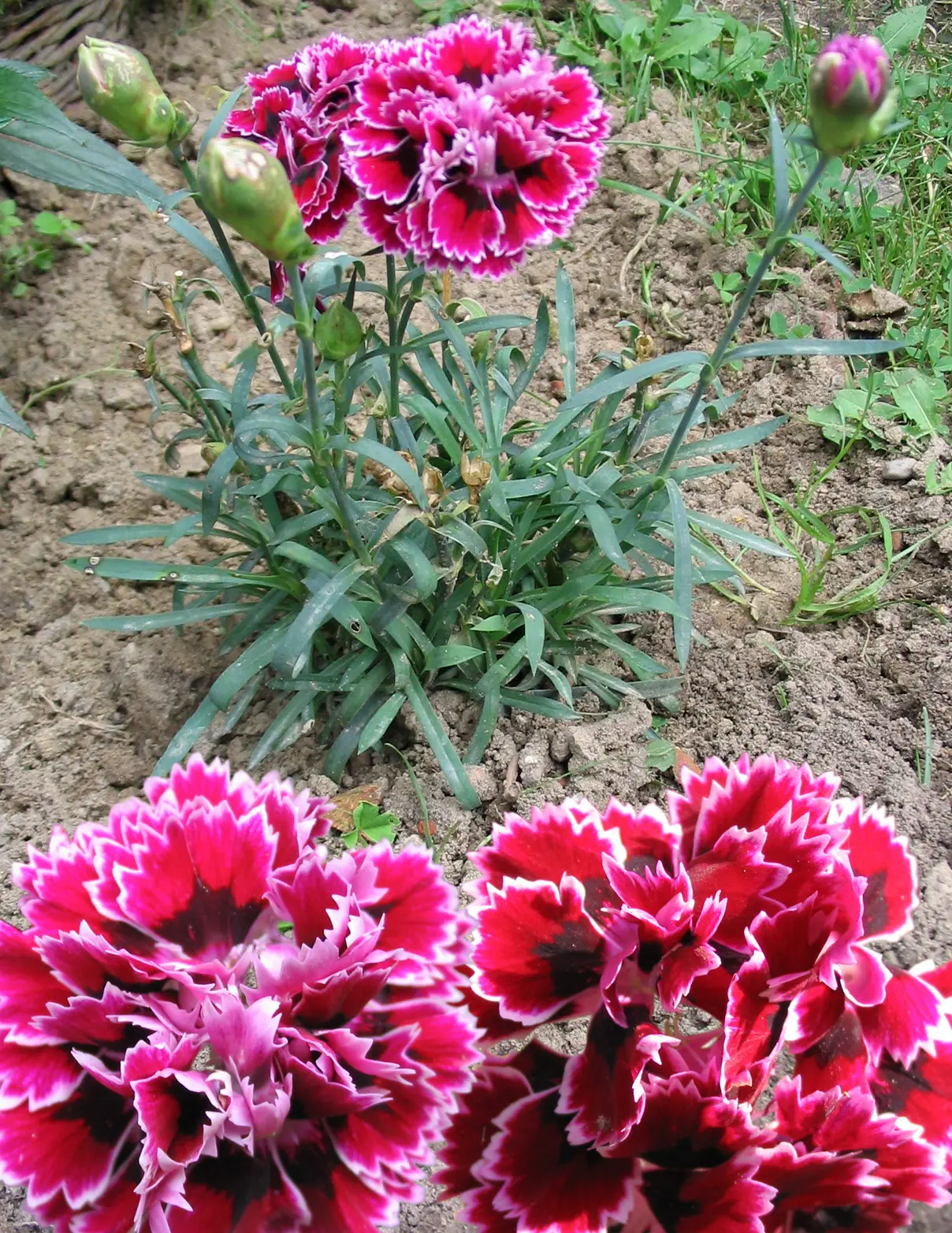
The carnation is a perennial, usually 1 to 4 feet tall, with narrow, waxy, gray-green to blue-green leaves in opposite pairs. Its fragrant, saucer-shaped flowers are 1 to 3 inches across, single or double, with about 7 to 20 or more petals. The species comes in white, pink, purple and other colors, but Ohio’s state flower is the red, or scarlet, form. The law names only the color, not a particular variety.
Not a wild flower
The carnation is not native to Ohio or North America. It comes from the Mediterranean region, although its exact original range is unknown, and it is grown as a garden and florist flower. In the garden it needs full sun and well-drained, neutral to slightly alkaline soil, and it does best where summers are cool. It is mildly toxic to people and a problem for cats, dogs and horses.
Lamborn Red and the president
The scarlet carnation’s Ohio story began in Alliance, in Stark County. In 1866 Dr. Levi Lamborn, an Alliance doctor, grew a red carnation from French seedlings and called it “Lamborn Red.” Before his 1876 congressional debates with William McKinley, Lamborn gave McKinley a carnation, and McKinley kept wearing one as a good-luck charm. In September 1901, at the Pan-American Exposition in Buffalo, McKinley handed the carnation from his lapel to a young admirer, moments before he was shot.
Where to see it
Alliance is the place. The Legislature named it “The Carnation City” on April 1, 1959, a state historical marker at 57 West Main Street marks the site of Lamborn’s greenhouses, and since 1960 the city has held a 10-day Carnation Festival every August.
The state flower since 1904
The General Assembly named the scarlet carnation the state flower by joint resolution on February 3, 1904, in memory of McKinley. In 1987 Ohio added a native state wildflower, the large white trillium, which grows in every one of Ohio’s counties.
Questions about the Ohio state flower
- What is the state flower of Ohio?
- The scarlet carnation, adopted by joint resolution on February 3, 1904, in memory of President William McKinley.
- Why is the carnation Ohio's state flower?
- To honor William McKinley, an Ohioan who wore a red carnation as a good-luck charm. He was assassinated in 1901.
- Is the carnation native to Ohio?
- No. It comes from the Mediterranean region and is a cultivated plant. Ohio's native state wildflower is the large white trillium.
- Why is Alliance called the Carnation City?
- Because Dr. Levi Lamborn grew the red carnation there in 1866. The Legislature named Alliance the Carnation City in 1959, and the city holds a Carnation Festival every August.
Sources
- Alliance, Birthplace of Ohio's State Flower, the Scarlet Carnation (historical marker 20-76) Remarkable Ohio (Ohio History Connection)
- Dianthus caryophyllus NC State Extension Gardener Plant Toolbox
- The Carnation Rodman Public Library, Alliance
- Ohio Revised Code §§ 5.02 and 5.021 Onecle (copy of the Ohio Revised Code)
- Dr. Lamborn's carnations Rodman Public Library, Alliance, Ohio
- Ohio Revised Code § 5.021 - State Wild Flower Onecle (copy of the Ohio Revised Code)