Indiana state symbols
Indiana has 16 official state symbols, a shorter list than most states. The oldest is the state song of 1913; the newest is the mastodon, adopted as the state fossil in 2022. Its symbols mix nature, such as the tulip tree and the cardinal, with history, from a frontier rifle to a World War II fighter plane.
Song, flag, tree and flower
Indiana’s symbols started with music. “On the Banks of the Wabash, Far Away,” written by Paul Dresser in 1897, became the state song in 1913. The flag followed in 1917, after a contest for the state’s centennial. In 1931 the legislature adopted the tulip tree as the state tree and the zinnia as the state flower; in 1957 it replaced the zinnia with the peony, a garden favorite traditionally used to decorate graves on Memorial Day. The cardinal became the state bird in 1933.
Stone and river
Indiana’s most famous natural resource is its limestone. In 1971 the legislature named Salem Limestone, quarried in south-central Indiana, the official state stone. It has been used in the Empire State Building, the Pentagon and many state capitols and courthouses, and it was used to build Indiana’s own Statehouse. The Wabash River, the state river since 1996, gave the state its song.
History you can hold
Two symbols honor objects from Indiana’s past. The Grouseland Rifle, the state rifle since 2012, was made between 1803 and 1812 by Colonel John Small of Vincennes, and it is named for Grouseland, the Vincennes home of territorial governor William Henry Harrison. The law gives the Grouseland Foundation of Vincennes control over any copy: nobody may reproduce or sell one without its permission. The Republic P-47 Thunderbolt, the state aircraft since 2015, honors the thousands of these heavy fighters built in Evansville from 1942 to 1945, which earned it the nickname “the Indiana Warbird.”
Ideas from students and a fossil
Indiana’s newest symbols came from young people and a curious legislator. Kayla Xu, a second grader at Cumberland Elementary in West Lafayette, noticed that Indiana had no state insect. She and classmates from Cumberland and Happy Hollow schools researched the options and chose Say’s firefly, named for Thomas Say of New Harmony, often called the father of American entomology. Their bill passed the Senate 48 to 0 and became law in 2018.
The mastodon became the state fossil in 2022. Representative Randy Frye of Greensburg sponsored the bill after seeing a life-size mastodon skeleton at Hanover College. Mastodons are the most common Ice Age fossil in Indiana and have turned up in nearly every county.
The main symbols
The flag, the cardinal and the peony each have their own page. Indiana also has a state poem, “Indiana,” by Arthur Franklin Mapes of Kendallville, whose full text is written into the law.
Flag, seal, song, motto and nickname
-
 1917
Flag of Indiana
FlagA blue field carries a gold torch with rays and 19 gold stars: 13 in an outer ring for the original states, 5 in an inner arc for the next states admitted, and a larger star above the flame for Indiana, with the word INDIANA arched over it. The torch stands for liberty and enlightenment.
IC 1-2-2-1 (Acts 1917, c.114; renamed from 'banner' to 'flag' by Acts 1955, c.146)
- 1963
Great Seal of Indiana
SealA pioneer scene of a woodsman with an ax beside sycamore trees, a buffalo leaping a log, and the sun behind three hills, inside a border reading 'Seal of the State of Indiana' with the date 1816 and tulip tree leaves. Versions of the scene appear on papers as early as 1801; the 1963 law gave the design its official description.
IC 1-2-4-1 (Acts 1963, c.207)
- 1913
On the Banks of the Wabash, Far Away
SongWritten in 1897. The lyrics are in the public domain. Official page.
IC 1-2-6-1 (Acts 1913, c.254)
- 1937
The Crossroads of America
MottoEnglish.
1937 General Assembly resolution (not codified in the Indiana Code)
Animals
-
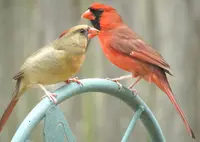 1933
Cardinal (northern cardinal)
BirdCardinalis cardinalisThe statute names the 'Red Bird or Cardinal' using the older scientific name Richmondena cardinalis cardinalis. Cardinals live in Indiana all year.
-
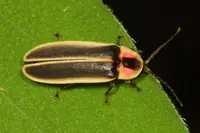 2018
Say's firefly
InsectPyractomena angulataThe species was described by Thomas Say of New Harmony, often called the father of American entomology. Cumberland Elementary student Kayla Xu noticed in second grade that Indiana had no state insect, and she and classmates from Cumberland and Happy Hollow schools in West Lafayette pushed for the bill sponsored by Sen. Ron Alting. The Senate passed it 48-0 on February 6, 2018.
IC 1-2-15-1 (Senate Enrolled Act 236, 2018) · Indiana Senate Republican Caucus
Plants and fungi
-
 1957
Peony
FlowerPaeoniaThe zinnia was Indiana's state flower from 1931 until the peony replaced it in 1957. Lawmakers did not specify any particular peony variety or color.
-
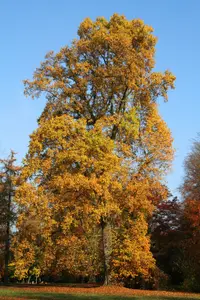 1931
Tulip tree (yellow poplar)
TreeLiriodendron tulipiferaThe tulip tree's leaf appears in the border of the state seal.
Earth and sky
- 2022
Mastodon
FossilMammut americanumRep. Randy Frye of Greensburg sponsored the bill after seeing a life-size mastodon skeleton cast at Hanover College. Mastodons are the most common Ice Age fossil in Indiana and have turned up in nearly every county.
IC 1-2-17-1 (House Enrolled Act 1013, 2022) · Indiana Public Media
- 1971
Salem Limestone
RockThe law designates the limestone quarried in south-central Indiana from the Salem Limestone formation as the official state stone.
- 1996
Wabash River
RiverThe Wabash River, made the state river in 1996, flows for most of its length through Indiana and forms part of the border with Illinois. It is celebrated in the state song.
Food and drink
- 2021
Popcorn grown in Indiana
SnackPopcorn grown in Indiana became the official state snack in 2021. Indiana is one of the country's top popcorn-growing states.
IC 1-2-16-1 (Senate Bill 97, 2021) · FindLaw (Indiana Code, current as of 2026-01-01)
Songs, words and language
- 1963
"Indiana" by Arthur Franklin Mapes
PoemMapes was from Kendallville, and the full text of the poem is written into the statute.
- 1984
English
LanguageEnglish is the official language of Indiana. A 1995 addition to the law also recognizes American Sign Language as a standard, independent language.
Culture and history
- 2012
Grouseland Rifle
FirearmThe rifle was made between 1803 and 1812 by Col. John Small of Vincennes. State law requires the Grouseland Foundation of Vincennes to authorize any copy or sale of a copy.
- 2015
Republic P-47 Thunderbolt
AircraftThe designation honors the P-47s built in Evansville from 1942 to 1945, an aircraft nicknamed the 'Indiana Warbird'.
Questions about Indiana's symbols
- What is the Indiana state animal?
- Indiana has no state mammal or animal. Its official creatures are the cardinal (state bird), Say's firefly (state insect) and the mastodon (state fossil).
- What was Indiana's state flower before the peony?
- The zinnia, from 1931 until the peony replaced it in 1957.
- What is the Indiana state insect?
- Say's firefly, adopted in 2018 after a campaign by elementary school students in West Lafayette.
- Why is the mastodon Indiana's state fossil?
- Mastodons are the most common Ice Age fossil in Indiana and have been found in nearly every county. The legislature adopted it in 2022.
Photo credits (5)
- Flag of Indiana: Paul Hadley (design, 1917); SVG by Zscout370 and HoosierMan1816, Public domain, via Wikimedia Commons
- Cardinal: patricia pierce, CC BY 2.0, via Wikimedia Commons
- Peony: MPF, CC BY-SA 3.0, via Wikimedia Commons
- Tulip tree: Jean-Pol GRANDMONT, CC BY 3.0, via Wikimedia Commons
- Say's firefly: Judy Gallagher, CC BY 2.0, via Wikimedia Commons
Something out of date? Tell us and we will check it against the law.
Sources
- Indiana State Flag Indiana Historical Bureau
- Indiana State Seal Indiana Historical Bureau
- What is the Indiana State Song? Indiana Governor History (State of Indiana)
- Indiana Code, Title 1, Article 2 (state emblems) Justia (text of the Indiana Code)
- Emblems and Symbols Indiana Historical Bureau
- Indiana lawmakers name mastodon as first state fossil Indiana Public Media