Cottonwood, the state tree of Kansas and Nebraska
The cottonwood is the state tree of Kansas, which chose it in 1937, and Nebraska, which replaced the American elm with it in 1972. Wyoming's state tree, the plains cottonwood, is a western form of the same species. A fast-growing tree of riverbanks, it was precious to settlers on the treeless plains, who carried cottonwood shoots to plant on their claims.
The 2 states
Trees of the plains
Kansas named the cottonwood its state tree in 1937; the Kansas Historical Society notes that it grows in every county and was used by early settlers for building. Nebraska’s first state tree was the American elm, but in 1972 the Legislature replaced it with the cottonwood. Nebraska settlers often carried cottonwood shoots to plant on their claims, and several well-known pioneer landmarks were cottonwoods. Wyoming’s state tree, adopted in 1947, is the plains cottonwood, a subspecies of the same tree.
How to recognize it
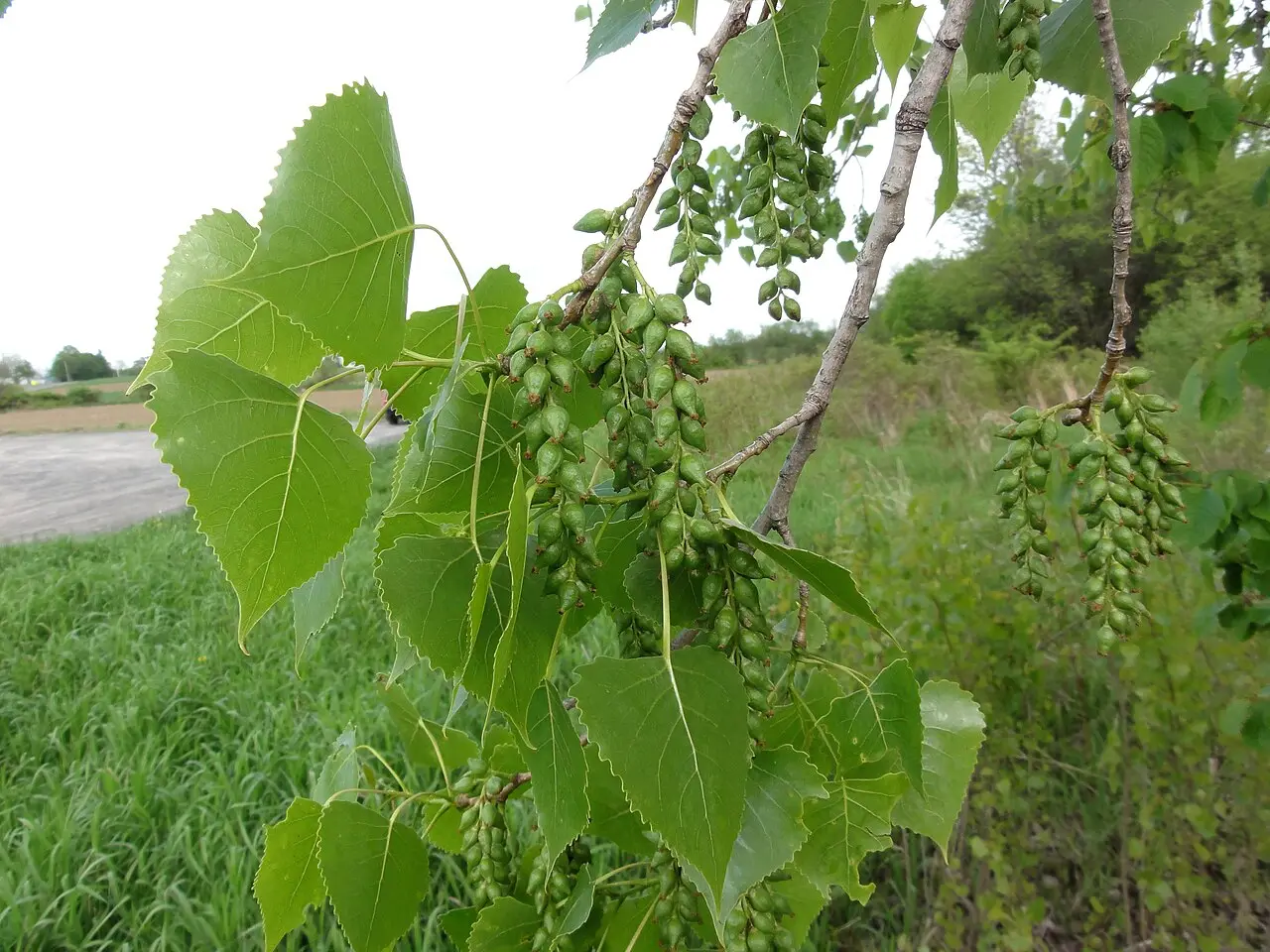
The cottonwood is a fast-growing tree with a broad, open crown, found along stream banks, river bottoms and lake shores. Its leaves are broadly triangular and toothed, on flattened stalks, glossy green in summer and bright yellow in fall. The bark is gray and deeply furrowed. Male and female catkins grow on separate trees in spring, and in early summer the female trees release seeds on tufts of cottony white hairs that give the tree its name. On the Great Plains, mature trees reach about 80 to 90 feet, young trees can grow 6 to 12 feet a year, and the cottonwood is widely planted in windbreaks. Its limbs often break in strong winds, and its wood is light and soft, warps easily and is hard to season.
Questions people ask
- Which states have the cottonwood as state tree?
- Kansas and Nebraska name the cottonwood, and Wyoming names the plains cottonwood, a subspecies of the same tree.
- Why is it called a cottonwood?
- Because female trees release their seeds on tufts of cottony white hairs in early summer.
- Why did settlers value cottonwoods?
- They grew along streams on the open plains, grew fast and could be planted from shoots. Kansas settlers used them for building, and Nebraska settlers carried shoots to plant on their claims.
Sources
- Eastern cottonwood (Silvics of North America) USDA Forest Service
- K.S.A. 73-1001 Kansas Office of Revisor of Statutes
- Nebraska Revised Statutes, Chapter 90 (State Symbols and special acts), sections 90-101 to 90-120 Nebraska Legislature