Common blue violet, the state flower of three states
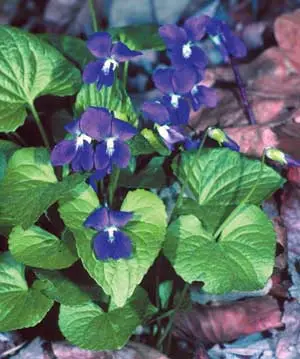
The common blue violet, Viola sororia, is the state flower of three states, under three names: the wood violet in Wisconsin, adopted in 1949, the violet in Rhode Island, 1968, and the common meadow violet in New Jersey, 1972. In all three, schoolchildren or early resolutions picked it decades before the law caught up. It is a small native wildflower of spring woods, fields and lawns.
The 3 states
| State | Designation | Name in state law | Adopted |
|---|---|---|---|
| Wisconsin | State flower | Wood violetCh. 218, Laws of 1949; Wis. Stat. § 1.10(3)(e) | 1949 |
| Rhode Island | State flower | VioletR.I. Gen. Laws § 42-4-9 (P.L. 1968, ch. 15) | 1968 |
| New Jersey | State flower | Common meadow violetN.J.S.A. 52:9A-2 (L.1971, c.444) | 1972 |
Chosen early, adopted late
The violet’s story is much the same in all three states: an early choice by children or a resolution, then a long wait for the law. Rhode Island’s schoolchildren picked the violet in a vote announced on Arbor Day 1897, but the Legislature did not make it official until 1968, and the state says that made Rhode Island the last state to adopt an official flower. Wisconsin’s children narrowed the candidates to four in 1908, the violet, wild rose, trailing arbutus and white water lily, and the violet won a final vote on Arbor Day 1909; the Legislature made it official in 1949. New Jersey named the violet by resolution in 1913, but the resolution lapsed, a 1961 bill failed, and the law finally passed in 1972.
How to recognize it
The common blue violet is a low perennial, usually 3 to 10 inches tall, with heart-shaped, toothed leaves that grow from the base of the plant. Its flowers have five petals, usually purple-blue with a white throat, and the two side petals carry tufts of hairs. It blooms in spring, and in summer it also makes small flowers that never open but still set seed.
Small but useful
The violet grows in woods, fields, stream banks, roadsides and lawns, where it often spreads like a weed. It is one of the first spring food sources for bees and a host plant for fritillary butterfly caterpillars, and ants carry off its seeds for their oily attachments, spreading the plant. The young leaves and flowers are edible.
Questions people ask
- Which states have the violet as their state flower?
- Wisconsin, Rhode Island and New Jersey all name Viola sororia. Illinois also has a violet as its state flower.
- Why did it take so long for these states to adopt the violet?
- Rhode Island's schoolchildren chose it in 1897 and Wisconsin's in 1909, but the legislatures did not act until 1968 and 1949. New Jersey named it by resolution in 1913, but that lapsed, and the law came in 1972.
- Are violets edible?
- The young leaves and flowers are edible.
- Is the common blue violet native?
- Yes, to eastern and central North America, including all three states.
Sources
- Viola sororia Lady Bird Johnson Wildflower Center
- Wisconsin State Symbols (Wisconsin Blue Book 2007-2008, pp. 962-966) Wisconsin Legislative Reference Bureau
- State Symbols RI.gov (State of Rhode Island)
- New Jersey State Symbols research guide: Violet New Jersey State Library