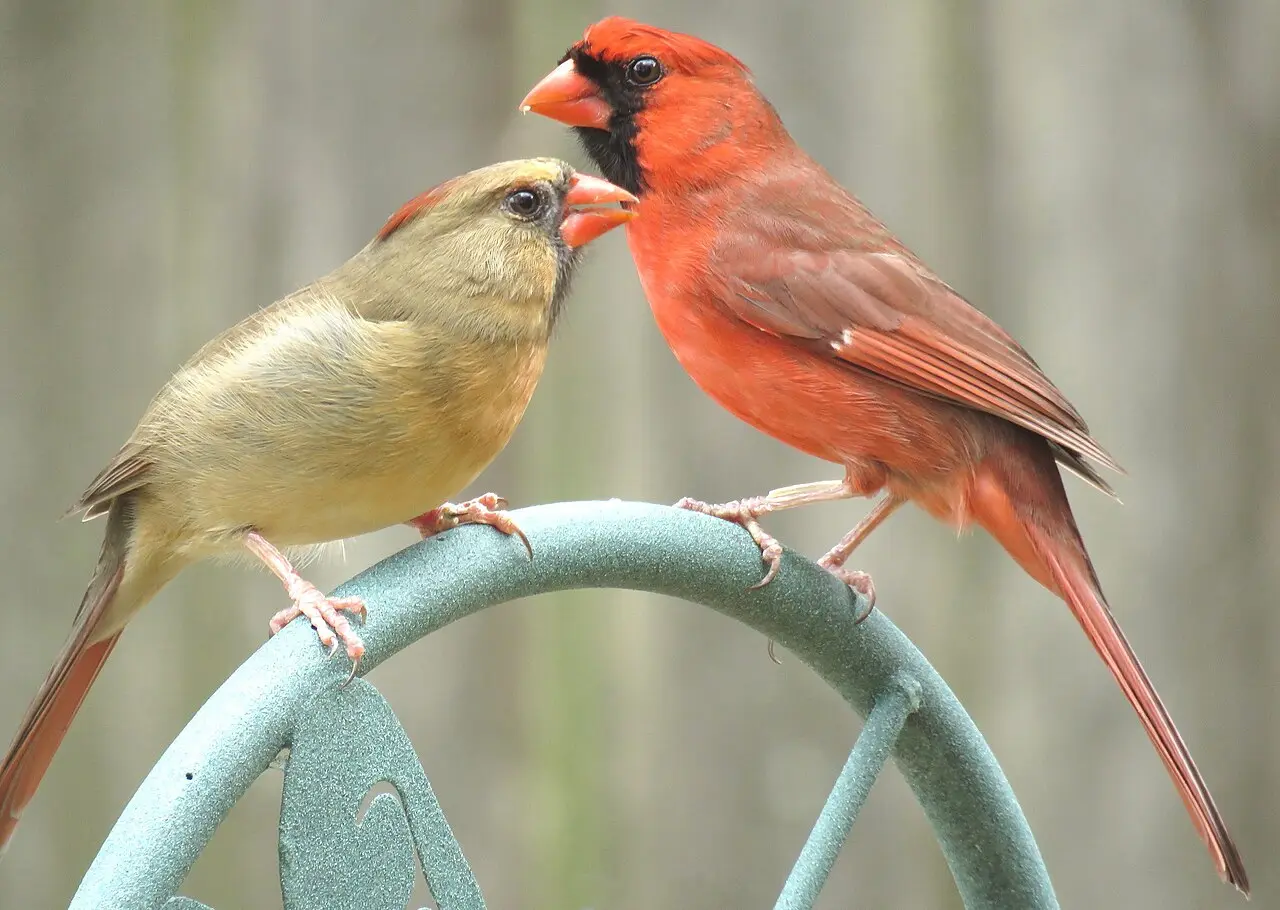
Northern cardinal, the state bird of seven states
The northern cardinal is the most popular state bird in the country, chosen by seven states: Kentucky first, in 1926, then Illinois, Indiana, Ohio, North Carolina, West Virginia and Virginia. The bright red male with its pointed crest is easy to recognize, it sings all year, and it stays through the winter, which helps explain why so many schoolchildren and voters picked it.
The 7 states
| State | Designation | Name in state law | Adopted |
|---|---|---|---|
| Kentucky | State bird | Kentucky cardinal (northern cardinal)KRS 2.080 | 1926 |
| Illinois | State bird | Northern cardinal5 ILCS 460/10 | 1929 |
| Indiana | State bird | Cardinal (northern cardinal)IC 1-2-8-1 (Acts 1933, c.223) | 1933 |
| Ohio | State bird | Northern cardinalOhio Rev. Code § 5.03 | 1933 |
| North Carolina | State bird | CardinalN.C. Sess. Laws 1943, c. 595 (G.S. 145-2) | 1943 |
| West Virginia | State bird | Northern cardinalHouse Concurrent Resolution No. 12 (1949) | 1949 |
| Virginia | State bird | Northern cardinalVa. Code § 1-510 | 1950 |
Seven states, one bird
No bird has been chosen by more states than the northern cardinal. Kentucky went first, by a resolution approved on February 17, 1926; its law calls the bird the native redbird, commonly known as the Kentucky cardinal. Illinois followed in 1929, after schoolchildren picked the cardinal over the bluebird, meadowlark, quail and oriole. Indiana and Ohio both adopted it in 1933, North Carolina in 1943, West Virginia in 1949 and Virginia in 1950.
Chosen by the public
Many of these choices came from public votes. In Illinois, schoolchildren voted at the suggestion of a women’s club. In North Carolina the state Bird Club ran a poll in which more than 23,000 votes were cast for 26 birds; the cardinal led with about 5,000. The North Carolina vote came a decade after the Legislature had briefly made the Carolina chickadee the state bird in 1933 and repealed it about a week later, partly because lawmakers disliked its nickname, the tomtit. In West Virginia, schoolchildren and civic groups chose the cardinal over 10 other birds by more than 11,000 votes.
Why the cardinal
The cardinal suits the role. The male is bright red all year, with a pointed crest and a black face, the only red bird with a crest in eastern North America, and the female has the same crest and heavy reddish bill in warm brown. Both sing loud, clear whistles, often written as what-cheer, cheer, cheer. And cardinals do not migrate: they live in all seven states year-round, visiting backyard feeders in every season.
A bird doing well
The northern cardinal is widespread and abundant. Once mainly a bird of the Southeast, it has spread north into southeastern Canada over the past century, and Virginia’s breeding bird atlas estimated about three million cardinals in that state alone, the most of any species it modeled.
Questions people ask
- Which states have the cardinal as their state bird?
- Seven - Illinois, Indiana, Kentucky, North Carolina, Ohio, Virginia and West Virginia.
- Which state chose the cardinal first?
- Kentucky, by a resolution approved February 17, 1926. Virginia, in 1950, was the last of the seven.
- Why is the cardinal such a popular state bird?
- It is bright red, easy to recognize, lives in these states all year and sings in every season. In several states it won public votes by wide margins, such as more than 11,000 votes in West Virginia in 1949.
- Is the cardinal the most common state bird?
- Yes. No other bird is the state bird of more than seven states; the western meadowlark is next, with six.
Sources
- Northern Cardinal National Audubon Society
- KRS 2.080 Kentucky cardinal (northern cardinal) Kentucky Legislative Research Commission
- Official State Symbols, 2019-2020 Illinois Blue Book Illinois Secretary of State
- Indiana State Bird Indiana Historical Bureau
- Ohio Revised Code 5.03 - State Bird Onecle (copy of the Ohio Revised Code)
- State Bird of North Carolina: Cardinal NCpedia (State Library of North Carolina)
- Official State Symbols of West Virginia West Virginia Legislature
- Have you heard about the state bird? Beyond the cardinal numbers Cardinal News