Mayflower, the state flower of Massachusetts
The state flower of Massachusetts is the mayflower, also called trailing arbutus or ground laurel, adopted on May 1, 1918. It is a low evergreen plant that creeps along the forest floor and opens clusters of sweetly fragrant pink and white flowers in early spring. It shares its name with the Pilgrims' ship, and Massachusetts law still fines anyone who digs it up.
How to recognize it
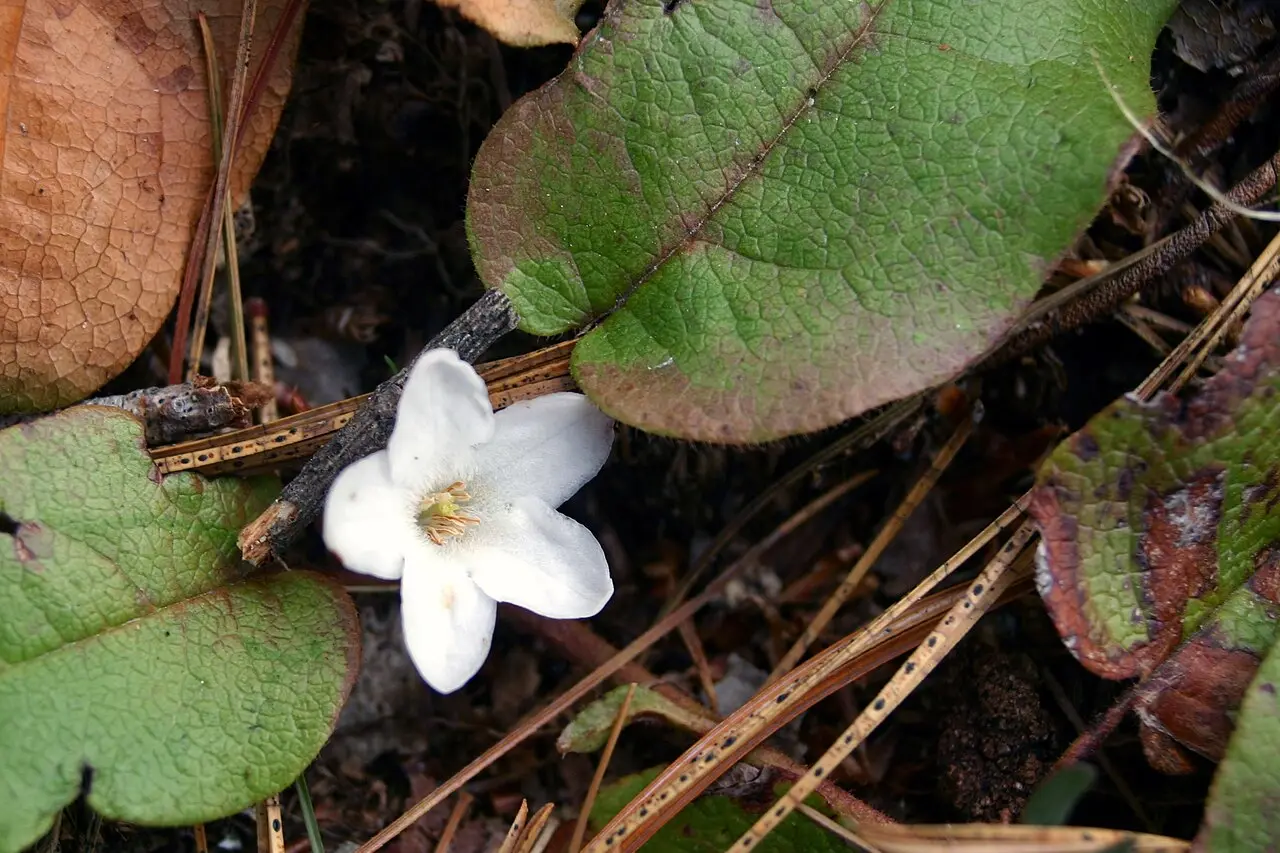
The mayflower is a low evergreen plant whose woody stems creep along the ground, rooting as they go. Its leaves are leathery and oval, an inch to four inches long, with hairy stalks, and they stay green all winter. In early spring it opens clusters of two to ten small, five-petaled flowers, pink to white, tucked among the leaves close to the ground. The flowers have a sweet, spicy fragrance, and finding them often means kneeling and brushing back fallen leaves.
Its seeds are spread by ants, which carry them away along with a soft, nutritious tissue attached to each one.
Where it grows
The mayflower is native to eastern North America and grows in all six New England states. In Massachusetts it grows in woods and along forest edges on acidic, often sandy or rocky soils, frequently under or near pines and other evergreens.
Where to see it
Look in early spring, usually April, in open woods and along trails and forest edges with sandy or rocky soil, especially under pines. The flowers are small and low, so watch the ground, and use your nose: their fragrance is often the first clue.
A protected flower
The mayflower became the state flower on May 1, 1918. Within a few years it was becoming scarce, partly because people dug it up or picked it in great quantities, and in 1925 Massachusetts made digging it up an offense. The current law, section 7 of chapter 2 of the General Laws, sets fines for damaging the plant on public land or on private land without the owner’s permission, and a higher fine for anyone who does it in disguise or secretly at night.
The protection seems to have worked. Although the state’s fact book still describes the mayflower as having been on the endangered list since 1925, Native Plant Trust now ranks it secure and widespread in Massachusetts.
A Pilgrim name
The flower’s common name links it to the Mayflower, the ship that carried the Pilgrims to Plymouth in 1620, and according to tradition it was one of the first flowers they saw after their first hard winter.
Questions about the Massachusetts state flower
- What is the state flower of Massachusetts?
- The mayflower, or trailing arbutus (Epigaea repens), adopted on May 1, 1918.
- Is it illegal to pick mayflowers in Massachusetts?
- Massachusetts law sets fines for damaging or digging up mayflowers on public land, or on private land without the owner's permission, with a higher fine for doing it in disguise or secretly at night.
- When does the mayflower bloom?
- In early spring, often in April, sometimes while patches of snow remain.
- Is the mayflower endangered in Massachusetts?
- No. The state's fact book says it was put on an endangered list in 1925, but Native Plant Trust now ranks it secure and widespread in Massachusetts.
Sources
- Epigaea repens (trailing arbutus) Native Plant Trust (Go Botany)
- Epigaea repens plant profile USDA PLANTS Database
- "Massachusetts Facts: A Review of the History, Government, and Symbols of the Commonwealth" Secretary of the Commonwealth of Massachusetts