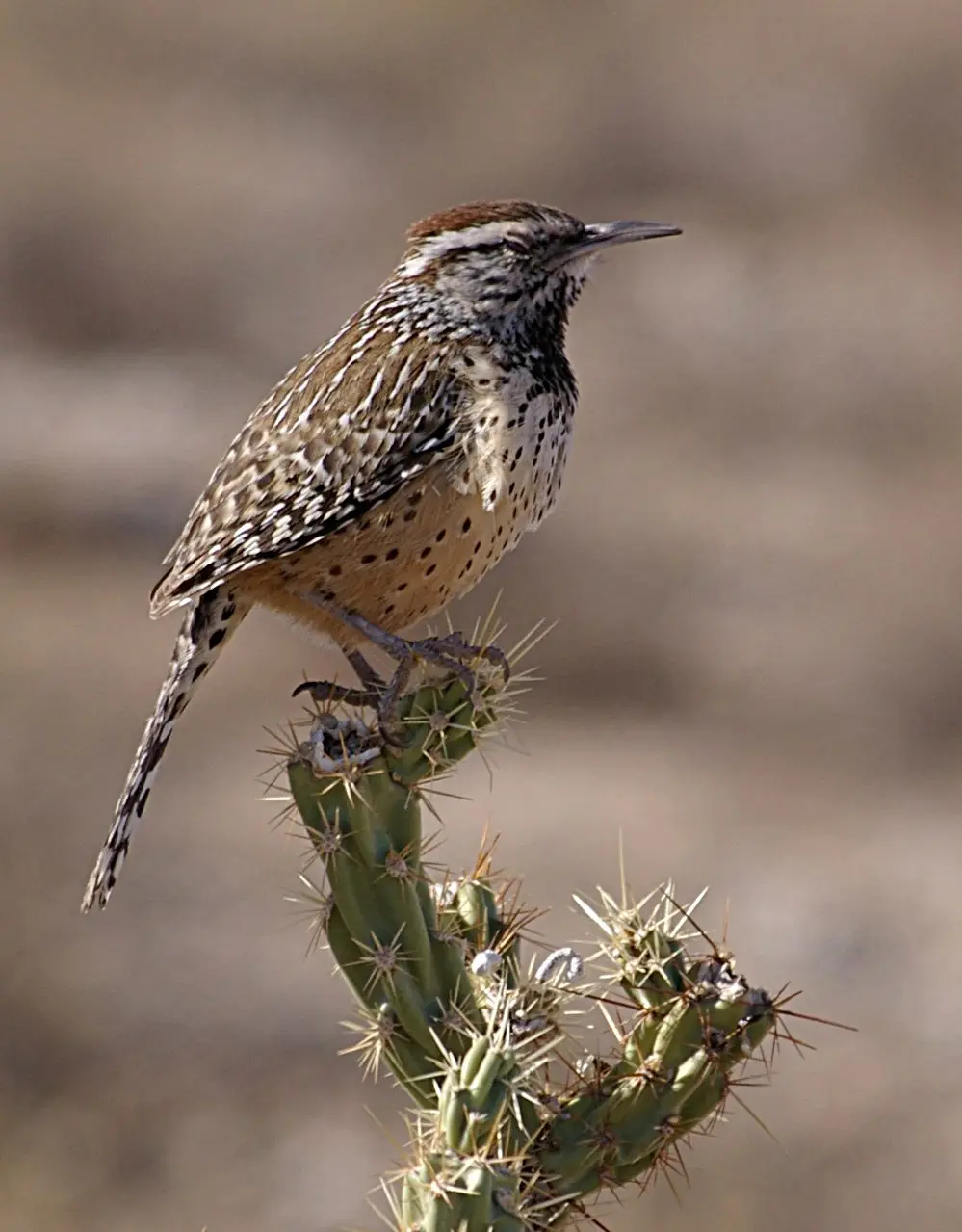
Cactus wren, the state bird of Arizona
The state bird of Arizona is the cactus wren, the largest wren in the United States, adopted in 1931. It is a brown, heavily spotted desert bird with a bold white eyebrow and a harsh, chugging call, and it builds bulky, football-shaped nests among the spines of cholla cactus.
How to recognize it
The cactus wren is big for a wren, about seven to nine inches long, and looks more like a small thrasher than the tiny wrens of eastern gardens. It is brown above and heavily barred, streaked and spotted all over, with a dense cluster of dark spots on its chest and a bold white stripe over each eye. Males and females look alike.
You will usually hear it first. Its call is a harsh, rapid, mechanical chug-chug-chug-chug, often compared to a car that will not start. Pairs greet each other with the call while spreading their wings and tails.
The easiest way to find one may be its nest. Cactus wrens build bulky, football-shaped nests of grass and twigs with a side entrance tunnel, usually wedged in a cholla cactus, a yucca or a thorny tree, where they are easy to spot.
Where it lives
The cactus wren is a bird of the desert Southwest and Mexico. It lives in low, dry country with cactus and thorny shrubs, especially where cholla grows, and also in mesquite brush and desert towns. In Arizona it is common across the Sonoran Desert in the southern and central parts of the state, and it stays there all year. Saguaro National Park calls it one of the best-known birds of the Sonoran Desert.
How it lives
Cactus wrens feed mainly on insects, including beetles, ants, wasps and grasshoppers, plus spiders and the occasional small lizard. Up to about a fifth of their diet is plant food such as cactus fruit, berries and seeds, and they get much of the water they need from their food.
Pairs may stay together for life and defend a territory all year. The male often builds extra nests, which the pair uses for roosting at night and sometimes for raising a later brood.
Where to see one
Visit Saguaro National Park, on both sides of Tucson, and look in stands of cholla and around the big saguaros, or listen for the rasping call. In Phoenix and Tucson, cactus wrens are common in desert parks and in neighborhoods landscaped with native plants.
Still common
The cactus wren remains widespread and abundant in its main range in the Southwest. Surveys suggest it has declined in parts of Texas, and the small population in the coastal sage scrub of southern California may be threatened.
The state bird since 1931
Arizona adopted the cactus wren in 1931. The law, now section 41-854 of the Arizona Revised Statutes, names it “Coues’ cactus wren,” using an old scientific name, Heleodytes brunneicapillus couesi. Today the species is classified as Campylorhynchus brunneicapillus.
Questions about the Arizona state bird
- What is the state bird of Arizona?
- The cactus wren (Campylorhynchus brunneicapillus), adopted in 1931. The statute names it Coues' cactus wren, using an older scientific name.
- Why does the cactus wren nest in cactus?
- The spines of cholla and other cactus protect the nest from predators such as snakes and other animals. The wrens move among the spines without getting hurt.
- Where can I see a cactus wren?
- Across the Sonoran Desert of southern and central Arizona, all year round. Saguaro National Park near Tucson is a good place, and the birds are common in desert neighborhoods of Phoenix and Tucson.
Sources
- Cactus Wren National Audubon Society
- Birds of Saguaro National Park National Park Service
- A.R.S. § 41-854 (state bird) Arizona State Legislature