Washington state symbols
Washington has 27 official state symbols, all set out in Chapter 1.20 of the Revised Code of Washington. The oldest are the seal of 1889 and the flag of 1923; the newest is bull kelp forests, the state marine forest, adopted in 2025. Schoolchildren proposed many of the others, from the green darner dragonfly to the Olympic marmot and the Walla Walla sweet onion. The nickname and motto, though widely used, are not official.
Tree, flower and bird
Washington’s first natural symbol was its tree. After an Oregon newspaper ribbed Washington in 1946 for lacking one and suggested the western hemlock, Washington papers backed the western red cedar instead, but Representative George Adams of Mason County argued the hemlock would be the mainstay of the timber industry, and his bill became law in 1947. The coast rhododendron, chosen by Washington women in an 1892 ballot, became the state flower in 1949, and the willow goldfinch, after two rival informal votes, the state bird in 1951.
Fish and wildlife
The steelhead trout, the sea-run form of the rainbow trout, became the state fish in 1969. Students in more than 100 school districts helped choose the common green darner dragonfly, nicknamed the “mosquito hawk,” as state insect in 1997. Second graders at Crescent Harbor Elementary School in Oak Harbor spent two years lobbying for the orca, the state marine mammal since 2005, and in 2009 fourth and fifth graders at Wedgwood School in Seattle won the Olympic marmot, which lives only on the Olympic Peninsula, its title as state endemic mammal. A third-grade class in Olympia proposed the Pacific chorus frog, found in every county, as state amphibian in 2007. The Olympia oyster, the only oyster native to Washington, became the state oyster in 2014.
Fossils and stones
Students near Cheney campaigned for four years to make the Columbian mammoth the state fossil, adopted in 1998. In 2023 Washington named a state dinosaur, Suciasaurus rex, the informal name for a partial left thigh bone of a theropod found in 2012 at Sucia Island State Park, the only dinosaur fossil ever found in the state. Petrified wood, formed when ancient lava flows buried logs that were later replaced by silica, became the state gem in 1975; Ginkgo Petrified Forest State Park near Vantage is the best place to see it.
Farm and table
Washington leads the nation in apple production, and the apple became the state fruit in 1989, the centennial year, along with bluebunch wheatgrass, the state grass, a symbol of eastern Washington’s rangelands. The Walla Walla sweet onion, whose line is traced to seed a French soldier brought from Corsica, became the state vegetable in 2007, after a seventh-grade class project at Eatonville Middle School.
Songs, ships and sports
Woody Guthrie wrote “Roll On, Columbia, Roll On” while working for the Bonneville Power Administration in the early 1940s; it became the state folk song in 1987. The square dance is the state dance, and the state tartan, designed for the 1989 centennial, uses black for the eruption of Mount St. Helens. The Lady Washington, a replica of an 18th-century brig built in Aberdeen, is the state ship. Palouse Falls, a 198-foot drop described by the law as the last year-round falls left from the Ice Age floods, became the state waterfall in 2014. Pickleball, invented in 1965 at a Bainbridge Island summer cabin by Joel Pritchard and his friends Bill Bell and Barney McCallum, became the state sport in 2022, and in 2025 bull kelp forests became the state marine forest.
Flag, seal, song, motto and nickname
-
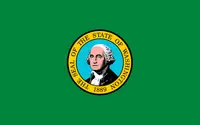 1923
A dark green field with the state seal, bearing George Washington's portrait, in the center; an optional fringe must be gold or yellow to match the seal.
RCW 1.20.010 (1923 c 174; fringe amended 1925)
- 1889
Great Seal of Washington
SealA ring lettered 'The Seal of the State of Washington' and '1889' surrounds a portrait of George Washington. Olympia jeweler Charles Talcott drew the 1889 original; the current version, adopted in 1967, uses a Gilbert Stuart portrait chosen by Seattle designer Richard Nelms.
The first seal was drawn in 1889 by the Olympia jeweler Charles Talcott, who laid it out with an ink bottle and a silver dollar; the die-cutter copied Washington's face from a cough-remedy packing box. The current seal, adopted in 1967, uses a Gilbert Stuart portrait chosen by the Seattle designer Richard Nelms. The seal is for official use only unless the secretary of state authorizes it in writing.
Use restricted: Chapter 43.04 RCW: the seal is for official use only unless the secretary of state authorizes it in writing; advertising, endorsement and political-campaign use are prohibited, and willful violation is a misdemeanor.
Wash. Const. art. XVIII, sec. 1; RCW 1.20.080
- 1959
Washington, My Home
SongThe lyrics are still under copyright, so they are not reproduced here. Official page.
"Washington, My Home," by Helen Davis, became the state song in 1959. Woody Guthrie's "Roll On, Columbia, Roll On" is the state folk song.
RCW 1.20.070
-
Al-ki
MottoChinook Jargon, meaning “By and by”.
Animals
-
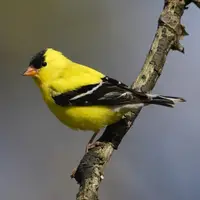 1951
Willow goldfinch (American goldfinch)
BirdSpinus tristisSchoolchildren picked the western meadowlark in a 1928 vote, but several other states already claimed that bird. In 1931 the Washington Federation of Women's Clubs held its own vote and the goldfinch came out ahead of the tanager, song sparrow, junco and pileated woodpecker. With two informal favorites in play, a 1951 schoolchildren's vote settled on the goldfinch, and the Legislature adopted it that year (1951 c 249).
-
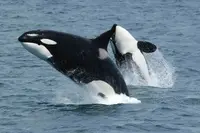 2005
Orca
Marine mammalOrcinus orcaSecond graders at Crescent Harbor Elementary School in Oak Harbor spent two years researching and lobbying for the designation. The law's findings cite orca-watching tourism, the animal's importance in Native American culture and the resident pods of Puget Sound.
- 2009
Olympic marmot
Endemic mammalMarmota olympusFourth and fifth graders at Wedgwood School in Seattle proposed the designation. The marmot lives only on the Olympic Peninsula, making it the one mammal found solely in Washington; it is often seen in summer along Hurricane Ridge in Olympic National Park.
-
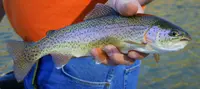 1969
Steelhead trout
FishOncorhynchus mykissThe statute uses the outdated name Salmo gairdnerii; steelhead are the sea-run form of rainbow trout, now classified as Oncorhynchus mykiss. Steelhead return from the ocean to fresh water to spawn and are a mainstay of Washington's sport fishing.
-
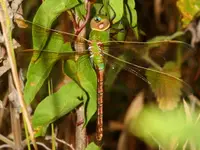 1997
Common green darner dragonfly
InsectAnax juniusStudents at Crestwood Elementary School in Kent brought the idea to lawmakers, and students in more than 100 school districts took part in choosing it. Nicknamed the 'mosquito hawk,' it has a bright green head and thorax and eats large numbers of insect pests.
-
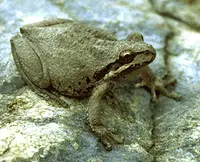 2007
Pacific chorus frog
AmphibianPseudacris regillaA third-grade class at Boston Harbor school in north Olympia proposed it. The frog is found in every county on both sides of the Cascades, which supporters argued made it a fitting emblem for the whole state.
- 2014
Olympia oyster
OysterOstrea luridaIt is the only oyster native to Washington; the statute notes it has also been called the Native, Western or Shoalwater oyster.
RCW 1.20.180 · Washington State Legislature, Office of the Code Reviser
Plants and fungi
-
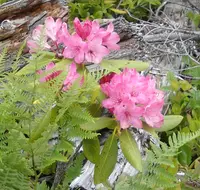 1949
Coast rhododendron
FlowerRhododendron macrophyllumIn 1892, before Washington women could vote, they chose the rhododendron over clover in a statewide ballot so the state would have a flower to show at the 1893 Chicago World's Fair. The Legislature first adopted a state flower in 1949 (1949 c 18) and in 1959 amended the law to name the native species Rhododendron macrophyllum specifically.
-
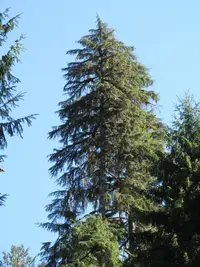 1947
Western hemlock
TreeTsuga heterophyllaAfter an Oregon newspaper ribbed Washington in 1946 for lacking a state tree and suggested the western hemlock, Washington papers backed the western red cedar instead. Rep. George Adams of Mason County argued the hemlock would be the mainstay of the state's timber industry, and his bill became law in 1947.
- 1989
Bluebunch wheatgrass
GrassPseudoroegneria spicataThe statute uses the older name Agropyron spicatum; the Legislature's symbols page gives the current name Pseudoroegneria spicata. It was adopted in the 1989 centennial session as a symbol tied to eastern Washington's rangelands and farming history.
- 2025
Bull kelp forests
Marine forestNereocystis luetkeanaThe 2025 law cites bull kelp's value as habitat for orcas, salmon and rockfish and its cultural importance to tribal nations. It also notes steep declines of bull kelp in south and central Puget Sound.
RCW 1.20.220 · Washington State Legislature, Office of the Code Reviser
Earth and sky
- 2023
Suciasaurus rex
DinosaurThe name is an informal nickname for a partial left thigh bone of a theropod found in May 2012 at Sucia Island State Park in the San Juan Islands; it has not been assigned to a formal genus or species. It is the only dinosaur fossil discovered in Washington, and some scientists think the animal lived farther south and its remains were carried north by shifting crust.
RCW 1.20.041 · Washington State Legislature, Office of the Code Reviser
- 1998
Columbian mammoth
FossilMammuthus columbiStudents at Windsor Elementary School near Cheney campaigned for four years to win the designation. Columbian mammoth fossils have been found in Washington, including on the Olympic Peninsula.
- 1975
Petrified wood
GemstoneAncient lava flows buried logs that were later replaced by silica, preserving the wood's structure in stone. Ginkgo Petrified Forest State Park near Vantage is the best-known place to see it.
- 2014
Palouse Falls
WaterfallThe falls drop 198 feet and the law's findings describe them as the last year-round falls remaining from the Ice Age floods. The legislative findings also note the area's Palouse Native American heritage, its tie to the Appaloosa horse and mentions in the Lewis and Clark journals.
RCW 1.20.170 · Washington State Legislature, Office of the Code Reviser
Food and drink
- 1989
Apple
FruitMalus domesticaWashington leads the nation in apple production, and the fruit was named a state symbol in 1989, the state's centennial year.
- 2007
Walla Walla sweet onion
VegetableAllium cepaThe bill was a class project of a seventh-grade honors social studies class at Eatonville Middle School, after earlier attempts by a Kirkland junior high. The onion's line is traced to seed a French soldier brought from Corsica to the Walla Walla Valley more than a century ago.
Songs, words and language
- 1987
"Roll On, Columbia, Roll On" by Woody Guthrie
Folk songThe Bonneville Power Administration hired Woody Guthrie in the early 1940s for a 30-day stint to write songs for a film promoting electricity from the new Columbia River dams. Of the 26 songs he wrote for the project, this tribute to the Columbia became the best known; the Legislature made it the state folk song in 1987.
Culture and history
- 1979
Square dance
DanceThe dance traces to the quadrille that pioneers brought west; dancers follow a caller through a series of figures.
- 1991
Washington State tartan
TartanMargaret McLeod van Nus and Frank Cannonita of the Vancouver USA Country Dancers designed it in 1988 for the state centennial. Green stands for forests, blue for water, white for snowy peaks, red for apples and cherries, yellow for grain and black for the eruption of Mount St. Helens. The law directs the secretary of state to register the tartan with the Scottish Register of Tartans.
- 2007
Lady Washington
ShipThe brig is a replica of the 18th-century Lady Washington, launched March 7, 1989 after being built in Aberdeen by the Grays Harbor Historical Seaport Authority. The Secretary of State's office holds a mortgage on the vessel to protect the state's investment in it.
- 2022
Pickleball
SportJoel Pritchard, later lieutenant governor and a member of Congress, invented the game in 1965 at his Bainbridge Island summer cabin with friends Bill Bell and Barney McCallum. Lacking badminton gear, the fathers improvised with ping-pong paddles, a net and a plastic wiffle ball.
RCW 1.20.200 · Washington State Legislature, Office of the Code Reviser
Places and institutions
- 1995
Washington Park Arboretum
ArboretumThe statute names it 'an official arboretum' of the state; the roughly 200-acre Seattle site is managed jointly by the City of Seattle and the University of Washington.
RCW 1.20.120 · Washington State Legislature, Office of the Code Reviser
Questions about Washington's symbols
- What is the Washington state bird?
- The willow goldfinch, the western form of the American goldfinch, adopted in 1951.
- What is the Washington state flower?
- The coast rhododendron, chosen by Washington women in 1892 and adopted by the Legislature in 1949.
- What is the Washington state sport?
- Pickleball, adopted in 2022. It was invented in 1965 at a summer cabin on Bainbridge Island.
- Does Washington have a state dinosaur?
- Yes, Suciasaurus rex, adopted in 2023, the informal name for a partial thigh bone of a theropod found on Sucia Island in 2012, the only dinosaur fossil ever found in Washington.
- What is the Washington state marine mammal?
- The orca, adopted in 2005 after second graders in Oak Harbor spent two years lobbying for it.
Photo credits (8)
- Flag of Washington: WA Secretary of State, Public domain, via Wikimedia Commons
- Willow goldfinch: Mdf, CC BY-SA 3.0, via Wikimedia Commons
- Coast rhododendron: Robert Dunning, CC BY-SA 3.0, via Wikimedia Commons
- Western hemlock: Doug Kerr from Albany, NY, United States, CC BY-SA 2.0, via Wikimedia Commons
- Orca: Robert Pittman, Public domain, via Wikimedia Commons
- Steelhead trout: Mike Anderson, CC BY-SA 3.0, via Wikimedia Commons
- Common green darner dragonfly: Bruce Marlin, CC BY 3.0, via Wikimedia Commons
- Pacific chorus frog: Unknown author, Public domain, via Wikimedia Commons
Something out of date? Tell us and we will check it against the law.
Sources
- Washington State Flag Washington Secretary of State
- History of the State Seal Washington Secretary of State
- Washington State Legislature: Washington State Song Washington State Legislature
- Chapter 1.20 RCW (state symbols) Washington State Legislature
- State symbols Washington State Legislature