Purple lilac, the state flower of New Hampshire
The state flower of New Hampshire is the purple lilac, adopted in 1919. It is not native: the common lilac comes from the Balkans, and in New Hampshire it was first planted around 1750 at Governor Benning Wentworth's home in Portsmouth, where lilacs still bloom. The Legislature chose it because the tough, long-lived shrub stood for the hardy character of the state's people. It blooms in May.
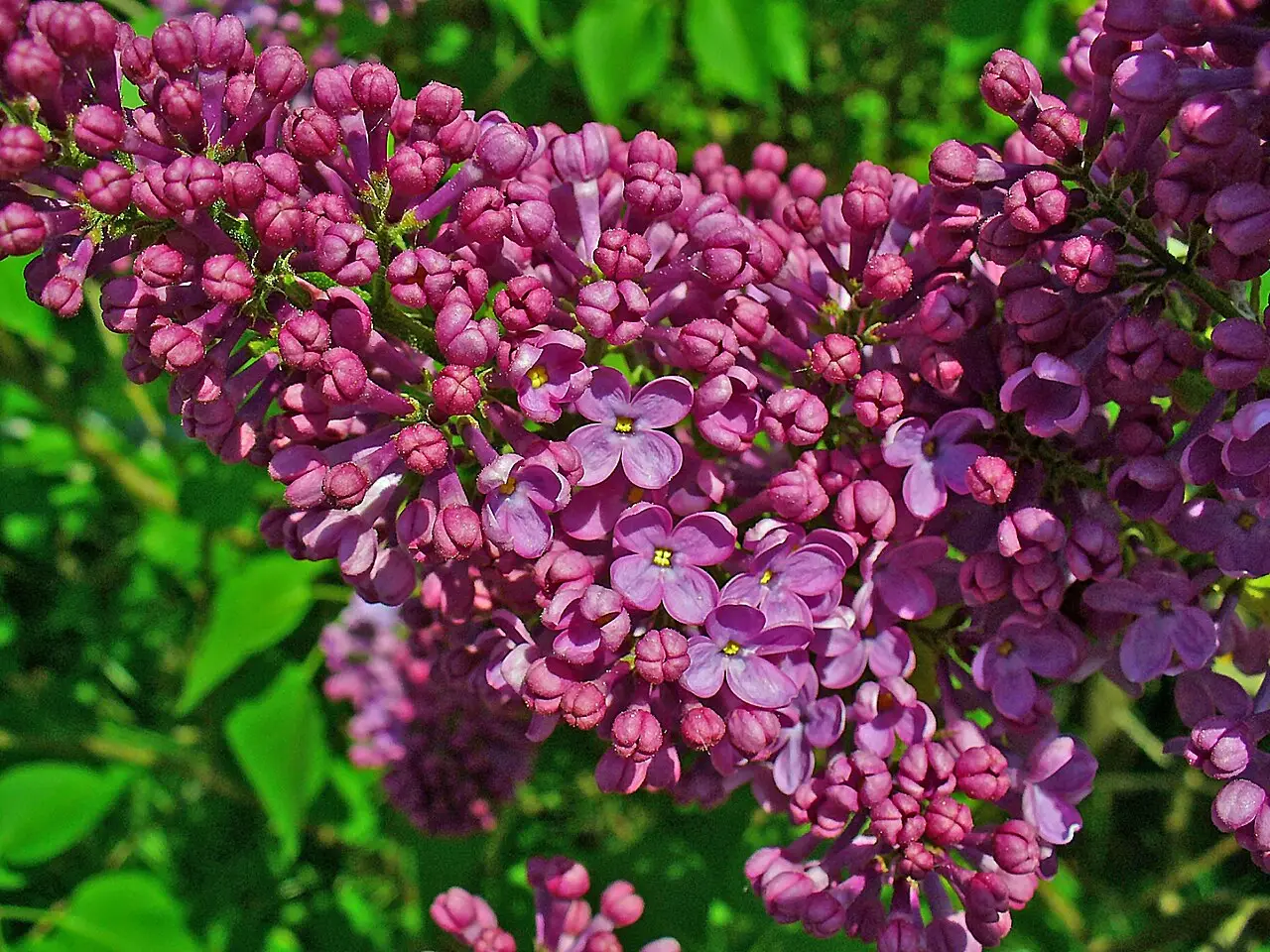
How to recognize it
The common lilac is a multi-stemmed shrub, usually 8 to 16 feet tall and 6 to 12 feet wide. Its small, very fragrant, tubular flowers, each with four or five spreading lobes, are packed into cone-shaped clusters up to about 8 inches long, in colors from white, cream and rose to magenta, lavender and purple. The leaves are heart-shaped to oval, 3 to 6 inches long, in opposite pairs. In New Hampshire it usually blooms from the second to the fourth week of May.
From the Balkans to Portsmouth
The lilac is not native to North America. It comes from the Balkan Peninsula of southeastern Europe. The state historian Leon Anderson traced New Hampshire’s lilacs to plants set out around 1750 at Governor Benning Wentworth’s home in Portsmouth, brought over from England.
Where to see it
Visit the Wentworth-Coolidge Mansion State Historic Site in Portsmouth, a state park and National Historic Landmark, whose lilacs, grown from that English stock, are believed to be among the oldest in North America.
Growing lilacs
The lilac is hardy in USDA zones 3 to 7 and needs a cold winter to flower well, which suits New Hampshire. It prefers full sun and well-drained soil, and by summer it often gets powdery mildew, white patches on the leaves. The University of New Hampshire ran a lilac breeding program for 60 years, the longest continuous one in the United States.
The state flower since 1919
The 1919 Legislature considered a long list of candidates, among them the apple blossom, the purple aster, the wood lily, the mayflower, the goldenrod, the wild pasture rose, the evening primrose and the buttercup. It chose the purple lilac on March 28, 1919, with supporters arguing that the hardy, long-lived shrub stood for the sturdy character of the state’s people. In 1991 New Hampshire added a native state wildflower, the pink lady’s slipper, a woodland orchid.
Questions about the New Hampshire state flower
- What is the state flower of New Hampshire?
- The purple lilac (Syringa vulgaris), adopted on March 28, 1919.
- Is the lilac native to New Hampshire?
- No. The common lilac comes from the Balkan Peninsula in southeastern Europe. In New Hampshire it was first planted around 1750, from English stock. The state wildflower, the pink lady's slipper, is native.
- When do lilacs bloom in New Hampshire?
- Usually from the second to the fourth week of May.
- Where can I see old lilacs in New Hampshire?
- At the Wentworth-Coolidge Mansion State Historic Site in Portsmouth, whose lilacs are believed to be among the oldest in North America.
Sources
- State Flower, New Hampshire Almanac New Hampshire State Library
- Syringa vulgaris North Carolina State Extension Gardener Plant Toolbox
- Purple wonders University of New Hampshire Extension
- Syringa vulgaris, common lilac USDA PLANTS Database
- Cypripedium acaule Aiton, moccasin flower (plant profile) USDA NRCS PLANTS Database