Black-eyed Susan, the state flower of Maryland
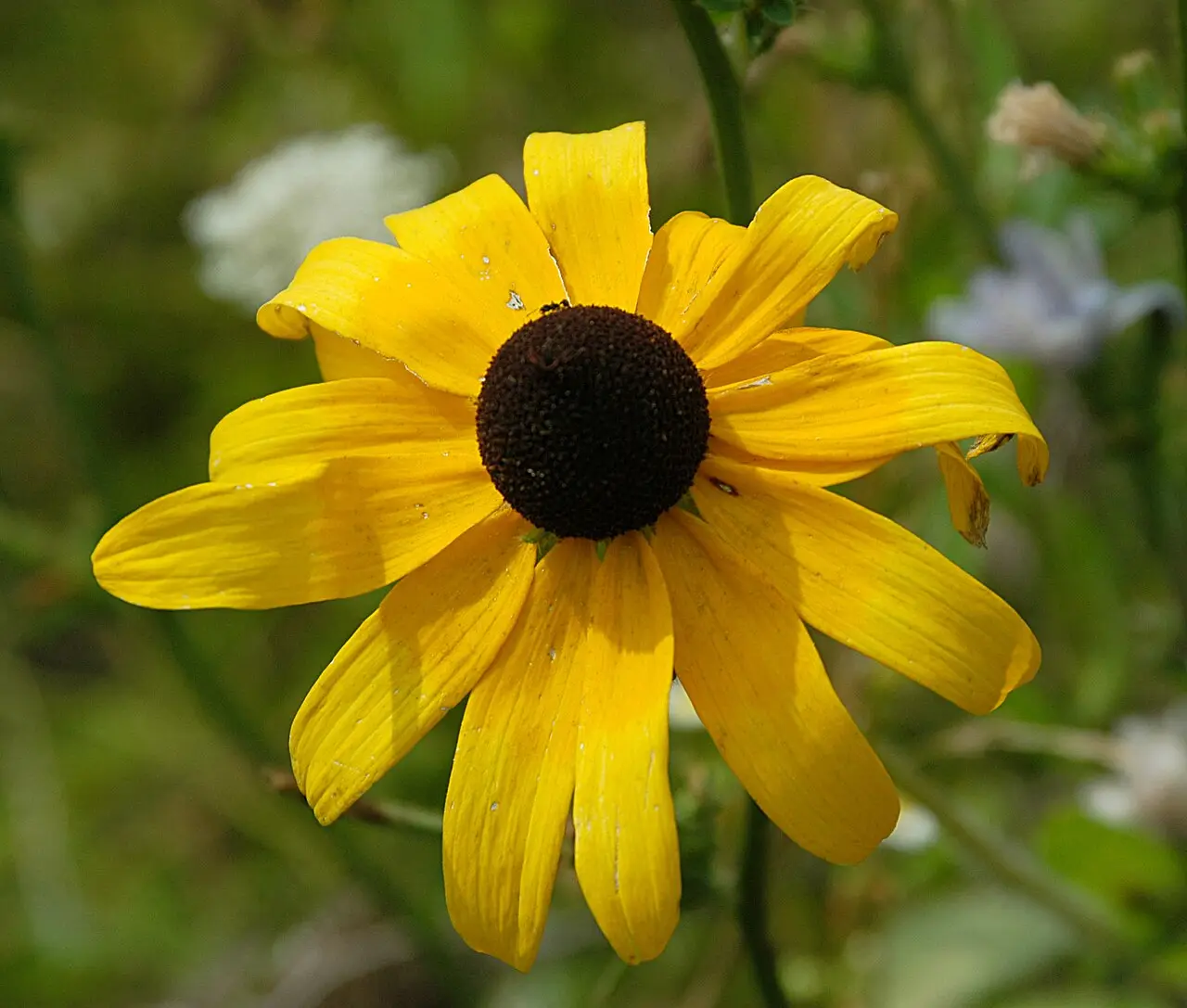
The state flower of Maryland is the black-eyed Susan, adopted as the state's "floral emblem" in 1918. It is a cheerful native wildflower with golden-yellow petals around a dark brown center, blooming in fields and along roadsides from June into October. It is also the symbol of the Preakness Stakes, traditionally run at Pimlico in Baltimore.
How to recognize it
The black-eyed Susan is an upright wildflower, usually one to three feet tall, with stiff, rough, hairy stems. Each flower head is about two to three inches across, with 8 to 20 golden-yellow petals, called rays, surrounding a dark brown, cone-shaped center, the “black eye.” Its leaves are rough and hairy too, with smooth or slightly toothed edges.
It may live as an annual, a biennial or a short-lived perennial, and it belongs to the aster, or sunflower, family. Its scientific name, Rudbeckia hirta, honors the Swedish botanist Olof Rudbeck and his son, and hirta means “rough-hairy.”
Where it grows
The black-eyed Susan is native to Maryland and grows across most of the United States. Two varieties occur in the state. One grows statewide, mostly on disturbed ground such as roadsides and old fields; the other ranges from Western Maryland west to the prairie states, often in woods. It loves sun and tolerates poor soil.
Where to see it
From June into October, look in sunny meadows, old fields, pastures and roadsides anywhere in Maryland. It is also one of the most popular plants in native and pollinator gardens, easy to grow from seed and quick to reseed itself.
Good for wildlife
Black-eyed Susans feed many insects. Bees, flies and butterflies visit their flowers for nectar and pollen, the plant is a host for the caterpillars of the silvery checkerspot butterfly, and in fall goldfinches and other birds eat its seeds.
The state flower since 1918
The General Assembly made the black-eyed Susan Maryland’s floral emblem in 1918. The flower has since become closely tied to the Preakness Stakes, the second race of horse racing’s Triple Crown, run each May. Because real black-eyed Susans do not bloom until summer, the blanket of flowers draped over the Preakness winner is traditionally made of other flowers dressed up to look like them.
Questions about the Maryland state flower
- What is the state flower of Maryland?
- The black-eyed Susan (Rudbeckia hirta), adopted in 1918.
- When does the black-eyed Susan bloom in Maryland?
- From about June into October.
- Is the black-eyed Susan native to Maryland?
- Yes. It is native to Maryland and grows across most of the United States.
- What is the connection between the black-eyed Susan and the Preakness?
- The Preakness Stakes, traditionally run in Baltimore, is nicknamed "the Run for the Black-Eyed Susans," and the winning horse is draped with a blanket of flowers made to look like black-eyed Susans.
Sources
- "Plant Guide: Black-eyed Susan" USDA Natural Resources Conservation Service
- Black-eyed Susan University of Maryland Extension
- Maryland State Flower Maryland State Archives