Illinois state symbols
Illinois has 36 official state symbols. The oldest are the violet and the oak, chosen by schoolchildren in 1907 and 1908; the newest is the black-and-gold bumblebee, signed into law in 2026 and taking effect in 2027. Students proposed most of the list, and it includes some of the most unusual symbols of any state, from a fossil sea monster to a microbe.
Chosen by students
Illinois has let its schoolchildren choose its symbols for more than a century. In 1907 and 1908 children voted for the state flower and tree: the violet beat the wild rose and goldenrod, and “the oak” beat the maple and the elm. In 1928 a women’s club in Macomb proposed a children’s vote for a state bird, and the cardinal won. In 1973 a poll of about 900,000 children narrowed the tree to the white oak.
The tradition has continued. A third-grade class in Decatur proposed the monarch butterfly in 1974 and watched the governor sign the bill. Children chose the white-tailed deer in 1980 and the bluegill in 1986. A class in Joliet campaigned for popcorn as the state snack, a fourth-grade class picked the GoldRush apple as the state fruit, fourth graders in Chatham proposed sweet corn, and eighth graders in Wilmette championed the pirogue, a dugout canoe, as the state artifact. In 2026 eighth graders at Lincoln Junior High School in Naperville won a statewide student vote and testified before lawmakers for the black-and-gold bumblebee, which becomes the state bee on January 1, 2027.
Prairie and farm
Many symbols recall the prairie that once covered most of Illinois. Big bluestem, a grass that can grow taller than a person and whose seed head looks like a turkey’s foot, became the state grass in 1989. Milkweed, the food of monarch caterpillars, became the state wildflower in 2017. The state soil, Drummer silty clay loam, formed under prairie and covers more than 1.5 million acres, almost half of Illinois’s counties.
The farm is well represented too. Corn, which makes up more than half the value of the state’s farm products, is the state grain; sweet corn is the state vegetable, popcorn the snack and the soybean the state bean. Pumpkin pie is the official state pie, because Illinois, around Morton, grows most of the pumpkins eaten in the United States.
A sea monster and a mold
Two symbols stand out. The state fossil is the Tully monster, Tullimonstrum gregarium. Its first fossil was found by an amateur collector, Francis Tully, who took it to Chicago’s Field Museum, where nobody could identify it. It was a soft-bodied sea animal about 300 million years old, and its fossils come almost entirely from the Mazon Creek deposits in Will and Grundy counties.
The state microbe is a single strain of mold, Penicillium rubens NRRL 1951. During World War II, researchers at the federal laboratory in Peoria searched for a mold that could produce penicillin in large amounts. A lab worker, Mary K. Hunt, known as “Moldy Mary,” brought in a moldy cantaloupe from a Peoria market, and its mold turned out to produce far more penicillin than earlier cultures. It made mass production possible. Illinois adopted it in 2021.
Rocks and minerals
Fluorite, adopted in 1965, recalls the mines around Rosiclare and Cave-in-Rock in southern Illinois, which once made the state the country’s top producer. Dolostone, a rock made mostly of the mineral dolomite, became the state rock in 2022, and the giant puffball the state mushroom in 2024.
The main symbols
The flag, the cardinal and the violet each have their own page. The state song, “Illinois,” dates from 1925.
Flag, seal, song, motto and nickname
-
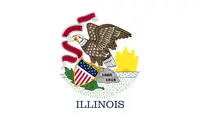 1915
Flag of Illinois
FlagA white field with the central emblem of the Great Seal (an eagle on a boulder holding a banner with the state motto, before a rising sun on the prairie), with the word ILLINOIS in blue below.
Flag Act of 1915 (law July 6, 1915), amended 1969 to add the word ILLINOIS; current flag official July 1, 1970. Seal-banner rules now at 5 ILCS 460/5
- 1867
Great Seal of Illinois
SealAn American eagle on a boulder in the prairie, with the sun rising on the horizon, holds in its beak a banner reading 'State Sovereignty, National Union'; a shield rests against the boulder, which carries the dates 1818 and 1868. The words 'Seal of the State of Illinois' and 'Aug. 26th 1818', the date the first constitution was signed, run around the edge.
Use restricted: The Secretary of State keeps the Great Seal; the seal and flag may be reproduced or used only as allowed by Chapter 5 of the Illinois Compiled Statutes (see 5 ILCS 460/5)
Act passed March 7, 1867 authorizing a new Great Seal (in use since 1868); reproduction rules at 5 ILCS 460/5
- 1925
Illinois
SongThe lyrics are in the public domain. Official page.
5 ILCS 460/35 (words and music at Laws 1925, pp. 602-603)
- 1819
State Sovereignty, National Union
MottoEnglish.
No standalone motto statute; the motto is part of the Great Seal, and the seal act passed March 7, 1867 kept its wording
- 1955
Land of Lincoln
NicknameHonors Abraham Lincoln, who lived and built his political career in Illinois; the General Assembly made it the official state slogan in 1955 and it appears on license plates.
Animals
-
 1929
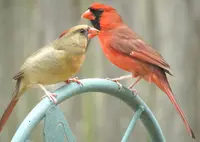
Northern cardinal
BirdCardinalis cardinalisIn 1928 the Macomb branch of the National Federation of Professional Women's Clubs proposed letting schoolchildren pick a state bird. The cardinal won the student vote over the bluebird, meadowlark, quail and oriole. Illinois is one of seven states with the cardinal as state bird; Kentucky adopted it first, by a resolution approved February 17, 1926, three years before Illinois (1929).
-
 1982
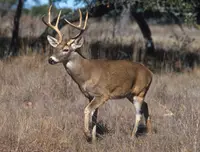
White-tailed deer
MammalOdocoileus virginianusIllinois calls it the state animal. Schoolchildren chose it in 1980 from candidates put forward by the General Assembly and the Illinois State Museum, beating the raccoon, fox squirrel, opossum, red fox and thirteen-lined ground squirrel. The law took effect January 1, 1982, after Governor James R. Thompson signed it. Deer had been almost wiped out in Illinois by the early 1900s and were restocked starting in the 1930s.
- 2017
Shelter dogs and shelter cats
PetThe designation covers dogs and cats living in, or adopted from, a shelter or rescue in Illinois.
5 ILCS 460/47 (P.A. 100-353, eff. 2017-08-25) · Illinois General Assembly
-
 1975
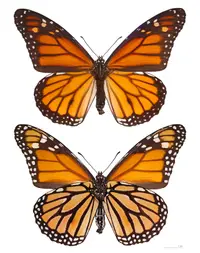
Monarch butterfly
InsectDanaus plexippusA third-grade class at Dennis School in Decatur proposed it in 1974, and Representative Webber Borchers of Decatur sponsored the bill. The class lobbied for the bill and watched Governor Daniel Walker sign it in 1975.
- 2026
Black-and-gold bumblebee
BeeBombus auricomusEighth-graders in Barbara Bell's science class at Lincoln Junior High School in Naperville ran the campaign, which included a statewide student vote and testimony before lawmakers. Governor JB Pritzker signed the bill in July 2026, and the designation takes effect January 1, 2027.
5 ILCS 460/17 (P.A. 104-0539, HB 4438; eff. 2027-01-01) · Office of the Governor of Illinois
-
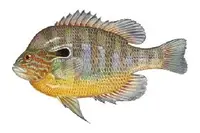 1986
Bluegill
FishLepomis macrochirusIllinois schoolchildren chose the bluegill, the state's most common sunfish, in 1986.
-
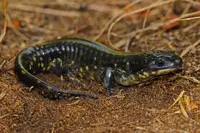 2005
Eastern tiger salamander
AmphibianAmbystoma tigrinumIt won an online vote by students and the public, beating the gray treefrog and American toad, and lawmakers approved it in 2005. It is the largest land-dwelling (terrestrial) salamander in Illinois; aquatic species found in the state, such as the hellbender (averaging 11.5 to 20 inches) and the mudpuppy, grow larger.
5 ILCS 460/85 (P.A. 94-257, eff. 2006-01-01) · Illinois State Museum
-
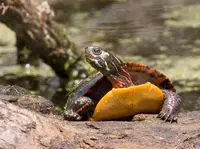 2005
Painted turtle
ReptileChrysemys pictaIt won the same online vote as the salamander, ahead of the eastern box turtle and common garter snake, and was approved in 2005.
5 ILCS 460/90 (P.A. 94-257, eff. 2006-01-01) · Illinois State Museum
- 2022
Eastern milksnake
SnakeLampropeltis triangulumThe statute uses the name Lampropeltis triangulum triangulum. DNR notes the eastern milksnake lives in the northern third of Illinois and the red milksnake in the southern third.
5 ILCS 460/87 (P.A. 102-1098, eff. 2023-01-01) · Illinois General Assembly
Plants and fungi
-
 1908
Violet (native violet)
FlowerViolaAfter Mrs. James C. Fessler of Rochelle suggested a school vote in 1907, children picked the violet over the wild rose and goldenrod, and Senator Andrew J. Jackson of Rockford carried the bill in 1908. The law names the native violet rather than one species; the dooryard violet (Viola sororia) is the most common of Illinois's blue violets.
-
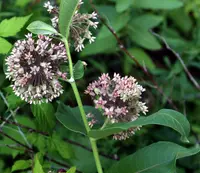 2017
Milkweed
WildflowerAsclepiasThe designation covers the whole milkweed genus, the food plant of monarch caterpillars; Illinois has 19 milkweed species.
5 ILCS 460/43 (P.A. 100-371, eff. 2017-08-25) · Illinois Department of Natural Resources
-
 1973
White oak
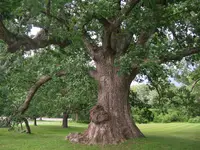
TreeQuercus albaSchoolchildren chose the oak in 1907-1908 (oak 21,897 votes, maple 16,517, elm 5,082), and from 1908 the state tree was simply the native oak. A 1973 poll of roughly 900,000 children picked the white oak over the northern red oak, and the law was amended that year.
- 1989
Big bluestem
GrassAndropogon gerardiiIt won a student poll run by the state Department of Conservation, and Governor Thompson signed the bill on August 31, 1989. Its seed head looks like a bird's foot, which is why it is also called turkey foot.
- 2024
Giant puffball
MushroomCalvatia giganteaThe statute calls it the official State mushroom, while DNR lists it as the state fungus; the governor's office says it came from a student-led effort.
5 ILCS 460/56.3 (P.A. 103-1052, eff. 2024-08-12) · Illinois General Assembly
- 2021
Penicillium rubens NRRL 1951
MicrobePenicillium rubensThis strain came from a moldy cantaloupe bought in Peoria and was studied at the federal research lab there; it yielded far more penicillin than earlier cultures and made mass production possible. The designation honors that Peoria lab work, including lab worker Mary K. Hunt ('Moldy Mary').
5 ILCS 460/105 (P.A. 102-402, HB 1879; eff. 2022-01-01) · Illinois Department of Natural Resources
Earth and sky
- 1989
Tully monster
FossilTullimonstrum gregariumAmateur collector Francis Tully found the first specimen and took it to Chicago's Field Museum, where nobody could identify it, so it became known as the Tully monster. It was a soft-bodied sea animal of the Pennsylvanian period, and its fossils come mainly from the Mazon Creek deposits in Will and Grundy counties.
- 1965
Fluorite
MineralThe most important U.S. fluorite deposits were around Rosiclare and Cave-in-Rock in southern Illinois, which made the state the country's top producer.
- 2022
Dolostone
RockDolostone is a rock made mostly of the mineral dolomite. The governor's office credits a student-led effort for the designation.
5 ILCS 460/27 (P.A. 102-1044, eff. 2023-01-01) · Illinois Department of Natural Resources
- 2001
Drummer silty clay loam
SoilFFA members from Monticello High School and Chicago High School for Agricultural Sciences lobbied for the bill. Drummer soils formed under prairie and cover more than 1.5 million acres across nearly half of Illinois's counties.
5 ILCS 460/75 (P.A. 92-210, eff. 2001-08-02) · Illinois Secretary of State
Food and drink
- 2007
GoldRush apple
FruitMalus domesticaA fourth-grade class at Woodlawn Elementary School picked the GoldRush, a disease-resistant apple that keeps well in storage.
5 ILCS 460/57 (P.A. 95-328, eff. 2007-08-21) · Illinois Secretary of State
- 2015
Sweet corn
VegetableZea maysFourth-graders from Chatham Elementary School proposed it.
5 ILCS 460/56 (P.A. 99-64, eff. 2015-07-16) · Illinois Secretary of State
- 2018
Corn
GrainZea maysDNR says corn accounts for about 54 percent of the value of Illinois agricultural commodities.
5 ILCS 460/56.5 (P.A. 100-109, eff. 2018-01-01) · Illinois Department of Natural Resources
- 2025
Soybean
BeanGlycine maxThe soybean became the official state bean in 2025, effective in 2026. Illinois is one of the country's leading soybean producers.
5 ILCS 460/37 (P.A. 103-1073, HB 4439; eff. 2026-01-01) · Illinois General Assembly
- 2003
Popcorn
FoodThe official state snack food. It began as a class project of second- and third-graders at Cunningham Elementary in Joliet and their teacher Fran Hollister, with State Senator Larry Walsh as sponsor.
5 ILCS 460/80 (P.A. 93-410, eff. 2004-01-01) · Illinois State Museum
- 2015
Pumpkin pie
DessertThe official state pie. The Blue Book says about 85 percent of the pumpkin eaten in the United States comes from Illinois, and DNR ties the choice to the pumpkin industry around Morton.
5 ILCS 460/100 (P.A. 99-364, eff. 2016-01-01) · Illinois Secretary of State
Songs, words and language
- —
English
LanguageEnglish is the official language of Illinois under section 20 of the State Designations Act, carried over from an earlier Official Language Act.
Culture and history
- 1990
Square dance
DanceGovernor James R. Thompson signed the bill in 1990; the statute calls it the American Folk Dance of the State.
- 2012
Illinois Saint Andrew Society Tartan
TartanThe Illinois Saint Andrew Society Tartan became the official state tartan in 2012.
5 ILCS 460/95 (P.A. 97-756, eff. 2012-07-06) · Illinois General Assembly
- 2018
Cycling
ExerciseCycling became the official state exercise in 2018.
5 ILCS 460/67 (P.A. 100-383, eff. 2018-01-01) · Illinois General Assembly
- 2016
Pirogue
ArtifactA pirogue is a canoe made by hollowing out a tree trunk; eighth-graders at St. Joseph School in Wilmette championed it.
5 ILCS 460/63 (P.A. 99-545, eff. 2017-01-01) · Illinois Department of Natural Resources
Places and institutions
- 2022
Theatre in the Park
TheatreThe first state theatre, named in 1995, was The Great American People Show; the 2022 revision moved the title to Theatre in the Park at Lincoln's New Salem State Historic Site.
5 ILCS 460/70 (P.A. 102-789, eff. 2023-01-01) · Illinois Department of Natural Resources
Questions about Illinois's symbols
- What is the Illinois state animal?
- The white-tailed deer, chosen by schoolchildren in 1980 and made official from January 1, 1982.
- What is the Tully monster?
- The Illinois state fossil, a soft-bodied sea animal from about 300 million years ago with a long snout and eyes on a crossbar. It is known almost entirely from the Mazon Creek fossil beds in northeastern Illinois, and scientists still argue about what kind of animal it was.
- Why does Illinois have a state microbe?
- To honor Peoria's role in the history of penicillin. A strain of Penicillium mold found on a cantaloupe bought in Peoria produced far more penicillin than earlier cultures, making mass production possible during World War II.
- What is the Illinois state snack?
- Popcorn, adopted in 2003 after a class project by second and third graders in Joliet.
Photo credits (10)
- Flag of Illinois: Denelson83, Public domain, via Wikimedia Commons
- Northern cardinal: patricia pierce, CC BY 2.0, via Wikimedia Commons
- Violet: Koyaanis Qatsi at English Wikipedia, Public domain, via Wikimedia Commons
- Milkweed: Hardyplants at English Wikipedia, Public domain, via Wikimedia Commons
- White oak: Marty Aligata, CC BY-SA 3.0, via Wikimedia Commons
- White-tailed deer: USDA photo by Scott Bauer, Public domain, via Wikimedia Commons
- Monarch butterfly: Didier Descouens, CC BY-SA 4.0, via Wikimedia Commons
- Bluegill: NOAA, Public domain, via Wikimedia Commons
- Eastern tiger salamander: Peter Paplanus, CC BY 2.0, via Wikimedia Commons
- Painted turtle: Jmalik, CC BY-SA 3.0, via Wikimedia Commons
Something out of date? Tell us and we will check it against the law.
Sources
- Official State Symbols, 2019-2020 Illinois Blue Book Illinois Secretary of State
- State Designations Act (5 ILCS 460) Illinois General Assembly
- Illinois State Symbols Illinois State Museum
- Illinois State Symbols Illinois Department of Natural Resources
- Gov. Pritzker designates official Illinois state bee Office of the Governor of Illinois